This article was originally published in Vol. 5 No. 4 of our print edition.
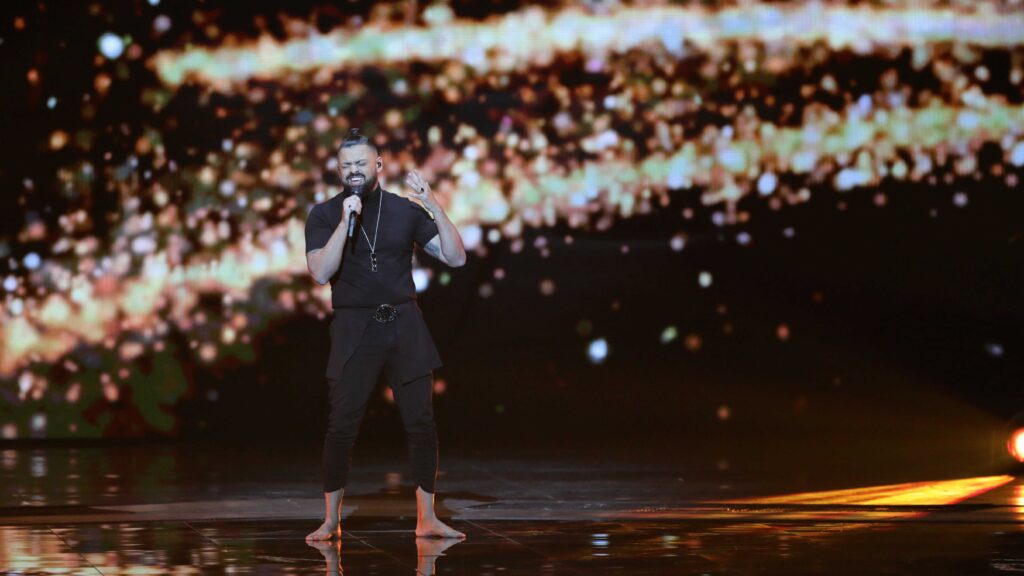
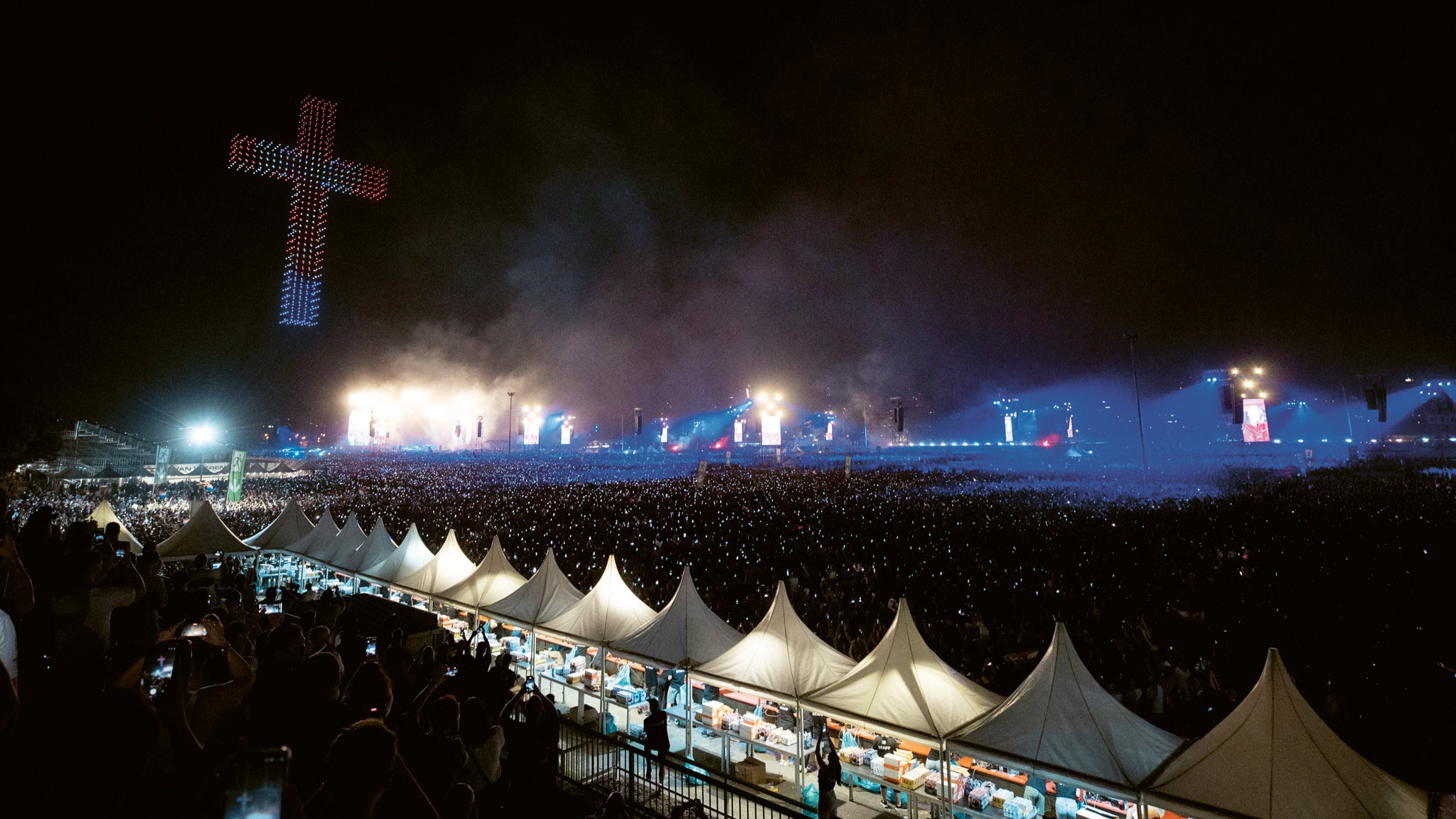
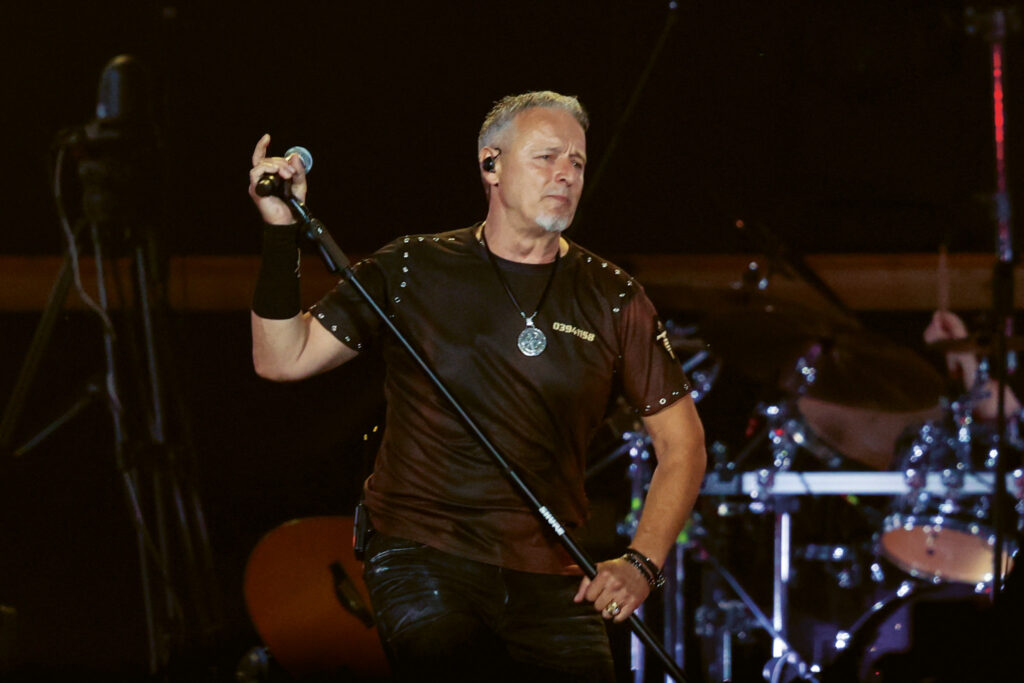
On the summer evening of 5 July 2025, the grass of Zagreb’s Hippodrome became more than a concert ground. Marko Perković Thompson stepped to the microphone, greeted the crowd with the old Croatian salutation, and the field answered as one. What might elsewhere pass for a formality here carried the weight of centuries. It was a reminder that in Croatia, faith and public life have not yet been entirely prised apart.
Across Europe, the centre is not lost in a single blow but eroded in increments. The modern promise—emancipation from origin, duty, and inherited bonds—has brought a freedom that drifts without direction. Mobility has replaced rootedness; connection without place has replaced community. Truth is reduced to opinion, freedom to a series of gestures, nations to facades with little behind them. Institutions behave like moods, and thought slips into arbitrariness. When form is abandoned, the self dissipates into distraction.
‘Modern Europe drifts in a slow-motion collapse of form’
Music, in the European tradition, once resisted that drift. It was a grammar of order, a resonance of the eternal in the temporal. Pythagoras heard harmony in the motion of the spheres; medieval choirs shaped prayer into sound.1 Bach set divinity into the discipline of counterpoint.2 Wagner bound image, word, and music into a single, total art.3 Modernity, as Theodor W. Adorno warned, stripped song of this liturgical weight, folding it into the marketplace.4 But every so often, form returns—not as revivalism, but as an unlooked-for presence.
Zagreb was such an evening. More than half a million people, from Croatia, Germany, Austria, Scandinavia, and the United States, stood together, not merely to consume but to participate. Thompson’s songs, steeped in the memory of a nation, did not agitate or demand; they testified. They carried the cadence of liturgy, not of spectacle, and for a few hours made audible what survives when form and memory hold their ground.
Introduction
Modern Europe drifts in a slow-motion collapse of form. What was billed as liberation from the weight of ancestry, obligation, and rootedness has left behind an emptiness that no amount of connectivity can fill. A culture once defined by continuity now treats truth as negotiable, the nation as a decorative facade, and law as little more than a sequence of procedures. Detached from deeper structures, people are left circling the self. Oswald Spengler saw such symptoms as the exhaustion of the West’s creative energies.5 Martin Heidegger described it as a ‘thrownness’ into a technological order that loosens every tie to origin.6
In Germany, these abstractions surface in the tug-of-war between a multicultural ‘welcome culture’ and the national self-assertion voiced by the AfD.7 In Central Europe, however, the same tensions arrive imported, with Western narratives carrying a quiet disenchantment that dissolves local particularities into a post-national template radiating from Brussels. The European Union, with its preference for harmonized regulations and borderless identities, often accelerates this unmooring. Yet further east, resistance to such cultural flattening has been deliberate and sustained. Poland insists on its Catholic heritage, Hungary engages in an open cultural contest with EU orthodoxy, and Croatia, in a way both symbolic and physical, allowed Thompson’s concert to reclaim a vast public square in Zagreb.
In Western Europe, such a gathering would be hemmed in by lawsuits and protests, the display of national symbols immediately contested. But music, in its older sense, was never neutral entertainment: it was an ordering principle, an echo of the transcendent within public life. Modernity has thinned that meaning into mere consumption. Thompson’s performance attempted the opposite, restoring form not as a stylistic gesture but as a metaphysical stand against the drift.
What follows is an inquiry into how the Zagreb and Sinj concerts functioned as acts of liturgical resistance, joining memory to presence, turning song into a vessel of cultural memory, confronting historical silences like Bleiburg, reframing contentious symbols such as the salute ‘Za dom spremni’ (Ready for the homeland), and reintroducing ritual into civic space. In an age of curated identities and managed narratives, such a chorus becomes more than performance; it becomes a refusal to let form, measure, and dignity disappear without a sound.
What Remains When Nothing Binds
In the late modern age, people appear exposed: restless in movement yet hollow in their foundations. The enduring ties of family, nation, faith, and language are treated as optional by many. Everything can be chosen, yet nothing is secure. The promise of liberation from tradition and hierarchy has left behind an emptiness, or what Heidegger called a state of being thrown into a world where technology replaces roots.8 Mobility is celebrated as progress, while settlement is often dismissed as reaction. Yet human beings do not thrive without attachment. To be bound is not to be caged, but to know oneself. Without such grounding there can be no form, and without form, no dignity.
Boundaries disturb the modern individual not because they limit, but because they reveal how undefined the self has become. Identity turns into a project to be managed: a profile to be adjusted, curated, and broadcast. Each update erases a little of what was permanent. Where altars once stood, there are now platforms: digital, mobile, and silent. Rights multiply while rites disappear. Opinions replace confessions; narratives take the place of memory. Symbols are emptied into brands, gestures become automatic. The upward gaze fades, knees remain unbent. Expression overshadows sacrifice, and even death is stripped of its solemn weight.
This slow erosion has shaped a generation fluent in abstraction yet unable to speak of meaning. They inherit no psalms, only playlists, no catechism, only algorithm. Where grandparents once prayed, they scroll; where ancestors lit candles, they swipe a screen. The vertical thread that joined the living to the dead and humanity to heaven has frayed into a flat drift of updates and feeds. Freedom becomes mere choice, morality dissolves into lifestyle, loyalty is reduced to personal branding, and truth collapses into opinion. The centre holds nothing, and life is a sequence of events without continuity. Daily existence becomes performance, festivals mere simulations. Still, even the freest among them feel the lack of something enduring and real.
Amid this absence, song survives as one of the last forces that can bind. It is not a commodity, but a kind of liturgy: a pattern of sound that draws scattered individuals into community. Song joins through harmony rather than command, through memory rather than control. In Zagreb, it carried an entire people back to themselves, not through argument or spectacle, but through melody. Older than writing, deeper than opinion, it declares belonging. To sing is to enact a form of worship; and worship, in its truest sense, is a return home for a world that has forgotten the way. Thompson’s concert was no simple performance, but a rite of restoration, a moment when voices recovered what the modern age has tried to erase.
Thompson’s Song: An Archive of Self-Assertion
Marko Perković Thompson was born in 1966 in the Dalmatian village of Čavoglave, a place where Catholic ritual, rural custom, and the unspoken tensions of late Yugoslavia formed the fabric of daily life.9 He came of age under Tito’s one-party state, where national sentiment was monitored and religious life kept to the fringes of public space. When Croatia declared its independence in 1991, Thompson volunteered for the front. The name by which he became known, ‘Thompson’, came from the American submachine gun he carried. It was not a stage invention but a call sign from the battlefield, a token of lived resistance rather than a manufactured persona.
In Čavoglave, in the earliest months of the war, he wrote ‘Bojna Čavoglave’ (Čavoglave Battalion) and recorded it on a simple cassette. Passed from hand to hand among soldiers, it became an unofficial anthem, its opening bars instantly recognizable along the defensive lines. Before the war, Thompson had worked as an electrician. His musicianship was not shaped in academies but forged through experience, where the raw force of rock met the modal cadences of Croatian folk song. From that fusion came early works that gave voice to the elemental triad of homeland, family, and faith. Songs like ‘Lijepa li si’ (How Beautiful You Are), ‘Geni kameni’ (Stone Genes), ‘Ravnoteža’ (Balance) and ‘Hodočasnik’ (The Pilgrim) entered the oral memory of the nation, carrying histories that official institutions neglected or erased.
His later albums expanded in arrangement and texture while keeping a liturgical arc, each song placed like a rite within a service. To his critics, Thompson embodies a narrow and exclusionary nationalism. To his listeners, he is a keeper of the cultural flame. In that role, he belongs to the same tradition as Schubert’s ‘Winterreise’ or Silcher’s ‘Lorelei’: melodic vessels carrying memory through time. The structure of his repertoire is cyclical, not linear, making the past a living presence rather than a sealed archive. In Zagreb, the crowd gathered as a single choir, singing not for display but for endurance. Each refrain was a gesture of fidelity, holding form against the cultural drift of the present.
Adorno once wrote of the culture industry’s ability to strip art to its marketable shell. Thompson’s work resists that reduction. His concerts are not spectacles to be consumed but ceremonies to be entered into, his recordings not products but confessions. In Germany, where public identity is framed in the moral dialectic of pride and guilt, this kind of music is often misread or dismissed. Yet its reach is not confined to Croatia. When institutions falter, song remains as one of the last intact forms by which a people can bind itself to its own history. Thompson’s music does not seek to persuade; it bears witness, sounding the thread of continuity between the living and those who came before.
Bleiburg and the Candle: Liturgy of Silence
The most haunting moment of the night arrived without music. Shortly after ten, a Catholic priest stepped onto the stage. On the giant screens appeared a single word: Bleiburg. Beneath it, a date: 1945. For much of Western Europe, it is a marginal note in history; for Croatia, it is an open wound. In May 1945, tens of thousands of Croatian soldiers, civilians, women, and children, retreating toward Austria, were handed over by British forces to Tito’s partisans in southern Austria and Slovenia. What followed were massacres, death marches, and unmarked graves. In the West, Tito’s army was celebrated as liberators. In Croatian memory, the events of 1945 are remembered as a time of immense suffering and loss, shaped by a nation’s experience of suppression and mourning, while acknowledging the complex and ambivalent legacy of the partisan movement. The dead were silenced twice: first by their killers, then by a state that forbade their mention. In Germany, the Holocaust forms the unshakable centre of remembrance culture. Bleiburg, by contrast, is almost invisible, resisted by those who decide which pasts deserve recognition.
‘The stage became an altar of memory, the concert a liturgy’
In Zagreb that night, silence became a voice. A single candle glowed on the screen, accompanied by words from Bishop Ante Ivas. The crowd sang ‘Maranatha’ (Come, Lord)—and then all sound fell away. It was not an absence but a presence so dense it seemed to weigh on the air: a reverent stillness in defiance of the hollow rituals of the modern memorial industry. Western remembrance often follows protocol without passion: guilt without repentance, monuments without tears. Bleiburg resists this packaging. It is grief that remains raw, politically inconvenient, and impossible to resolve. Historians often minimize its scope, journalists pass over it, and activists fear its complexity. Yet when a people’s dead are denied even their name, the living lose part of themselves. The candle in Zagreb stood against that erasure, a flicker of metaphysical defiance, an unspoken vow to remember. Likewise, the remembrance of Serbian victims in places such as Jasenovac or Kragujevac must not be reduced to political instrumentality. Each community’s dead deserve remembrance without monopolies of guilt or ownership of grief.
This moment sought no permission. It fit into no prefabricated narrative. It cut through the expected arc of the concert, not with rage but with invocation. The candle burned as an act of fidelity against forgetfulness, against the monopoly on sanctioned history, against the managed amnesia that smooths over inconvenient truths. Europe’s official memory culture has its boundaries: the Shoah may be remembered; the Balkans must remain silent. In Zagreb, that silence was broken by another, deeper stillness that acknowledged more than one wound and insisted that dignity requires naming them all.
Thompson had made space for it through form. The stage became an altar of memory, the concert a liturgy. Songs of homeland and loss functioned as rites rather than entertainment. Bleiburg was not an afterthought but a formative absence that shaped the entire presence of the night. The stillness of the crowd, united in reverence, defied media expectations. It was not a nationalist provocation but a phenomenon of lived memory. In that silence, the forgotten returned—not as statistics or archived documents, but as a presence felt in the hearts of those who sang and those who stood in wordless witness.
Za Dom Spremni: The Dispute over Symbols
A phrase can carry so much history that its meaning becomes obscured. In Zagreb, ‘Za dom spremni’ rose from the crowd not as provocation but as a fragment of collective memory. For many, especially in neighbouring nations, the phrase still evokes deep pain and loss, bound to the tragedies of the Second World War and the crimes of the Ustaša regime. Western commentators quickly condemned it. The Frankfurter Allgemeine Zeitung called it ‘a melange of kitsch, war romance, and form rehabilitation’;10 Berliner Zeitung described it as ‘a sociopolitical oath of disclosure’.11 In Croatia, however, the words come from scar tissue, born of origin, hardship, and resistance. In ‘Bojna Čavoglave’, they were a cry of survival, where trauma became melody and melody became steadfastness.
Symbols do not exist in isolation. They bind or repel, bless or offend, depending on the depth of the memories they awaken. In Western Europe, ‘Za dom spremni’ is overwritten by fascist association, resistant to translation or nuance. In Croatia, it lives not as an ideological slogan but as a field-born refrain, sung in the mud rather than written into manifestos, carried on the frontline rather than stored in archives. It signals not conquest but the endurance of the wounded.
In the West, history is often sealed in archives of guilt. In the Balkans, it breathes in wounds and witnesses. The first seeks closure through taboo; the second struggles through unresolved remembrance. ‘Za dom spremni’ stands at the fault line between these two worlds. Is it a stain to be erased or a scar to be acknowledged? Western reflexes tend toward sterilization, with no song unvetted and no gesture unapproved. Yet cultural memory is not an administrative file. It lives in contradiction, in what refuses to be smoothed over.
In Zagreb, what was heard was less a political statement than a liturgical act. It was not a plea for absolution but a gesture of fidelity, directed not to abstract ideals but to those who defended the country. Thompson has long distanced his music from any fascist legacy, rooting his message in the lived experience of Croatia’s struggle for independence in the 1990s. Foreign media, however, often strip away that context, ignoring the trauma and the ritual structure of his performances. Croatian courts remain divided: some uphold the phrase as legitimate in wartime remembrance, others deem it unconstitutional.12 Beneath the legal arguments lies a deeper conflict between the mechanisms of law and the persistence of memory, between narrative control and historical truth.
When half a million voices answered with the phrase in Zagreb, it was not defiance for its own sake but an affirmation of presence: we are still here. Phrase became refrain, refrain became rite. And in the liturgical sense, repetition redeems. In ‘Bojna Čavoglave’, the words marked the beginning of defence, not of conquest. At the concert, what politics had profaned was reclaimed as communal memory.
The rift was closed not through argument but through form. Modernity treats symbols as interchangeable. Thompson restores their binding power. In Germany, flags are caught in the web of pride and guilt; in Croatia, they are a form of resurrection. In Brussels, ‘Za dom spremni’ is beyond the pale; in ‘Čavoglave’, it remains a living sign. This tension is more than cultural; it is metaphysical. Can Europe accept that memory cannot be written into law, and that liturgy cannot be managed by administration?
Hungary knows this dilemma well. The defence of form, heritage, and rootedness often collides with Western systems that prefer erasure to risk, forgetting to fidelity. No nation endures without symbols, and no symbol endures without the courage to carry its contradictions. Thompson’s concert revealed that even a single phrase, weighted with history, could serve not as incitement but as invocation: of memory, of sacrifice, and of form itself.
The Silence of Cities
Zagreb has been under the leadership of the left-green Možemo! (We can!) coalition since 2021, with Mayor Tomislav Tomašević as its leading figure. The movement’s programme combines a denationalized urban policy with an administrative culture that thinks in technocratic terms and acts with progressive priorities. National self-understanding is not openly attacked, yet it is quietly relativized through a detached attitude toward Croatian identity, softened portrayals of the socialist period, and the omission of communist crimes. At times, this comes with nostalgic references to Tito. Možemo! stands for an urban order that presents itself as inclusive while gradually dissolving what is distinct into a general, global narrative.
To observers from abroad, this political mood recalls the fault lines between the German Greens and the AfD: a post-national civic vision set against a more rooted and local understanding of identity. The Možemo! agenda, framed as decolonization and diversity, promotes tolerance while avoiding or reframing episodes of the past that involve blood, loss, or religious devotion. Pride festivals and gender workshops take their place alongside international art projects, yet these sit uneasily with the imagery of Marian processions, chequered flags, and war veterans present at the concert.
In this political climate, Thompson’s concert felt like a countermovement, a deliberate disruption of the city’s prevailing semantics: Christian, patriotic, rooted in the memory of the Homeland War, and carried by half a million voices. The setting makes clear that Zagreb is not merely the stage for local cultural disputes. The confrontation between the city administration and an event like this reflects a much larger tension reaching far beyond Croatia: the opposition between a post-national, technocratic West and a Central and Eastern Europe that holds fast to history, faith, and national identity.
What emerges in this environment is a surface vibrancy that hides an interior void. The city that once moved to the cadence of bells, feast days, and market rhythms now follows the logic of schedules, consumer habits, and curated events. Where rituals once anchored life, programmed spectacles now fill the calendar; where symbols once grew out of the city’s soul, slogans are imported from elsewhere. Under Možemo!, cultural space is managed rather than inherited, and the sacred is not removed but diluted by endless alternatives.
The shift is deeper than politics. Streets that once bore the names of saints are now more likely to be landmarks on a festival map. Algorithms dictate rhythm where church towers once measured the hours. Without transcendence, a silent orthodoxy takes hold in which faith seems intolerant, song is treated as a risk, and memory is viewed as a potential source of division. Yet identity resists this kind of management. It reappears unbidden when the official voice falls silent. Thompson’s concert revealed this resilience. For one night, the Hippodrome was neither protest venue nor entertainment ground but a sanctuary of sound. The crowd was orderly not because of police presence but because it shared an unspoken discipline born of common cause.
The event cut through the city’s cultivated neutrality. Every omission in public life hides a choice; every silence contains a verdict. On that evening, it was the people, not the municipality, who gave meaning to the space. The same confrontation between managed cosmopolitanism and living heritage plays out elsewhere in Central Europe. Zagreb’s night of singing echoed far beyond its borders, as if a psalm had been set into the city’s concrete.
The Return of Form
In the first days of August, the journey of song moved inland to Sinj, a small town in the Dalmatian hinterland about 30 kilometres from Split. The gathering unfolded in a year that marked three decades since Operation Oluja, the Croatian military campaign that began on 4 August 1995 and altered the course of the Homeland War. That offensive re-established Croatian control over the Krajina region, which since 1991 had been held by a majority-Serb population and proclaimed as the ‘Republic of Serbian Krajina’, a separatist entity aligned with the Yugoslav People’s Army. In Croatia, the date is honoured as the Day of Victory, the moment of restored territorial unity, while for many Serbian families it remains a humanitarian catastrophe marked by loss and displacement. In Serbia, it remains a wound, recalling the displacement of more than 150,000 civilians and disputes over wartime crimes and expulsions. That memory, too, deserves dignity. The suffering of Serbian civilians during and after Operation Oluja belongs to the shared human cost of the wars that tore the region apart. Acknowledging it does not diminish Croatia’s independence, but restores a sense of moral symmetry that every nation requires to heal.
On that summer evening, the open field at the local hippodrome became a sea of people. Thompson greeted them with words that distilled the spirit of the occasion: ‘Comrades, Yugoslavia is no more. It is dead. Those who wish to live in our homeland must respect its defenders.’ The response was immediate and sustained. The applause was no mere courtesy; it carried the weight of recognition, an unspoken agreement that independence was achieved at great cost and that those who had secured it were owed not triumph, but remembrance. For Croatians, this marked long-sought independence, not vengeance, a moment of national affirmation rather than triumph over others.
The night in Sinj unfolded without haste. Songs and chants rolled through the warm air of the valley. As midnight neared, the sky became part of the performance. A fleet of drones rose silently, arranging themselves into the figure of the Virgin Mary, then the cross, then angels. Light and air formed a kind of visible hymn. The display was not spectacle for its own sake but an extension of the evening’s prayer.
Thompson spoke again, recalling the long effort to suppress ‘Bojna Čavoglave’: ‘We know it’s calvary, the lawsuits. The High Court ruled it legal. Yet some politicians still do not accept it.’ For him, victory was not in statutes but in the act of singing itself, in the endurance of memory voiced aloud. What Zagreb had begun, Sinj deepened. Far from resembling modern concerts, they became acts of communal devotion, where music and memory merged into a single presence. From ‘Bojna Čavoglave’ to ‘Hodočasnik’, each song followed the cadence of worship: invocation, confession, refrain.
‘Thompson’s songs are endangered, not dangerous’
The structure of the evening mirrored the one in Zagreb. It opened with ‘Praised Be Jesus and Mary’, spoken plainly, followed by a reading from Joshua 24:15: ‘As for me and my house, we will serve the Lord.’ The crowd’s answer was quiet but firm, more vow than cheer. The music functioned as theurgy, shaping the gathered body in harmony with something greater. History and belief were summoned into the present. Technology served the sacred; the drones’ patterns were less a display than a procession in the sky.
In a political climate where symbols are often drained of their meaning or filed away in museums, this was an evening that returned them to life. It did not need slogans. The act of singing was enough. ‘You are stronger than we ever were’, Thompson told the young. ‘Croatia is in safe hands.’ What remained was not the sheer size of the crowd, but the certainty it carried. The people had come together out of recognition, not spectacle. Their presence followed an unspoken order, a discipline rooted in belonging. There was no frenzy, no hostility, only the quiet strength of a community that understood why it had gathered and what it wished to affirm.
The Weight of Memory: A European Perspective
The resistance embodied in Thompson’s concerts is not unique to Croatia but resonates across Central and Eastern Europe, where nations grapple with the tension between heritage and modernity’s dissolving force. In Hungary, Viktor Orbán’s government defends cultural sovereignty against EU mandates, emphasizing Christian roots and national memory. Poland’s Law and Justice Party (PiS) upholds Catholic traditions, resisting secular cosmopolitanism. These movements, like Thompson’s music, are less about nostalgia than about reclaiming form, binding peoples to their history in the face of post-national erasure.
Yet this resistance faces a paradox. Western Europe, particularly Germany, frames such acts as regressive, trapped in pride–guilt binaries. Germany’s Vergangenheitsbewältigung, its reckoning with the Nazi past, has created a remembrance culture that prioritizes universal guilt over particular memory. Symbols like flags or anthems are scrutinized, often made taboo, to avoid nationalist excess. In contrast, Croatia’s ‘Za dom spremni’ or Hungary’s defence of Christian heritage embrace symbols as anchors, not threats. This divergence reflects a deeper divide: the West archives history to control it, while Central Europe lives it to survive.
Heidegger’s concept of Geworfenheit (thrownness) illuminates this. Western Europe’s technical world, rational and administered, severs roots, leaving individuals adrift. Central Europe’s resistance, whether in Budapest’s cultural policies or Zagreb’s singing crowds, seeks to rebind. But this is not mere conservatism. It is ontological defiance, a refusal to let identity dissolve into global abstraction. Thompson’s concerts, like Hungary’s heritage laws, are not about reclaiming a lost past but about asserting a present that carries its weight.
The EU’s vision of unity often flattens these differences, promoting a borderless identity that sidelines national memory. Yet memory is not a zero-sum game. Acknowledging Bleiburg does not diminish Auschwitz; singing ‘Bojna Čavoglave’ does not negate other histories. The challenge for Europe is to recognize plural wounds without hierarchizing suffering. Thompson’s music, raw and unapologetic, forces this question: can a continent so intent on progress accept the persistence of particularity?
Song as Resistance: A Philosophical Reflection
Song, as Thompson’s concerts demonstrate, is more than art; it is a metaphysical act. In Plato’s The Republic, music shaped the soul and the polis, aligning both with cosmic order. For Nietzsche, music was Dionysian, binding chaos into form. In the Christian tradition, Gregorian chant lifted the temporal toward the eternal. Modernity, as Adorno noted, commodifies this power, reducing song to distraction. Yet Thompson’s work reverses this trajectory. His music carries the cadence of prayer and the structure of liturgy. It does not seek to amuse or to be consumed, but to draw those who hear it into an ordered act of remembrance and belonging.
This liturgical quality distinguishes it from protest or propaganda. Where protest demands, liturgy confesses. Where propaganda manipulates, liturgy binds. In Zagreb and Sinj, the crowds did not rally, they worshipped. Their refrains were not slogans but psalms, carrying history not as burden but as grace. Yet what appeared in Zagreb and Sinj is not uniquely Croatian. Every nation in the post-Yugoslav space bears its own form of liturgical resistance—its own way of transforming loss into memory and memory into song. In Serbia, Bosnia, and Montenegro too, communities have turned remembrance into ritual, defending meaning through symbols, prayers, and melodies that outlast politics. These parallel acts do not cancel each other; they reveal a shared regional struggle to preserve dignity amid the ruins of ideology. This is what makes Thompson’s music dangerous to modernity: it refuses to be managed. It eludes the culture industry’s grasp, offering a form that modernity cannot digitize or relativize. In Serbia, too, music and liturgy have long served as vessels of endurance, from the gusle epics to the church hymns that carried faith through centuries of hardship. These parallel traditions do not contradict Croatia’s, but reveal a deeper kinship in how Balkan peoples transform loss into meaning.
The philosophical stakes are high. Spengler saw cultures as organisms with lifecycles of birth, growth, and decline. Europe, in his view, is in its twilight, its forms crumbling under rationalism and materialism. Thompson’s concerts suggest otherwise: that form can return, not as revival but as resistance. They echo Herder’s Romantic vision of folk songs as the soul of a people, or Fichte’s call for cultural self-assertion. But they also transcend nationalism, touching a universal human need: to belong, to remember, to endure.
In a world of curated identities and transient trends, song remains a final bastion. It is older than text, deeper than ideology. It carries what discourse cannot: the weight of the unsaid, the presence of the absent. In Zagreb, it was not just Croatia that sang, but it was Europe, yearning for a measure that modernity has forgotten.
Epilogue: A People That Sings
Thompson’s songs are endangered, not dangerous. They are power in memory, not provocation; summoning, not violence. In a heritage-forgetting world, they remain a remnant of dignity, unscathed by imposed narratives. They orient the present, offending only by refusing to flatter. In Zagreb and Sinj, the summer crowds swelled beyond half a million, gathered in calm determination. It was not the restlessness of a mob but the composure of a community that knew why it had come. Order prevailed over disorder, solidarity over division.
‘Europe has forgotten that it is not discourse but song that shapes humanity’
They recall an order now absent: people shaped by prayer, not markets; by service, not applause; by rite, not event. Singing advances memory against the erosion of fathers’ stories, the burial of the dead without remembrance, and the noise of self-absorption. Together, the two concerts opened a window onto a European reality beyond guilt, self-loathing, and constant reinterpretation: a space where living history, renewed faith, and shared memory strengthen culture and give the homeland a future.
When a nation loses its songs, it loses itself. Song preserves form, the measure that modernity has discarded. Without knowing when to fall silent or when to sing, life loses its worth. Silenced songs mute history, and a history left to desiccate crumbles into arbitrariness. Yet a people that still sings is not lost. To sing is to carry one’s own, even when everything else has been taken. These songs are memory in sound. In an age where cultural order is cracking and belonging is treated with suspicion, Zagreb and Sinj together offered a sign of rootedness, remembrance, and measure. You can ban such songs, but they remain. Where there is singing, there is still hope. From heritage, a future can be born.
In these concerts, the first notes arose not as mere performance but as a call to presence. In Zagreb, it opened with ‘Praised Be Jesus and Mary’, a greeting to a future that could not exist without origins. In Sinj, the moment deepened through the reading of Joshua 24:15: ‘As for me and my house, we will serve the Lord.’ The voices that answered carried perseverance rather than nostalgia, a collective act of holding form against the dissolving distractions of the age. As political virtue withers into slogans and culture evaporates into entertainment, their chorus became a final defence: steady, unembellished, and unwavering.
This was both symptom of and testimony to Europe’s deeper fracture: the void of post-national abstraction confronting the dignity of rooted peoples; a global present detached from inherited memory; the restless nomad opposed by the anchored pilgrim. Croatia offered no perfection, but a witness born of suffering and still capable of belief. You can ban, defame, or ignore these songs, yet they endure, and shape legacy. A singing people unconquered. In singing, they pray not for the past but for strength in the present. Song becomes the last bastion of fidelity, to homeland, to form, to measure.
Europe has forgotten that it is not discourse but song that shapes humanity; not a tweet but a Kyrie; not opinion but melody bowing to the depth of heritage. In Zagreb and Sinj, a people sang, and in their voices was the memory of a continent that once knew how to bind freedom to form, identity to responsibility, hope to sacrifice. These were not provincial gatherings but living reminders that cultural identity, when voiced together, can resist erosion more powerfully than any speech or policy. If Europe still seeks a future rooted in something more than markets and regulations, it must hear what was sung in those nights: that a people secure in its song is a people secure in its soul. To listen is to stand with what must be remembered; to turn away is to let it be erased. If Europe chooses to listen, it may yet find in such songs the strength to become itself again. And if Europe can still learn from its margins, it will find in the Balkans not only old wounds, but also the music of endurance, the reminder that nations endure not by erasing one another’s songs, but by listening to them.
NOTES
1 Boethius, De institutione musica, I.2, in Fundamentals of Music, trans. Calvin M. Bower (Yale University Press, 1989), 9–10. ‘The courses of the stars are joined by such harmonious union that nothing so perfectly united can be realized.’
2 ‘Look into the Secret World of Numerology and Puzzles in Bach’, Aeon Essays (2 April 2019), https://aeon.co/essays/look-into-the-secret-world-of-numerology-and-puzzles-in-bach.
3 Richard Wagner, ‘The Art-Work of the Future’, in Richard Wagner, trans. William Ashton Ellis, Richard Wagner’s Prose Works, vol. 1 (Kegan Paul, Trench, Trübner & Co., 1895), 69–213, https://ia801406.us.archive.org/16/items/in.ernet.dli.2015.154223/2015.154223.Richard-Wagner-S-Prose-Works.pdf, accessed 6 November 2025.
4 Cf. Theodor W. Adorno, and Max Horkheimer, Dialectic of Enlightenment: Philosophical Fragments, trans. Edmund Jephcott (Stanford University Press, 2002), 108, 128–129.
5 ‘Does History Repeat Itself? Oswald Spengler and the West’s Civilizational Winter’, The Culturist (24 May 2025), www.theculturist.io/p/does-history-repeat-itself.
6 Martin Heidegger, The Question Concerning Technology and Other Essays, trans. William Lovitt (Harper & Row, 1977), 27–35.
7 ‘Angela Merkel’s “We Can Do It”: Ten Years Later’, The American Postliberal (30 August 2025), www.americanpostliberal.com/p/angela-merkels-we-can-do-it-ten-years.
8 Heidegger, The Question Concerning Technology and Other Essays, 33.
9 ‘Marko Perković – Thompson’, Croatia Week (20 April 2020), www.croatiaweek.com/marko-perkovic-thompson/.
10 ‘Ein Großkonzert des Musikers Marko Perković in Zagreb’, Frankfurter Allgemeine Zeitung (8 July 2025), www.faz.net/aktuell/feuilleton/debatten/ein-grosskonzert-des-musikers-marko-perkovic-in-zagreb-110577474.html.
11 ‘Eine halbe Million Kroaten feiern den Faschismus’, Berliner Zeitung (6 July 2025), www.berliner-zeitung.de/politik-gesellschaft/geopolitik/eine-halbe-million-kroaten-feiern-den-faschismus-li.2338945.
12 ‘Croatian Court Rules “Thompson” Song Did Not Break Law’, Balkan Insight (3 June 2020), https://balkaninsight.com/2020/06/03/croatian-court-rules-thompson-song-did-not-break-law.
Read more:
At a time when public debate is increasingly polarized and superficial, Hungarian Conservative remains committed to depth, intellectual honesty, and independent conservative thought.
Producing high-quality journalism requires resources. Your contribution helps us expand our coverage, reach new audiences, and keep our content accessible.
Please consider supporting our mission.