This article was originally published in Vol. 5 No. 4 of our print edition.
‘What wakens our spirit from the sleep of ordinary life, what throws it into the undiscovered sea of our own thoughts, and of new feelings, is reading…the richness and density of our consciousness, as well as its subtlety, do not come otherwise than through this act by which we take possession of our human inheritance.’
Nicolás Gómez Dávila
For the Colombian philosopher and aphorist Nicolás Gómez Dávila (1913–1994) books and the art of reading were at the centre of his life, his writing, and his philosophy. The two sobriquets ‘Andean Montaigne’ and ‘Nietzsche of the Andes’ attributed to him by critics, which I have combined in my title, draw attention to a shared interest and concern.1
Like Montaigne, as the epigraph shows, Gómez put reading at the heart of the transmission of a culture from one generation to another. He also had strong views about how one ought to read and, like Montaigne in his tower in the Dordogne, spent much of his time in a library whose books he mentioned constantly in his writings. The historian Arnold Toynbee, himself a great bibliophile, invited to Gómez’s house on a visit to Bogotá, reckoned it to contain the largest private library in the world.2 Its approximately 30,000 books, in many different languages, were funded out of Gómez’s personal fortune, which also gave him the time in which to read them. Educated in Paris from the age of six, he was deeply versed in Greek, Latin, and French literature, acquired English through visits to England during school holidays, and could also read German, Italian, and Portuguese. Although not a recluse—he was married with three children, a polo player, and had many friends within the Bogotano haute bourgeoisie—he turned down offers of political or diplomatic posts and spent most of his time reading, thinking and, eventually, writing. It was in his library that he often read late into the night. It was in his library that he hosted friends at tertulias (literary soirées). It was into his library that his bed was brought when he was unwell and it was there, surrounded by the legacy of a civilization on which he had come to believe the world had turned its back, that he died.
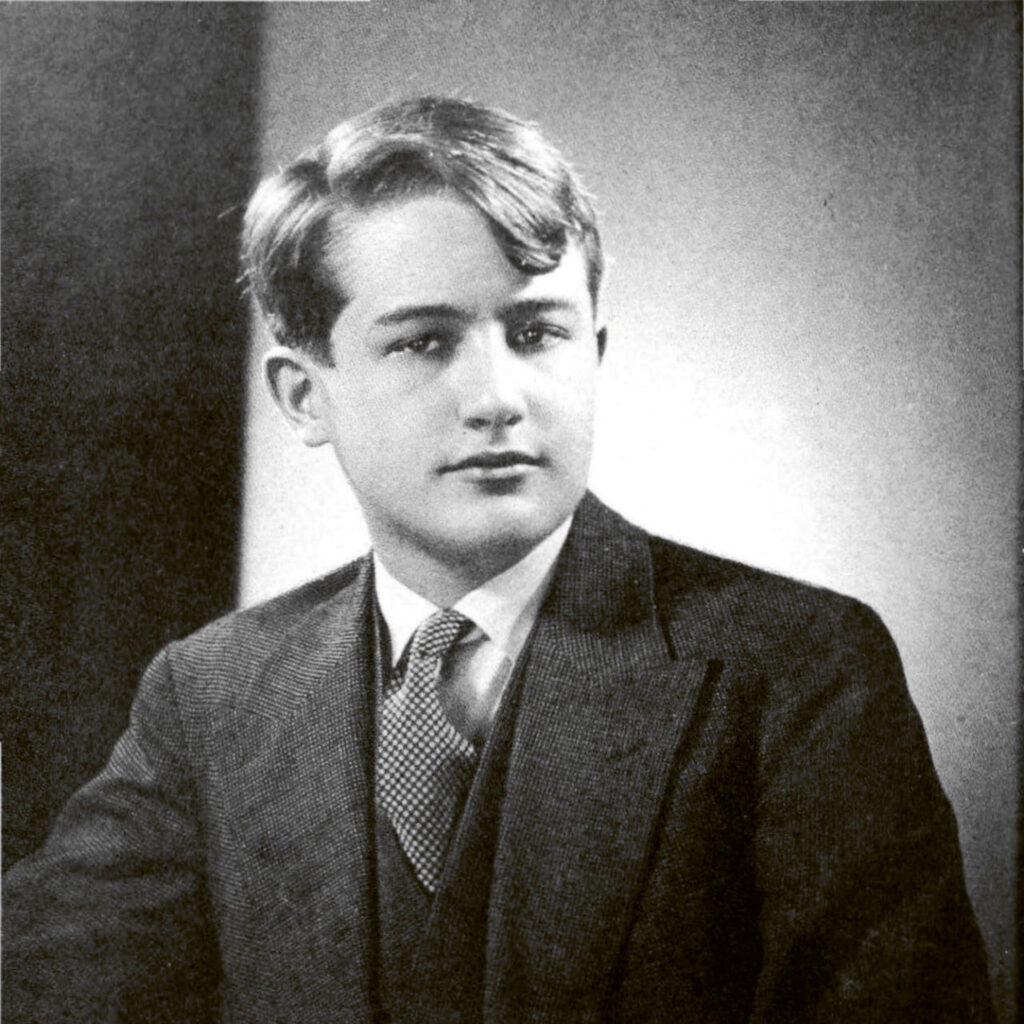
The Nietzschean sobriquet is equally apposite. Gómez, who said that he had never doubted God’s existence, disagreed profoundly with Nietzsche’s view that ‘God is dead’, but shared with him an aristocratic view of the world, a preference for hierarchy and a distaste for democracy, and like him, wrote mainly for the select few.3 He also had similarly demanding views to those of Nietzsche on how cultured persons ought to approach their reading, fully agreeing with Nietzsche that reading, like writing, is ‘an art that requires much precision and patience, and an eye for detail’.4 One of Gómez’s other affinities with Nietzsche was as an author who also made effective use of the aphorism as a literary form. The main influences on the Colombian author in relation to this form, however, were French, especially seventeenth-century writers such as La Rochefoucauld and La Bruyère, but also in later centuries Chamfort and Joubert, and, in his own time, the Franco–Romanian Emil Cioran.
It is through the aphorism that Gómez has given us his thoughts about books and reading. His first publication, Notas I, published privately in Mexico in 1954 and circulated in numbered copies among his friends, is a work that contains many aphorisms but also longer sections of prose in a style reminiscent of Montaigne. It is particularly rich in its commentaries on reading. This was followed by an essay Textos I in 1959. There was never either a Notas II or a Textos II and no further writings appeared until, in his mid-sixties, in 1977, Gómez brought out his first set of escolios (scholia or comments) in a two-volume work entitled Escolios de un texto implícito (Comments on an implicit text). These were followed by two further volumes of New Comments in 1986 and a final volume of Successive Comments in 1992. The five volumes, filling 1,305 pages, contain 13,050 escolios of various kinds relating to a wide range of philosophical, historical, literary, and ethical topics, one of which is the writing and reading of books.5
The nature of the ‘implicit text’ mentioned in the title, and on which all these escolios are supposed to be commenting, has occasioned much speculation and, with the discretion that one might expect from an aphorist, has been left for the reader to interpret as he sees fit. For this reader the ‘implicit text’ is most appropriately seen as all those books which have led the author to make these comments. Given their huge number and the wide range of historical periods from which they come it is nothing less than European civilization as a whole, with its Greco–Roman and Judeo–Christian roots, on which these five volumes of escolios are commenting. The word escolio is derived from Latin scholia and refers to the marginal and interlinear comments on texts made by scholiasts in late Antiquity and medieval times, historical periods that Gómez rated more highly than modernity.
Gómez saw himself as a philosopher—not as the kind of philosopher who wrote lengthy treatises, developed elaborate systems, and gave birth to new ideologies, but as one in the classical tradition of Cicero, Seneca, Plutarch, or Marcus Aurelius, and of their successors the Renaissance humanists, who saw philosophy as what Gómez’s ‘patron saint’ Montaigne called ‘that branch of learning which deals with knowing myself and which teaches me how to live and die well’.6 Given that philosophy, seen in this way, is based on books, it is often therefore a commentary, explicit or implicit, on all those authors who have preceded us in this search over the previous 2,500 years. Although Gómez was highly respectful of the traditions to be found in the philosophical and literary writings he was investigating, he did not see them as sacred texts to be venerated but as works to be interrogated, while their messages were to be adapted and, where necessary, made relevant to new contexts. ‘Reading the great philosophers’, he wrote, ‘does not teach us what we must think, but how we should do so’.7 The core element in the transmission of these writings and their associated philosophical traditions was thus not so much a set of doctrines as a hermeneutic of study with its origins in the Socratic and zetetic practices of ancient Greece.8
Why and How to Read
At the heart of this view of philosophy and of a philosophical way of life was reading books. Gómez was insistent that reading should not become an ‘opium of the spirit’ and substitute for living. Its purpose was to help us to live more consciously, seeing through the fictions and simplicities that surround us in our daily lives and keeping our critical and reasoning faculties in good order.9 If we read mainly for utilitarian reasons or for light entertainment our existing prejudices will just be confirmed.10 This does not mean that we should not use our reading the better to understand our own times. ‘All literature is contemporary for the reader who knows how to read’, he wrote in one of his early escolios.11 The critic Franco Volpi sees Gómez’s recommendations for reading as a kind of ‘bibliotherapy’ which offers an entrée into a world in which we have the privilege of the company of some of the greatest minds of the past.12
Instead of reinforcing our normal lazy ways of thinking, reading the right books (he has in mind, of course, Sophocles or Shakespeare, not Agatha Christie or Frederick Forsyth) should bring us up short, shock and surprise us, and confront us with an obstacle.13 Books that do this are not easily absorbed into our lives. They have a life of their own, confront us, and demand a response. If a book does not have a major impact on us, does not change us, make us happier or sadder, leave us more or less certain or more or less committed about important things, it is a waste of time.14
To make sure we get the most out of serious books, he recommends focusing on one at a time. To understand a book we need to keep all its parts in our heads and work hard at establishing the relationships between them. This involves a constant to-and-fro between individual words and one’s sense of their place within the whole work.15 Though these comments were made early in his career, Gómez may already have been thinking here of his own writings. By the time he had completed his 13,050 escolios this had become exactly the challenge that faced his own readers.
‘At the heart of this view of philosophy and of a philosophical way of life was reading books’
These demanding—and initially rather off- putting—requirements placed on readers do not mean that books should not also give pleasure. ‘The book that fails to entertain or make one welcome’, he writes, ‘runs the risk of losing its one intelligent reader: the one who seeks pleasure in reading, and only pleasure’.16 It is the duty of humanist philosophers and writers to ensure that this pleasure is present even in the most arid of intellectual explorations. Gómez argues for what Volpi has called an ‘epicureanism of the intelligence’, not in the sense of the pleasures of the flesh, but of the delight that can come from the development of wisdom and the acquisition of knowledge.17 ‘Knowledge is the purest face of pleasure’, he writes, in one of the briefest aphorisms of Notas I.18
What to Read
Gómez does not present his readers with a list of recommendations about reading, though his own preferences—Greek and Roman classics, Montaigne, the writers of France’s Grand Siècle such as Molière, German romantics, Baudelaire, Balzac, Nietzsche, the ‘grand Catholic pamphleteers’ (as he calls them) such as Pascal, de Maistre, Chesterton, and Bernanos—are unmistakeable. Striking by their absence are writers in Spanish, whether from Spain or from his native Latin America. He was critical of Spain’s literary heritage because of its ‘provincialism’ and had a particular distaste for the Spanish baroque style. ‘It was France that made me’, he remarked to a German visitor shortly before his death.19
In one of the passages of Notas I where he is clearest about his views on education he strongly advocates above all the reading of the Bible and the Greek classics—‘slowly and with the most minute attention’—as telling one everything one needs to know about Man, messages that have not fundamentally changed over three millennia.20 Elsewhere he advises that a daily ‘morning reading of Homer, with the serenity, calm, deep sense of moral and physical wellbeing and of perfect health that this instils in us’ is the best precaution against the banalities of everyday life we are about to face.21 He particularly advises against reading books about books (and, by implication, I suppose, articles like the present one). Life is too short for such things, he feels. Instead, in a habit that he joins Schopenhauer, Proust, and Borges in recommending, we should just keep on re-reading them.22
Reading Gómez
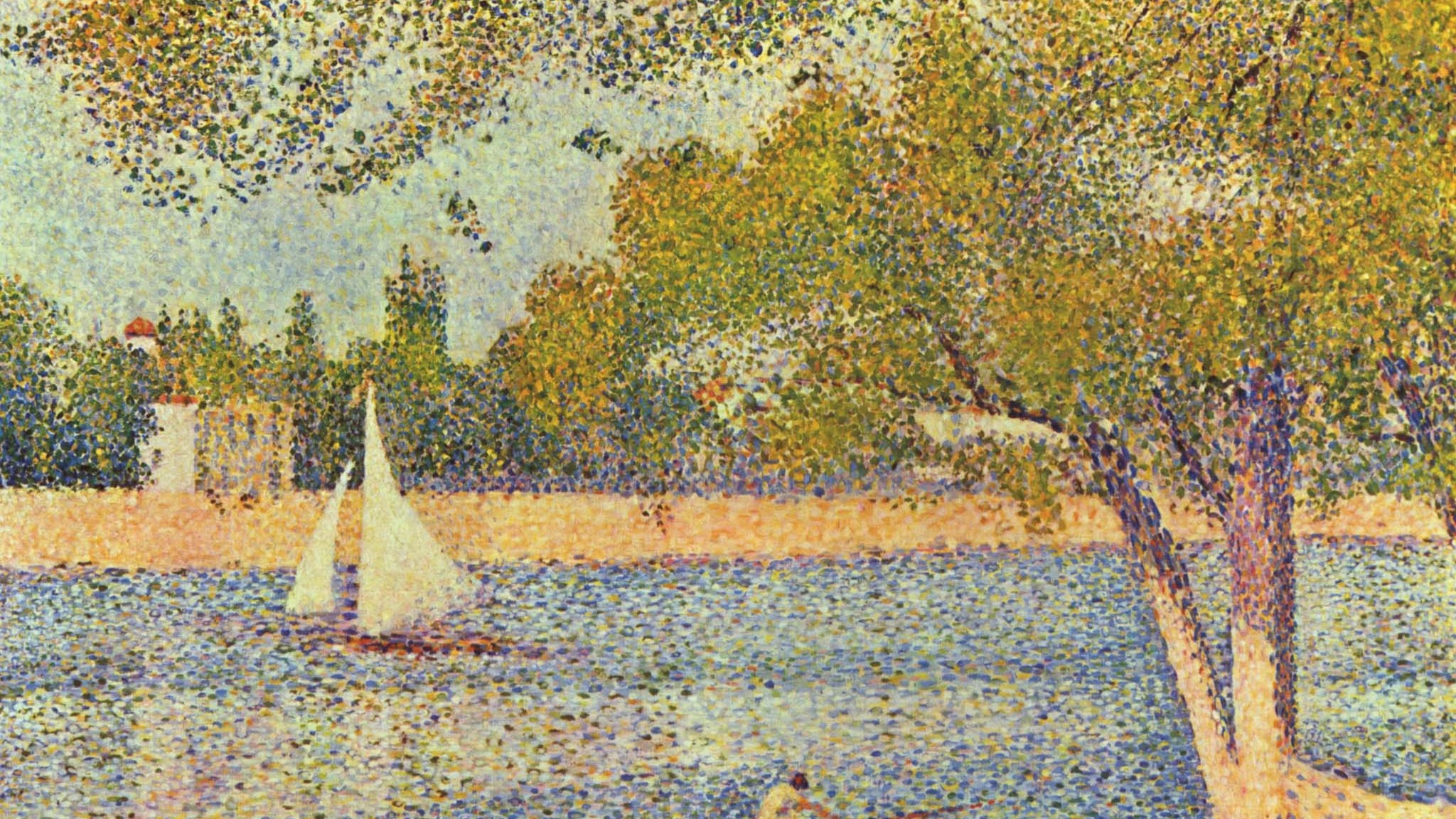
Gómez’s own writings make considerable demands on his readers, not surprisingly given that initially his writing was for himself and then just for a small circle of friends with similar interests. Like Nietzsche, he seems deliberately to conceal some of his meaning from a wider public, using untranslated epigraphs in Greek and Latin, concealing the source of citations, and making use of paradox and irony. His writing is both ‘exoteric’ for a wider audience and ‘esoteric’ for those capable of deciphering his deeper meanings. While the vast majority of escolios in Escolios de un texto implícito are readily comprehensible, the task required of the reader is much more than that of responding to them one by one. An early—and in this case gnomic—escolio in the first volume states that ‘the reader will not find aphorisms in these pages. My brief sentences are the chromatic tones of a “pointilliste” composition’.23 The analogy is to the late nineteenth-century French pointilliste style associated with Georges Seurat, whose paintings our Colombian author must have seen in Parisian art galleries as a young man, and in which the painter puts small dots of colour on the canvas leaving it to the viewer’s eyes to assemble these dots into a full image. The implication of the metaphor is that the reader is expected to establish relationships and patterns among the escolios and see to what extent they form part of a whole. Doing so across 13,050 of them is no small task for a neophyte.
The Message Behind the Escolios
The one thing one should not expect from Gómez is a systematic philosophy of life. What he provides is an introduction to a way of thinking and a stimulus to a way of life in which one observes and reflects and makes up one’s own mind. His prescription, as expressed in one of his most memorable escolios, is for ‘a life lived with lucidity that is simple, quiet, discreet, amidst intelligent books and with those one loves’.24 Such a life is compatible with many different viewpoints.
Gómez is easily presented as a deeply reactionary, indeed counter-revolutionary figure, an intransigent and sometimes-arrogant opponent of liberalism and democracy, and one of those ultramontane Catholics who never came to terms with Vatican II. Much of this is true, but it suggests a rigidity absent from his thought. Given the breadth and diversity of his reading, he was accustomed to bitter controversy both among the authors he was reading and between some of them and himself. He did not turn away from an author because he disagreed fundamentally with him. Someone who labelled the 1800s as a century-long ‘Good Friday’ because it was the century that killed God—through evolution, biblical scholarship and free thinking—could nonetheless feel close to a thinker, Nietzsche, who proclaimed from the rooftops that ‘God is dead’.25 Despite his classicism, he also embraced German and English romantic poets and writers, had good things to say about Rousseau and Hume, and could see advantages in certain forms of individualism. His very approach to philosophy, with its Socratic and zetetic methods, was also inimical to rigid certainties, always allowing for a polyphony of interpretations.
He was, however, consistent in his distaste for modernity, as a phase in which humanity, threatened on all sides by ‘the state, technology’ and (as ever) the temptations of ‘the devil’, lies imprisoned ‘like an animal in a trap’.26 He looked back to feudalism as the best kind of social organization and government that Europe had seen. In feudal societies, intermediate authorities, hierarchical structures, customary law, and the sense of transcendence conveyed by religion had limited the power of the state and, he argued, allowed both greater freedom and a greater sense of belonging. The growth in royal power, the replacement of feudalism by the nation state, the French Revolution, and the spread of democracy had led to the appearance of what he called an ‘anthropotheistic’ world now centred on man, but on man as a god. All the medieval restraints on unlimited power have been removed, opening the way to tyranny—a tyranny that was unrestrained because it was exercised in the interests of Man defined as a tabula rasa on which anything could be written. In this new world without community and hierarchy, the individual, as he says in one of his densest and most pungent escolios, ‘is born even more naked and dies even more completely’.27
Gómez died in 1993, and worldwide developments since then—the abandonment of the definition of marriage as the union of a man and a woman, the replacement of sex by gender, state-assisted suicide, genetic engineering, artificial intelligence—make his picture of a world run by despotic elites in the interests of a man-god able to be re-made at will much less fanciful than it might appear at first sight.
What therefore, if anything, is to be done in a world in which the Greco–Roman and Judeo–Christian heritage celebrated in Gómez’s writings risks disappearing? Although many of his views are deeply conservative, and he had links with Colombia’s Conservative Party, this is an option politically that he brushed aside on the grounds that in modernity there is little left to conserve. Most conservatives, in his opinion, have turned into ‘liberals’ who feel they have been ‘badly treated by democracy’. The only useful role they are likely to have is to try to slow down the process of decline and to provide some kind of ‘counterweight to the stupidities of the day’.
‘Gómez was happy to call himself a “reactionary”’
The alternative to conservatism is ‘reaction’, and Gómez was happy to call himself a ‘reactionary’. Despite his nostalgia for the Holy Roman Empire—an entity with intermediary authorities for which he clearly had much affection—and for the Ancien Régime in France before the Revolution of 1789, he was well aware that any return to those days was out of the question. He equally saw no point in ‘counter-revolution’, seeing it as a utopian fantasy and, like all the utopias also peddled by the left, something that it would be foolish to embrace. ‘Being a reactionary is understanding that man is a problem without human solutions’, he says in one of his neatest escolios.28
If, then, there is little to be done politically, how might a reactionary respond? It is to respond with dignity to the shipwreck in which he finds himself and, as quoted above, to live quietly, amidst books, family, and friends.29 It is to receive the legacy of civilization into one’s life and to transmit it, in the hope that parts of it might continue, as Gómez did through his writings, and as Roger Scruton urged all those involved in education to do ‘by lodging it in brains that will last longer than their own’.30
Afterword: The Future of Serious Reading
The September 2025 edition of the French conservative magazine L’incorrect greeted the rentrée (return to school) and its accompanying rentrée littéraire, with a leading article ‘Is the death of the book inevitable?’ based on a conversation about reading between critic Éric Naulleau, novelist Patrice Jean, and Alain Finkielkraut, a philosopher, member of the Academie Française, author of Un coeur intelligent, a book on how to read great literature, and one of the rare readers of Gómez.31 The concern of Finkielkraut and his colleagues was not the number of new books in circulation: 484 new novels had just been published as part of the rentrèe littéraire, but many of them, according to L’incorrect, completely lacked literary ambition, were bloated with the ephemeral issues of the day, and deserved only to be pulped.32 They were also not concerned about the literature curriculum in French schools, taking it for granted that pupils would be going back in the new school year to read Montaigne, Racine, and Balzac, as Gómez would have done at the Parisian lycée where, in the 1920s, his literary tastes began to be formed.
The problem, Finkielkraut and his colleagues felt, was in the home and in the wider environment where the school’s efforts to produce pupils who are cultivé, in the sense of having been inducted into French haute culture, are no longer appreciated, even among the traditional bearers of cultural transmission, the bourgeoisie. The old elite has been replaced by a new ruling class which has grown up under the influence of radical ideologies emerging from French and US universities during the latter part of the twentieth century, is apologetic about that European civilization on which Gómez’s work was based, and lacks any coherent set of standards in relation to the arts. For Alain Finkielkraut—who is fond of quoting one of our Colombian author’s escolios about the importance of not letting the ‘din of the living smother the music of the dead’—the future of French culture in the hands of this elite looks grim.33 In his view, however, the main threat to reading and literature is not political but economic and technological: the rise, successively, of cinema, radio, television, and now the internet and social media.
All of this has pushed the kind of attentive reading that Gómez and so many of his predecessors have encouraged to the margins of our lives, if not out of them altogether. Naulleau likens the disappearance, book by book and author by author, from people’s consciousness of parts of France’s literary heritage to the gradual loss of living species. He fears that the future will look increasingly similar to the old communist dictatorships and become one in which, away from the universities, literary institutions, publishers, and bookshops which have succumbed to wokeism and cancel culture, literature will only survive ‘in the catacombs’.
It is because of this negative environment that the sociologist Frank Furedi, in Power of Reading. From Socrates to Twitter, has called for a ‘rediscovery of the virtues of reading’—the kind of reading that, as Montaigne put it and Gómez practised throughout his life and recommended to others—teaches one ‘how to live and die well’.34 There are three things that might start us on the road to doing this, one immediate and two long-term.
First, we need to step up the fight against all those—universities, cultural institutions, bookshops, libraries, and above all publishers with their sensitivity readers and censorship in the name of progressive causes—that limit our access to good books we might otherwise have been able to read. This includes books that never get written because of self-censorship, books rejected on non-literary grounds, books rewritten during the publishing process, and books rejected by bookshops for political reasons.
Second, we need to recover (in some countries) and strengthen (in others) the idea that education in schools is valuable in itself, irrespective of all its other benefits, and that its main purpose is to help us to become knowledgeable, cultured, and virtuous people, not to support the economy or promote contemporary causes.
Third, we need to return to the original idea of the university as providing a broad ‘liberal education’ for everyone, alongside their specialism, as John Stuart Mill, Cardinal Newman, José Ortega y Gasset, and Karl Jaspers all recommended, and as a place in which one learns how to read good books, not as a course requirement but as an existential necessity that will accompany one throughout life.
Only in these ways will we be able to recreate an elite that shows us how a life with books should be lived and, in doing so, once again transmits to future generations the cultural heritage that Gómez spent his life studying and which, as he wrote in one of his escolios, contains, amidst the ruins, ‘truths that do not die’.35
NOTES
1 Michaël Rabier, Nicolás Gómez Dávila, penseur de l’antimodernité (L’Harmattan, 2020), 31, 47.
2 ‘¿De quiénes eran las bibliotecas más importantes de Colombia?’ (Who Owned Colombia’s Most Important Libraries?), Revista Diners (July 2019), htts://revistadiners.com.co/cultura/68983_conozca-las-bibliotecas-personales-mas-grandes-de-colombia/.
3 Gómez, Notas I, 112.
4 Friedrich Nietzsche, The Dawn of Day (Macmillan, 1911), 14.
5 The definitive editions of the escolios remain the Colombian ones of 1977, 1986, and 1992, which are out of print. Footnote references to escolios in this article are from Nicolás Gómez Dávila, Escolios a un texto implícito (Atalanta, 2024), which is said to contain the vast majority of them, but with different pagination.
6 Michel de Montaigne, ‘On books’, in Essays, translated by M. A. Screech (Penguin, 2003), 459; Gómez, Escolios a un texto implícito, 409.
7 Gómez, Escolios a un texto implícito, 302.
8 Rabier, Nicolás Gómez Dávila, penseur de l’antimodernité, 110–113.
9 Gómez Dávila, Notas I, 23; Franco Volpi, “Prólogo” (Prologue), in Gómez, Escolios a un texto implícito, 21–22.
10 Gómez, Notas I, 151.
11 Gómez, Escoliosauntextoimplícito, 106.
12 Volpi, “Prólogo”, 10, 35–36.
13 Gómez, Notas I, 24.
14 Gómez, Notas I, 50.
15 Gómez, Notas I, 92, 228, 278.
16 Gómez, Notas I, 11.
17 Volpi, Prólogo, 19.
18 Gómez, Notas I, 12, 171; Rabier, Nicolás Gómez Dávila, penseur de l’antimodernité, 102–105.
19 Rabier, Nicolás Gómez Dávila, penseur de l’antimodernité, 34.
20 Gómez, Notas I, 162.
21 Gómez, Notas I, 141.
22 Gómez, Notas I, 283; Nicholas Tate, Seven Books that Everyone Once Read and No One Now Does (Ludovika University Press, 2025), 297; Jorge Luis Borges, Obras completas, Vol. 4: 1975–1988 (Emecé, 1996).
23 Gómez, Escolios a un texto implícito, 69.
24 Gómez, Escolios a un texto implícito, 263.
25 Gómez, Escolios a un texto implícito, 417; Gómez Dávila, Notas I, 112.
26 Gómez, Escolios a un texto implícito, 514, 833.
27 Gómez, Escolios a un texto implícito, 298.
28 Gómez, Escolios a un texto implícito, 1172.
29 Gómez, Escolios a un texto implícito, 427. ‘The reactionary today is merely a passenger who accepts shipwreck with dignity’.
30 Roger Scruton quoted in Mark Dooley, ed., The Roger Scruton Reader (Continuum, 2011), 52–53; Gómez, Escolios a un texto implícito, 858.
31 L’incorrect, No. 89 (September 2025), 14–29; Alain Finkielkraut, Un coeur intelligent (Flammarion, 2009).
32 L’incorrect, No. 89, 54.
33 Lyvaan Vaté, ‘Quelques mots sur Alain Finkielkraut de l’Academie Française’, La Règle du Jeu, 86 (23 February 2016), https://laregledujeu.org/2016/02/23/27627/quelques-mots-sur-alain-finkielkraut-de-lacademie-francaise/. The reference is to the escolio which reads ‘The cultured soul is one in which the din of the living does not smother the music of the dead’.
34 Frank Furedi, Power of Reading. From Socrates to Twitter (Bloomsbury, 2015).
35 Gómez, Escolios a un texto implícito, 858.
Related articles:
At a time when public debate is increasingly polarized and superficial, Hungarian Conservative remains committed to depth, intellectual honesty, and independent conservative thought.
Producing high-quality journalism requires resources. Your contribution helps us expand our coverage, reach new audiences, and keep our content accessible.

Please consider supporting our mission.