This article was originally published in Vol. 5 No. 3 of our print edition.
Tracing Theological Interpretations of Electricity Across the Seventeenth and Eighteenth Centuries: From Cat’s Fur to Theosophical Cosmology
In the famous fragment ‘For I will consider my cat Jeoffry’, of the eighteenth-century poem ‘Jubilate Agno’, the author, Christopher Smart, claimed that ‘by stroking of him’ [the cat], he has ‘found out electricity’ and perceived ‘God’s light’, as ‘both wax and fire’. Smart expanded on this theme during his confinement in St Luke’s Hospital for Lunatics: ‘For the Electrical fire is the spiritual substance, which God sends from heaven to sustain the bodies both of man and beast’.1
Smart’s observations resonate with the ‘theology of electricity’, a movement that flourished during the seventeenth and eighteenth centuries. Fuelled by the burgeoning understanding of electricity and the lingering influence of vitalism in physiology and biochemistry (with reference to figures like Luigi Galvani and Franz Anton Mesmer, and even Benjamin Franklin), this movement sparked a reinterpretation of God’s transcendence. In a ground-breaking book, Theologie der Elektrizität, edited a few decades ago, Ernst Benz delved into this movement and its origins within the Swabian Pietist tradition. Benz showed how the discovery of electricity altered our understanding of the interconnection between spirit and matter. Theologians like Friedrich Christoph Oetinger explored electrical arguments in the eighteenth century to reframe biblical light imagery and interpret God as a source of life and movement. Gradually, theosophical circles, including those influenced by Helena P. Blavatsky, transcended this ‘theology of electricity’ by establishing their own distinct spiritual movement. While acknowledging similar concepts, they moved beyond the theological argument of electricity, developing the notion of ‘cosmic electricity’ in the nineteenth century as a metaphysical force and manifestation of the Divine within the universe.2
The religious interpretations of electricity explored in this essay represent a chapter in a much larger narrative. The focus here remains on the twentieth century; however, the narrative stretches beyond this period, encompassing earlier models and their subsequent evolution.
How Electricity Became a Religion and Why the Catholic Church Reacted in the Early Twentieth Century
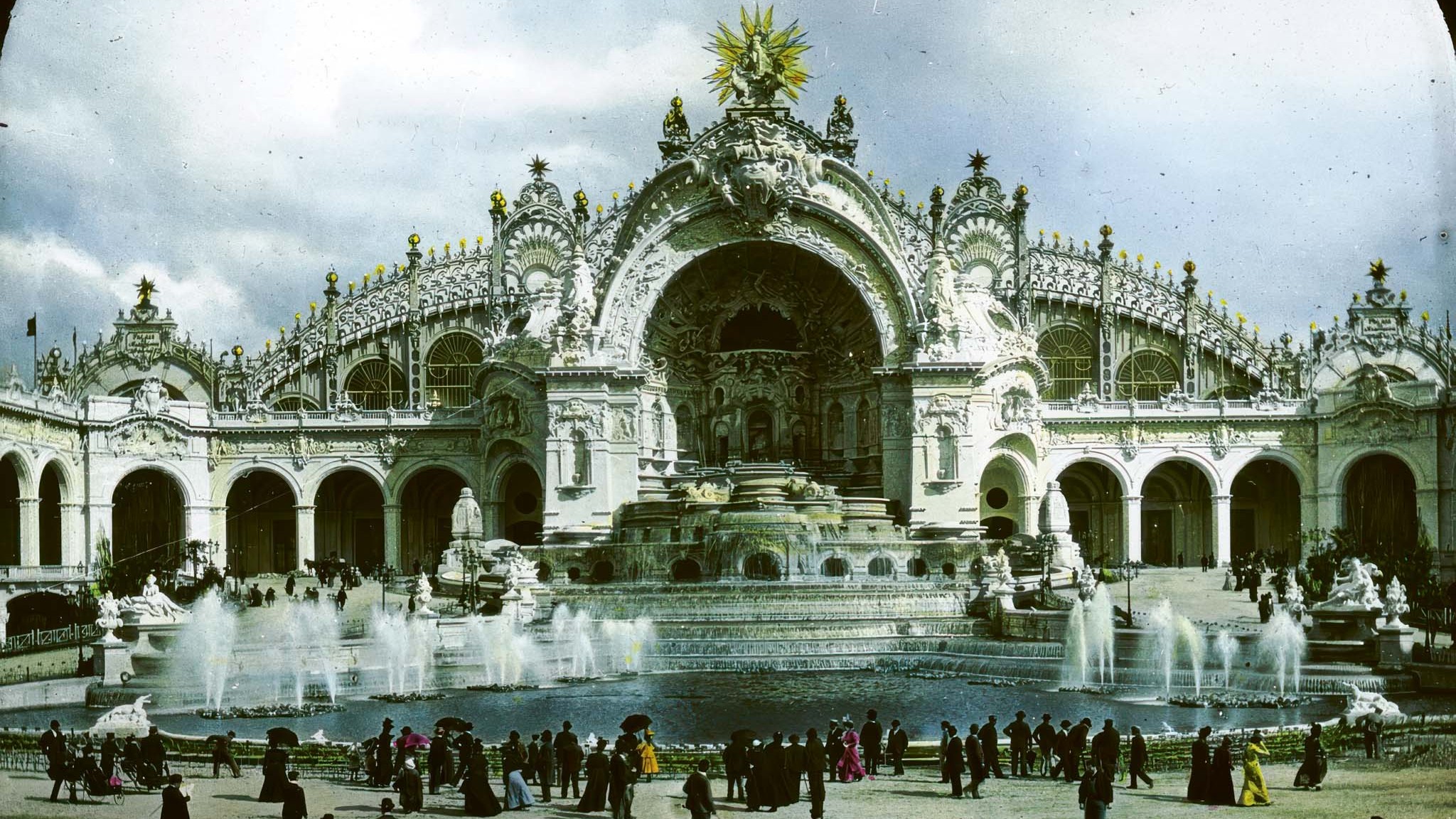
In the early twentieth century, the American historian Henry Brooks Adams, visiting the fifth World’s Fair in Paris, was struck by the ‘forty-foot dynamos’ displayed in the gallery-palace of electricity. He felt their power as ‘a moral force, much as the early Christians felt the Cross’.3 Paul Morand echoed this sentiment, declaring that ‘Electricity is the religion of 1900’.4 In 1916, the Italian poet Filippo Tommaso Marinetti wrote in the manifesto of the Futurist movement on the new religion-morality of speed: ‘Every night, I pray to my electric light bulb, for it has a speed moving furiously in it’.5 In a radical shift, electricity rises above the realm of theology and turns into an object of veneration. No longer seen merely as part of a theological or cosmological framework, it sparks the imagination, birthing its own unique rituals. The prayer to the light bulb, blossoming alongside established Christian liturgy, inevitably finds itself on a collision course, particularly with the Catholic Church, leading to a confrontation.
Roman Catholicism reacted to the use of electric light in churches. According to the views of the Futurist Marinetti, to replace liturgical candles with electric bulbs was a necessary step in the modernization of the sacred. Amid the re-enchantment of technology and the secularization of religion, Marinetti advocated for the use of ‘blue-white electric light to illuminate churches’ and scorned the ‘carnal, lustful, and reddish yellow of candlelight’.6
‘De Luce Electrica’, a decree issued by the Catholic Sacred Congregation of Rites in 1907—and repromulgated in 1914, having regard to previous decrees issued since 1895—forbade the placing of electric lamps on the altar instead of candles and/or torches before the Eucharist, as well as relics or the images of saints. Indoor electric light in churches was permitted for practical, not liturgical effects. Concessions were made during the two world wars, but these were temporary and due to the wartime financial straits according to the decrees of 23 February 1916 and 13 March 1942, and the latter was repealed on 18 August 1949.
The Catholic Church’s reaction to the replacement of candles with electric bulbs reflected its concerns about the loss of both material and non-material values associated with burning candles. According to an eleventh and twelfth-century interpretation, candles represent the flesh of Christ and his martyrdom, with the wax symbolizing his flesh and the signs and wounds of the Passion. This interpretation is referenced in the writings of Ivo of Chartres, Pierre of Esquilin, and Louis Charbonneau-Lassay in his Bestiary of Christ (1940), and in various late-nineteenth-century liturgical compendiums, such as those of Pierre de Saint-Vincent (1862) and Albert Durand (1868). What is more, similarly to the flesh of Christ, born of an immaculate virgin, wax is produced by bees, which give birth without fecundation. This Christian symbolism was elaborated on by the Benedictine theologian Anselm, Archbishop of Canterbury, who formulated a triple emblem: the wax signifies the virginal flesh of Christ, the wick his soul, and the flame his divinity.
‘In a radical shift, electricity rises above the realm of theology, and turns into an object of veneration’
In this context, I argue that Roman Catholicism’s defence of wax was never a reaction to speed—despite Marinetti’s accusation of ‘trance and sleep crimes’ in his 1911 Futurist ode to ‘sublime Electricity’—but rather a defence of its fundamental commitment to the Incarnation, which ideologies of electricity threatened. In his ‘Manifesto of Futurist Sacred Art’ of 1931, Marinetti deems electric light ‘superior in celestial purity’ and claims it signifies a rinnovamento or modernization of both sacred art and the Catholic religion. In 1911, he described electricity as both the ‘unique and divine mother of future mankind’ and a force wreaking havoc on the ‘Black Cathedral’, smashing stained-glass Madonnas. He praises electric light as a symbol of progress, and uses it to attack established faith, blurring the line between artistic innovation and iconoclasm.7
Early Anthropological Connections Between Fetishism, Mana, and Electricity
The late nineteenth and early twentieth centuries witnessed an advancement of electrical science, which intersected with emerging academic interests in ethnology, anthropology, and parapsychology, leading to pioneering comparisons and speculations. Andrew Lang’s seminal 1898 work The Making of Religion delves into a Melanesian ritual in which sticks supposedly move violently without physical contact, drawing parallels to similar phenomena observed in Zulu rituals and late seventeenth-century European accounts such as the Jesuit Menestrier’s interpretation of divinatory rod movements.8 Lang also refers to the nineteenth-century Swiss ‘Zoller case’, in which objects inexplicably moved within a private residence, reminiscent of studies on mediums of the sort conducted on Daniel Dunglas Home and Eusapia Palladino, which categorized them as ‘fetishistic phenomena’.9 Lang initially rejected an electrical explanation for these movements, then vaguely acknowledged the allure of ‘electricity…a blessed word’ in a chapter exploring the link between fetishism and spiritualism.10
The social anthropologist, Edward Burnett Tylor, Lang’s contemporary, had already linked ‘fetishism’ to objects channelling ‘electricity as invisible fluids’ in animistic beliefs.11 This connection found further elaboration in the work of Robert Ranulph Marett, Tylor’s successor at Oxford. Marett incorporated the notion of physical effects without mechanical cause into his ethnological theory of ‘Mana’, an impersonal force associated with ritual actions. In this sense, he describes the indirect action of a symbolic weapon brandished towards a distant person as demanding ‘explanation on non-mechanical lines’.12
‘Roman Catholicism’s defence of wax was never a reaction to speed…but rather a defence of its fundamental commitment to the Incarnation’
As far as Mana is concerned, the association with electricity strongly resonated with scholars like Edward Smith Craighill Handy, an expert on Polynesian religion, who compared Mana, with reference to Marett’s work, to the generation and transmission of electrical energy, due to its shared characteristics, ‘analogous in so many ways to the known nature of electricity’.13 Similarly, Africanist Jack Herbert Driberg acknowledged the similarities between ‘Mana’ and ‘electricity’, though suggesting ‘radium’ might be a more fitting ‘analogy’.14 Max Freedom Long, a Hawaiian specialist, stated that Mana behaved like an electric current and could be mechanically reproduced. Long, a member of the New Thought movement, believed that ‘Mana’ behaves ‘like the voltage of an electric current’.15
The early twentieth century saw further convergence between ethnology, the paranormal, and electrical concepts. For instance, Ernesto Bozzano, an Italian parapsychologist, investigated a South African case of alleged levitation, attributing it to electromagnetism (‘the body negatively charged was attracted and held aloft’). He even drew parallels between the phenomenon of the spontaneous combustion of grass and short circuit in ‘electric illumination’.16 This exploration highlights the early fascination with the potential of non-mechanical cause, specifically through the lens of electricity. It also reveals a confluence of intellectual currents. It emphasizes the historical entanglement of anthropology, parapsychology, and electrical science by offering a glimpse into how emerging scientific concepts were used to understand religious rites and fuel further inquiries into non-mechanical causes.
What McLuhan’s ‘Global Village’ and Warburg’s Reading of the Hopi Tribe’s Religious Art Can Teach Us About the ‘Electric Age’
The concept of technological globalization is often defined in terms of increased speed and connectivity, echoing the notion of an ‘electric age’, introduced in the mid-twentieth century by one of the earliest proponents of the ‘global village’ theory. In his influential 1964 work Understanding Media, sociologist Marshall McLuhan famously declared, ‘Today, after more than a century of electric technology, we have extended our central nervous system itself in a global embrace, abolishing both space and time as far as our planet is concerned’.17 This ‘electric speed- up’ beyond a certain threshold (the ‘speed of light’) has indeed established a new reality of ‘instantaneous connections’ and ‘communication’, giving rise to a global media landscape that has fundamentally reshaped human interactions.
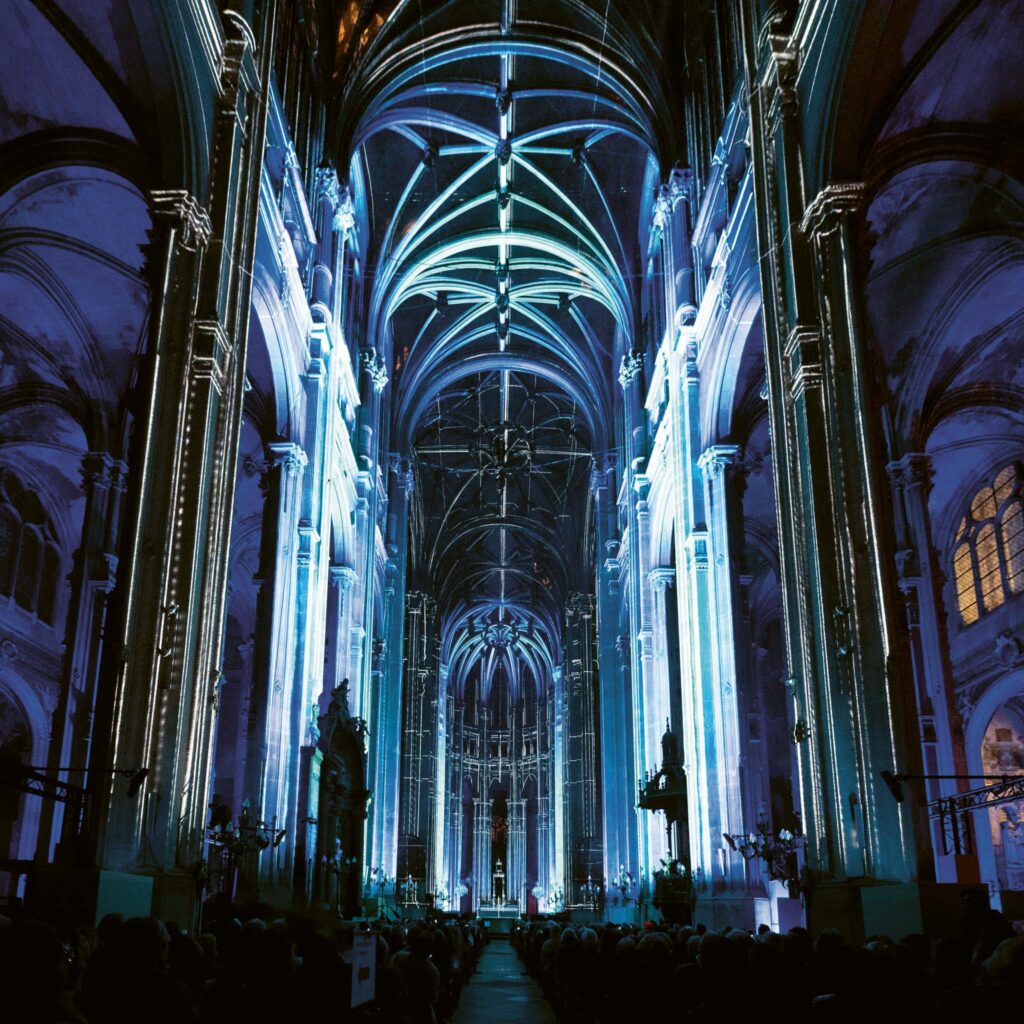
In his exploration of the impact of technology on human societies, McLuhan engaged in a critical dialogue with the Romanian historian of religions Mircea Eliade (1907–1986), regarding Eliade’s association of modernity with a process of ‘de-sacralization’. McLuhan’s critique of Eliade’s thesis may have been oversimplified, overlooking Eliade’s notion of the sacred being concealed within the profane and the secular sphere, as a ‘hierophany’ or camouflage. Nonetheless, it raised questions about the complex terminological debate. McLuhan argued that Eliade had failed to consider the religious impact of electricity, asserting, in contradiction to the Romanian historian of religions, that ‘modern man’ is essentially an ‘archaic man plus’.18 This enhanced human experience, McLuhan contended, is a consequence of the ‘mythic dimension’ nowadays conferred by the instantaneous speed of electricity, collapsing the boundaries allegedly set by Eliade between the archaic sacred and modern secular.
In this context, the art historian and cultural theorist Aby Warburg emerges as a more fitting intellectual counterpart to McLuhan, offering a nuanced and insightful perspective on the global implications of electricity. Warburg’s 1923 lecture, ‘Telegraph and Telephone’, directly addressed the issue of global media, examining the impact of electrical technology on modern cities and the transformation of electricity from a revered force to a seemingly enslaved tool. Warburg’s analysis highlights the loss of distance and the erosion of mediated communication and contact brought about by the instantaneous nature of electrical connections. He asserts, ‘Myths and symbols in attempting to establish spiritual bonds between man and the outside world create space for devotion and scope for reason, which are destroyed by the instantaneous electrical contact’.19
The contrasting perspectives of McLuhan and Warburg offer valuable insights into the multifaceted impact of technological globalization on human society. While McLuhan emphasizes the transformative power of technology and its potential to enhance new religious experiences, Warburg cautions against the loss of mediation, along with the erosion of traditional values, in an increasingly interconnected world. Their dialogue underscores the importance of critical engagement with technological advancements, ensuring that they serve to empower communication, even with the divine, rather than diminish it.
From Denshin-Kyo to Hendrix’s Electric Church: A Journey Through Post-World War II Electro-Spirituality
In the period following the Second World War, we can observe a heightened reliance on, and even reverence for, technology. This phenomenon was particularly evident in Japan, where a movement called Denshin-kyo emerged in Osaka. Often translated in Western literature as ‘religion of electricity’ or ‘religion of the electric deity’, Denshin-kyo worshipped Tenchi Denki Okami, literally Heaven-and-Earth-Electricity-Great-Deity, ‘as manifested in the light bulb’. Notably, they also revered Thomas Edison (Edison-no-mikoto) ‘in gratitude for the blessing of electricity’.20 A core practice of Denshin-kyo involved ‘faith healing’ by a mediator believed to channel ‘electric power’.21
Officially recognized as a Shinto sect by the Education Ministry in 1949, Denshin- kyo disbanded in 1953.22 Its brief existence, however, highlighted the complexities surrounding the definition of ‘religion’ in the context of Japan and its new, post-war religious organizations, prompting scholars like Timothy Fitzgerald to call for theoretical approaches that engage with this new cultural landscape.23 The veneration of electricity in Japan extends beyond Denshin-kyo. Yearly festivals honouring Edison have been held since the 1930s, and a memorial dedicated to him stands within the grounds of the Iwashimizu Hachimangu Shinto shrine in Yawata (Kyoto). This connection stems from Edison’s successful test of bamboo ribs from the shrine’s groves in 1880 to manufacture the filament for his first electric light bulb.24
The issue of the ‘electrified media’ became a chief topic in the sixties, notably in the North American post-war rock and roll scene. Jimi Hendrix, a pivotal figure in this movement, coined the term ‘Electric Church’ or ‘Electric Sky Church’. There is no single, definitive definition of this concept, but its deliberate ambiguity is significant. Hendrix believed that electric guitars, instruments inextricably linked to the era of technological innovation, could be used as tools for spiritual awakening. In a 1969 statement, he explained, ‘Everything is electrified nowadays’, so a belief can come ‘through electricity to people… so loud… to go inside the soul of the person… and awake some kind of thing in their minds—because there are so many sleeping people’.25
His pronouncements were often poetic and fragmented. Disjointed sentences are frequent in his speeches, such as: ‘…the sounds…we’re making Electric…to make our music into a religious…Our scene is trying to wash people’s souls’.26 His wording evolved over time: ‘My music is electric church music’; or ‘I am Electric Religion’, followed by ‘We are making music into a new kind of Bible’.27 He even envisioned a ‘universal religion, containing all beliefs’.28 This concept resonated visually in the poster for his 1969 Stuttgart performance, where a ‘Medusa Head’ sported electric wires for hair. As Wade Hollingshaus suggests in the Electric Church, ‘the body was a semiconductor’.29
Cracks in Weber’s Classic Portrayal of Modernity
It began as a spark, igniting theological interpretations. It then evolved, fuelling controversy, even birthing its own ‘religions’. We see electricity as a catalyst for connection and transformation, mirroring the interconnectedness and rapid change of the modern era. Finally, the journey goes through post-war electro-spirituality and artistic expression.
Unveiling the ‘religion of electricity’ uncovers a narrative embedded in modernity which challenges reductive secularization theories, especially Max Weber’s classic portrayal. The ‘religion of electricity’ embodies both the scientification of religion and the re-enchantment of the world, offering intriguing anomalies to explore. Yet this religion shows a regular tension with the Weberian paradigm, trying to push against its boundaries only to be drawn back into the very framework it seeks to transcend. The debate is contradictory and recriminatory in tone. It oscillates between the resurgence and decline of religion, while also simply trying to solve puzzles and set standards for the issues at stake. Secularization is a multifaceted issue, embracing both possible responses to a binary question. It ultimately reveals a false dilemma, a misleading loop which frustrates inquiry into the matter, remaining locked within the confines of the secularization issue rather than welcoming its explicatory inadequacy. To move beyond these constraints requires a shift in perspective, seeking competing frameworks to solve the interplay of technology and faith.
Acknowledgements: The idea for this essay originated from conversations I had with Enrico Montanari, a scholar of religions, a few years ago. With the encouragement of David Martin Jones from the Danube Institute, Budapest, I was finally able to complete it. I would like to dedicate this essay to him. He passed away tragically in April 2024. He was a brilliant and beautiful mind.
NOTES
1 Christopher Smart, Rejoice in the Lamb. A Song from Bedlam (Jonathan Cape, 1939), 135–136.
2 Ernst Benz, The Theology of Electricity: On the Encounter and Explanation of Theology and Science in the 17th and 18th Centuries (Pickwick Publications, 1989).
3 Henry Adams, The Education of Henry Adams (Privately printed, 1907), 332.
4 Paul Morand, 1900 (Flammarion Morand, 1958 [1931]), 69.
5 Filippo Tommaso Marinetti, ‘La Nuova Religione-Morale della Velocità’ (New Religion-Morality of Speed), L’Italia futurista, 1 (1 June 1916), 1: ‘Io prego ogni sera la mia lampadina elettrica, poiché una velocità vi si agita furiosamente’.
6 Filippo Tommaso Marinetti, ‘Manifesto dell’Arte Sacra Futurista’ (Manifesto of Futurist Sacred Art), Gazzetta del Popolo (23 June 1931), 3.
7 Filippo Tommaso Marinetti et al., I Manifesti del futurismo (Edizione di Lacerba, 1914), 55, with reference to ‘Contro la Spagna passatista’ (Against Spain Mired in the Past), originally published by the journal Prometeo in Madrid, in June 1911.
8 Andrew Lang, The Making of Religion (Green & Co.), 1909, 150–151, 154–157, 325.
9 Lang, The Making of Religion, 150–151, 154–157.
10 Lang, The Making of Religion, 158.
11 Edward B. Tylor, Primitive Culture: Research into the Development of Mythology, Philosophy, Religion, Language, Art, and Custom, Vol. II (John Murray, 1871), 147.
12 Robert Ranulph Marett, The Threshold of Religion (Methuen & Co., 1909), 57.
13 Edward Smith Craighill Handy, Polynesian Religion (Honolulu, Bernice P. Bishop Museum, 1927), 28–29.
14 Jack Herbert Driberg, ‘The Secular Aspect of Ancestor-Worship in Africa’, Journal of the Royal African Society, Supplement 138 (1938), 8.
15 Max Freedom Long, Recovering the Ancient Magic (Kessinger Publishing, 1936), 100–101.
16 Ernesto Bozzano, Popoli primitivi e manifestazioni supernormali (Primitive Peoples and Supernormal Manifestations) (Edizioni L’Albero, 1941), 27–28.
17 Herbert Marshall McLuhan, Understanding Media: The Extensions of Man (New American Library, 1964), 19.
18 Herbert Marshall McLuhan, The Gutenberg Galaxy: The Making of Typographic Man (University of Toronto Press, 1962), 68.
19 Aby Warburg, ‘A Lecture on Serpent Ritual’ [Translated by W. F. Mainland], Journal of the Warburg Institute, 2/4 (1939), 277–292.
20 Kazuo Kasahara et al., A History of Japanese Religion (Kosei Publishing, 2001), 566.
21 Sakae Kobayashi, Changes in the Japanese Religions after World War II (Union Theological Seminary, 1957), 61.
22 Christal Whelan, Kansai Cool: A Journey into the Cultural Heartland of Japan (Tuttle Publishing, 2014), 44–46.
23 Timothy Fitzgerald, The Ideology of Religious Studies (Oxford University Press, 2013), 169–170.
24 Whelan, Kansai Cool, 44.
25 Jimi Hendrix, ‘Interview on 7 July 1969, at the Dick Cavett Show’, American Broadcasting Company, USA.
26 Tony Brown, Jimi Hendrix: ‘Talking’ (Omnibus Press, 2012), 85.
27 Kodwo Eshun, More Brilliant Than the Sun: Adventures in Sonic Fiction (Quartet Books, 1998), 11.
28 Steven Roby (ed.), Hendrix on Hendrix: Interviews and Encounters with Jimi Hendrix (Chicago Review Press 2012), 298.
29 Wade Hollingshaus, Philosophizing Rock Performance (The Scarecrow Press, 2013), 79.
Related articles:
At a time when public debate is increasingly polarized and superficial, Hungarian Conservative remains committed to depth, intellectual honesty, and independent conservative thought.
Producing high-quality journalism requires resources. Your contribution helps us expand our coverage, reach new audiences, and keep our content accessible.

Please consider supporting our mission.