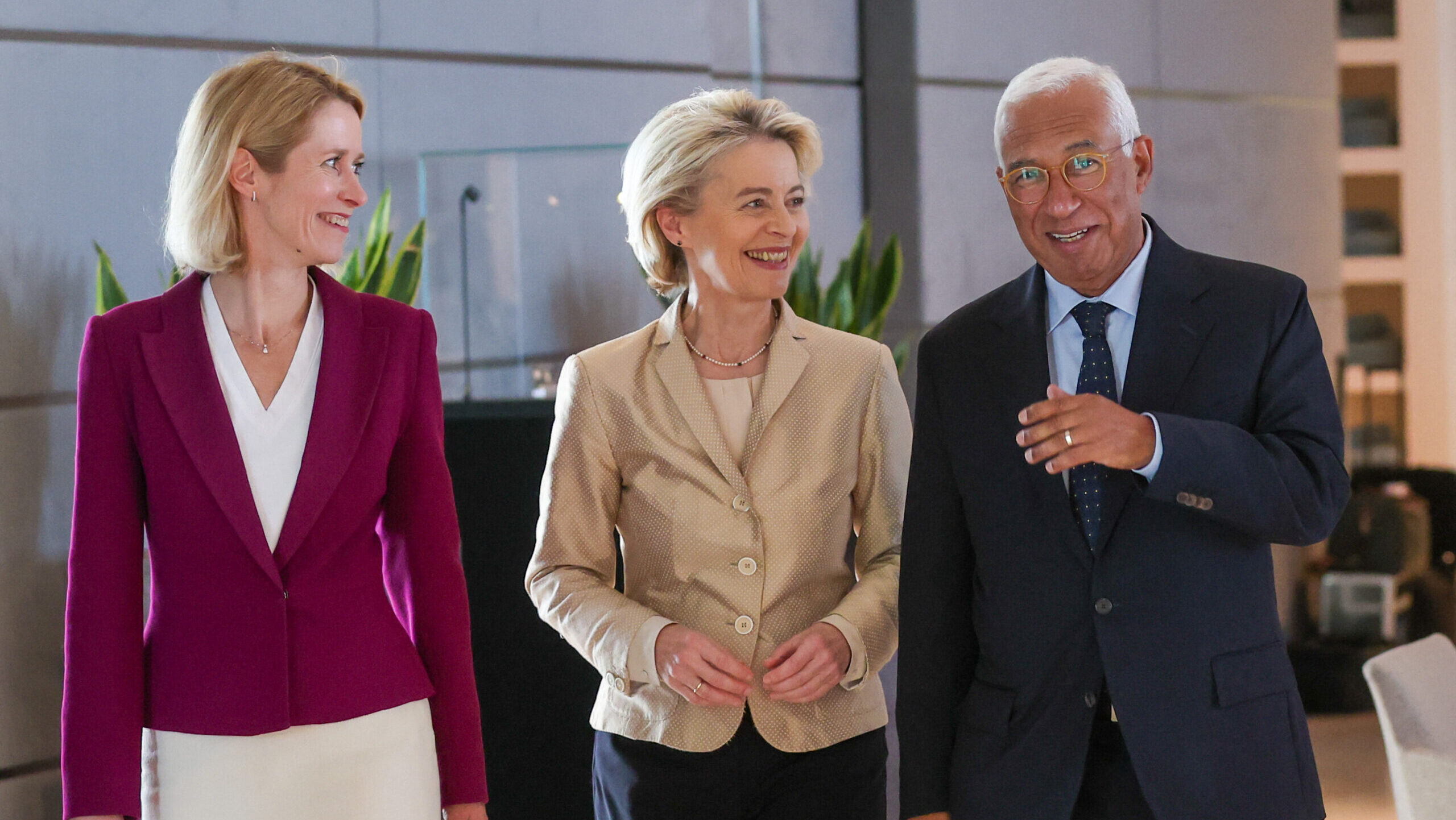
European headlines are increasingly dominated by reports about the future of EU foreign policy chief Kaja Kallas and the bloc’s diplomatic service, the European External Action Service (EEAS), after media reports indicated that France and Germany are both pushing for a major overhaul of the European Union’s foreign policy architecture.
The debate was triggered by an internal French paper, published on Thursday, 11 June, by Reuters and the Financial Times, which outlined three possible futures for the EEAS amid growing concerns in several EU capitals that the bloc remains too slow, fragmented, and ineffective in responding to geopolitical crises. Those concerns were first highlighted by the war in Ukraine and have more recently been reinforced by the war involving Iran and the crisis in the Strait of Hormuz. Many critics argue that these shortcomings stem, at least in part, from structural weaknesses within the EEAS itself.
The French Three-Way
The French paper presents three reform options.
The first would bring EU foreign policy almost entirely under the authority of the European Commission. Under this model, much of the EEAS’s work would be absorbed into the Commission, integrating diplomacy more closely with trade, development aid, enlargement policy, and economic security initiatives.
Supporters argue that modern geopolitical competition increasingly blurs the distinction between diplomacy and economic policy, making the current division of competences inefficient. Critics, however, are likely to view such a move as another transfer of power to Brussels, similar to developments witnessed during major crises such as the Covid-19 pandemic. Eurosceptics have long argued that the Commission uses international crises to expand its powers at the expense of member-state sovereignty.
The second option would move in the opposite direction. It would transfer many of the EEAS’s key functions back to the Council of the European Union and, by extension, to the member states themselves. Such a reform would significantly reduce the role of Brussels-led diplomatic initiatives and strengthen national governments’ control over foreign policy decisions.
‘It would transfer many of the EEAS’s key functions back to the Council of the European Union and, by extension, to the member states’
That option is likely to attract the greatest support from Europe’s sovereigntist and conservative forces. Former Hungarian prime minister Viktor Orbán and the Patriots for Europe (PfE) group have consistently argued that foreign policy should remain primarily in the hands of national governments rather than EU institutions. Similar positions have been championed by the hard-right Europe of Sovereign Nations (ESN), which also opposes further centralization of EU competences.
The third, and reportedly most preferred by Paris, option would strengthen the position of the High Representative itself. Under this proposal, Kallas would receive broader powers within the Commission and greater authority over the EU’s external relations portfolio, while the EEAS would be reorganized to function more effectively. Reuters reported that the proposal would effectively elevate Kallas to a position comparable to that of a First Executive Vice-President responsible for coordinating foreign policy, trade, and development issues.
Kallas’s Leadership Under Growing Scrutiny
While this scenario would strengthen Kallas’s formal position, scrutiny of the former Estonian prime minister’s handling of EU foreign policy has grown considerably during her first eighteen months in office.
Diplomats quoted by several European media outlets have argued that Kallas has at times approached the role more as a national political leader than as a consensus-building diplomat. Critics contend that she has focused excessively on Russia and Ukraine at the expense of other strategic priorities, including the Middle East, Africa, and the EU’s southern neighbourhood.
Another frequently cited criticism concerns Kallas’s strongly hawkish stance towards Russia, particularly as the EU seeks to play a more direct role in efforts to end the war in Ukraine.
As the administration of US President Donald Trump pursued negotiations with Moscow, European leaders repeatedly insisted that Europe must have a seat at the table in any future peace settlement. Yet Kallas has remained one of the bloc’s most outspoken critics of Russia, repeatedly emphasizing pressure, sanctions, and military support rather than diplomatic engagement. Earlier this year, she proposed a list of concessions that Europe should demand from Russia as part of any peace agreement and has consistently expressed scepticism regarding negotiations with Moscow.
‘Diplomats quoted by Le Monde likewise described growing frustration with Kallas’s management style’
Following Washington’s decision to scale back its mediation efforts amid the conflict with Iran, some European leaders have argued that the EU should step in to fill the vacuum. Critics contend, however, that with Kallas at the helm, such an effort is effectively stillborn given her consistently hawkish stance towards Moscow and scepticism regarding negotiations with Russia.
According to earlier media reports, Kallas also has a strained working relationship with European Commission President Ursula von der Leyen, partly because the foreign policy chief has been overshadowed by the Commission president in several major international dossiers. Diplomats quoted by Le Monde likewise described growing frustration with Kallas’s management style and her difficulty in building broad support across the EU’s politically diverse membership.
A Cautious Welcome
Responding to the latest reform proposals, Kallas defended the EEAS in an internal email to staff obtained by POLITICO Brussels. She argued that the service had demonstrated its value, particularly during a period ‘marked by war in Europe and mounting international instability’. While welcoming discussion of reforms, she stressed that the division of responsibilities between EU institutions remains defined by the treaties.
‘Given the unprecedented geopolitical challenges we face, it is only natural that these discussions attract renewed attention and take on greater intensity,’ she wrote, adding that she welcomed the debate because it reflected a shared desire to make European foreign policy more effective.
At the same time, Kallas emphasized that the legal framework governing the EEAS ‘remains unchanged’ and indicated that the reform proposals would be discussed further by EU foreign ministers after the summer.
Related articles:
At a time when public debate is increasingly polarized and superficial, Hungarian Conservative remains committed to depth, intellectual honesty, and independent conservative thought.
Producing high-quality journalism requires resources. Your contribution helps us expand our coverage, reach new audiences, and keep our content accessible.

Please consider supporting our mission.