Researchers at the HUN-REN Wigner Research Centre for Physics are participating in an international research collaboration focused on the development of compact and portable quantum processors that could function even at room temperature, the HUN-REN Hungarian Research Network announced on Monday.
According to the statement, conventional quantum computers require vast, complex and extremely costly infrastructure, as well as ultra-high vacuum conditions or temperatures close to absolute zero. The new approach, however, could allow future quantum processors to move beyond purely laboratory experiments and become practical technologies with broader real-world applications.
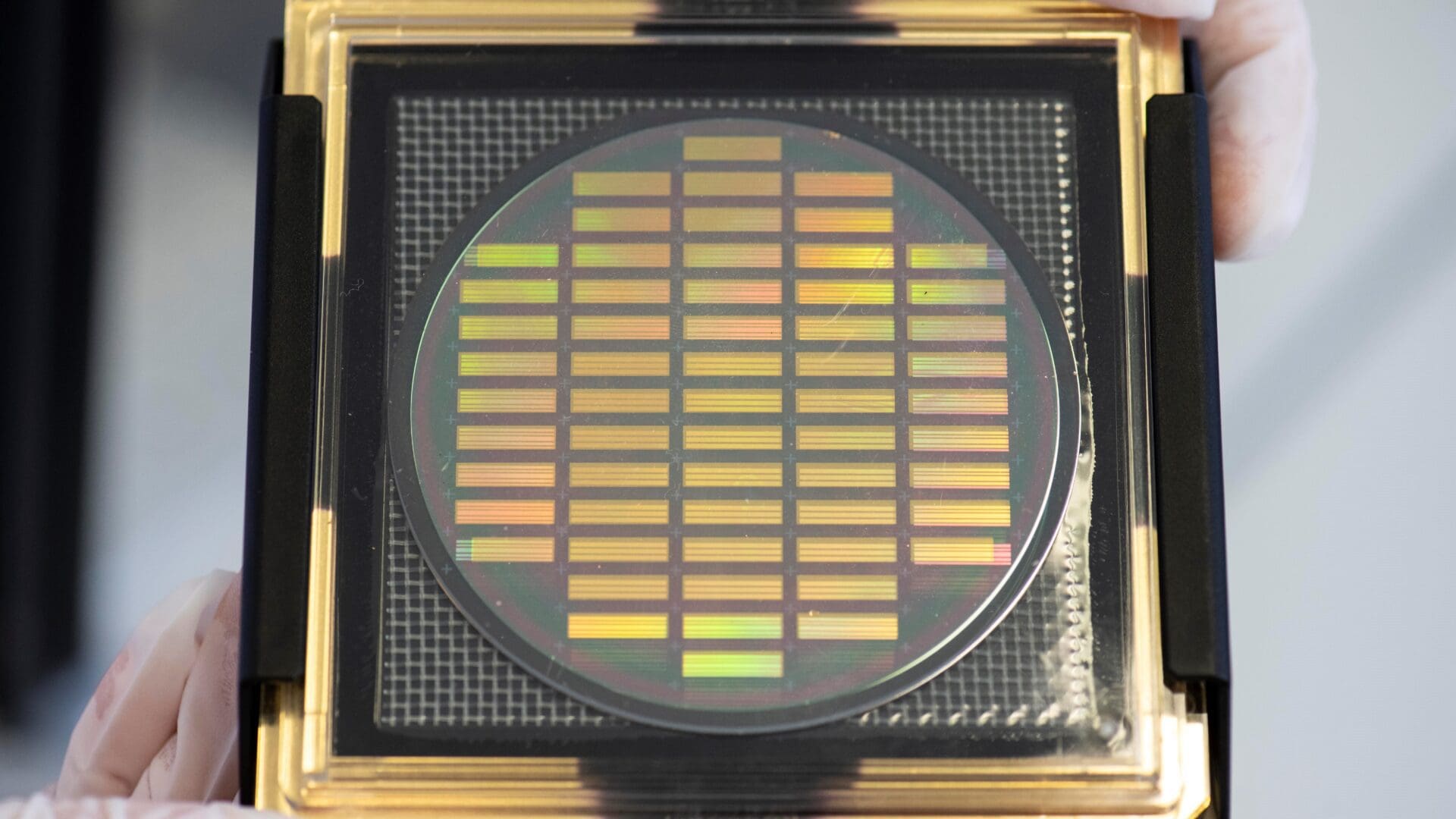
The research is being carried out within the EU-funded MAESTRO project, which aims to develop solid-state quantum processors based on qubits formed by so-called nitrogen-vacancy centres embedded in diamond. These atomic-scale quantum systems are known for their exceptional stability and their ability to preserve quantum states for long periods even in relatively warm, potentially room-temperature environments.
One of the project’s key innovations is the electrical rather than optical readout of qubit states. This method could significantly reduce the size and complexity of quantum processors, while also paving the way for scalable, industrially integrable quantum devices.
Researchers at the HUN-REN Wigner Research Centre primarily contributed through theoretical work and computer modelling. The Hungarian team focused on understanding how quantum defects in diamond, including nitrogen-vacancy centres, behave under different material and environmental conditions, and how manufacturing processes can be optimized to ensure reliable and high-yield quantum devices.
In the longer term, the results of the MAESTRO project could support not only advances in quantum computing but also open up new applications in data security, sensing technologies, artificial intelligence and industrial optimization, the research centre said.
Related articles:
At a time when public debate is increasingly polarized and superficial, Hungarian Conservative remains committed to depth, intellectual honesty, and independent conservative thought.
Producing high-quality journalism requires resources. Your contribution helps us expand our coverage, reach new audiences, and keep our content accessible.

Please consider supporting our mission.