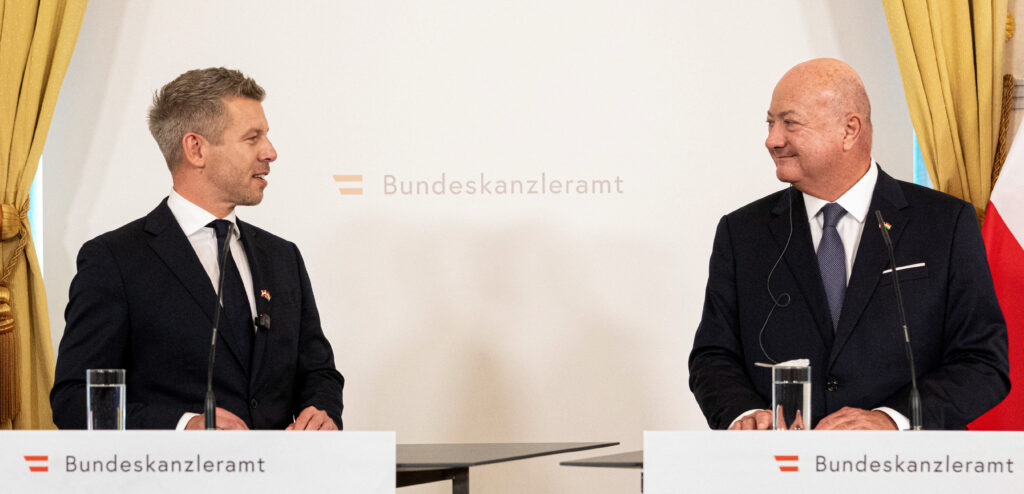
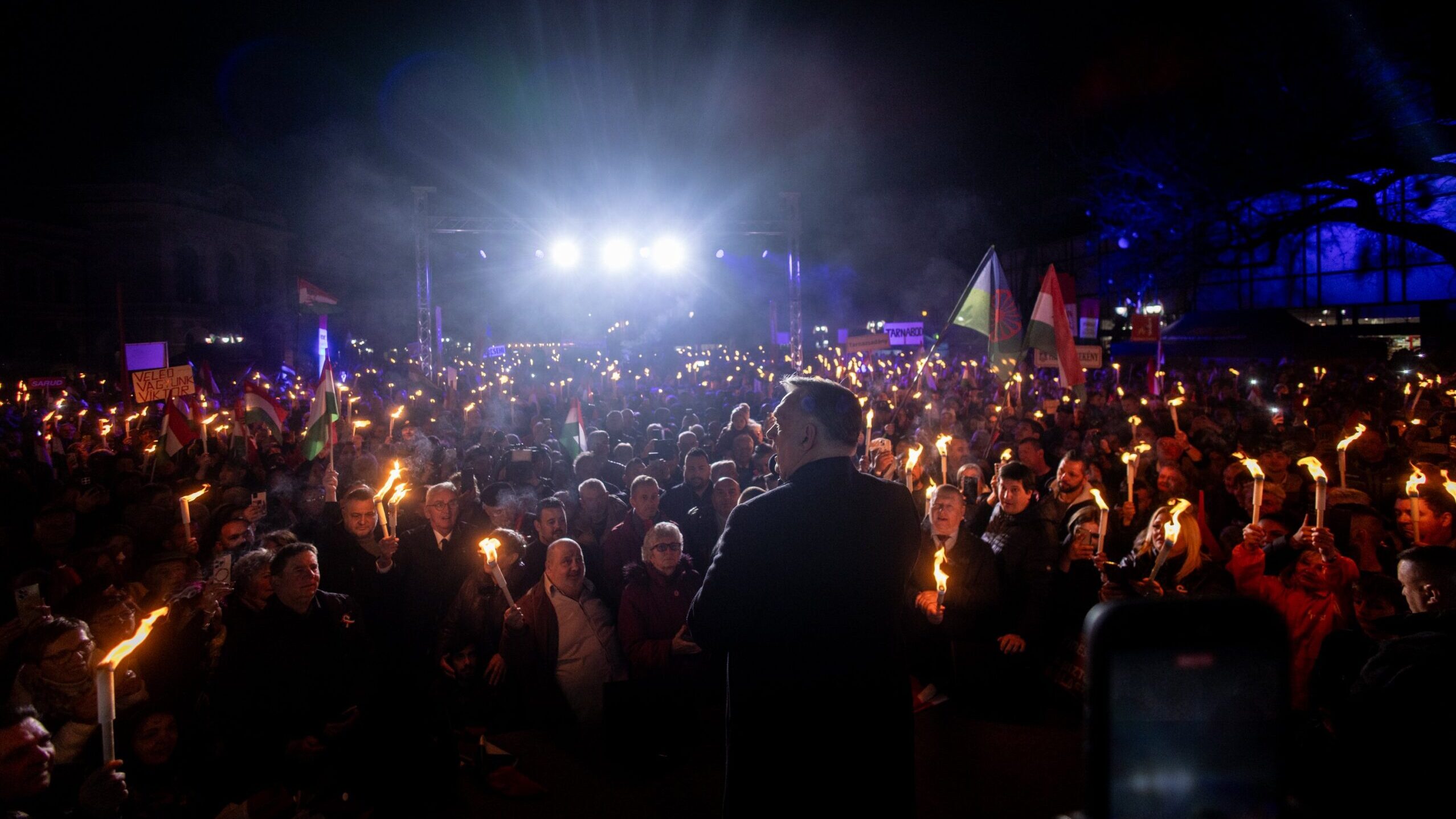
Hungarian Minister of EU Affairs János Bóka pushed back against a narrative promoted by Western media and the Hungarian opposition that, in the event of an electoral defeat in April, Prime Minister Viktor Orbán would refuse to relinquish power and claim the election was rigged.
Speaking to POLITICO Brussels, Bóka pointed out that the governing party Fidesz has been active in politics since 1988, winning and losing elections both in government and in opposition, yet has never questioned the outcome of an election.
Bóka instead argued that the opposition Tisza Party and its leader, Fidesz defector Péter Magyar, are building a narrative that ‘if they lose the election, then this is an illegitimate result’. ‘Would Péter Magyar come out to a camera and say, “Okay, I’ve heard the voice of the Hungarian people, they want this government to stay in power”?’ the minister asked, adding that this is not a realistic scenario given the ‘political hysteria’ the opposition has already created around the legitimacy of the vote.
Hungarians head to the polls on 12 April in what is likely to be the closest election in the country’s recent history. Over the past 15 years, Viktor Orbán and his Fidesz–KDNP governing alliance have won four consecutive elections with a supermajority, but the outcome is expected to be significantly closer this time.
The opposition Tisza Party has absorbed much of the original progressive-left opposition since its emergence in 2024. Pollsters aligned with the party consistently measure its support ahead of Fidesz, with some surveys placing Péter Magyar 20 percentage points ahead of Viktor Orbán. These polls are considered by many analysts to be manipulated and form an important part of the opposition’s ‘stolen election’ narrative, as previously reported by Hungarian Conservative. POLITICO Brussels is also significantly contributing to this by cherry-picking opposition-aligned pollsters in its polling aggregation, ‘Poll of Polls’, while excluding surveys showing Orbán ahead, despite the former’s historical inaccuracy in recent elections.
Another key element of the ‘stolen election’ narrative is the claim of Russian interference, based on a report by Hungarian outlet Direkt36, a frequent recipient of EU and Western European funding. The report alleges that Russian military intelligence officers were deployed in Hungary to support Orbán’s campaign. However, it provides no tangible evidence to substantiate these claims.
These narratives are frequently picked up and disseminated by a number of Western outlets, including POLITICO Brussels, Financial Times, Bloomberg, The Telegraph, and others, as well as by EU politicians opposed to Orbán.
In the aforementioned article, POLITICO Brussels also quotes Gábor Tóka, a political scientist at Central European University (CEU)—founded by George Soros—who said that ‘Orbán can be expected to contest an unfavourable result’. ‘I think he will challenge the vote in the districts and may encourage street protests to frame the result as illegitimate,’ he added. However, Tóka also acknowledged that the prospect of unrest is not limited to a scenario in which Orbán is defeated. Given the expectations driven by Tisza-aligned polls, he continued: ‘there will be enormous tension in the weeks after the election if the opposition loses.’
Related articles:
At a time when public debate is increasingly polarized and superficial, Hungarian Conservative remains committed to depth, intellectual honesty, and independent conservative thought.
Producing high-quality journalism requires resources. Your contribution helps us expand our coverage, reach new audiences, and keep our content accessible.

Please consider supporting our mission.