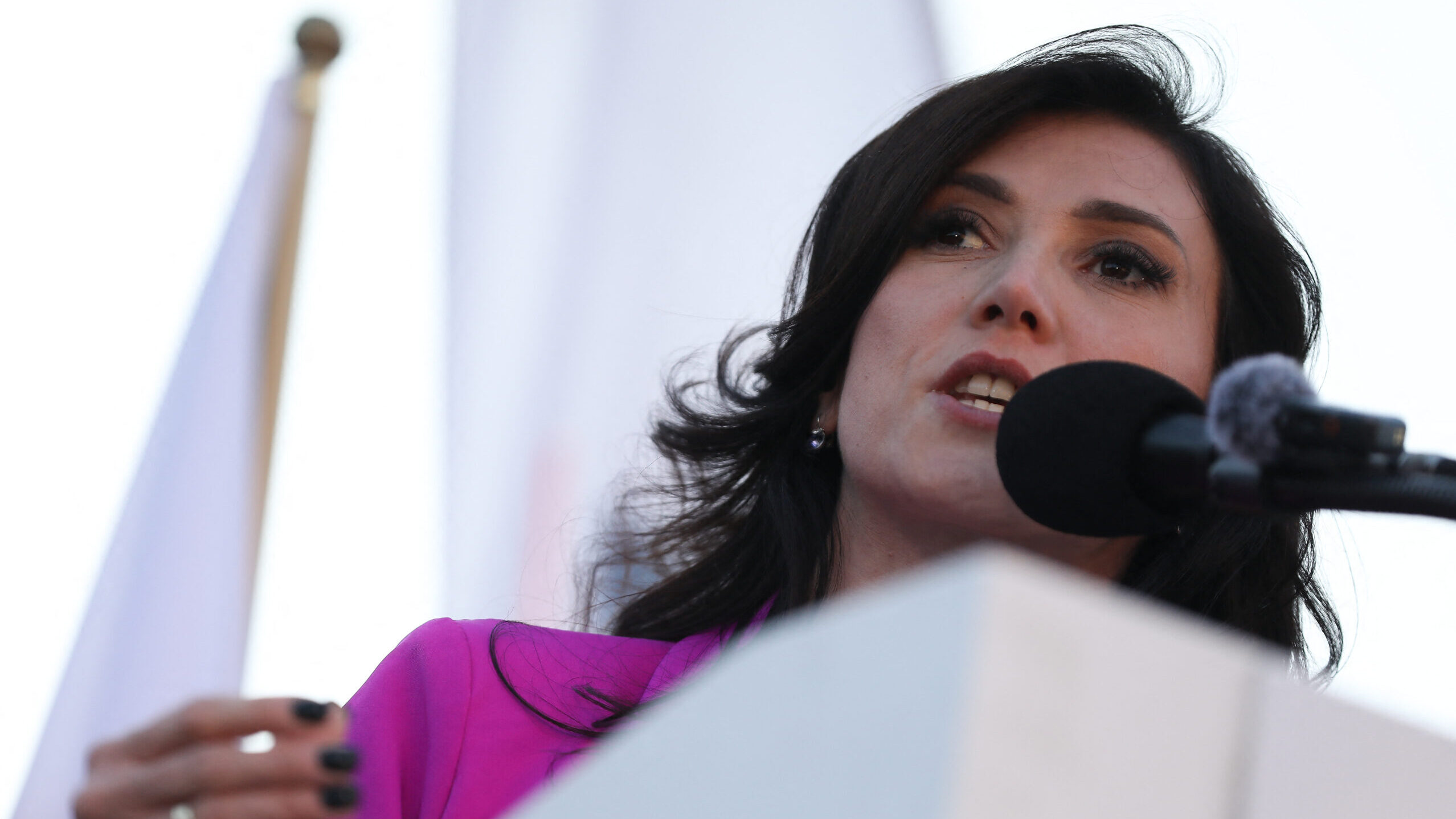
Polish MEP Ewa Zajączkowska-Hernik condemned the European Commission’s interference in the Hungarian elections through the activation of the rapid response system under the Digital Services Act (DSA), widely seen as one of Brussels’ most effective tools for influencing outcomes in member states.
‘The European Commission of von der Leyen is directly interfering in the elections in Hungary and has activated a tool for censoring social media,’ said Zajączkowska-Hernik, an MEP of the Polish right-wing Konfederacja’s New Hope faction in the European Parliament, which sits in the Europe of Sovereign Nations group alongside Germany’s AfD. She accused European Commission President Ursula von der Leyen of attempting to ‘rig the elections’ in Hungary by using institutional tools to censor Orbán and his Fidesz party while supporting the opposition.
‘I hope Hungarians will not succumb to these influences!’ Zajączkowska-Hernik stressed, calling on the European Commission ‘to hands off free citizens and their states!’
The Polish MEP was reacting to recent developments surrounding Hungary’s upcoming high-stakes parliamentary elections, most notably the restrictions imposed by Meta on Prime Minister Viktor Orbán’s content on Facebook. As Hungarian Conservative reported, right-wing commentator Mario Nawfal broke the news, stating that the move followed a call by a member of the opposition Tisza party and former Meta employee, Dóra Dávid, who urged supporters to mass-report Orbán’s posts.
Nawfal also raised questions about the online performance of Tisza leader Péter Magyar, whose engagement figures are described as disproportionately high compared to those of global political figures, despite Hungary’s relatively small and linguistically limited user base. It is further alleged that Magyar has used a personal ‘professional mode’ profile rather than an official political page, potentially circumventing Meta’s established rules governing political content.
Just days before the restrictions on Orbán’s content, the European Commission announced the activation of the rapid response system under the DSA—citing alleged Russian interference—which coordinates social media platforms such as Facebook and TikTok with NGOs and ‘fact-checkers’ to determine which content may remain online and which should be removed. The system will remain active until one week after the 12 April election.
‘Von der Leyen and her entourage are once again using their instruments of influence to interfere in the democratic elections of a sovereign state and influence the outcome!’ Zajączkowska-Hernik added.
Hungary’s election has already been marked by an unprecedented level of information warfare. Claims of Russian interference have become central to the narrative of Orbán’s opposition, both domestically and at the European level. After a report by Hungarian outlet Direkt36 alleged that Russian military intelligence officers had been deployed to Hungary to support Viktor Orbán’s campaign, Western mainstream media quickly picked up and amplified the story, despite there being no tangible evidence to substantiate the claims beyond anonymous sources cited in the article.
Moreover, on 18 March, Ukraine accused Hungary of assisting a Russian disinformation operation targeting the Transcarpathian Hungarian community in an effort to influence the election.
Rejecting these accusations, Orbán pointed to similar interference by the European Commission and Ukraine, alleging that they support Magyar and the Tisza party in order to oust his government. According to the Hungarian prime minister, intelligence reports indicate that the Tisza party receives funding from Kyiv, as Ukraine seeks to undermine the Hungarian administration due to its firm stance against the country’s EU membership, further EU financial and military support to Kyiv, and sanctions on Russian energy.
Related articles:
At a time when public debate is increasingly polarized and superficial, Hungarian Conservative remains committed to depth, intellectual honesty, and independent conservative thought.
Producing high-quality journalism requires resources. Your contribution helps us expand our coverage, reach new audiences, and keep our content accessible.

Please consider supporting our mission.