In a now famous line from his essay on the 1851 coup in Paris, Marx wrote: ‘Hegel remarks somewhere that all great world-historic facts and personages appear, so to speak, twice. He forgot to add: the first time as tragedy, the second time as farce.’ The European liberals, unable to come up with an original political ploy to try to oust the Orbán government in the upcoming April elections have reverted to an 1851-style comedy coup of their own: ‘Russiagate – European Edition’.
Russiagate itself, which alleged that the Kremlin were responsible for the election of Donald Trump as President in 2016, was a wholly dishonest affair. Today it is widely acknowledged that it was invented from whole cloth—the deep origins being the now infamous ‘dodgy’ Steele dossier, a piece of opposition research masking as an independent intelligence assessment that was amplified by the later Crossfire Hurricane investigation carried out by the FBI under James Comey. Future historians will no doubt read Russiagate as sowing the initial seeds of distrust in American democracy as the country entered an unprecedented phase of political instability.
One would think that self-styled defenders of ‘liberal democracy’ would take a lesson from the original Russigate: by injecting paranoia and distrust into a political system—especially paranoia inspired by imaged plots of foreign interference—the people who claim to be the defenders of that system may set in motion its ultimate destruction. Or, to put the same thought in more pithy terms: who needs the Kremlin to destroy confidence in American democracy when you have the Democrats and their dirty tricks? That is the lesson a rational and self-reflective person would draw from the original Russiagate. Sadly, the adjectives ‘rational’ and ‘self-reflective’ are not terms anyone would apply the out-of-touch and increasingly unhinged liberal class in Europe.
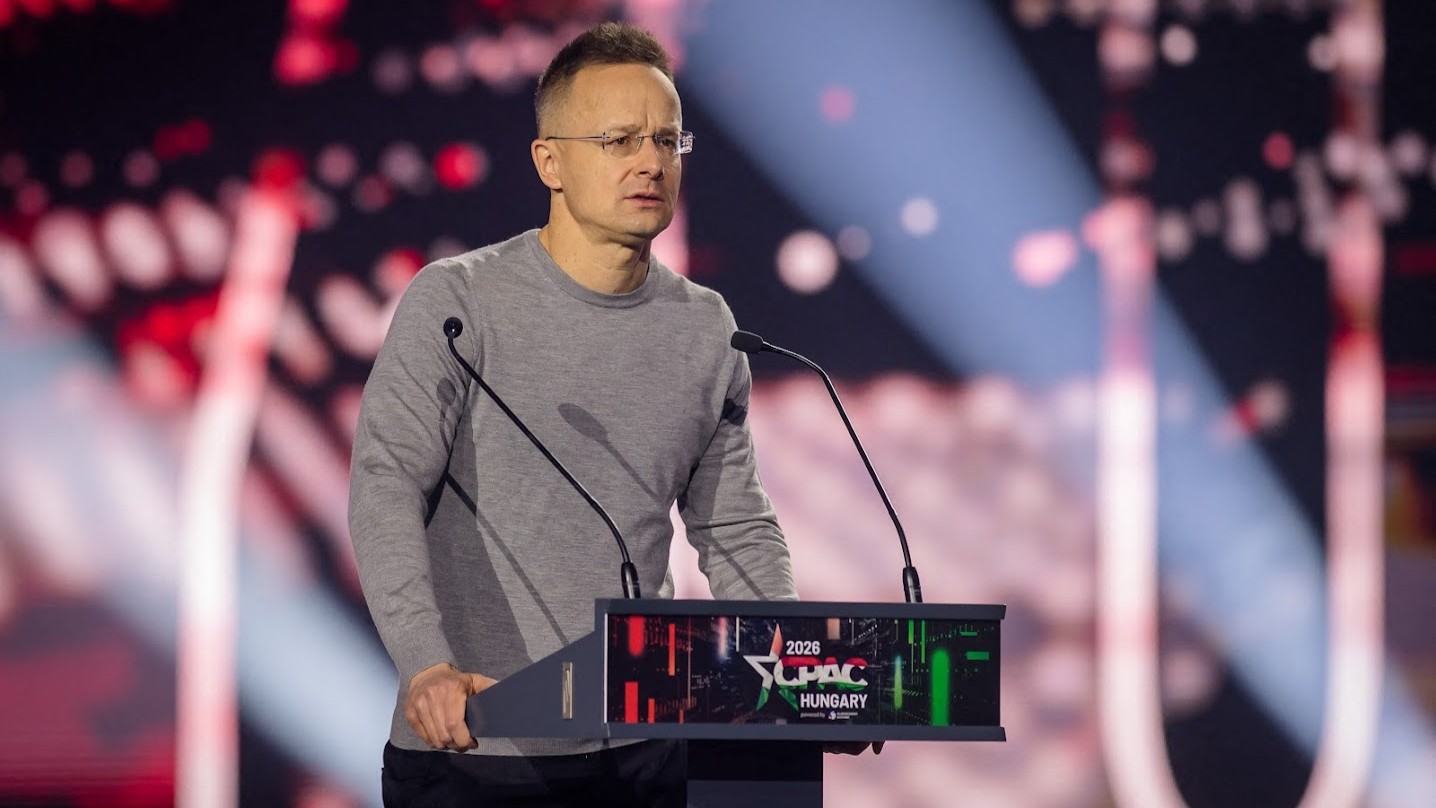
The claims of a European Russiagate surfaced in an article published in The Washington Post on 21 March 2026 just a few weeks before the Hungarian election. The article—which seems to routinely misspell Orbán’s name—led with the idea that the Russian foreign intelligence service, the SVR, would stage an assassination attempt on Viktor Orbán to bolster domestic support for his government. The problem with this claim is that we are now days away from the Hungarian election and no such attempts on Orbán’s life, staged or otherwise, have emerged. Read properly, however, this sensationalist claim is just a lead in for accusations later in the article that the Hungarian Foreign Minister Péter Szijjártó—whose name is also misspelled in the article—was making ‘live reports on what’s been discussed’ to Russian Foreign Minister Sergey Lavrov during breaks from European meetings.
‘The problem with this claim is that we are now days away from the Hungarian election and no such attempts on Orbán’s life, staged or otherwise, have emerged’
Obviously, these accusations are, looked at objectively, thin gruel. The Hungarian government makes no secret that it has maintained diplomatic relations with Moscow, especially surrounding energy security and discussing what is taking place in European politics is part of the normal diplomatic process. To amplify these claims and make them seem substantial the old trick is to create a ‘wall of noise’—a series of disparate stories and claims that are not clearly linked to one another, yet which nevertheless gradually give the appearance of building up a narrative about Kremlin interference. The bet here is that many people do not carefully parse political reporting and instead form their opinions of what is going on by getting a vague impression from the mosaic of reporting around an issue.
At the beginning of March, a local opposition outlet called VSquare that received initial funding from the National Endowment for Democracy and is now financed by the Warsaw-based Fundacja Reporterów (Reporters Foundation) started to spread rumours. VSquare journalist Szabolcs Panyi claimed that the Kremlin had dispatched a specialist team from the military intelligence unit, the GRU, to help the Orbán campaign win the election. It is not clear what exactly this mysterious team was tasked with doing, nor was any evidence of the existence of this team, but it was an easy hook to catch a gullible journalist at a mainstream publication.
The Financial Times soon took the bait. In an article published in the second week of March written by Russian correspondent Max Seddon and South-East Europe correspondent Marton Dunai, the newspaper alleged that the Hungarian government was colluding with a Russian social media company to create a ‘disinformation campaign’. The article provided no proof beyond citing ‘people familiar with the matter’—a purposely vague designation to disguise the fact that the entire article is unsourced. Dunai himself has a track record of dubious reporting on Hungary using unnamed sources. For example, Dunai’s name is attached to an article published in January 2024 stating that Brussels would ‘sabotage’ the Hungarian economy if the Orbán government vetoed aid to Ukraine. The Hungarian government did, in fact, veto the aid and no such ‘sabotage’ ever emerged—not least because the European Commission does not have the tools available to undertake economic warfare on member states.
‘The article provided no proof beyond citing “people familiar with the matter”’
While the specific characters are different, the plot of the play remains the same. ‘Russiagate — Europe Edition’ is a sort of pale shadow of the original Russiagate. It plays on unsourced rumours, anonymous allegations and the utilization of a ‘wall of noise’ media strategy to try to seed a general notion that the Russians are ‘up to something’.
But the entire strategy has lost its freshness. The original Russiagate is now a decade old. Most serious people are well-aware that the allegations went nowhere. Many people who bought into the original Russiagate narrative are now vaguely embarrassed by it. Trying to breathe life into the old corpse is unlikely to fool anyone but the most gullible person. And the mere fact that the globalist liberals behind this scam could not come up with a fresh angle speaks to the tiredness of the globalist liberal class themselves. Not to put too fine a point on it, but these people are getting old and the younger people who have latched onto them quite obviously lack dynamism.
The direction that the ‘Russiagate — European Edition’ fiasco is taking says it all. This week Hungarian government officials leaked a tape of Szabolcs Panyi, the opposition journalist who first seeded the rumours of GRU activity, in which he appears to admit that he gave the phone number of Foreign Minister Szijjártó to a security service of a foreign state so that the foreign state could spy on the minister. Panyi has direct links to the Tisza politician Anita Orbán, who is tipped to be given the role of Foreign Minister if Tisza win the election. Obviously, if these allegations are true, they amount to a serious act of espionage against the Hungarian state.
‘If these allegations are true, they amount to a serious act of espionage against the Hungarian state’
Let us not be naïve. Dirty tricks are the norm, not the exception in politics—and European politics is no exception. But there are limits to what is acceptable. It is widely suspected that the Hungarian opposition are having their social media artificially boosted, for example, and while supporters of Fidesz will complain about this, ultimately everyone understands that it is just the dirty underbelly of the political process. It is all part of the game, and the goal is to play the game better than the other guy. But there are limits—and ‘Russiagate — Europe Edition’ obviously crosses those limits. Do we really want to turn European politics into a game where the intelligence services of member states spy on the politicians of other member states and leak these conversations to the press? This type of politics would obviously destroy the European project itself—and it would do so quickly.
‘Russiagate — Europe Edition’ is a farce, there is little doubt about that. But it is a dangerous farce. The globalist liberals are getting old and tired. Their project looks increasingly less convincing by the day. They are desperate. And in an act of desperation, they have begun to violate certain norms in European politics that could, if left unchecked, destroy the entire European project by turning it into a ‘surveillance arms race’.
What is saddest of all is that ‘Russiagate — Europe Edition’ will likely have almost no impact on the Hungarian election whatsoever. Most people on the ground are concerned with the conflict in Ukraine and energy security—a serious issue that becomes more serious every day. These people do not have time to follow the intricacies of a poorly written James Bond novel. Let the Hungarians vote for their preferred candidate. Leave the ageing liberals to their paranoid spy games. In 2026 there are major challenges facing Europe that need to be solved.
Related articles:
At a time when public debate is increasingly polarized and superficial, Hungarian Conservative remains committed to depth, intellectual honesty, and independent conservative thought.
Producing high-quality journalism requires resources. Your contribution helps us expand our coverage, reach new audiences, and keep our content accessible.

Please consider supporting our mission.