The following is an adapted version of an article written by Laura Nyilas, a research fellow at the Europe Strategy Institute of the University of Public Service, originally published in Hungarian on the Five Minutes Europe blog of Ludovika.hu.
The lessons learned from the first year of the second Trump administration have clearly been incorporated into European strategic thinking and are undeniably reflected in the realities of governance. While the first Trump administration may not have made it entirely clear, the second has made it abundantly obvious why Donald Trump is so important to Europe. We must not forget that Trump came to the world of politics from the business world, so it is not surprising that he acts according to different strategies, which are sometimes somewhat unpredictable. However, it is precisely these factors that make Trump important to Europe, because they reveal everything that the European security system has concealed until now.
A recurring question and topic of debate in the EU is the creation of an independent European army and security and defence system, as NATO remains a key alliance. Previously, we might have wondered what America wanted from Europe, but with Donald Trump’s presidency, a sense of unease has intensified in Europe, as the real question has become: what can Europe do if America no longer wants the same things as before?
With the US taking an increasingly tough stance within NATO, European illusions seem to be fading away. The mindset that ‘the US will take care of it anyway’ and ‘NATO runs itself’ is no longer necessarily present. The old order is clearly being replaced by a new one, which demands new strategies from European leaders as well.
‘The second [Trump administration] has made it abundantly obvious why Donald Trump is so important to Europe’
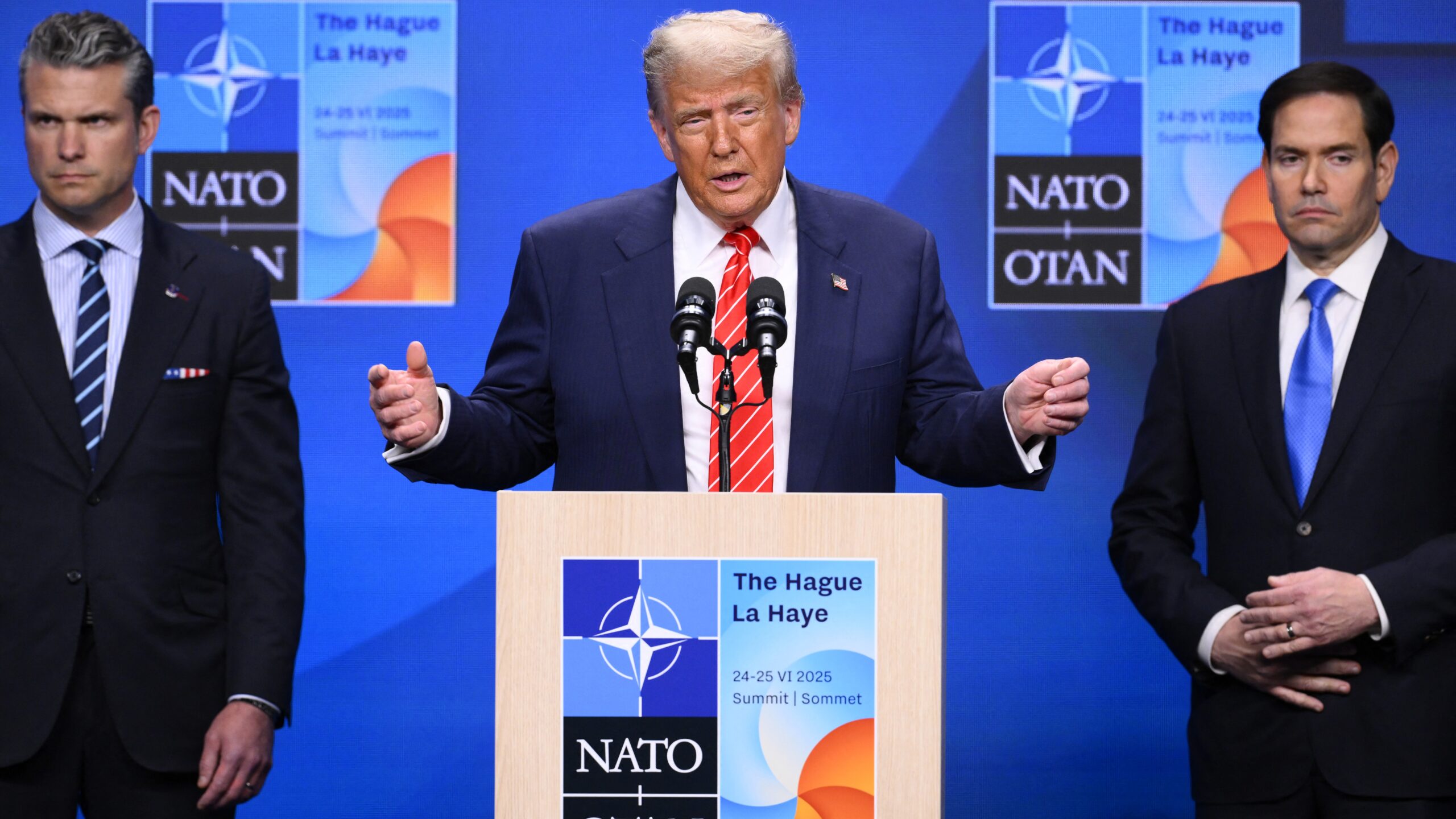
Although NATO remains one of the most effective and important alliances in modern history, transatlantic relations periodically reignite the sometimes emotionally charged debate over burden-sharing, namely, the question of the extent to which allies contribute to Europe’s defence and whether these contributions are sufficient. Over the past decade, in almost every NATO-related discussion or meeting attended by US leaders and their NATO allies, the question has arisen as to whether the allies are spending enough on their defence capabilities, and the questions raised have not been followed by satisfactory solutions, leading Donald Trump to promise increasingly tough measures.
Today, the NATO alliance must collectively face a wide range of security risks. It is important to emphasize that, despite all political disputes, NATO is too important to allies on both sides of the Atlantic to allow political disagreements and tensions to arise over the sharing of defence costs.
Although there is much talk about how Trump and the measures he has taken or intends to take during his presidency pose a security challenge to Europe, in reality, the Trump administration does not, in itself, constitute a security challenge but rather a source of stress in Europe. In security and defence policy, the speed of decision-making has changed, and strategic directions and political cohesion have been reassessed. Although NATO is formally strong, it is politically quite vulnerable. During Donald Trump’s second presidency, NATO faces its greatest challenge since its founding in 1949. Due to Washington’s strategic realignment, Europe must preserve the United States’ commitment while assuming greater responsibility for its own defence. To this end, the allies must advance the concept of a stronger European pillar of NATO. This means defining its strategic, economic, and military dimensions to reshape transatlantic relations, preserve NATO’s credibility, and strengthen European security.
‘Although NATO is formally strong, it is politically quite vulnerable’
However, a ‘more European’ NATO requires fundamental strategic changes. As the United States increasingly views the Indian and Pacific Oceans as its strategic priority, this places pressure on Europeans to shoulder a greater burden in their own defence, as stated in the 2025 US National Security Strategy.
European allies, therefore, need a common strategic approach toward the United States more than ever before. This must be based on the lessons of the first Trump administration and the recognition that Russia poses a long-term threat to European security, while the US’s contribution to European defence will undoubtedly decline. Consequently, Europeans must engage in substantive dialogue with the United States regarding shifts in the American position on Europe and the strengthening of NATO’s European pillar.
In the long term, the EU must recognize that there has been a shift in American foreign policy thinking. In its cooperation with the Trump administration, it must be aware that decisions are made strictly on the basis of US national interests and domestic political calculations. The EU can therefore likely no longer count on a values-based approach. This essentially results in a new order in Europe, which will have far-reaching consequences for Europe’s own strategic position.
Related articles:
Click here to read the original article.
At a time when public debate is increasingly polarized and superficial, Hungarian Conservative remains committed to depth, intellectual honesty, and independent conservative thought.
Producing high-quality journalism requires resources. Your contribution helps us expand our coverage, reach new audiences, and keep our content accessible.

Please consider supporting our mission.