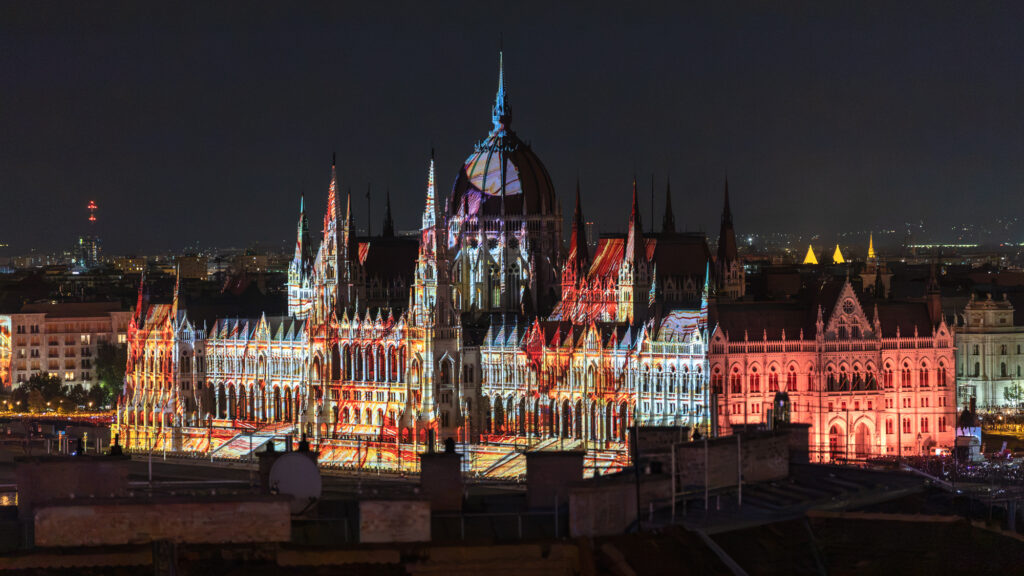
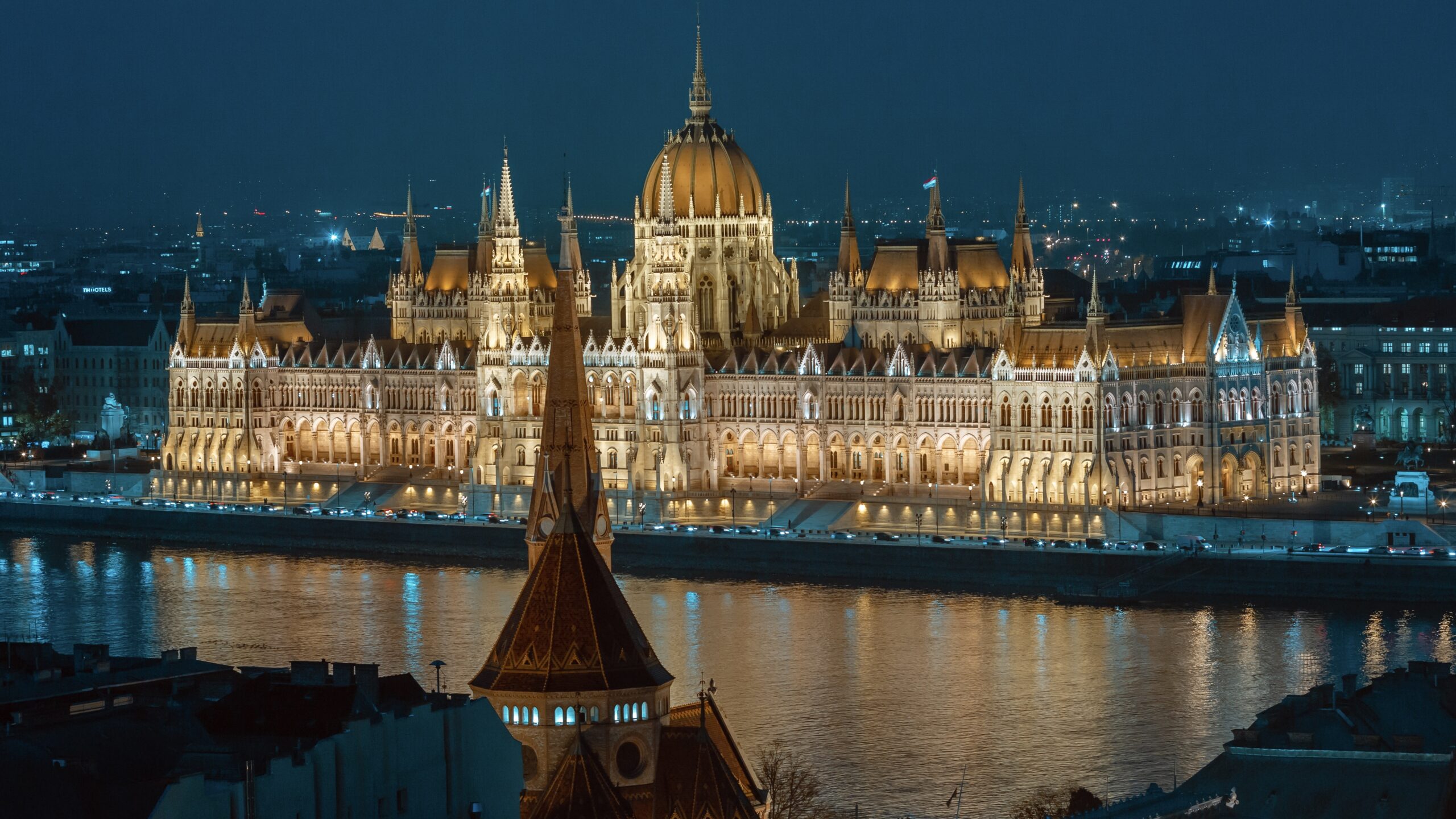
On 9 May 2026, the inaugural session of Hungary’s new parliament will be held, where members of the National Assembly will, for the first time in the country’s post-communist history, take their oath before the Holy Crown. This has been made possible by a decision reached through political consensus among the three parliamentary parties—the Tisza Party, Fidesz–KDNP, and Our Homeland (Mi Hazánk)—all of which are positioned on the right side of the political spectrum.
After the 12 April election, which ended the 16-year rule of Viktor Orbán and Fidesz–KDNP, Hungary has become the first country in the European Union where no leftist, liberal, or progressive parties are represented in parliament. This, of course, does not mean that there are no voters holding such worldviews in Hungary: most of them were absorbed by Tisza, which is, at its core, a centre-right party, but functioned as an umbrella movement for a broader anti-Orbán coalition.
The emergence of Péter Magyar and the Tisza Party roughly two years ago rendered the traditional left-wing opposition parties largely irrelevant. During the European Parliament elections in June 2024, the coalition of leftist, socialist, and progressive parties—including the Democratic Coalition (DK), the Hungarian Socialist Party (MSZP), and Dialogue—secured only 8 per cent of the vote; and that was only the beginning of their decline.
Those who decided not to withdraw were punished by voters on 12 April: the Democratic Coalition recorded its worst-ever result, securing just over 1 per cent, or 70,298 votes. The only other party that could be considered left-wing and ran in the election was the satirical, progressive Hungarian Two-Tailed Dog Party (MKKP), which also failed to pass the 1 per cent threshold.
The question, then, is clear: what lies ahead for the Left after the election?
From Opposition Leader to 1 Per Cent — Democratic Coalition
Let us begin with one of the biggest losers of the election, the Democratic Coalition (DK), founded in 2011 by former Socialist prime minister Ferenc Gyurcsány, defining itself as a Western-oriented, centre-left party. Since 2019, DK had been the main opposition party, polling well above other left-wing forces, even as late as February 2024, before the emergence of the Tisza Party. However, it has consistently carried the political burden of its leader, which made it difficult to ‘break the ceiling’ and become a genuine challenger to Viktor Orbán.
Although Gyurcsány left the party in 2025, DK—under the leadership of his ex-wife, Klára Dobrev—maintained the same unsuccessful strategy of running in the election rather than withdrawing, a move that might have helped preserve the party’s credibility.
Following the devastating election result, Dobrev immediately announced her resignation, along with that of the party’s full leadership, and stated that new leaders would be elected in June. However, this may not be enough to prevent the party’s potential collapse and decline.

Despite having one of the most stable organizational structures and nationwide networks among the opposition parties—aside from Fidesz—DK currently faces very limited prospects for political survival. Media reports already indicate a wave of planned departures within the party, particularly at the municipal level, suggesting that alongside its voter base, its institutional network could shrink significantly in the near future.
DK also has the oldest voter base among all parties, with 62 per cent of its supporters being pensioners, and it has failed to resonate with younger voters. After the election, this challenge may intensify further, as many younger voters increasingly view the party as the ‘left-wing counterpart’ to Fidesz.
So, is there a future for DK in the next election? Very unlikely. Even if it were to undergo a full renewal of its leadership, identity, and brand, it would likely remain associated with its failure to set aside perceived or actual political interests in the interest of opposition unity in 2026.
Sex, Drugs, Bankruptcy — Hungarian Two-Tailed Dog Party
Founded as a satirical party in 2006 and officially registered in 2014, MKKP has long been a splash of colour on the left, increasingly functioning as a protest party in recent years. Its voter base consists of politically engaged yet disillusioned voters, many of whom became activists—or ‘passivists’, as they call themselves—taking part in visible community activities such as renovating bus stops and public benches. At the same time, the party represents a strongly liberal-progressive worldview, with an emphasis on drug liberalization, LGBTQ rights, housing as a fundamental right, and similar issues.
Despite the possibility of cooperation with the Tisza Party, MKKP had already decided in 2025 to run independently, which ultimately proved to be its worst possible decision. The party became the target of one of the most intense smear campaigns, including from voters who otherwise share many of its ideological positions.
‘The party became the target of one of the most intense smear campaigns’
In the final stretch of the campaign, the party was further weakened by internal conflicts. A documentary released in April 2026 focused on allegations of corruption and internal purges; although the party leadership denied these claims, the controversy nevertheless damaged MKKP’s credibility. This was particularly problematic for a party that had built its identity precisely on emphasizing political integrity.
After failing to pass the 1 per cent threshold, MKKP must repay the HUF 686 million it received in state campaign funding, potentially pushing the party towards bankruptcy. Several leading figures have since resigned and acknowledged that running independently had been a strategic mistake. At present, it is not only MKKP’s political survival that is in question, but its existential survival.
Looking ahead to 2030, the outlook remains uncertain. For a party that relies heavily on young and protest voters, becoming—negatively speaking—one of the most memed parties during and after the election does not bode well. MKKP may return to its grassroots activities and local politics—if it manages to repay the state funding.

The Only Survivor? — Momentum Movement
Besides the Tisza Party, the biggest winner of the election is undoubtedly Momentum—especially considering that all it had to do to achieve this outcome was step aside in time. The liberal-progressive party, founded in 2017, rose to prominence during its campaign against the 2024 Budapest Olympics. At the time, it represented what the opposition lacked: young faces, a new identity, and fresh political momentum.
The party managed to carry this momentum into the 2019 European Parliament elections, where it secured two mandates, shaping its subsequent political identity. Katalin Cseh, its most recognizable politician, quickly became a vice president of the European Parliament, and the party played a key role in the European Commission’s decision to withhold EU funds from Hungary in December 2022—arguably its most significant political achievement, despite its highly controversial nature.
Momentum suffered a heavy loss in 2024, losing its two European Parliament mandates and most of its voter base, as urban youth were the first to rally behind Péter Magyar and the Tisza Party. Recognizing what neither DK nor MKKP did until the very end, Momentum was the first opposition party to announce that it would not run in the 2026 election and would instead throw its support behind Tisza. This may prove to be the most strategically significant decision the party’s leadership has made since its establishment.
‘It managed to preserve both its credibility and its political presence’
While officially not running, Momentum did not withdraw completely: it continued to campaign in support of Tisza, both online and locally, heavily criticizing the government and leveraging its EU networks to assist Tisza. In doing so, it managed to preserve both its credibility and its political presence; despite lacking parliamentary representation, it remains the only viable option for liberal-progressive voters.
In the four years ahead, Tisza is unlikely to maintain cohesion across its highly heterogeneous voter base—frictions have already become visible just over a week after its victory, and these are likely to intensify as the party begins to govern. Momentum could position itself to absorb a significant share of Tisza’s liberal-progressive voters and re-emerge in 2030 stronger than before. In the proposed reformed electoral system, which is expected to be more proportional than the current one, Momentum could very much become a strong mid-sized party.

Other leftist parties, such as Dialogue or the historically significant but now largely collapsed MSZP—the legal successor of the communist-era MSZMP—are no longer significant enough to warrant separate analysis, having largely survived in recent years through alliances with DK or other election coalitions.
The recent election was a historic defeat for Fidesz–KDNP, but an even more devastating collapse for the Hungarian left. In just over two weeks, the new parliament will be inaugurated, composed exclusively of right-wing parties, placing less emphasis on issues traditionally important to the left. At the same time, however, this moment may offer an opportunity for renewal—at least to some of them.
Related articles:
At a time when public debate is increasingly polarized and superficial, Hungarian Conservative remains committed to depth, intellectual honesty, and independent conservative thought.
Producing high-quality journalism requires resources. Your contribution helps us expand our coverage, reach new audiences, and keep our content accessible.

Please consider supporting our mission.