Once a symbol of Poland’s statehood, the eastern city of Lublin has increasingly become a textbook example of how the student visa system can serve as a backdoor to uncontrolled migration and the negative consequences that may accompany it.
Lublin has made headlines in recent weeks as growing numbers of African and Asian international students—including those from Zimbabwe, Nigeria, India, and Bangladesh—have become the focus of an increasingly heated public debate. Concerns about the scale and nature of this influx intensified following a series of recent incidents.
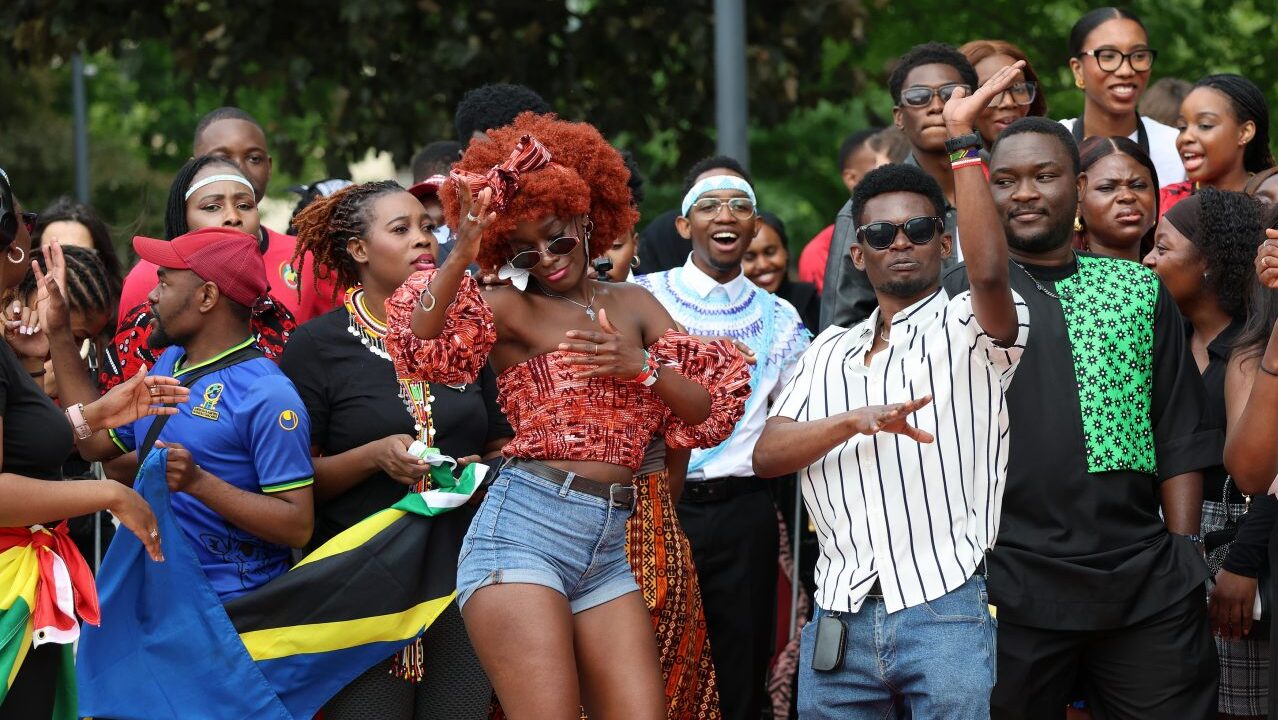
At the end of May, a 41-year-old Zimbabwean man was arrested after attacking a Polish resident outside a bar, striking him in the head with a glass mug and causing serious injuries. The violent incident occurred during Lublin’s controversial Africa Day celebrations, during which the local progressive administration led by Mayor Krzysztof Żuk, a politician from Donald Tusk’s Civic Platform party, promoted the city’s growing ties with African countries and highlighted the increasing number of students arriving from the continent.
Speaking about Lublin’s internationalization strategy, Deputy Director of Academic Affairs and Economic Promotion Wiktoria Herun noted that over the past six years Lublin had attracted large numbers of students from countries such as Zimbabwe, Nigeria, and South Africa. She also acknowledged that the profile of foreign arrivals had changed significantly, stating that students from Africa, India, and Bangladesh were increasingly arriving not alone but together with their spouses and children.
Her remarks quickly triggered a political backlash. On 23 May, Co-chair of the right-wing Konfederacja party and Deputy Speaker of the Sejm Krzysztof Bosak responded on X by accusing the city authorities of fundamentally changing the character of Lublin through migration. Addressing local residents directly, Bosak wrote: ‘Residents of Lublin, what is wrong with you that you elect authorities who populate your beautiful city with foreigners?’
He argued that the municipal administration was actively encouraging demographic change while presenting the process as a harmless internationalization strategy.
Bosak also reacted to the Zimbabwean assault, arguing that the incident vindicated concerns that had already been raised about Lublin’s migration policies. In a statement published on X, he accused local authorities of downplaying the severity of the attack and treating it as an ordinary altercation.
Citing reporting by Wirtualna Polska, Bosak claimed that the Zimbabwean citizen who had ‘almost killed’ a Polish man by attacking him from behind and slashing his neck had already been released by police, would not be detained, would not be deported, and would not face charges of attempted murder or robbery.
Instead, he noted, the suspect would face only a charge of causing bodily harm despite reports that the victim required two hours of surgery to close his wounds and had suffered spinal injuries.
The conservative Law and Justice (PiS) party also joined the criticism, with former education minister and Lublin MP Przemysław Czarnek condemning Wiktoria Herun’s remarks. He stated that Poland did not need the ‘mass importation of migrants from Africa together with their families’ and warned that Western Europe had already demonstrated the social and security problems that can emerge when mass migration is encouraged without public consent.
He accused the local administration of treating demographic change as a development strategy and questioned whether residents had ever been asked whether they wanted their city transformed in such a manner. More broadly, PiS politicians argued that the case highlighted the need for stricter controls on student visas and family reunification procedures, warning that educational programmes should not become a backdoor route to permanent settlement in Poland.
Lublin’s leadership firmly rejected the criticism, accusing opposition politicians of ‘exploiting the issue’ for political purposes and ‘deliberately distorting’ the city’s internationalization strategy.
Deputy Mayor Tomasz Fulara described the allegations as a mixture of ‘lies, manipulation and politics of fear’, arguing that Bosak and other critics had taken Wiktoria Herun’s remarks out of context to create the false impression that the city was experiencing uncontrolled mass migration. According to Fulara, foreign students account for only a small share of Lublin’s population and are an essential part of the city’s academic and economic development.
The city’s academic community also rallied behind the administration. University representatives emphasized that foreign students ‘help sustain enrolment levels’, support local businesses, and strengthen Lublin’s position as one of Poland’s leading academic centres.
They further rejected attempts to link the Zimbabwean assault to broader migration trends, arguing that ‘isolated criminal incidents should not be used to stigmatize entire national or ethnic communities.’
Related articles:
At a time when public debate is increasingly polarized and superficial, Hungarian Conservative remains committed to depth, intellectual honesty, and independent conservative thought.
Producing high-quality journalism requires resources. Your contribution helps us expand our coverage, reach new audiences, and keep our content accessible.

Please consider supporting our mission.