
For the first time, in 2021, the European Union introduced a mechanism allowing it to block Member States’ access to EU funds. The then-novel mechanism could be triggered if the European Commission believed that a Member State had violated EU values, specifically the rule of law.
The so-called Rule of Law Conditionality Regulation was intended to protect the EU’s financial interests by safeguarding them against corruption. Critics of the mechanism argue, however, that in practice it has created a tool that allows politically motivated sanctions to be imposed on Member States that disagree with Brussels’ mainstream positions, under the guise of enforcing the ill-defined notion of the ‘rule of law’.
Indeed, so far, the Rule of Law Conditionality Regulation has only been used against Hungary, despite many other EU countries, such as the Spanish government facing serious corruption allegations. Under the Rule of Law Conditionality Mechanism, Hungary’s access to 6.3 billion EUR in EU funds was suspended. The mechanism was triggered following a proposal by the European Commission, while the Council was responsible for approving the implementation of the proposed measures.
Not all mechanisms for suspending Member States’ access to EU funds require the approval of the Council. For example, the European Commission blocked Hungary’s access to approximately €10 billion under the Recovery and Resilience Facility without requiring the Council’s consent.
According to Politico, this could change significantly under the new Multiannual Financial Framework (MFF). If the proposed rules are approved, the European Council’s role in decisions to suspend a Member State’s access to EU funds could be strengthened from 2028 onwards. The proposal, strongly supported by larger Member States such as Italy, France and Poland, could serve as a check on the Commission’s power to sanction countries deemed to be deviating from its interpretation of the ‘rule of law’.
Under the revised mechanism, the Commission would still propose sanctions, but they could be implemented only with the Council’s approval. As a result, Member States would gain greater influence over decisions to freeze, unfreeze, or prevent the unfreezing of their allies’ funds.
‘Member States would gain greater influence over decisions to freeze, unfreeze, or prevent the unfreezing of their allies’ funds’
So far, the proposal has been approved at the level of EU ambassadors with regard to the National and Regional Partnership Plans, the European Competitiveness Fund and the Global Europe Fund. This is significant because different mechanisms exist for suspending EU funds under different programmes.
Funds under the Common Agricultural Policy (CAP), which accounts for roughly one-third of the EU budget, for instance, can currently be suspended only through a mechanism linked to the EU Charter of Fundamental Rights. Some Member States and NGOs, however, argue that these rules should be consolidated and that the EU should be able to suspend all funds, including agricultural subsidies, under a single procedure linked to the rule of law.
If this idea is approved, Member States found to have violated the ‘rule of law’ could face even more severe consequences than Hungary has over the past four years. In Hungary’s case, the €6.3 billion suspended under the Conditionality Mechanism represented ‘only’ 55 per cent of the country’s cohesion policy allocations for the 2021–2027 budgetary period. Hungary was never deprived of funds under the Common Agricultural Policy.
Expanding the EU’s ability to suspend all categories of funding under a single mechanism would therefore be a cause for serious concern, even if the role of Member States in overseeing the process were strengthened.
Although these changes would directly affect only Member States, the EU’s willingness to link funding to compliance with the rule of law may also have implications for enlargement countries. It is now widely understood that the European Commission is developing mechanisms that would ‘bite hard’ if new Member States were found to violate EU values. Enlargement Commissioner Marta Kos has acknowledged that the EU is designing ‘safeguards’ to keep future members aligned with the Union’s mainstream policy direction.
As the proposed changes to the MFF also demonstrate, in the Brussels bubble this is synonymous with the requirement to respect ‘EU values’ and the ‘rule of law’, failing which financial or other sanctions may ensue. The Commissioner’s statement sends a strong message to Moldova and Ukraine, whose first negotiation chapters were recently opened after Hungary abandoned its veto following the change of government.
‘The EU is designing “safeguards” to keep future members aligned with the Union’s mainstream policy direction’
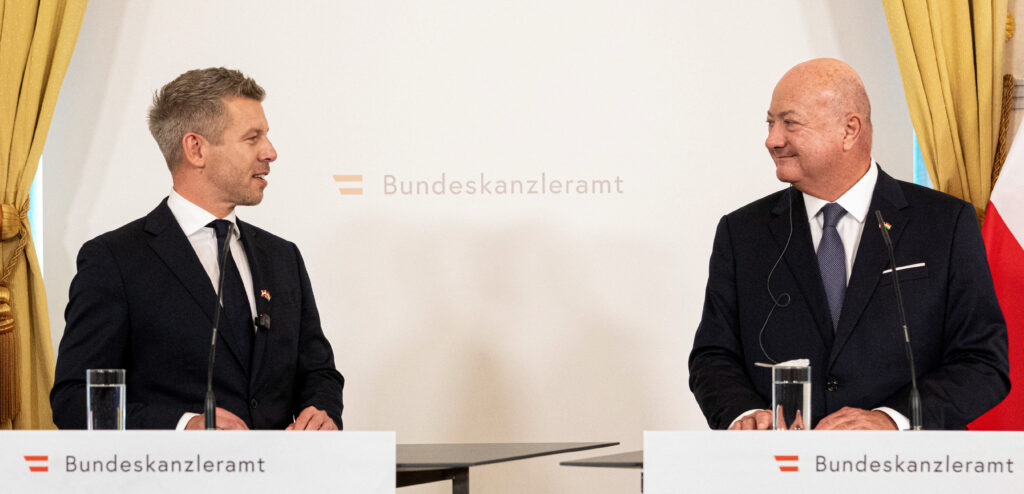
These developments are not irrelevant for Budapest either. A significant portion of Hungary’s EU funds remains frozen. Since its electoral victory, the new Hungarian government has invested considerable effort in reaching an agreement with the European Commission and securing the release of the funds. After a political agreement was reached between Hungarian Prime Minister Péter Magyar and Commission President Ursula von der Leyen, Budapest submitted a legislative package aimed at addressing the Commission’s concerns.
Despite the government’s efforts, it remains unclear how much funding Hungary will ultimately recover—and at what cost.
Related articles:
At a time when public debate is increasingly polarized and superficial, Hungarian Conservative remains committed to depth, intellectual honesty, and independent conservative thought.
Producing high-quality journalism requires resources. Your contribution helps us expand our coverage, reach new audiences, and keep our content accessible.

Please consider supporting our mission.