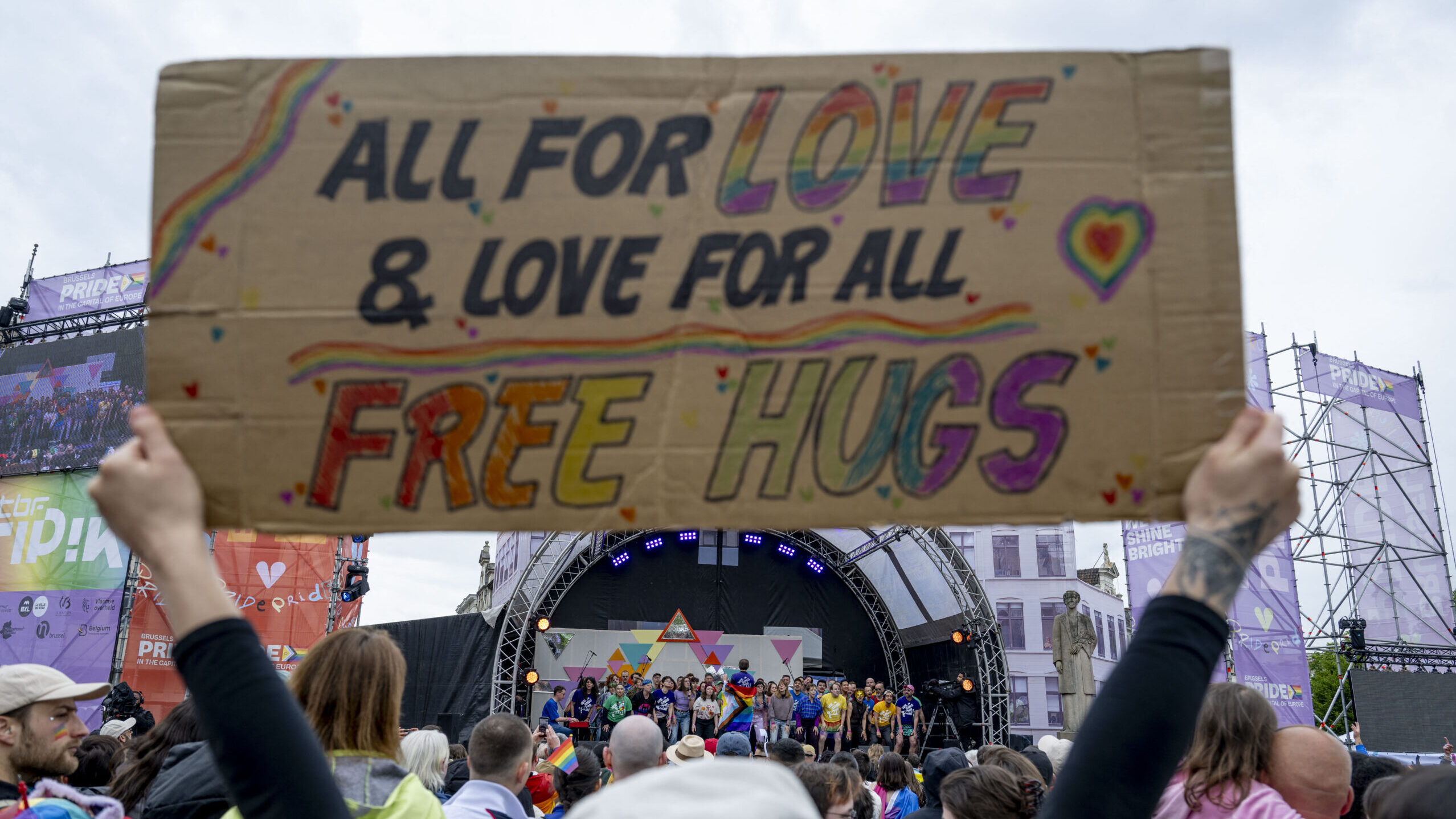
The European External Action Service (EEAS), the EU’s diplomatic service led by former Estonian prime minister Kaja Kallas, has come under heavy criticism over its Pride Month social media campaign, with many users accusing the agency of hypocrisy, double standards, and detachment from the concerns of ordinary citizens.
In a post on X published on Sunday, 14 June, the EEAS announced that the EU had supported 10,500 human rights defenders worldwide in 2024, of whom 21 per cent were LGBTIQ+. The post stated that 65 countries around the world ‘still criminalize consensual same-sex relations,’ a situation that it argued must come to an end.
The link attached to the post leads to a statement by Kaja Kallas, which further elaborates on the issue, calling on every country to ‘take the necessary steps to ensure that people are free to live their lives as they choose’ without fear of persecution. ‘The EU urges all states to repeal laws criminalizing consensual same-sex relations and to halt the adoption of new discriminatory legislation targeting LGBTIQ+ persons,’ the EU’s foreign policy chief argued.
According to the statement, the EU Human Rights Defenders Mechanism, launched in 2015, has supported at least 15,235 LGBTIQ+ rights defenders and 443 organizations directly. ‘In 2025 alone, ProtectDefenders.eu supported at least 1,560 individual human rights defenders and 28 organisations working to advance the rights of LGBTIQ+ persons,’ Kallas continued, arguing that partnerships with civil society and global and local NGOs are ‘key to promoting inclusive societies’ and protecting LGBTIQ+ persons from sexual and ‘gender-based violence’.
‘Brussels simultaneously condemns anti-LGBTIQ attitudes abroad while admitting migrants from countries where such views remain widespread’
‘The EU is strongly committed to uphold the full and equal enjoyment of all human rights by LGBTIQ+ persons globally and will continue to combat discrimination on the grounds of sexual orientation and gender identity,’ Kallas stressed.
‘Everyone should be free to love who they want to love. Everybody should be free to be who they want to be…The European Union will always stand for fundamental freedoms and rights for everyone,’ the statement concluded.
The post immediately attracted significant attention and criticism, with many users questioning whether the EU’s own migration policies are consistent with the values promoted in the campaign. A recurring argument was that Brussels simultaneously condemns anti-LGBTIQ attitudes abroad while admitting migrants from countries where such views remain widespread. ‘Why are you then IMPORTING FIGHTING AGE MEN into Europe from those countries?’ one user asked.
Another argued that if these are truly European values, the EU should ‘stop importing millions of people who share these beliefs’. Others questioned why citizens of countries accused of discriminating against LGBTIQ people continue to receive visas and other forms of access to Europe, claiming that the bloc is effectively rewarding societies whose attitudes it publicly condemns.
Another prominent line of criticism focused on what commenters described as double standards in the EU’s foreign policy, particularly regarding Muslim countries and Israel. Many accused the EEAS of repeatedly singling out Israel despite the country’s comparatively liberal record on LGBT rights, while failing to acknowledge that many states criminalizing same-sex relations are Muslim-majority countries.
‘Israel is and has always been your ally and you always single it out,’ one commenter wrote, adding: ‘Why won’t you mention that the LGBT discriminators are mainly MUSLIM countries?’
Similar comments argued that EU institutions are often reluctant to address the role of religious and cultural factors behind anti-LGBTIQ legislation when discussing the issue internationally.
Many reactions also reflected broader frustration with the priorities of EU institutions and the role of the EEAS itself. Critics argued that the bloc’s diplomatic service should focus on pressing challenges facing European citizens rather than promoting social causes abroad. Such responses echoed a wider criticism frequently directed at Brussels—that it is increasingly focused on ideological and advocacy issues while failing to adequately address concerns related to security, migration, and the cost of living within the Union.
Related articles:
At a time when public debate is increasingly polarized and superficial, Hungarian Conservative remains committed to depth, intellectual honesty, and independent conservative thought.
Producing high-quality journalism requires resources. Your contribution helps us expand our coverage, reach new audiences, and keep our content accessible.

Please consider supporting our mission.