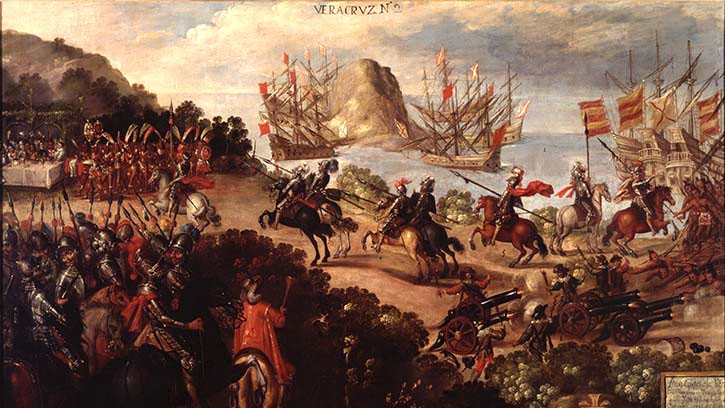
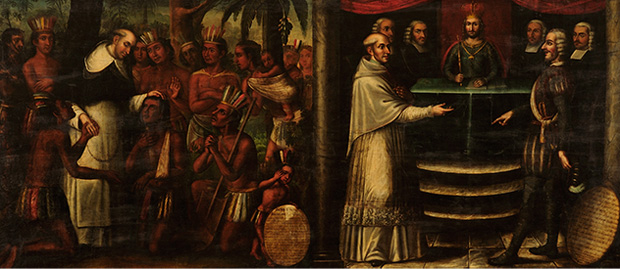
In 1550, in the Castilian city of Valladolid, an extraordinary event took place—one that remains without parallel in the history of empires. At the height of its power—though not yet the zenith of imperial expansion—and as the dominant European power, the Spanish Crown convened a formal theological and philosophical debate to examine a question that strikes at the very heart of imperial rule: by what right does an empire exercise dominion over other peoples and countries? The protagonists—Bartolomé de las Casas and Juan Ginés de Sepúlveda—were not marginal figures, but leading intellectuals of their time. And the stakes were not abstract. The outcome would shape the legal and moral framework governing Spain’s presence in the Americas.
The very existence of what we now call the Valladolid Debate (Controversia de Valladolid) is remarkable. Here was an empire at its zenith—militarily dominant, economically expansive, and civilizationally self-confident—choosing not simply to justify its actions ex post, but to publicly and systematically interrogate the moral legitimacy of its conduct ex ante. It is difficult to find a comparable moment in the annals of imperial history. Rome did not pause its conquests to question the justice of its dominion. Nor did the British Empire convene theological disputations on the rights of colonized peoples at the height of its expansion. Yet Spain did.
This was not an exercise in self-flagellation, nor a naïve surrender of sovereignty. It was something more profound: an acknowledgement that power, however vast, is not self-justifying. That there exists a moral order—accessible through reason, theology, and natural law—that stands above the will of princes. In convening the debate, Emperor Charles V implicitly accepted that even imperial authority must answer to a higher standard.
As both the Valladolid debate and the broader intellectual tradition surrounding it reveal, the Spanish Crown did not assume that its capacity to dominate translated automatically into moral legitimacy. Not even legality would automatically translate into legitimacy, for indeed the Crown was acting within the boundaries of the law, grounded in the juridical framework provided by papal authority—most notably the Bulls Inter caetera issued by Pope Alexander VI in 1493 and later reinforced by the so-called Omnímoda granted under Pope Adrian VI—which conferred upon the Spanish monarchy rights of dominion and evangelization in the newly encountered territories. Yet precisely because these legal titles existed, the Spanish scholastics were compelled to ask a deeper question: whether such titles were sufficient to justify rule in moral and theological terms.
Instead, it subjected its own actions to scrutiny grounded in a pre-existing moral and therefore legal order, acknowledging that power must be exercised within limits it does not itself define. This stands in sharp contrast to contemporary tendencies that equate power with normativity, in which the sovereign is understood as the ultimate source of truth and law, eroding the very distinction between right and might. The enduring lesson, therefore, is that the stability and legitimacy of any imperial order depend not on its ability to impose realities, but on its willingness to submit to them—particularly those rooted in moral principles that no authority, however powerful, can unilaterally redefine
‘The stability and legitimacy of any imperial order depend not on its ability to impose realities, but on its willingness to submit to them’
At the core of the Valladolid debate was a clash between two visions of order. Sepúlveda, drawing on Aristotelian categories, argued that certain peoples could be considered ‘natural slaves’, and that war against them could be justified if it led to their civilizational uplift. Las Casas, by contrast, insisted on the full rationality and dignity of the Indigenous peoples of the Americas, rejecting coercive conversion and affirming that no empire could claim legitimate authority without the consent of the governed.
What matters here is not who ‘won’ the debate—historians still disagree—but that the debate occurred at all, and that it was taken seriously at the highest levels of power. The Spanish imperial project, for all its undeniable contradictions and failures, was uniquely moulded by a sustained engagement with moral theology and legal philosophy. Figures such as Francisco de Vitoria and the wider School of Salamanca developed an elaborate framework for thinking about just war, sovereignty, and the rights of peoples—one that would later influence the development of international law.
This tradition did not deny the reality of power. It sought to discipline it. It did not assume that virtue would naturally follow from dominance; rather, it insisted that prudence (prudentia) and justice (iustitia) must guide political action, especially in relations between unequal actors. In this sense, the Spanish Empire was not merely a creator of geopolitical realities, but a participant in a moral order it did not control.
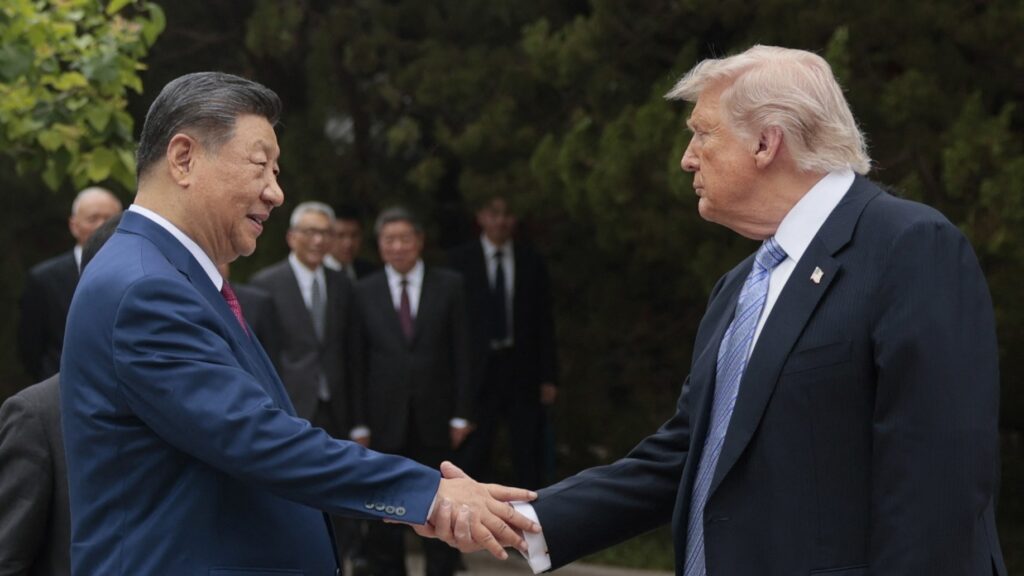
The contrast with the current exercise of power—and the rhetoric around it— in contemporary American political discourse is striking. Over the past few months, the Trump Administration’s words and deeds have shocked friends and foes alike, suggesting a radically different conception of power. Statements implying that international norms are subordinate to national—and more so, personal will—as stated by Donald Trump, or that legitimacy derives primarily from sheer power rather than from adherence to pre-existing legal and moral frameworks, point toward a model in which the sovereign becomes, in effect, the author of such a framework.
This is not entirely new. Great powers have often acted as if their interests define the contours of the international order. What is novel is the explicitness with which this logic is sometimes articulated. The idea that international law is, in practice, what the most powerful state declares it to be represents a departure from the post-war consensus that sought—however imperfectly—to bind even the strongest actors within a shared legal framework.
The Valladolid debate offers an alternative vision—one that is both more demanding and, arguably, more stable. It suggests that true sovereignty does not consist in the ability to impose one’s will without constraint, but in the capacity to govern in accordance with principles that transcend immediate interest. It recognizes that the exercise of power inevitably shapes reality, but insists that this creative capacity must itself be guided by a prior order of meaning.
This is not a call for moralism detached from political reality. Nor from the fabrication of international idealism, with little to no grounds in geopolitical reality. The thinkers of the School of Salamanca were acutely aware of the complexities of governance, the inevitability of conflict, and the limitations of human judgment. Their contribution lies precisely in their refusal to reduce politics to either pure idealism or pure realism. They understood that power must engage with reality—but also that reality is not exhausted by power.
In today’s international system, where emerging multipolarity and renewed great-power competition are reshaping the global landscape, this insight is more relevant than ever. The question is not whether powerful states will influence the norms that govern international relations—they inevitably will. The question is whether they see themselves as bound by those norms, or as their sole authors.
The Spanish Empire, for all its imperfections, chose—at least at a decisive moment—to subject itself to judgment. It recognized that legitimacy cannot be manufactured solely through force or decree. That even the most powerful must ask by what right they act.
The lesson of Valladolid speaks directly to the conditions under which power can remain legitimate in any age. The world has always been shaped by empires—whether under a unipolar order or within a more diffuse, multipolar configuration. That reality is unlikely to disappear. What can—and must—be contested is the way such power is exercised.
‘The lesson of Valladolid speaks directly to the conditions under which power can remain legitimate in any age’
The international system can only sustain the existence of empires if they conduct themselves according to a moral compass that is consubstantial to the very exercise of power. Not as an optional adornment, nor as an act of generosity, but as a constitutive requirement. Power that is not informed by prudence and justice ultimately corrodes the very order it seeks to uphold.
This was, in many respects, the original promise of the American project. The political thought underpinning the founding of the United States—articulated in texts such as The Federalist Papers and embodied in the United States Constitution—did not conceive of sovereignty as an unbounded will. On the contrary, it was premised on the idea that power must be limited, checked, and oriented toward justice. Just like liberty, which always ought to be ordered by an towards something beyond itself. Namely, virtue.
And perhaps most fundamentally, the United States Declaration of Independence affirms that political authority itself is subordinate to a higher moral law: ‘We hold these truths to be self-evident, that all men are created equal…endowed by their Creator with certain unalienable Rights.’ Here, legitimacy does not flow from power, but from conformity to a pre-political moral order.
Even in its emergence as a global power, the United States long maintained—at least in its self-understanding—that its role was not merely to shape the international order, but to uphold a framework of rules and principles to which it, too, was bound. This aspiration was never perfectly realized. No empire has ever been free of contradiction. But the aspiration itself mattered. It provided a standard against which action could be judged, criticized, and corrected.
It is precisely this inheritance that risks being eroded when power begins to conceive of itself as the sole author of legitimacy. If international law becomes indistinguishable from the preferences of the strongest, then it ceases to be law in any meaningful sense. And if political movements define truth and normativity purely in terms of leadership, they abandon the very tradition that once distinguished them.
The current and future administrations in Washington would do well to remember that the strength of the United States has never rested solely on its capacity to impose realities or exert power, but on its willingness—however imperfect—to recognize that it operates within a moral and legal order it did not create and cannot fully control.
The alternative is not greater sovereignty, nor America First for that matter, but its quiet dissolution into arbitrariness. And history suggests that empires which cease to recognize limits—whether moral or legal—ultimately lose not only their legitimacy but also their power. Their right and their might.
Related articles:
At a time when public debate is increasingly polarized and superficial, Hungarian Conservative remains committed to depth, intellectual honesty, and independent conservative thought.
Producing high-quality journalism requires resources. Your contribution helps us expand our coverage, reach new audiences, and keep our content accessible.
Please consider supporting our mission.