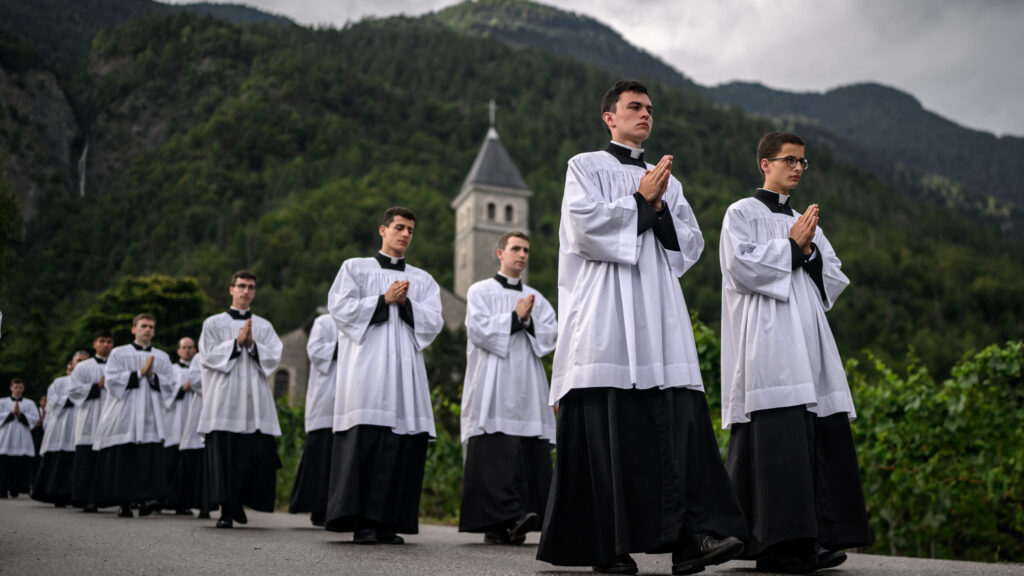
It has been over a month since the Priestly Fraternity of St. Pius X, also referred to as the Society of St. Pius X (SSPX), incurred the same latæ sententiæ (automatic) excommunication as their founder, Archbishop Marcel Lefebvre, did in 1988, for consecrating bishops without a papal mandate. The Decree by Rome established that, in the act of carrying out the consecration, not only the consecrators and those consecrated were subject to the prescribed penalty, but the ‘sacred ministers belonging to the Priestly Fraternity of Saint Pius X’, and those who formally associate with the Fraternity ‘are likewise to be regarded as schismatics and excommunicated.’
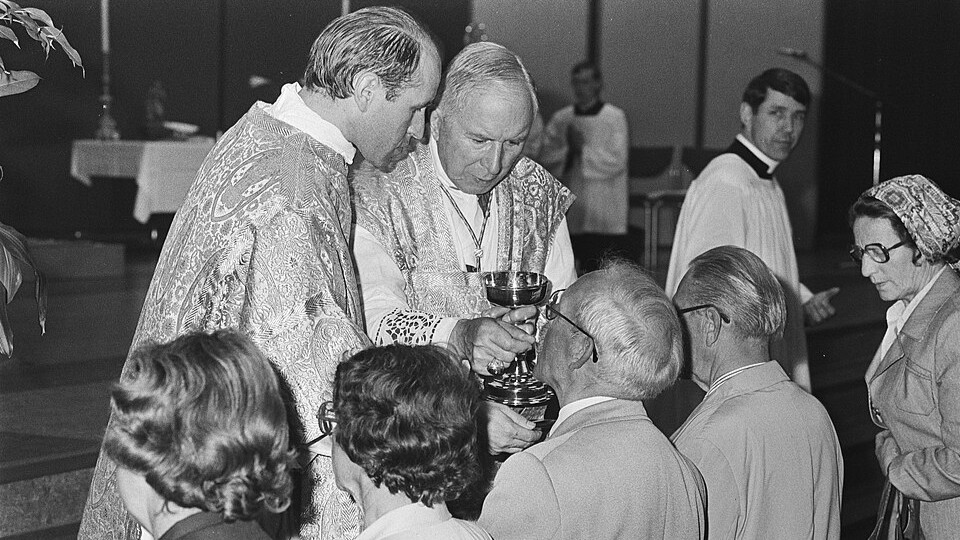
In the aftermath, questions persist not primarily regarding the legitimacy of the penal sanctions, but rather whether a Catholic can attend a Mass conducted by the SSPX and partake in holy communion or receive valid absolution from an SSPX priest, given that Rome has declared these priests to be in schism? Why do some canonists, myself included, hold that they are not in schism, whereas others do?
Some confusion had already surfaced prior to the episcopal consecrations, stemming from remarks made by figures such as Cardinal Gerhard Müller, the former Prefect of the Dicastery for the Doctrine of the Faith, who argued that the SSPX would be deemed schismatic; and the traditionalist Cardinal Raymond Leo Burke, who accordingly stated:
‘I think there are many faithful who belong to the [SSPX], including priests, who do not have a schismatic spirit; they simply love the tradition of the older use of the Roman Missal….the present situation does not constitute a state of necessity because, in fact, the idea behind it is that the faithful who are in the [SSPX] cannot live their Catholic faith in the Church without having a church within the Church.’
First, with all due respect to these esteemed cardinals, their statements are incorrect, since the Code of Canon Law, which serves as the comprehensive codification of canonical legislation for the Latin Catholic Church—the Eastern Rite Catholic Churches are governed by the Code of Canons of the Eastern Churches—does not consider consecrating a bishop without a papal mandate as an offence against the unity of the Church (cf. canons 1364–1369 of the Code — Offences against the Faith and the Unity of the Church).
Canon 751 defines schism as: ‘the refusal of submission to the Supreme Pontiff or of communion with the members of the Church subject to him’, or as St. Thomas Aquinas states in his Summa Theologiæ, II–IIæ, Q. 39: ‘schismatics, in the proper sense, are those who willfully and intentionally detach themselves from the unity of the Church.’ To put it simply, a conscious decision must be made to sever ties with the authority of the Roman Pontiff and to form a separate church, as with the Orthodox and Anglicans, or with the present-day Chinese Catholic Patriotic Association (CCPA) established by the Chinese Communist Party in 1957 as a parallel to the Church of Rome.
The SSPX’s profession of faith clearly affirms papal primacy, sacramental theology, and moral continuity, in addition to seeking clarification on contested doctrinal formulations that have infiltrated the Church.
The Fraternity had reached out to Pope Leo XIV on more than one occasion to explain its situation, to which he never responded. Fr. Pagliarani, the Superior General of the SSPX, also publicly stated in February during his audience with the Prefect of the Dicastery for the Doctrine of the Faith, Cardinal Victor Manuel Fernández, that the Fraternity does not aim to establish a parallel hierarchy, unlike the aforementioned CCPA. Its sole intention, particularly as the two remaining SSPX bishops have aged, was to ensure the presence of bishops for the administration of the Sacraments of Holy Orders and Confirmation, without any additional implications.
Second, as to the state of necessity within the Church, which prompted the SSPX for a second time to consecrate bishops without the Pope’s authority, a considerable segment of the Church’s hierarchy has consistently expressed this since the end of the Second Vatican Council (1962–965). Canon 1324, 5° introduces an aspect of subjective assessment. It suffices for an individual who has committed the offense to simply have ‘believed’ that he ‘acted by reason of necessity’.
The Fraternity’s primary concern was not merely the ability to celebrate the Traditional Latin Mass, but its determination not to accept, at the insistence of Rome, that all of its members accept in an absolute manner the Conciliar document, including those that are ambiguous, such as the assertion that Muslims and Catholics pray to the same God, despite the former rejection of the Holy Trinity. And, of course, that they adopt a more pastoral approach toward the LGBTQ+ movement, whatever that is supposed to mean.
‘Contrary to Cardinal Fernández’s explanatory note of 2 July, there is no basis for shunning those who associate with the SSPX’
Third, because the SSPX filed a preliminary recourse to the Roman authorities, any penalties incurred are suspended. According to canon 1353 of the Code, ‘an appeal or a recourse against judgments of a court or against decrees which impose or declare any penalty has a suspensive effect.’ Consequently, while the penalty itself remains in place, its effects, such as not being able to validly absolve sins, are put on hold until the entire process of the recourse (or appeal) is concluded, and the decree is rendered final, or the judgment becomes res iudicata (adjudged matter).
The inability of the SSPX to come to an agreement with Rome was disappointing; however, it should not be seen as an act of defiance, similar to Archbishop-Prince of Esztergom and Primate-Regent of Hungary Cardinal József Mindszenty’s public refusal to comply with the Vatican’s willingness to engage with communist regimes during the Cold War. Despite having been accused, arrested, and tortured for ‘subversive activity’ by the communists in Hungary, Pope Paul VI lifted the excommunications imposed by Pope Pius XII on the cardinal’s persecutors. On February 5, 1974, the Pope stripped Mindszenty of the Primacy of Hungary and declared his See of Esztergom vacant, replacing him with an apostolic administrator—Mindszenty said that this was the greatest cross he had to bear in his life.
Contrary to Cardinal Fernández’s explanatory note of 2 July, there is no basis for shunning those who associate with the SSPX. Even Cardinal Müller acknowledged that the faithful may, in good conscience, receive Holy Communion at an SSPX Mass and receive valid absolution in confession—and not merely because he said so.
Related articles:
At a time when public debate is increasingly polarized and superficial, Hungarian Conservative remains committed to depth, intellectual honesty, and independent conservative thought.
Producing high-quality journalism requires resources. Your contribution helps us expand our coverage, reach new audiences, and keep our content accessible.

Please consider supporting our mission.