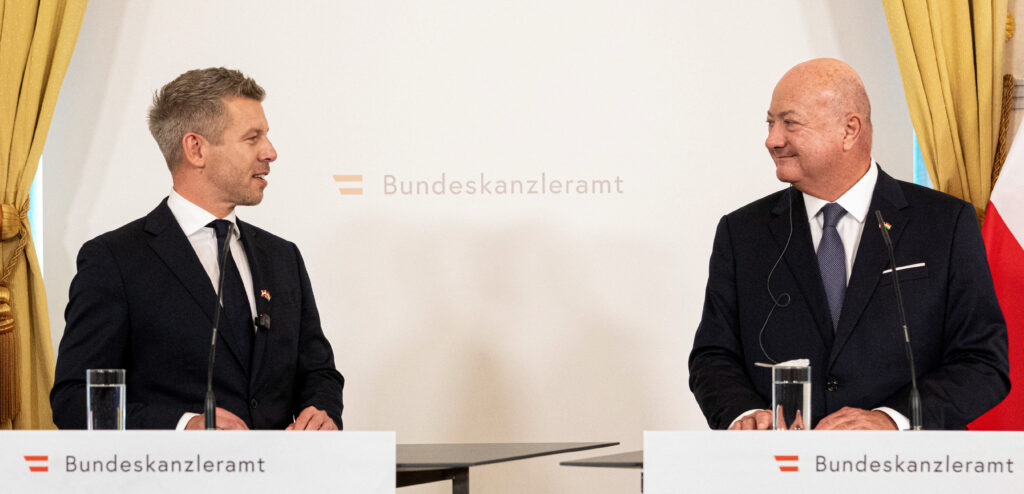
New information and claims have emerged in the Szijjártó–Lavrov leak story published by The Washington Post on 21 March. Senior officials from Viktor Orbán’s government have pointed to a closed-door event co-organized by the British Embassy in Budapest and government-critical think tank Political Capital, which featured Catherine Belton—the journalist who broke the story that has since escalated into an unprecedented intelligence and information war surrounding the upcoming election.
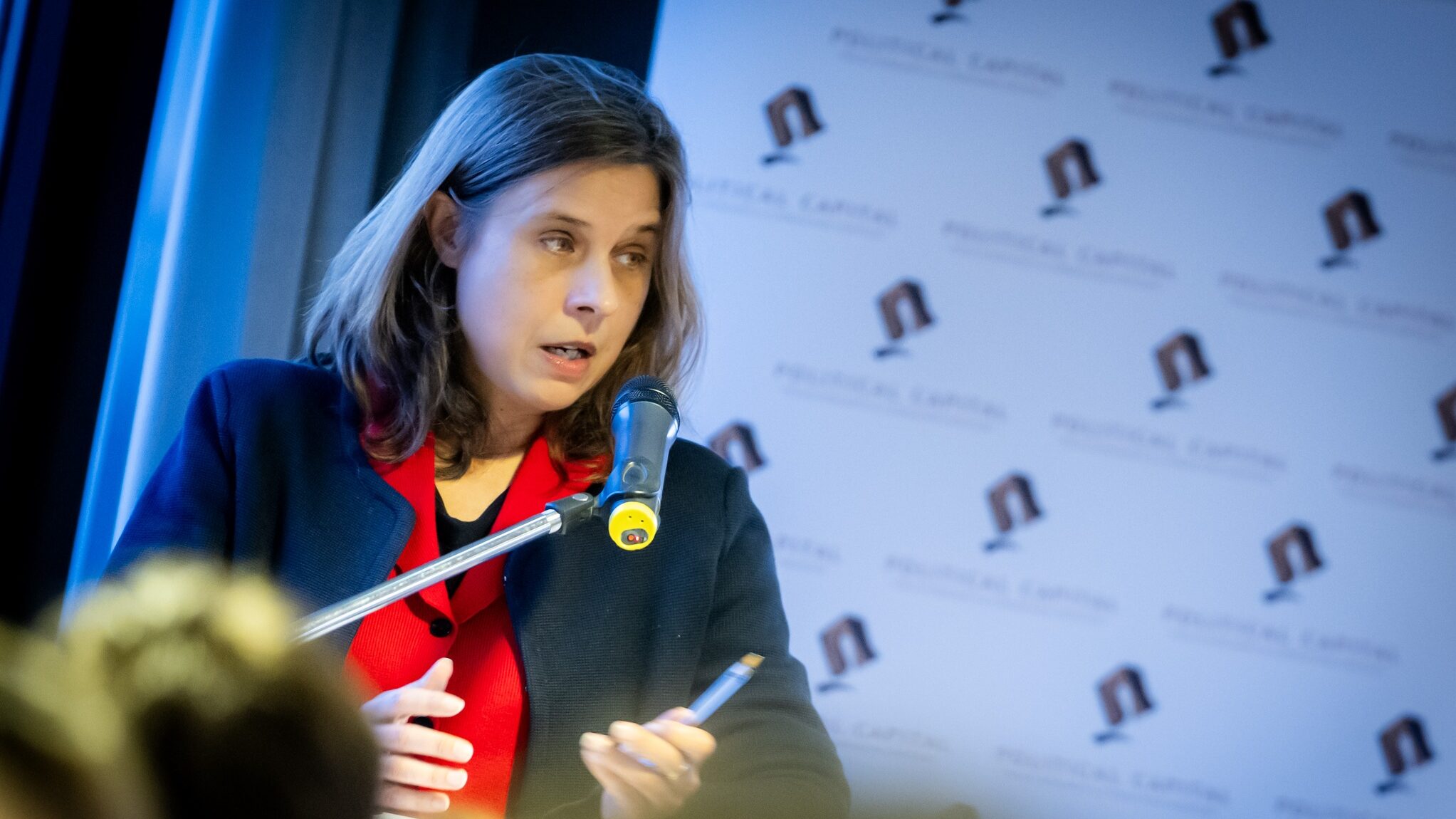
The event in question, described by Political Capital as a ‘thought-provoking discussion on Russia’s global and European influence’, was held on 4 March, three weeks before The Washington Post published its article. Alongside Belton, the panel featured Political Capital Director Péter Krekó and András Rácz, Senior Research Fellow at the German Council on Foreign Relations (DGAP)—a figure frequently cited in Ukrainian media, embedded in Western and Ukrainian security policy networks, and a regular visitor to Ukraine in recent years. The event was opened by British Ambassador Justin McKenzie Smith.
According to its introduction, available on its website, Political Capital is an ‘independent policy research, analysis and consulting institute founded in 2001 in Budapest. Our institute owes no allegiance to any government or political body. We have developed an extended network of professional partners, both domestically and internationally, all of whom have helped our institute to become one of the most influential think tanks in Central and Eastern Europe’.
The think tank receives funding from, among others, organizations linked to the European Commission, George Soros’s Open Society Foundations (OSF), the German Marshall Fund (GMFUS), and the National Endowment for Democracy (NED).
Three weeks after Belton’s visit to Budapest, where she engaged with actors embedded in Western informational and NGO networks, at an event co-organized by the embassy of one of Ukraine’s strongest international supporters, she published her report alleging that Hungarian Minister of Foreign Affairs and Trade Péter Szijjártó had, for years, leaked confidential EU information to Moscow.
The same article also claimed that Belton had reviewed an alleged Russian intelligence memo—obtained and authenticated by an unnamed European intelligence service—proposing a staged assassination attempt against Viktor Orbán to boost his campaign ahead of the election. Nearly a week after publication, no hard evidence beyond the alleged memo and anonymous sources has been presented publicly to substantiate these claims.
Yet, the report triggered a rapid chain of developments. On Monday, a leaked audio recording surfaced in which Hungarian journalist Szabolcs Panyi—described by government officials as a regular guest at Political Capital and linked to the same network—caught speaking of sharing Szijjártó’s contact details with an unnamed foreign intelligence service and referenced ties to Tisza party foreign policy expert Anita Orbán.
Panyi has been a central figure in the current information war; earlier in March, he reported that Russian military intelligence operatives had been deployed to Budapest to support Orbán’s campaign. Although the claim was not supported by publicly available evidence, it was widely amplified by Western media and contributed to the broader narrative of alleged Russian interference.
Following the release of the audio, the Hungarian government launched an investigation, describing the case as involving the ‘wiretapping’ of a minister. On Thursday, the Ministry of Justice filed a criminal complaint against Panyi on suspicion of espionage on Thursday. He rejected the allegations, describing them as part of a smear campaign aimed at discrediting him, accusing the government of using practices similar to Russia in order to intimidate political opponents.
In a post on X, Political Director of the Hungarian prime minister Balázs Orbán linked these developments together, stating that the ‘picture becomes quite clear’ regarding what he described as a ‘Russia hoax’ targeting the Hungarian government. ‘The same networks, the same circles, the same storylines—and suddenly a Washington Post article appears, based on an unnamed intelligence source, and the international media machine immediately amplifies it,’ he wrote.
Balázs Orbán added that, in his view, the objective of these developments is ‘weakening Hungary’s pro-peace patriotic government ahead of the April elections’, arguing that Hungary ‘is the only country in Europe that refuses to become part of the war machine’. ‘That is why they want a regime change,’ he stated, concluding that ‘we will not give in’. ‘The Hungarian people are sovereign, patriotic Hungary is strong, and the patriotic forces will win in Hungary,’ he added.
Related articles:
At a time when public debate is increasingly polarized and superficial, Hungarian Conservative remains committed to depth, intellectual honesty, and independent conservative thought.
Producing high-quality journalism requires resources. Your contribution helps us expand our coverage, reach new audiences, and keep our content accessible.

Please consider supporting our mission.