The Hungarian parliament’s National Security Committee has declassified elements of an intelligence briefing that, according to Viktor Orbán’s government, point to a coordinated foreign-backed operation involving IT specialists linked to the opposition Tisza Party.
Government spokesman Zoltán Kovács, sharing the declassified document on X, claimed that individuals associated with Tisza maintained contacts with Ukrainian actors, including representatives of the so-called IT Army of Ukraine, and were involved in efforts to acquire spyware and cooperate with hacker groups. He also said that one individual had prior criminal cases related to IT misuse, while another had been ‘directed by a foreign intelligence operative’.
According to the declassified document, counterintelligence had been monitoring these individuals since 2023, well before the founding of Tisza. The document also suggests contacts with the Ukrainian embassy in Budapest and communication through encrypted channels. The declassified document, which can be found on the website of the National Security Committee, appears authentic; however, it has not been independently verified.
The decision of the parliamentary committee came after Hungarian outlet Direkt36 published a sharply contrasting account of the same IT specialists, claiming that they were in fact targets of an attempted infiltration operation against the Tisza Party. According to documents allegedly obtained by the outlet, a previously unknown individual—referred to as ‘Henry’—attempted to recruit one of the IT experts in early 2025 to gain access to the party’s internal systems and disrupt its operations ahead of the election. The operation allegedly aimed to take control of Tisza’s IT infrastructure, insert ‘puppets’ into key positions, and access internal platforms, including the Tisza World application.
Direkt36 further claimed that the two IT specialists later became the subject of a police investigation triggered by a tip-off alleging child exploitation. Authorities reportedly seized multiple data carriers during house searches but found no such material. The outlet claims that Hungary’s Constitution Protection Office (AH) pushed for rapid action and may have influenced the direction of the investigation, while the identity of ‘Henry’ was not pursued. The article provides no hard proof to support these claims; however, the police investigation did take place.
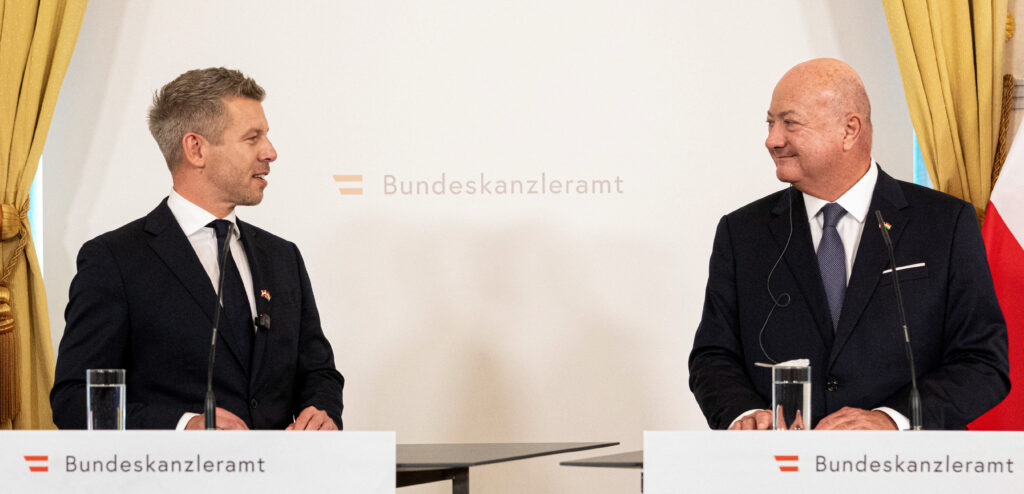
Opposition leader Péter Magyar reacted to the Direkt36 report by describing the case as ‘Orbán-gate’, comparing it to the Watergate scandal and calling it ‘a coup attempt against a free Hungary’. He accused Hungarian intelligence services of acting on political orders and pledged that those responsible would face legal consequences if his party comes to power.
An Info War Not Seen before in Hungary
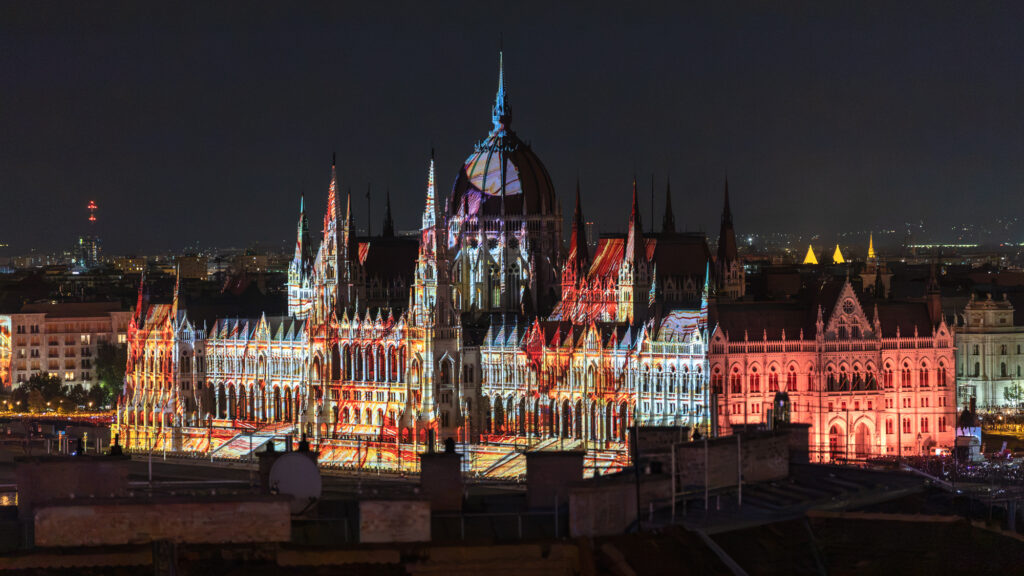
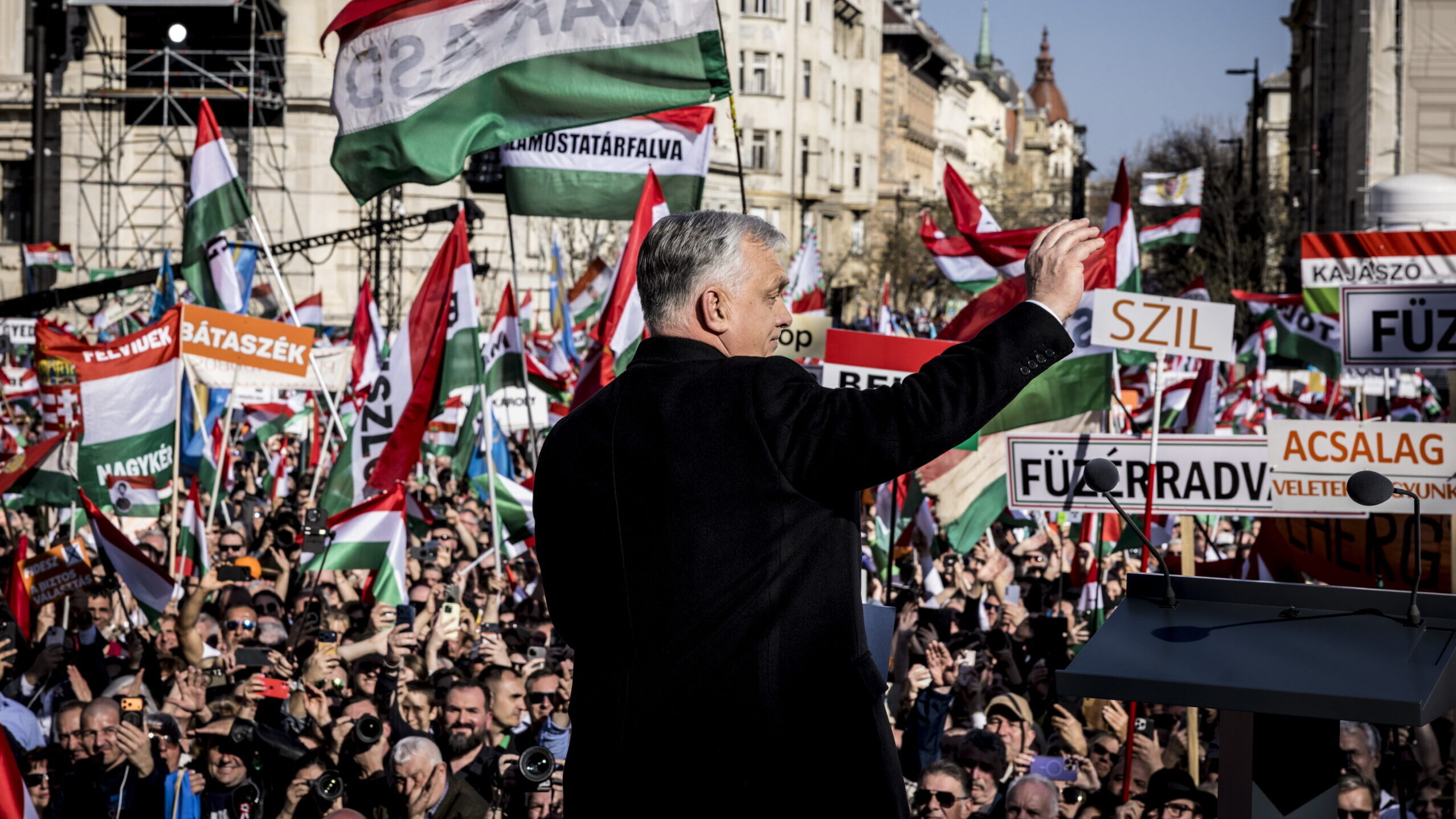
Hungary is preparing for a high-stakes election on 12 April, which in the past week has evolved into an unprecedented intelligence and information war, with two entirely contradictory narratives competing to answer one key question: who constitutes the real security threat—Viktor Orbán’s government, accused of ‘treason’ against Hungary and the European community for cooperating with Russia, or the opposition, accused of collaborating with EU, Western, and Ukrainian intelligence actors to overthrow the government.
Direkt36 is at the centre of this information war. Its journalist, Szabolcs Panyi—well embedded in Western journalistic circles and a constant receiver of funding from the now-abolished USAID, the National Endowment for Democracy (NED), and other NGOs—has played a key role in shaping the narrative around alleged Russian interference in Hungary. Earlier in March, Direkt36 reported, based solely on anonymous sources, that Russian military intelligence (GRU) had deployed operatives in Budapest to support Viktor Orbán’s campaign.
‘Two entirely contradictory narratives competing to answer one key question: who constitutes the real security threat’
These claims were later amplified by a report in The Washington Post, which alleged that Minister of Foreign Affairs and Trade Péter Szijjártó had for years shared confidential EU discussions with Russian Foreign Minister Sergei Lavrov, and that a Russian intelligence memo proposed staging a fake assassination attempt against Orbán to boost his campaign.
The claims are based on an alleged Russian intelligence document reviewed by the outlet and obtained and authenticated by an unnamed European intelligence service. However, The Washington Post did not present the document to substantiate the allegations.
The Hungarian government has rejected the reports as politically motivated fabrications aimed at influencing the 12 April election. Political Director of the Hungarian Prime Minister Balázs Orbán compared it to the so-called Russiagate in the United States. The controversy escalated further after a leaked audio recording surfaced, in which Panyi discussed sharing Szijjártó’s contact details with a foreign intelligence service and referenced links to Tisza Party foreign policy expert Anita Orbán. While the recording has not been independently verified, Panyi has not denied its existence, prompting an official investigation into the alleged wiretapping case. Panyi claimed he is the victim of a smear campaign and rejected espionage accusations.
What government officials describe as a ‘coordinated intelligence operation’ began shortly after the European Commission activated the Digital Services Act’s rapid response mechanism ahead of Hungary’s election. The system enables platforms, NGOs, and ‘fact-checkers’ to limit content labelled as disinformation—primarily affecting right-wing narratives on migration and Ukraine, which are central themes of the Hungarian government’s messaging.
‘Signs increasingly suggest that the unnamed European intelligence service that provided the story to The Washington Post may be Poland’
Following its activation, Orbán’s Facebook reach declined significantly, indicating that the system had taken effect. While this created the framework to restrict the government’s narrative, the amplified allegations provided justification for its use.
Adding to the scale of the information war, signs increasingly suggest that the unnamed European intelligence service that provided the story to The Washington Post may be Poland. Polish Prime Minister Donald Tusk and Foreign Minister Radosław Sikorski reacted to the report unusually quickly, suggesting that the allegations might be credible. Speaking to Brussels Signal, a former Polish official said he had ‘no doubt’ that the source country was Poland, adding that the memo itself ‘either does not exist or is currently being fabricated’. Tusk has continued to amplify the allegations, posting about the story repeatedly and consistently sharing the opposition’s narrative.
Related articles:
At a time when public debate is increasingly polarized and superficial, Hungarian Conservative remains committed to depth, intellectual honesty, and independent conservative thought.
Producing high-quality journalism requires resources. Your contribution helps us expand our coverage, reach new audiences, and keep our content accessible.

Please consider supporting our mission.