Hampshire Police considered issuing a public statement portraying 18-year-old British student Henry Nowak as the aggressor just days after he was fatally stabbed and subsequently bled to death while being restrained by officers who had accepted his Sikh attacker’s false claims of racial abuse on 3 December 2025.
According to recent media reports, the proposed wording was drafted despite investigators already possessing evidence that contradicted the account of the killer, 23-year-old Vickrum Digwa, and indicated that Nowak was the victim rather than the aggressor.
The reports allege that Hampshire Police sought to describe the incident in a way that suggested Nowak had initiated the confrontation with Digwa. One draft statement issued the day after the killing reportedly claimed that ‘two men had been assaulted by an unknown man’, while later draft wording was said to have implied that Henry had assaulted Digwa and his brother before the fatal stabbing.
The proposed wording was ultimately changed following objections from Nowak’s family.
The revelations came just days after separate reports emerged that the police had also considered intervening during the trial by issuing a public statement to ‘counter online mis- and disinformation’ surrounding the case.
According to The Sunday Times, Hampshire Police sought advice from the Crown Prosecution Service on a statement reminding the public that ongoing legal proceedings could not be prejudiced and that questions would be addressed once the trial had concluded.
Prosecutors ultimately warned that such an intervention could risk affecting the integrity of the proceedings, and the statement was never published. Hampshire Police later said the proposal was intended to address inaccurate information circulating online rather than comment on the evidence presented to the jury.
The recent developments have further intensified already widespread outrage and criticism of police conduct in the Henry Nowak case. Many users interpreted the revelations as evidence of a broader institutional failure rather than an isolated mistake.
Social media users described the scandal as a ‘total erosion of trust in the social contract’, while another argued that it suggested such conduct had become ‘standard practice’ among authorities seeking to protect themselves.
Others drew parallels with previous controversies involving the handling of sensitive criminal cases, questioning how many similar incidents may have been presented to the public in a misleading manner, while calling for the resignation of police leaders and officers involved.
On 28 May, Southampton Crown Court sentenced 23-year-old Vickrum Digwa to life imprisonment with a minimum term of 23 years for murdering Nowak. Digwa stabbed the first-year university student five times with an eight-inch Sikh ceremonial blade, including a fatal wound to the chest. His mother, Kiran Kaur, was also convicted of assisting an offender after removing the murder weapon from the scene.
The case became one of the most controversial criminal trials in Britain in recent years after it emerged that responding officers handcuffed the visibly wounded teenager and arrested him for assault while initially accepting Digwa’s claims that he had been racially abused and attacked. During the trial, prosecutors described those allegations as a ‘wicked lie about a dying man’, arguing that Digwa used racism as his ‘trump card’ to divert police attention away from himself.
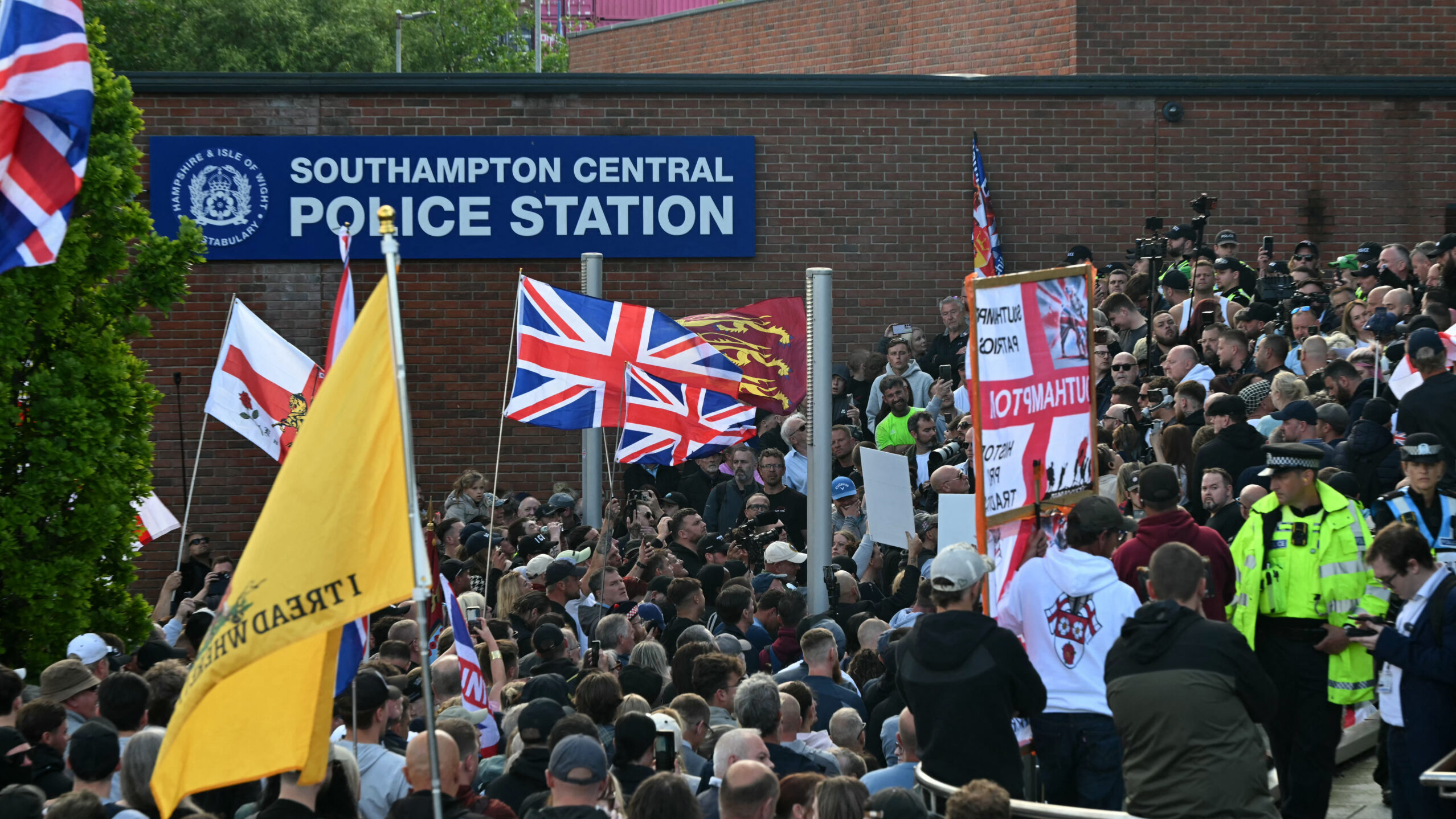
Public anger intensified further after Hampshire Police released body-camera footage showing Nowak repeatedly telling officers that he had been stabbed while they treated him as a suspect rather than a victim. The footage triggered protests in Southampton, where around a thousand demonstrators gathered to condemn what critics described as ‘two-tier policing’. The demonstration later descended into clashes between some protesters and riot police.
The case also generated significant political reactions. Reform UK leader Nigel Farage argued that officers appeared more concerned about allegations of racism than helping a dying teenager, describing the case as evidence of deeper problems within British policing. Over the weekend, the Trump administration also joined the criticism, condemning what it described as ‘ideological conditioning’ and ‘two-tiered policing’ as symptoms of civilizational decline.
After facing growing parliamentary pressure to comment following a prolonged silence on the case, Prime Minister Keir Starmer described the footage as ‘awful’ and ‘shocking’, while rejecting claims of two-tier policing and accusing the right of exploiting the tragedy for political purposes. Following the violent clashes during protests in Southampton, Starmer condemned the disorder and warned that those responsible would face the ‘full force of the law’.
Hampshire Police has since apologized for handcuffing Henry, acknowledging that he should have been treated as the victim. However, the latest revelations regarding the draft statements have added a new dimension to the controversy, raising questions not only about officers’ actions on the night of the killing but also about how the force sought to present the case to the public in the days that followed. The Independent Office for Police Conduct continues to investigate the actions of the officers present at the scene.
Related articles:
At a time when public debate is increasingly polarized and superficial, Hungarian Conservative remains committed to depth, intellectual honesty, and independent conservative thought.
Producing high-quality journalism requires resources. Your contribution helps us expand our coverage, reach new audiences, and keep our content accessible.

Please consider supporting our mission.