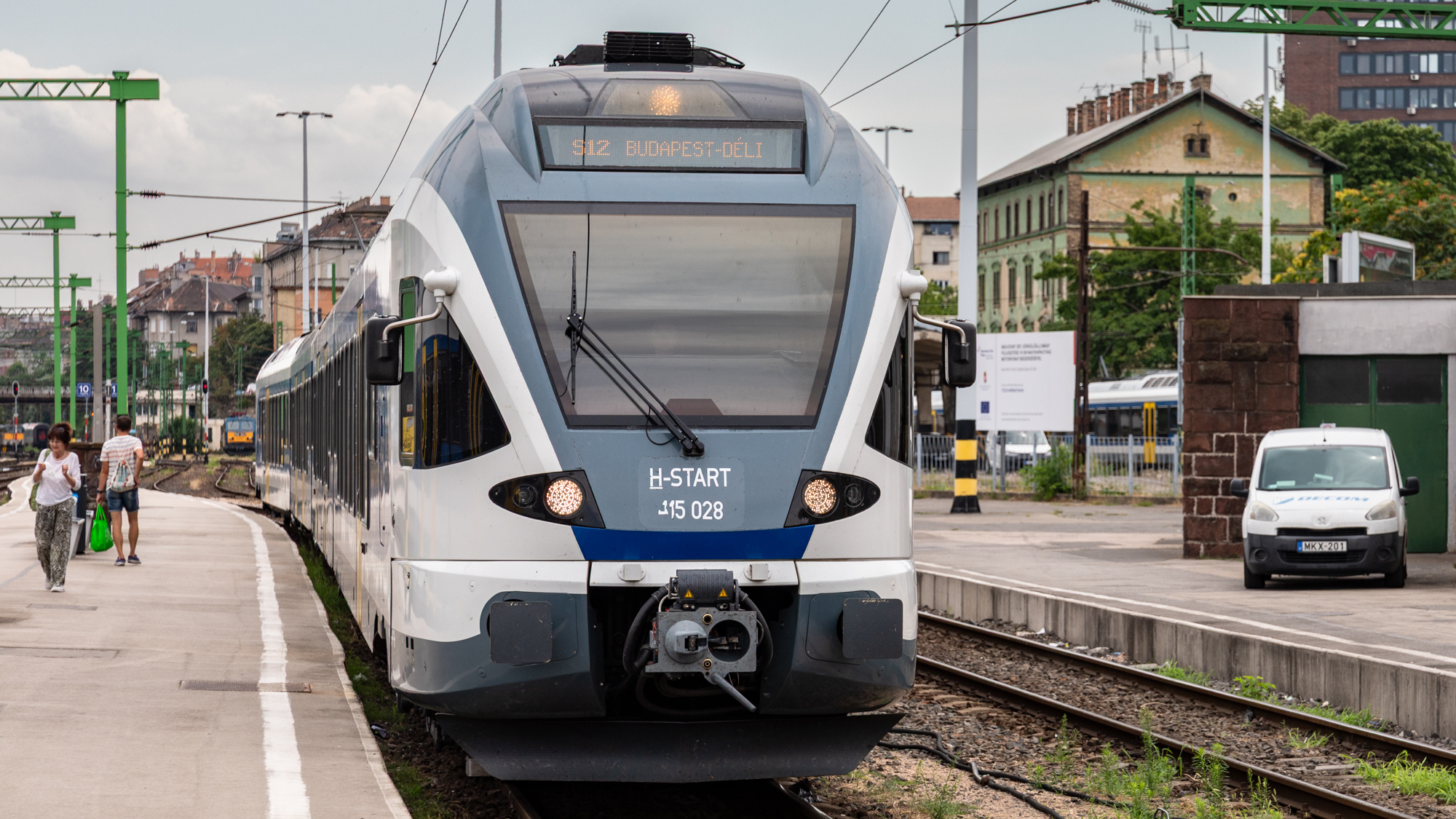
EU-funded projects under Hungary’s Baross Gábor Rail Development Plan can now begin following the publication of a government decree in the Hungarian Gazette, Transport and Investment Minister Dávid Vitézy said on Facebook on Sunday.
Vitézy said the Baross Gábor Rail Development Plan aims to modernize Hungary’s fixed-track transport network over a ten-year period at a total cost of 3,550 billion forints.
One of the programme’s main sources of funding is the Integrated Transport Development Operational Programme Plus (IKOP Plus), which provides 1,406 billion forints for development projects during the current EU funding cycle. A further 950 billion forints in commitments is available for projects in the next EU funding period, he said.
The plan includes upgrades to the Budapest–Veresegyház–Vác and Budapest–Lajosmizse–Kecskemét railway lines, as well as the modernization of Budapest’s HÉV suburban railway network and further development of the capital’s suburban rail services.
The programme also covers preparations for the reconstruction of Debrecen’s main railway station and upgrades to the Debrecen–Nyíregyháza line. The main railway lines serving Miskolc and Szeged are to be upgraded to allow trains to operate at speeds of up to 160 kilometres per hour.
Preparatory work could also begin on the reconstruction of the main railway line to Pécs, alongside the development of new intermodal transport hubs, Vitézy said.
The plans include an extension of Budapest’s M3 metro line and further development of the interconnected tram networks on both the Pest and Buda sides of the capital. A number of regional railway lines and stations are also set to be modernized.
The government may also purchase new battery-powered multiple units for non-electrified railway lines serving larger regional centres, including routes towards Salgótarján and Szekszárd, the minister added.
Other elements of the Baross Gábor Rail Development Plan include the acquisition of new InterCity trains and HÉV vehicles, station renovations, railway track reconstruction and the elimination of speed restrictions caused by poor track conditions.
The programme will also support further suburban rail development, upgrades to fixed-track transport networks in Budapest and major regional cities, and the strengthening of international railway connections, Vitézy said.
Related articles:
At a time when public debate is increasingly polarized and superficial, Hungarian Conservative remains committed to depth, intellectual honesty, and independent conservative thought.
Producing high-quality journalism requires resources. Your contribution helps us expand our coverage, reach new audiences, and keep our content accessible.

Please consider supporting our mission.