Viktor Orbán’s governing alliance, Fidesz–KDNP, has slightly increased its lead over the opposition Tisza Party following the Peace March held on the national holiday on 15 March, according to a recently published poll by the Nézőpont Institute.
The results of the survey show that, if elections were held this Sunday, Fidesz–KDNP would secure 46 per cent of the party-list vote, while Tisza would come second with 40 per cent. The hard-right Our Homeland (Mi Hazánk) continues to hold a steady 8 per cent, remaining the only party besides the two major political forces to surpass the parliamentary threshold of 5 per cent.
The findings indicate that the governing parties’ advantage is primarily driven by increased mobilization among their supporters. Turnout willingness among Fidesz sympathizers rose from 86 to 92 per cent compared to the previous survey. By contrast, the Tisza electorate was already highly mobilized, with 98 per cent of its supporters indicating they would definitely participate in the election.
‘Turnout willingness among Fidesz sympathizers rose from 86 to 92 per cent’
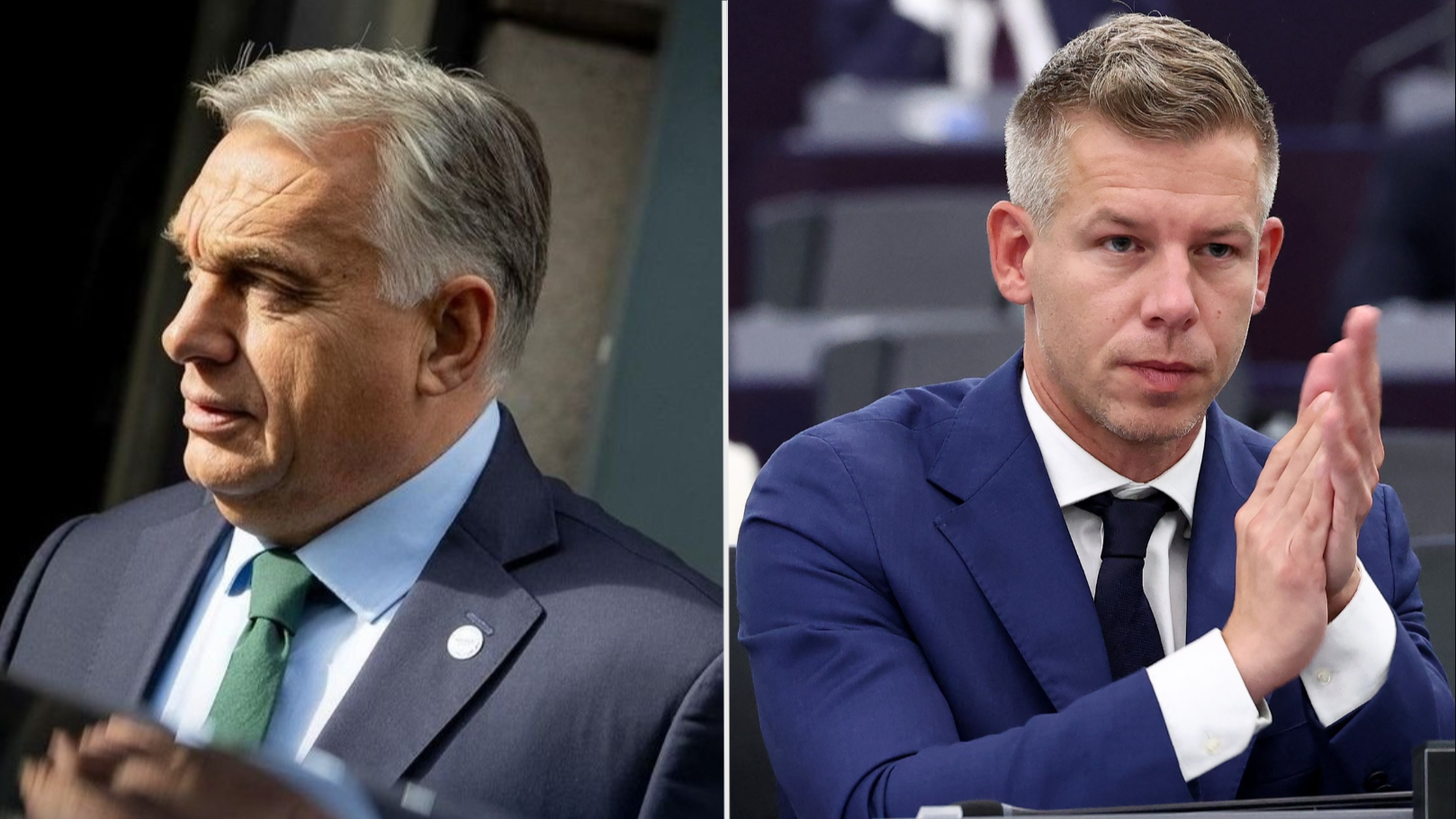
Commemorating the Hungarian Revolution and War of Independence of 1848–1849, both Orbán and opposition leader Péter Magyar organized rallies to mobilize their bases less than a month ahead of the high-stakes parliamentary election scheduled for 12 April. Both crowds were massive, numbering in the hundreds of thousands, signalling an unprecedented level of political engagement in the past 15 years.
Following the Peace March, Viktor Orbán launched his nationwide tour in the southern Hungarian town of Kaposvár, declaring that Fidesz will ‘win the election’ before a main square filled with supporters.
According to Nézőpont, Orbán appears to have had greater room to activate previously less engaged voters, while overall turnout is expected to remain below 80 per cent of the total electorate of around 8 million people.
In recent weeks, Fidesz appears to have regained control over the central themes of the campaign, as Ukraine’s oil blockade of the Druzhba pipeline remains in focus. According to the survey, Ukrainian President Volodymyr Zelenskyy remains unpopular among Hungarian voters, with 64 per cent holding a negative view of him after he openly threatened Orbán with possible military action if he did not lift his veto on the €90 billion EU loan to Kyiv—which he ultimately did not do during Thursday’s European Council summit.
While these developments have not significantly weakened the Tisza party, they appear to have contributed to a modest increase in Fidesz–KDNP’s lead.
Election Shaped by Disinformation Storm
As the campaign enters its final phase, the information warfare surrounding the election is intensifying to unprecedented levels, with both sides accusing the other of being supported by external actors seeking to influence the outcome.
The European Commission has recently activated the rapid response system linked to the Digital Services Act (DSA), citing alleged Russian interference. The mechanism coordinates social media platforms such as Facebook and TikTok with NGOs and ‘fact-checkers’ to determine which content may remain online and which should be removed. The system will remain active until one week after the 12 April election.
Days after its activation, Facebook restricted Orbán’s reach, signalling similar interference to that seen during the annulled Romanian presidential election in 2024.
‘The information warfare surrounding the election is intensifying to unprecedented levels’
Meanwhile, Orbán’s opposition—both domestically and at the European level—has accused Russia of interfering in the election to support the Hungarian prime minister. These allegations are based on a report by Hungarian outlet Direkt36, which claimed that Russian military intelligence officers had been deployed to Hungary. Western mainstream media quickly picked up and amplified the story, despite there being no tangible evidence to substantiate the claims beyond anonymous sources cited in the article.
Moreover, on 18 March, Ukraine accused Hungary of assisting a Russian disinformation operation targeting the Transcarpathian Hungarian community in an effort to influence the election.
Rejecting these accusations, Orbán pointed to what he described as similar interference by the European Commission and Ukraine, alleging that they support Magyar and the Tisza Party in order to oust his government. According to the Hungarian prime minister, intelligence reports indicate that the Tisza Party receives funding from Kyiv, as Ukraine seeks to undermine the Hungarian administration due to its firm stance against the country’s EU membership, further EU financial and military support to Kyiv, and sanctions on Russian energy.
Related articles:
At a time when public debate is increasingly polarized and superficial, Hungarian Conservative remains committed to depth, intellectual honesty, and independent conservative thought.
Producing high-quality journalism requires resources. Your contribution helps us expand our coverage, reach new audiences, and keep our content accessible.

Please consider supporting our mission.