Hungary’s state development bank reversed more than HUF 66 billion (€170 million) in EU funding awarded to a company controlled by billionaire Lőrinc Mészáros just four days after approving the applications, in an abrupt decision that could become a precedent for how companies with opaque ownership structures are treated under the country’s recovered EU funding programmes.
The Hungarian Development Bank (MFB) notified OPUS TITÁSZ on 6 August that its applications for electricity-grid development and smart meters had been successful, before its board decided on 10 August that the company did not meet statutory transparency requirements and excluded it from the two Recovery and Resilience Facility (RRF) schemes. MFB said compliance with transparency rules was essential to prevent Hungary from losing the EU funds.
OPUS TITÁSZ hit back on Wednesday, calling the reversal ‘professionally and legally unfounded’ and announcing that it would use every available means of legal challenge. The company said transparency was already examined during the initial eligibility stage and that applicants failing the test could not proceed to substantive assessment. TITÁSZ said it passed that stage, received a positive evaluation and was asked by MFB on 6 August to provide the documents needed to conclude the grant agreements.
‘The company argued that excluding an already approved application under new criteria threatened “confidence in the predictability” of the tender system’
The company argued that excluding an already approved application under new criteria threatened ‘confidence in the predictability’ of the tender system. MFB has declined to explain what changed between 6 and 10 August or to identify the specific transparency deficit.
The outcome could reach beyond TITÁSZ. If MFB’s interpretation survives a legal challenge, the decision could establish a template for excluding other businesses whose beneficial ownership cannot satisfy the stated transparency standards attached to EU money.
Coming as the new Tisza government begins broader scrutiny of business networks linked to circles around former prime minister Viktor Orbán, the unexplained reversal also makes the case an early test of how far those standards will be applied to companies that benefited from public procurements under the previous government.
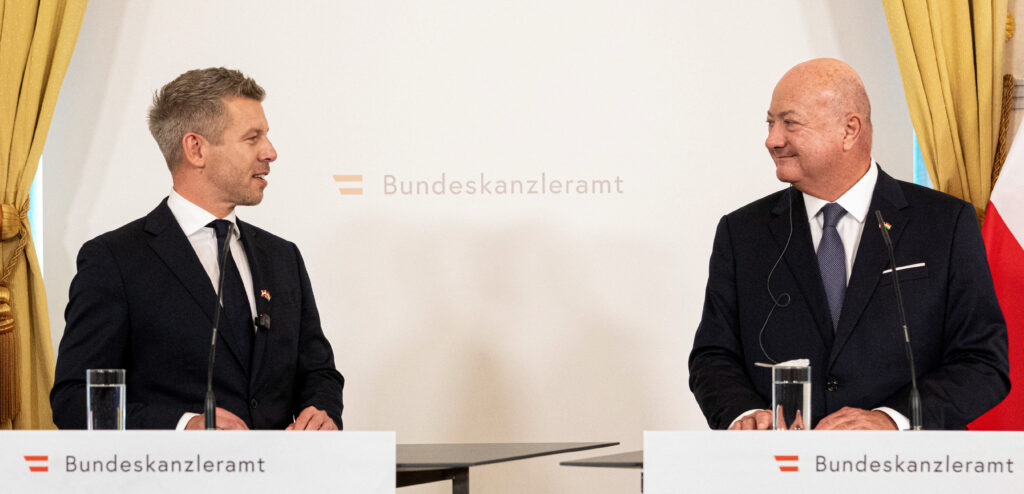
The new government openly embraced MFB’s decision earlier this week. Economy and Energy Minister István Kapitány said the cabinet accepted the exclusion and would find other ways to ensure that municipalities in OPUS TITÁSZ’s service area still receive the necessary grid investments. Prime Minister Péter Magyar seized on the decision politically, announcing that Mészáros’s electricity company had been shut out of the RRF programme because ‘the company owned by Orbán Viktor’s strawman did not meet the transparency requirements.’
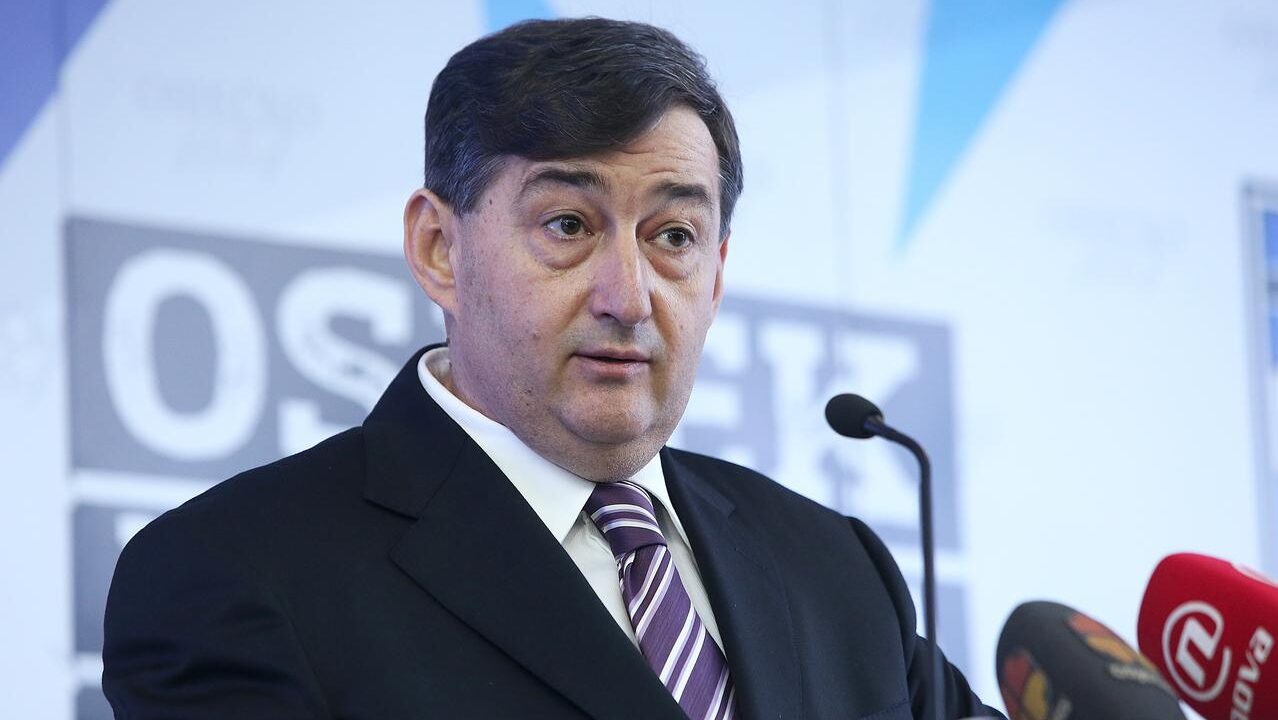
TITÁSZ sits inside the business empire of Mészáros, Viktor Orbán’s longtime friend from Felcsút, the village where the former prime minister spent his childhood, whose extraordinary rise became one of the defining controversies of Fidesz–KDNP’s 16 years in government. Critics and opposition politicians have accused the Orbán system of directing public contracts and EU-funded investments towards politically connected businessmen, allegations that Orbán, Mészáros and others publicly accused have rejected.
The scale of Mészáros’s participation in publicly funded development is nevertheless extensive: a comprehensive reconstruction found that nine companies owned by Mészáros and his circles won HUF 476 billion in public tenders between 2010 and 2017, of which HUF 396 billion, or 83 per cent, was EU-financed. The network subsequently expanded across construction, railways, energy, agriculture and other sectors, participating in EU-funded projects as direct grant beneficiaries, prime contractors, consortium members and subcontractors.
The Mészáros network is at the centre of the Tisza government’s so-called Operation Purgatory, a wider constitutional overhaul coupled with an anti-corruption and asset-recovery push to dismantle what Magyar described as the ‘economic and political patronage network’ built around Orbán.
At its centre is the newly established anti-corruption super-agency, the National Asset Protection and Recovery Office (NVVH), which was given unusually broad powers, including prosecutorial and investigative ones. According to the government, these powers would help the office reach back to cases as old as two decades. Magyar had already mentioned several times, both on the campaign trail and in office, three likely early ‘priority clients’, and Mészáros was among them.
Fidesz has described Tisza’s anti-corruption campaign as political retribution and likened the super-agency to the Communist-era state protection authority, tasked with persecuting political opponents, presenting potential future investigations as show trials.
Related articles:
At a time when public debate is increasingly polarized and superficial, Hungarian Conservative remains committed to depth, intellectual honesty, and independent conservative thought.
Producing high-quality journalism requires resources. Your contribution helps us expand our coverage, reach new audiences, and keep our content accessible.

Please consider supporting our mission.