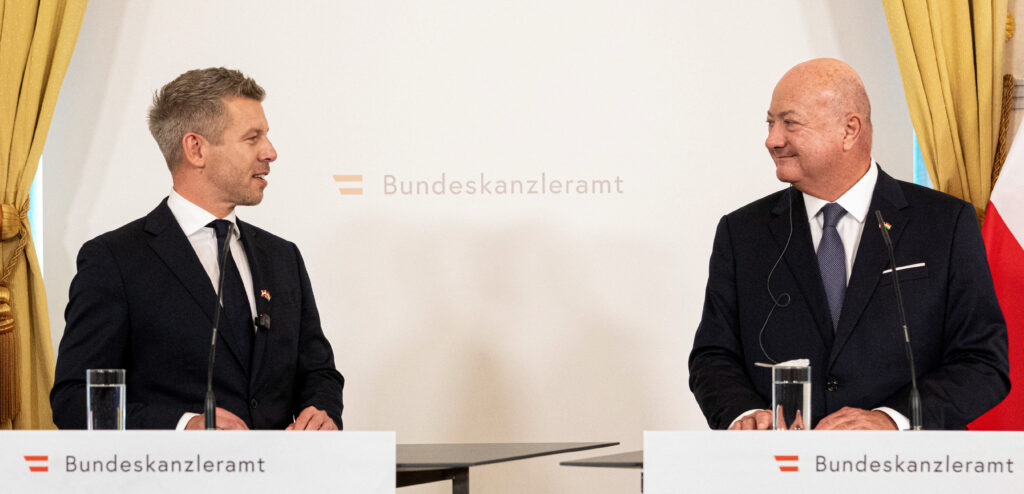
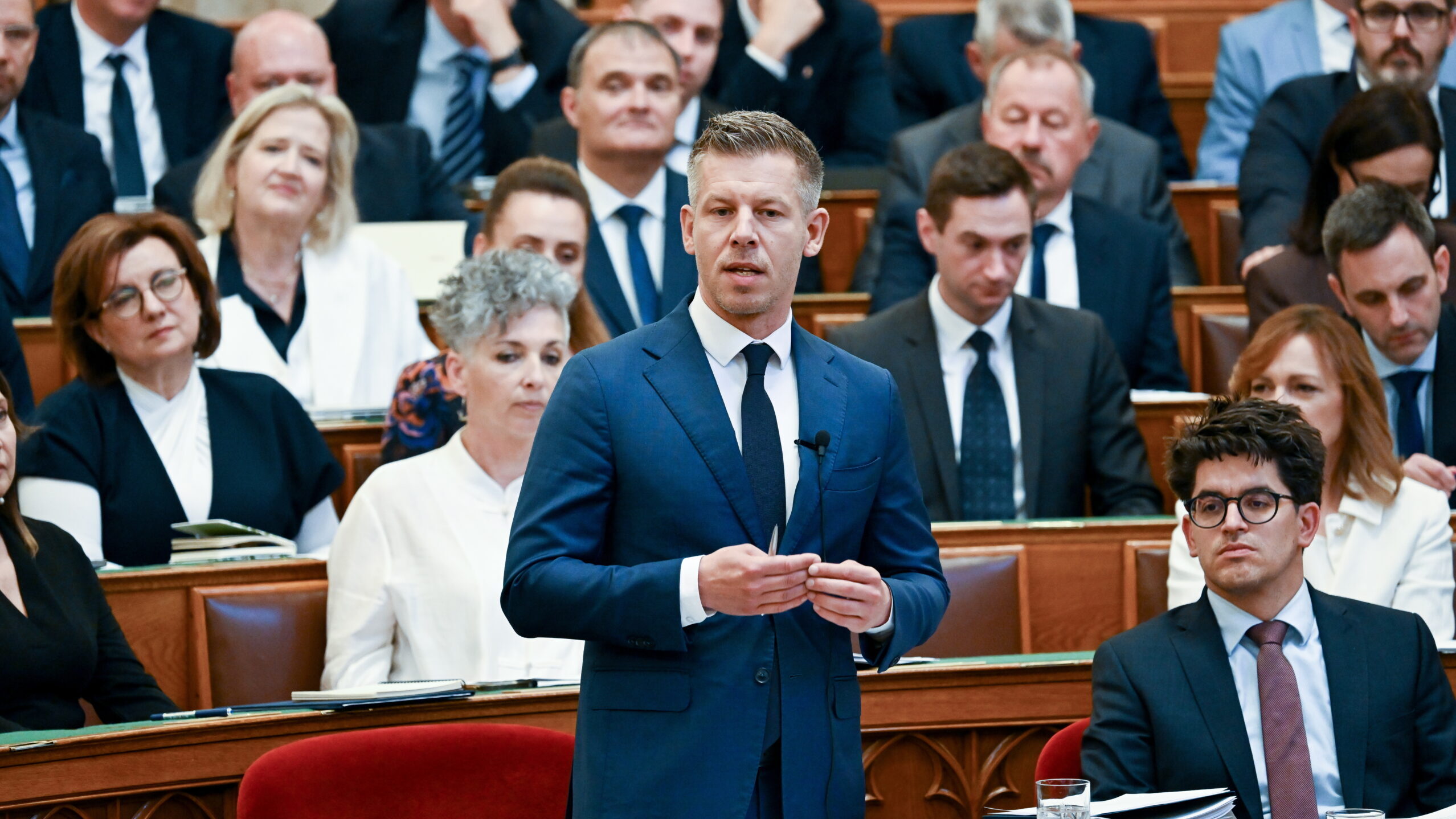
Hungarian Prime Minister Péter Magyar has launched ‘Operation Purgatory’, a political and legal campaign intended to dismantle what he called the ‘political and economic mafia’ built during former prime minister Viktor Orbán’s 16 years in power, recover ‘unlawfully diverted public wealth’, and remove officeholders whom the government regards as pillars of the former system.
The initiative combines the creation of a National Asset Recovery and Protection Office with the 17th amendment to the Fundamental Law and a broader constitutional process involving public consultation, which is intended to culminate in the drafting and adoption of an entirely new Constitution for Hungary.
In what he described as the most important speech so far as prime minister, Magyar compared Hungary’s situation to Italy’s confrontation with organized crime following the 1992 assassinations of anti-mafia magistrates Giovanni Falcone and Paolo Borsellino. Their deaths, he argued, forced Italy to recognize that the mafia could not be defeated through existing institutions alone. ‘If we are to cut off the mafia’s tentacles, we must act as decisively and strictly as possible in all areas,’ he said.
Magyar repeatedly described the Orbán governments not simply as corrupt administrations, but as a Hungarian equivalent of the Cosa Nostra, supported by oligarchs, lawyers, accountants, political enforcers, and media outlets. ‘Today we are setting out on this path, and we will begin to defeat the Hungarian Cosa Nostra,’ he declared. ‘We will proceed step by step, brick by brick, criminal by criminal.’ He warned those who had acquired wealth from public assets to ‘get their paperwork in order and start coming up with explanations’.
The prime minister said the constitutional and asset-recovery proposals had to be introduced together because public wealth could not be recovered while ‘puppets’ of the previous government controlled key constitutional institutions. ‘As long as these institutions are held captive, Hungary remains captive as well,’ he said.
The 17th Amendment: Temporary Framework, Lasting Consequences
The 17th Amendment is presented as an interim settlement before a new Constitution is drafted from September and submitted to a referendum. Yet it would immediately reshape several central institutions.
Its most controversial provision would terminate President Tamás Sulyok’s mandate on the day after the amendment enters into force. Parliament would then have 30 days to elect a successor for a term lasting until the new Constitution takes effect, but no longer than five years.
Since the April election, Magyar has repeatedly called on the president and other public officeholders to step down, arguing that they had lost their ability to serve and represent Hungary’s constitutional order because of what he described as their ‘complicity in dismantling checks and balances’ over the past 16 years. President Sulyok has consistently rejected those demands, maintaining that constitutional offices derive their legitimacy from the Fundamental Law rather than shifting political majorities.
‘The amendment would also bar anyone who has served as an MP for a cumulative 12 years from standing at the next election’
The amendment would also bar anyone who has served as an MP for a cumulative 12 years from standing at the next election—a provision that, in the current Parliament, would affect only opposition MPs. It would restore a retirement age of 70 for Constitutional Court judges, ending the mandates of members above that threshold, and give judges a greater role in selecting senior judicial leaders.
Other provisions would narrow the range of laws requiring a two-thirds majority—the so-called cardinal laws—restore the Constitutional Court’s review powers over certain budgetary and taxation legislation, abolish the restrictive constitutional definition of public funds, and remove prosecutors’ monopoly over public prosecutions.
The Super-Agency behind Operation Purgatory
At the centre of Operation Purgatory stands the National Asset Recovery and Protection Office (MNVVH). Despite its name, the draft would create more than an asset-management body: an independent super-agency combining financial analysis, public-asset investigations, law enforcement, prosecution, and litigation.
According to the proposal, its president and four deputies would be elected by a two-thirds parliamentary majority for single six-year terms.
The MNVVH could examine public procurement, concessions, subsidies, EU-funded projects, state-owned companies, public-interest asset-management foundations, and property that had left state ownership. It could demand protected financial information, connect databases, conduct inspections, copy electronic material, and compel cooperation. Obstruction could bring fines of up to HUF 50 million for individuals and HUF 5 billion for organizations.
More controversially, the office could conduct criminal investigations, supervise police activity, bring charges, and represent the prosecution in court. Public-asset investigations would generally not qualify as administrative proceedings and—with the exception of fines—could not normally be challenged through an administrative lawsuit.
Companies deriving at least 75 per cent of their revenue from public procurement or concessions in any of the previous five years would automatically face scrutiny. Where further harm to public assets was considered a substantiated risk, the office could place a company under state supervision, replace executives, restrict representation rights, terminate contracts, and issue binding instructions.
The model goes beyond comparable European institutions; it rather merges already existing frameworks. Romania’s National Anticorruption Directorate is a specialized prosecution service, while its National Agency for the Management of Seized Assets mainly administers property frozen or confiscated by prosecutors and courts. The European Public Prosecutor’s Office investigates crimes affecting the EU’s financial interests within a defined jurisdiction.
‘The Hungarian proposal would unite functions normally divided among prosecutors, police, auditors, and asset-management agencies’
The Hungarian proposal would unite functions normally divided among prosecutors, police, auditors, and asset-management agencies. That may reduce obstruction, but it also creates a need for transparent case selection, judicial control, and safeguards against political retaliation.
The government is accepting comments on the constitutional amendment until 27 June and on the MNVVH until 30 June. The compressed timetable leaves only days to assess an eight-page constitutional amendment and a 54-page legislative package affecting 47 laws. The government intends to launch a broader constitutional review process in the autumn, culminating in a referendum on a new Constitution.
From Anti-Corruption Drive to Political Retribution?
Fidesz has rejected both the rhetoric and the constitutional logic behind Operation Purgatory. Parliamentary group leader Gergely Gulyás described Magyar’s speech as ‘slanderous and appalling’, arguing that comparing four democratically elected Orbán governments to the Sicilian mafia poisoned democratic debate. ‘You are not fighting a mafia; you are building a dictatorship,’ Gulyás told Magyar during Monday’s extraordinary parliamentary session.
Beyond the political rhetoric, Fidesz’s strongest objections concern the constitutional mechanisms themselves. Critics argue that several provisions appear designed not to establish general constitutional rules but to remove specific officeholders. The proposed termination of President Sulyok’s mandate has become the clearest example. The new governing supermajority has already approved legislation making it impossible for Orbán to return to power even if political circumstances were to permit it.
Rights advocacy group Amnesty International Hungary criticized the proposal on procedural rather than political grounds, arguing that it bypasses fundamental rule-of-law safeguards. While the organization stated that Sulyok had ‘never raised his voice against abuses of power or in defence of those in the most vulnerable situations’, it maintained that ‘Tamás Sulyok also has the right to a fair procedure’ and that his removal should take place through the existing constitutional impeachment procedure rather than by simply terminating his mandate through a constitutional amendment.
Amnesty argued that the issue extends beyond the president himself, warning that ‘only a fair procedure provides all of us with a guarantee that we are never at the mercy of arbitrary power’. The organization also criticized the government for allowing only five days for public consultation on the amendment instead of the usual eight and concluded that ‘a genuine change of system is only possible through a fair procedure’.
‘Concerns about political retaliation are heightened by the fact that the leadership of the MNVVH would be appointed exclusively by the Tisza majority’
The wide range of powers granted to the National Asset Recovery and Protection Office has likewise drawn criticism, primarily from Fidesz and analysts linked to the former governing camp. While supporters view the institution as a necessary response to alleged systemic corruption, critics warn that combining investigative, prosecutorial, supervisory, and civil-enforcement powers within a single body creates an unprecedented concentration of authority. They also argue that concerns about political retaliation are heightened by the fact that the leadership of the MNVVH would be appointed exclusively by the Tisza majority.
The government, however, rejects these accusations, arguing that the institutional framework inherited from the Orbán era was deliberately constructed to shield political allies from accountability. Magyar has repeatedly insisted that conventional institutions are incapable of investigating what he describes as two decades of systemic corruption and that exceptional circumstances require exceptional legal tools.
According to government estimates, corruption may have cost Hungary between 8 and 10 per cent of GDP in recent years. Ministers argue that the new office is intended to recover public wealth rather than serve as an instrument of political revenge.
Related articles:
At a time when public debate is increasingly polarized and superficial, Hungarian Conservative remains committed to depth, intellectual honesty, and independent conservative thought.
Producing high-quality journalism requires resources. Your contribution helps us expand our coverage, reach new audiences, and keep our content accessible.

Please consider supporting our mission.