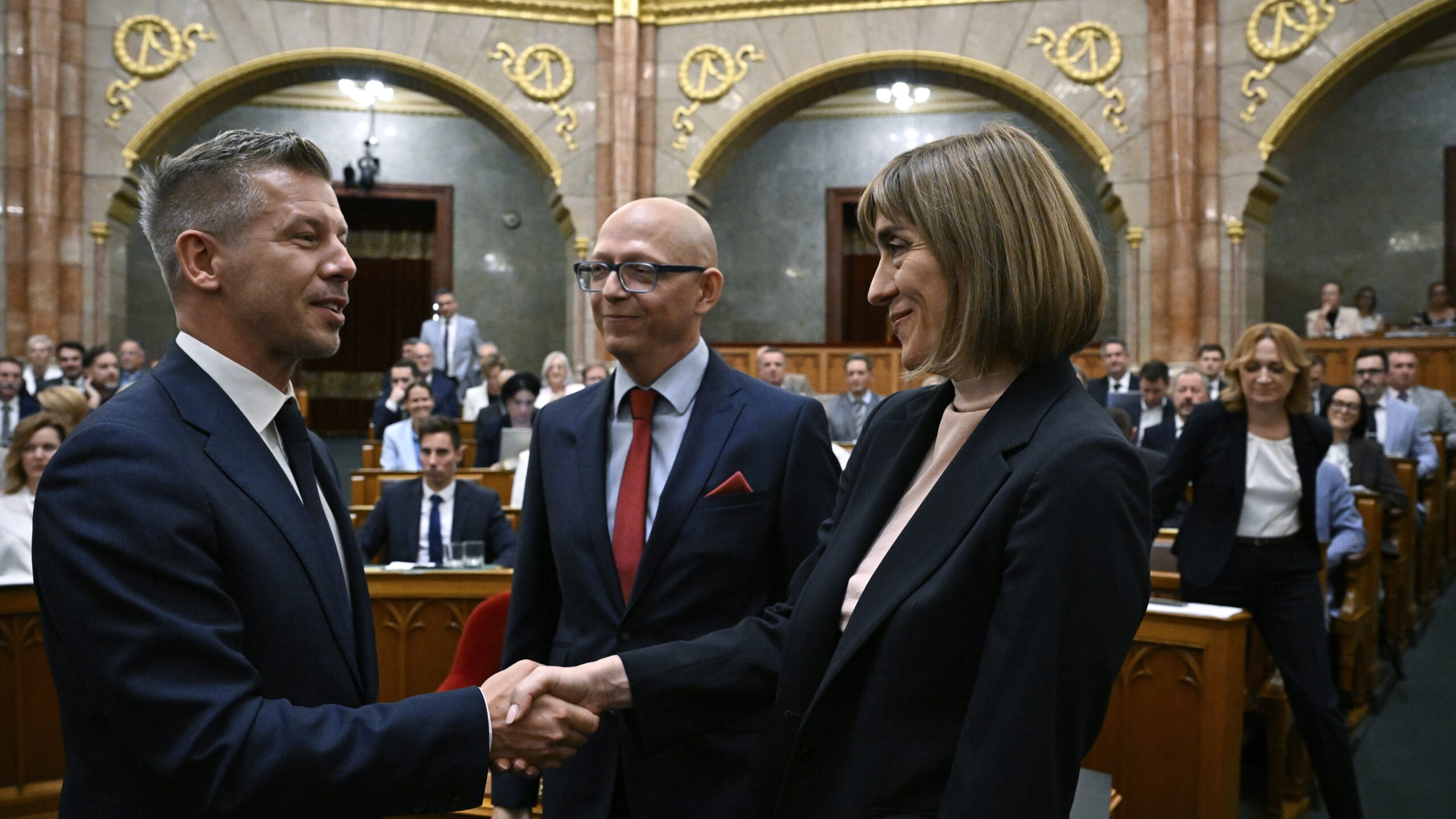
Hungary’s Parliament elected six of the nine members of the newly established Independent Public Media Board on Tuesday, including experts nominated by professional media organizations and the governing side. Lawmaker Judit Bayer was subsequently elected chair of the body tasked with protecting the independence of public media.
Bayer was elected to the board with 140 votes in favour, 45 against and one abstention. Viktor Bálint received 135 votes in favour and 51 against, while Miklós Hargitai was elected with 134 votes in favour and 52 against.
Árpád Kollár received 140 votes in favour and 54 against; Miklós Sükösd received 140 votes in favour, 45 against and one abstention; and György Szabó was elected with 134 votes in favour and 52 against. Bayer’s election as chair was approved by 134 lawmakers, with 46 voting against and six abstaining.
Bálint, Hargitai and Szabó were elected for four years, but no later than the establishment of the next Parliament. Bayer, Kollár and Sükösd were elected for two years. Their mandates will take effect on 9 September. Following the vote, the chair and board members took their oaths of office.
The Independent Public Media Board was established through amendments to Hungary’s 2010 media law adopted this summer. Its mandate is to safeguard public media and news services and protect their independence. The board is designed to have three members nominated by the governing parties, three by opposition parliamentary groups and three by professional media organizations.
Members delegated by parliamentary groups serve four-year terms, while those nominated by professional media organizations serve two-year terms. Members may be re-elected once, and the board elects its chair from among its members. The legislation also allows the board to be established even if not all nominated candidates receive the required majority, provided at least two-thirds of the members nominated by parliamentary groups and professional media organisations are elected.
‘Members delegated by parliamentary groups serve four-year terms, while those nominated by professional media organizations serve two-year terms’
Parliament’s Cultural Committee unanimously supported the three candidates nominated by professional media organizations on 2 September: media researcher and media lawyer Judit Bayer, poet and cultural organizer Árpád Kollár, and sociologist and media researcher Miklós Sükösd.
The committee did not support the candidacies of television and radio media professional Beatrix Siklósi, nominated by Fidesz; journalist and media specialist Zoltán Martí, nominated by the Christian Democrats (KDNP); or media professional Zoltán Moys, creator of the television programme Hazajáró, nominated by the Mi Hazánk party.
Márk Radnai, deputy chair of the committee from the Tisza Party, had previously said the party would support candidates who were ‘well-prepared, credible and professionally and personally suitable’. He added that if the opposition did not put forward such candidates, the remaining seats would be filled with nominees from professional media organizations.
During her hearing before the Cultural Committee, Bayer stressed that public media remained necessary despite the overwhelming amount of information available through the media. She said public media could provide guidance and credibility, and argued that Hungary was in a historical position to create an exemplary environment at the European level.
Bayer said the aim should be to establish a system with clearly defined public-service responsibilities that is politically and ideologically neutral and open to online technologies.
Related articles:
At a time when public debate is increasingly polarized and superficial, Hungarian Conservative remains committed to depth, intellectual honesty, and independent conservative thought.
Producing high-quality journalism requires resources. Your contribution helps us expand our coverage, reach new audiences, and keep our content accessible.

Please consider supporting our mission.