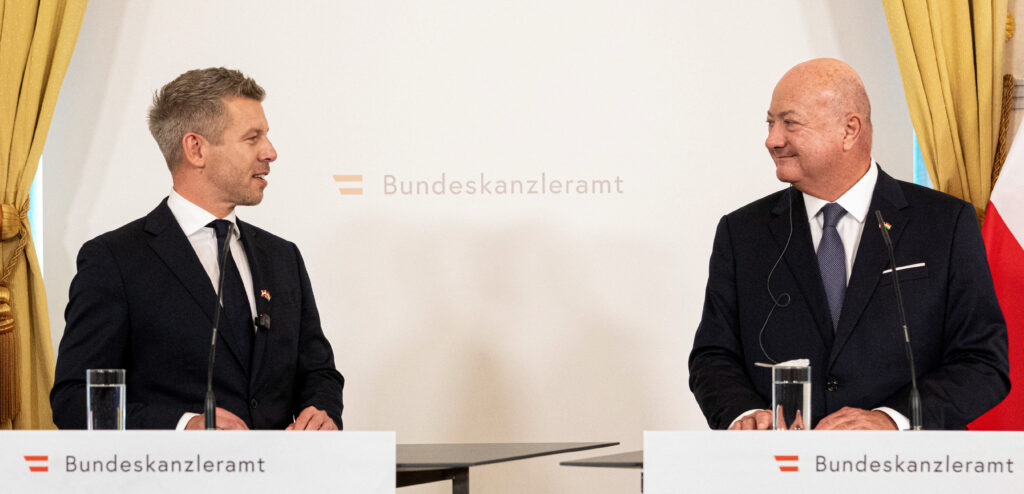

Just one day after Russian state media issued an unusually personal attack on Prime Minister Péter Magyar, Foreign Minister Anita Orbán sent Moscow a more reassuring message, reaffirming that Budapest wants a ‘pragmatic relationship’ with Russia despite the new government’s rapid political realignment towards the EU, NATO and Ukraine.
‘We are seeking a pragmatic relationship with Moscow,’ Orbán told Süddeutsche Zeitung in an interview published on Tuesday, 4 August. She cited Hungary’s continuing dependence on Russian oil and gas and the agreement with Rosatom to construct two new reactors at Paks. The relationship, she said, should be conducted between sovereign states that respect each other’s national interests and do not interfere in one another’s internal affairs.
Balancing Western Realignment with Russian Dependence
That position is nothing new, as both Orbán and Magyar have repeated similar statements on Hungarian–Russian relations since the Tisza Party’s landslide victory on 12 April, which ended the 16-year rule of Viktor Orbán and Fidesz–KDNP. While clearly distancing itself from the previous government’s close and often criticized ties with Moscow, the new administration has repeatedly described Russia as a ‘permanent European power’ with which Hungary must maintain working relations.
Magyar has nevertheless moved quickly to repair ties with Kyiv. On 3 June, Budapest and Kyiv reached a comprehensive agreement expanding the linguistic, educational, cultural and political rights of the Hungarian community in Transcarpathia. The Foreign Ministry also summoned Moscow’s ambassador to Budapest over a large-scale Russian strike on Transcarpathia, marking Hungary’s strongest direct diplomatic reaction towards Moscow since 2022.
The Kremlin itself took a similarly pragmatic approach immediately after the election. Dmitry Peskov, spokesman for Vladimir Putin, ‘noted with satisfaction’ Magyar’s willingness to pursue ‘pragmatic dialogue’ and expressed readiness to maintain mutually beneficial relations with Hungary. Later, in June, Peskov once again praised Magyar’s decision not to send weapons or military equipment to Ukraine, arguing that peace would come sooner if other countries adopted a ‘similar approach’.
‘The Kremlin itself took a similarly pragmatic approach immediately after the election’
Yet recently there have been signs pointing to at least some kind of rupture in relations, starting with remarks from Defence Minister Romulusz Ruszin-Szendi. On 14 July, speaking of Hungary’s need to restore trust with its NATO allies, he said that the country would ‘shut the door in the Russians’ faces’. He also alleged that Russian intelligence had tried to enter Hungary ‘through the back door’. Ruszin-Szendi later specified that he was referring to national security, critical infrastructure and alliance obligations rather than the wholesale termination of economic relations.
Nevertheless, the remarks caused a significant backlash among the Russian political elite, although not yet at the level of the Kremlin. Sergei Mironov, leader of the A Just Russia party’s parliamentary group, proposed stopping oil deliveries through the southern branch of the Druzhba pipeline in response to Hungary’s perceived change of position.
Days after the blunder, Anita Orbán initiated the termination of the appointments of 25 ambassadors and heads of diplomatic missions, including Norbert Attila Konkoly, who led the mission in Moscow.
Paks Shutdown Brings Russia Back into Focus
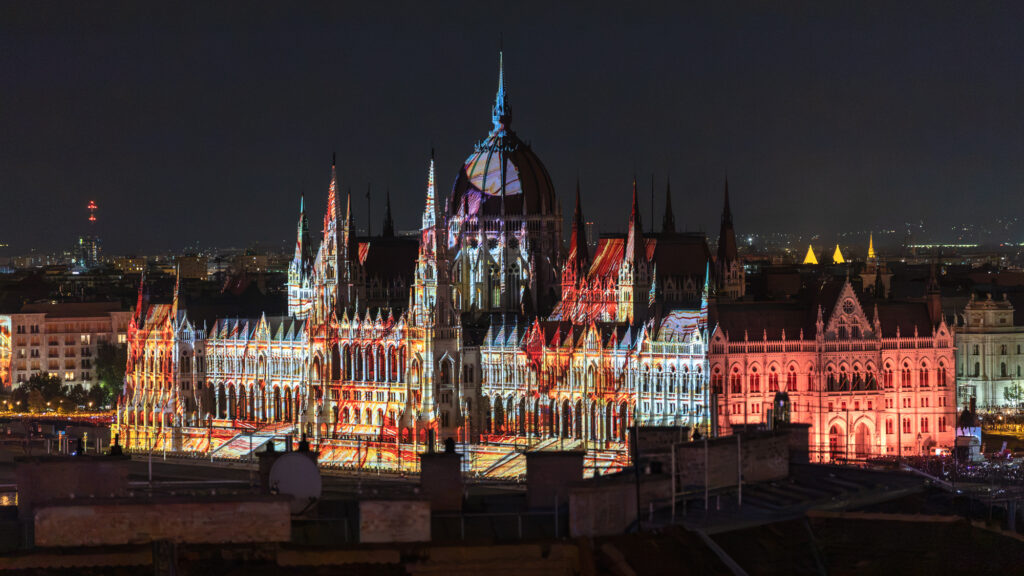
In that context, the current energy crisis, caused by a massive heatwave and drought hitting Hungary, put Hungarian–Russian relations at the centre of attention once again. As the Danube reached record-low levels, the reactors at Hungary’s only nuclear power plant in Paks, built during the Soviet era, had to be gradually switched off, potentially removing around 40 per cent of the country’s electricity supply.
The plant’s expansion has been under way since 2014 by Russia’s Rosatom, a €12.5 billion investment awarded without an open tender and a defining symbol of Orbán’s relationship with Moscow. Originally, the new reactors were planned to begin production in 2025 and 2026; however, the project was delayed by EU scrutiny, protracted design and licensing, slow site preparation and the war in Ukraine.
The new government pledged an inquiry and review into the contract and the investment, while Magyar also framed the present crisis as at least partly avoidable had the expansion been completed on schedule.
Moscow Is Watching Closely
Hungary’s energy crisis made international headlines last week as the potential shutdown of Paks was raised, which would mark its first-ever such halt in its 44-year history. That also prompted Russian state media outlet RIA Novosti to publish a column claiming that Hungary—and Romania, which is also experiencing similar difficulties—were approaching ‘two catastrophes’.
The article carried an unusually negative and offensive tone towards Magyar, opening by stating that the prime minister had ‘barely enjoyed his election victory’ before ‘reality sharply brought him down to sinful earth’. While presenting the crisis’s genuine characteristics, RIA overstated the technical danger, presenting the current situation as having the potential to damage the cooling circuit and trigger an emergency shutdown followed by potentially indefinite inspections.
‘The article ended with a direct taunt over the government’s planned review of Paks II’
Hungary’s nuclear regulator, however, said the reductions had no negative effect on nuclear safety or the environment. It added that technologies and reserves were available to maintain cooling even with river flow 90 per cent below average and at high water temperatures. The crisis concerns electricity supply and grid stability, not a potential nuclear accident.
The article ended with a direct taunt over the government’s planned review of Paks II: ‘Mr Magyar, how about now—is it not too expensive?’
The episode underscores how cautiously Hungary’s new government must navigate its political realignment with the European Union and NATO while maintaining pragmatic relations, mainly on energy, with Russia. With Viktor Orbán gone, Moscow may have lost a trusted ally and an almost constant veto in EU decision-making over Ukraine and sanctions policy. However, it did not immediately lose its leverage over Hungary’s energy security and has signalled that it could exploit it if the situation requires.
Related articles:
At a time when public debate is increasingly polarized and superficial, Hungarian Conservative remains committed to depth, intellectual honesty, and independent conservative thought.
Producing high-quality journalism requires resources. Your contribution helps us expand our coverage, reach new audiences, and keep our content accessible.

Please consider supporting our mission.