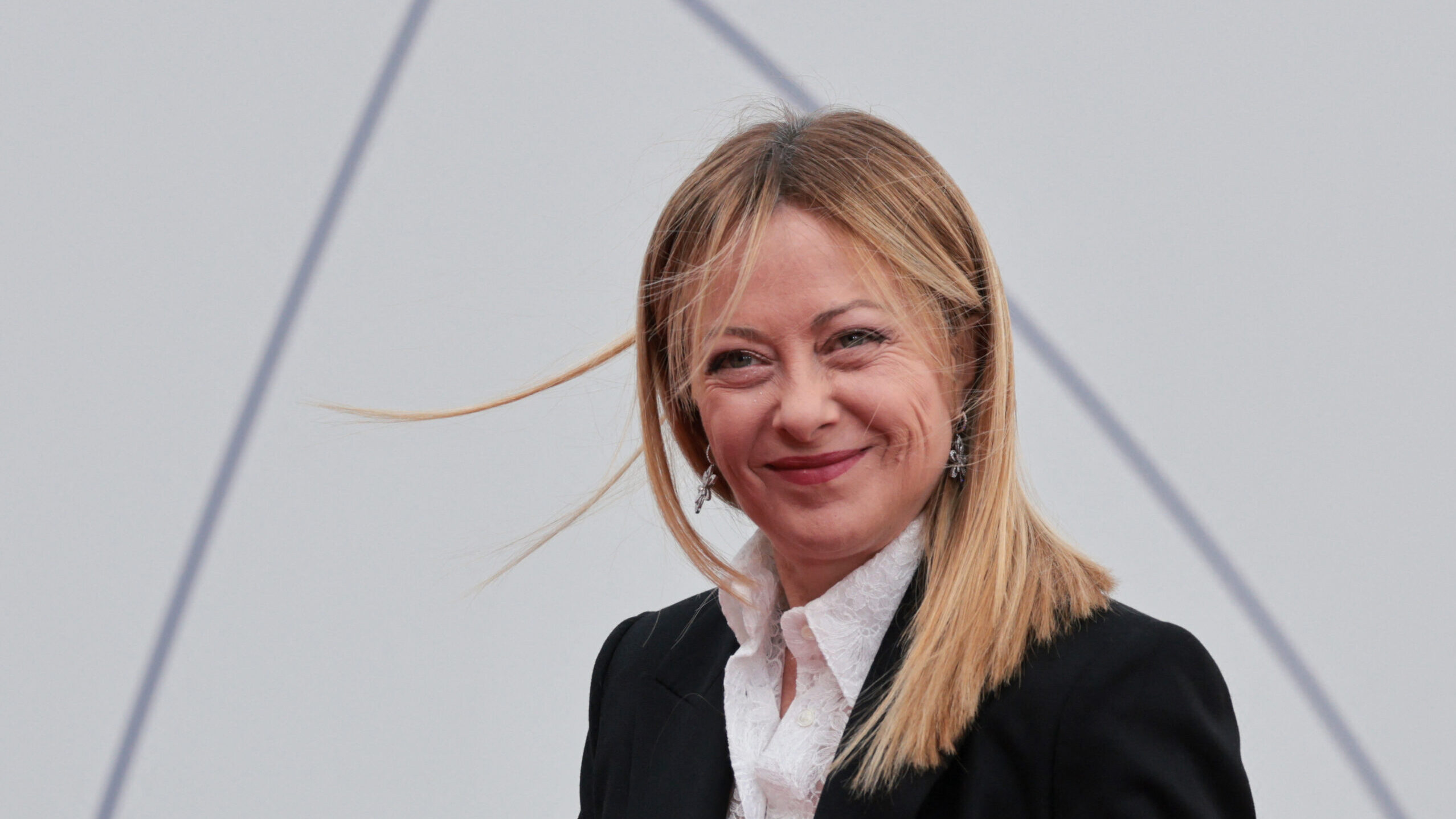
Artificial intelligence-generated deepfakes of Giorgia Meloni have flooded social media in recent days, depicting the Italian prime minister in an inappropriate manner, with one widely circulated image showing her in lingerie.
The images, presented as authentic, triggered strong reactions online, prompting Meloni to respond by condemning what she described as ‘politically motivated attacks’, noting that the AI-generated photos were being used to ‘attack and spread falsehoods’.
In a briefly ironic tone, Meloni also remarked that the creator had ‘even improved’ her appearance, while warning of the growing threats posed by AI-generated deepfake content. She emphasized that while public figures may have the resources to defend themselves, ordinary individuals are far more vulnerable. ‘I can defend myself. Many others cannot,’ she said.
The current controversy is not the first time Meloni has been targeted in recent years. In 2023, AI-generated pornographic deepfake videos and images of her circulated widely online and led to legal action.
The Italian prime minister called for greater digital responsibility from users, urging them to verify online content before reposting or drawing conclusions.
Girano in questi giorni diverse mie foto false, generate con l’intelligenza artificiale e spacciate per vere da qualche solerte oppositore.
— Giorgia Meloni (@GiorgiaMeloni) May 5, 2026
Devo riconoscere che chi le ha realizzate, almeno nel caso in allegato, mi ha anche migliorata parecchio. Ma resta il fatto che, pur di… pic.twitter.com/or44qru2qj
Meloni’s warning is not without foundation. The sheer scale of public reaction to the fake images illustrates how such content can influence public discourse in multiple ways. Reactions were sharply divided.
While some users quickly identified the images as fake, others initially believed them to be real, with one commenter writing that such images were ‘unworthy of the institutional role’ of a prime minister. The sexualized nature of the photos was central to these responses, with many describing them as a form of ‘digital harassment’ targeting Meloni.
The scandal comes amid an ongoing crackdown in Italy on harmful uses of artificial intelligence. Meloni’s government has introduced legislation imposing criminal penalties for ‘malicious applications’ of AI, including the creation and distribution of deepfakes, with potential fines and prison sentences depending on the severity of harm, positioning the country at the forefront of regulatory efforts within the European Union.
However, the legislation has also sparked significant criticism from both political opponents and legal experts. Critics argue that the introduction of criminal penalties represents a significant escalation and raises questions about proportionality.
Others point to ambiguities in how key concepts such as ‘harm’ and ‘deception’ are defined, warning that this could create legal uncertainty and make it difficult to distinguish malicious manipulation from satire or legitimate expression. While acknowledging that the law responds to a genuine and growing threat, critics contend that it risks prioritizing punitive measures without adequately addressing the deeper challenges posed by deepfake technology.
Related articles:
At a time when public debate is increasingly polarized and superficial, Hungarian Conservative remains committed to depth, intellectual honesty, and independent conservative thought.
Producing high-quality journalism requires resources. Your contribution helps us expand our coverage, reach new audiences, and keep our content accessible.

Please consider supporting our mission.