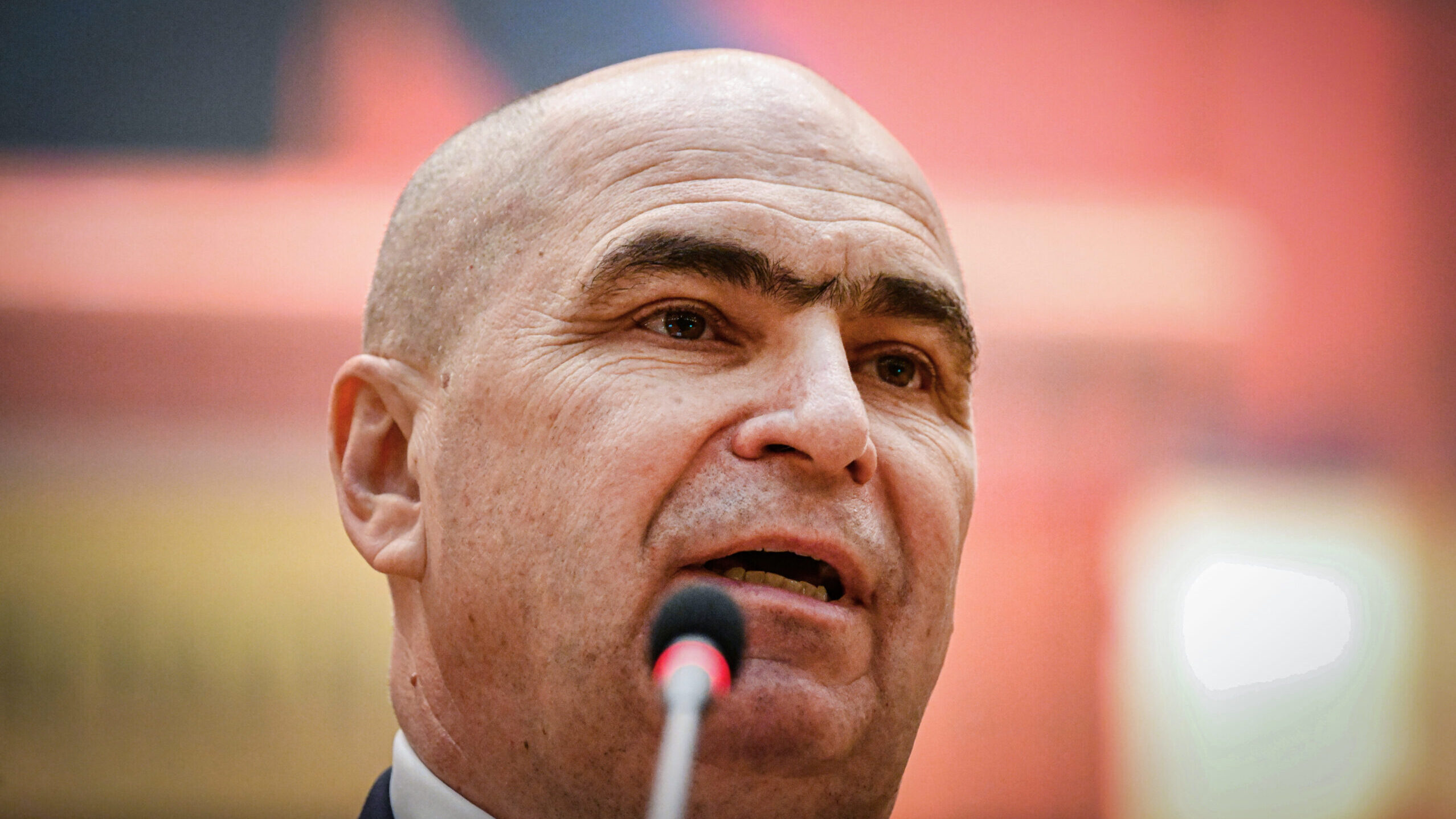
Romania’s parliament has voted to remove Prime Minister Ilie Bolojan from office, passing a motion of no confidence initiated by the ultranationalist Alliance for the Union of Romanians (AUR) and the Social Democratic Party (PSD).
Lawmakers approved the motion by a decisive margin on Tuesday, 5 May, with 281 votes in favour and only four against. The government, an ideologically diverse coalition of the PSD, the centre-right National Liberal Party (PNL), the liberal-progressive Save Romania Union (USR), and the Hungarian minority Democratic Alliance of Hungarians in Romania (RMDSZ), formed to keep AUR out of power, has collapsed less than a year into its mandate.
The vote followed weeks of escalating tensions after PSD exited the ruling coalition and joined forces with AUR, led by George Simion, to initiate the motion. PSD and the opposition accused Bolojan of imposing harsh austerity measures, failing to deliver reforms, and worsening economic conditions, while the prime minister defended his policies as necessary to reduce Romania’s large budget deficit and secure critical European Union funding.
The collapse raises concerns about Romania’s economic trajectory, including its ability to maintain investor confidence, protect its investment-grade credit rating, and access more than €10 billion in EU recovery funds.
The Bolojan government has just been ousted by the Romanian Parliament.
— 🇷🇴 George Simion 🇲🇩 (@georgesimion) May 5, 2026
An end to ten months during which the so-called pro-Europeans have delivered nothing but: taxes, war, and poverty.
The voice of the 🇷🇴people was heard today.
Time for national reconciliation!
Under Romania’s constitution, Bolojan will remain in office in a caretaker capacity with limited powers, while President Nicușor Dan begins consultations to form a new government. A snap election is considered unlikely, but the fragmented parliamentary landscape suggests that coalition negotiations could prove protracted and unstable.
The political fallout comes amid broader volatility in Romania following the annulled 2024 presidential election and the growing strength of AUR, which is increasingly shaping the national agenda despite remaining outside government.
As recently highlighted by Hungarian Conservative, the crisis extends beyond Romania. It is unfolding in parallel with a major political transition in Hungary following Viktor Orbán’s defeat, opening the possibility of a regional realignment in EU negotiations. A prolonged Romanian deadlock could weaken Bucharest’s reform capacity and standing in Brussels, potentially strengthening Hungary’s negotiating position over frozen EU funds and accelerating a shift towards more flexible ‘phased conditionality’.
At the same time, a scenario in which AUR gains influence raises concerns for the Hungarian minority in Transylvania, particularly regarding the future role of RMDSZ and the risk of renewed bilateral tensions under Péter Magyar’s incoming government.
Related articles:
At a time when public debate is increasingly polarized and superficial, Hungarian Conservative remains committed to depth, intellectual honesty, and independent conservative thought.
Producing high-quality journalism requires resources. Your contribution helps us expand our coverage, reach new audiences, and keep our content accessible.

Please consider supporting our mission.