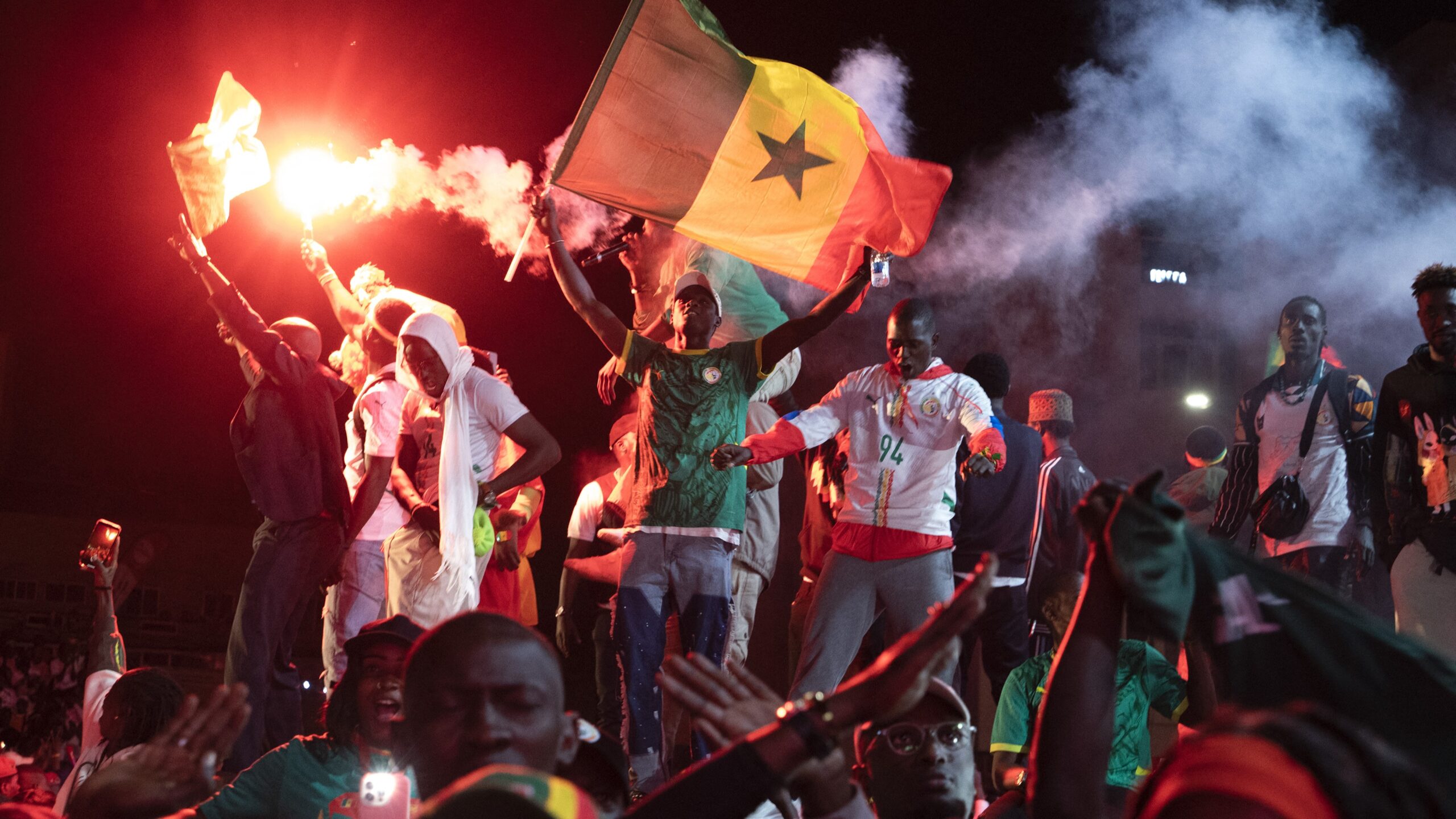
Senegalese football fans have been barred from entering the United States to watch their national team at the 2026 FIFA World Cup, becoming the latest nationality caught up in the Trump administration’s strict border and visa policies.
According to media reports, many Senegalese supporters have had their visa applications rejected, effectively preventing them from following their team at the tournament despite Senegal having qualified for the competition. Supporters from Ivory Coast have reportedly encountered similar difficulties.
Social media reports even say not a single Senegalese supporter expected to attend the tournament due to the ban.
The restrictions form part of a broader immigration and security policy introduced by the Trump administration, which has imposed varying levels of travel restrictions on several countries. While players, coaches, and official delegations are generally exempt, ordinary supporters, journalists, and football officials have increasingly faced difficulties obtaining entry permits.
Iran’s football federation has also publicly complained that at least 15 federation officials were denied visas ahead of the tournament, forcing last-minute logistical changes and preventing key staff members from travelling to the United States. Iran, which remains subject to US travel restrictions and is currently engaged in a military conflict with the US and Israel following the strikes against Tehran in February, was forced to relocate its World Cup base camp from Tucson, Arizona, to Tijuana, Mexico.
‘Iran was forced to relocate its World Cup base camp from Tucson, Arizona, to Tijuana, Mexico’
Iranian officials accused FIFA of failing to secure the necessary guarantees from the host country despite repeated assurances, while also accusing Washington of politicizing the tournament.
One of the most high-profile cases involved Somali referee Omar Abdulkadir Artan, the reigning African Referee of the Year and the first Somali ever selected to officiate at a FIFA World Cup. Despite holding a valid visa, Artan was denied entry upon arrival in Miami and forced to return home. The Trump administration later justified the decision by citing national security concerns and alleged links to individuals suspected of involvement with terrorist organizations.
Following the incidents, the White House World Cup Task Force argued that the United States cannot compromise security-screening standards simply because of the tournament, maintaining that every visitor must satisfy vetting requirements before being admitted. American authorities have also pointed to concerns involving terrorism, visa overstays, and weaknesses in identity-verification systems in certain countries.
The restrictions have drawn criticism from affected supporters and football officials. Some Senegalese fans told AFP that they felt ‘unfairly excluded’ from a tournament that was supposed to ‘bring nations together’. Fan groups reported that travel plans made months in advance had been cancelled after visa applications were rejected.
Others, however, have pointed to recent incidents involving Senegalese supporters at the 2025 Africa Cup of Nations in Morocco. Following Senegal’s controversial defeat in the final, dozens of supporters reportedly clashed with security forces, attempted to breach barriers, and sought to enter the pitch, prompting intervention by riot police.
‘White House World Cup Task Force argued that the United States cannot compromise security-screening standards simply because of the tournament’
Eighteen Senegalese supporters were subsequently arrested by Moroccan authorities. While US officials have not linked the current visa restrictions to those incidents, some commentators have argued that they contributed to broader concerns regarding crowd security and public order.
FIFA president Gianni Infantino has acknowledged concerns surrounding visa issues but stressed that immigration decisions ultimately remain the ‘responsibility of host countries’ rather than FIFA. Critics argue that the measures undermine the World Cup’s role as a global event and disproportionately affect supporters from African and Muslim-majority countries.
The tournament began on Thursday, 11 June, with host nation Mexico defeating South Africa in a fiery opening match that produced three red cards. The victory gave El Tri a strong start to their World Cup campaign.
Related articles:
At a time when public debate is increasingly polarized and superficial, Hungarian Conservative remains committed to depth, intellectual honesty, and independent conservative thought.
Producing high-quality journalism requires resources. Your contribution helps us expand our coverage, reach new audiences, and keep our content accessible.

Please consider supporting our mission.