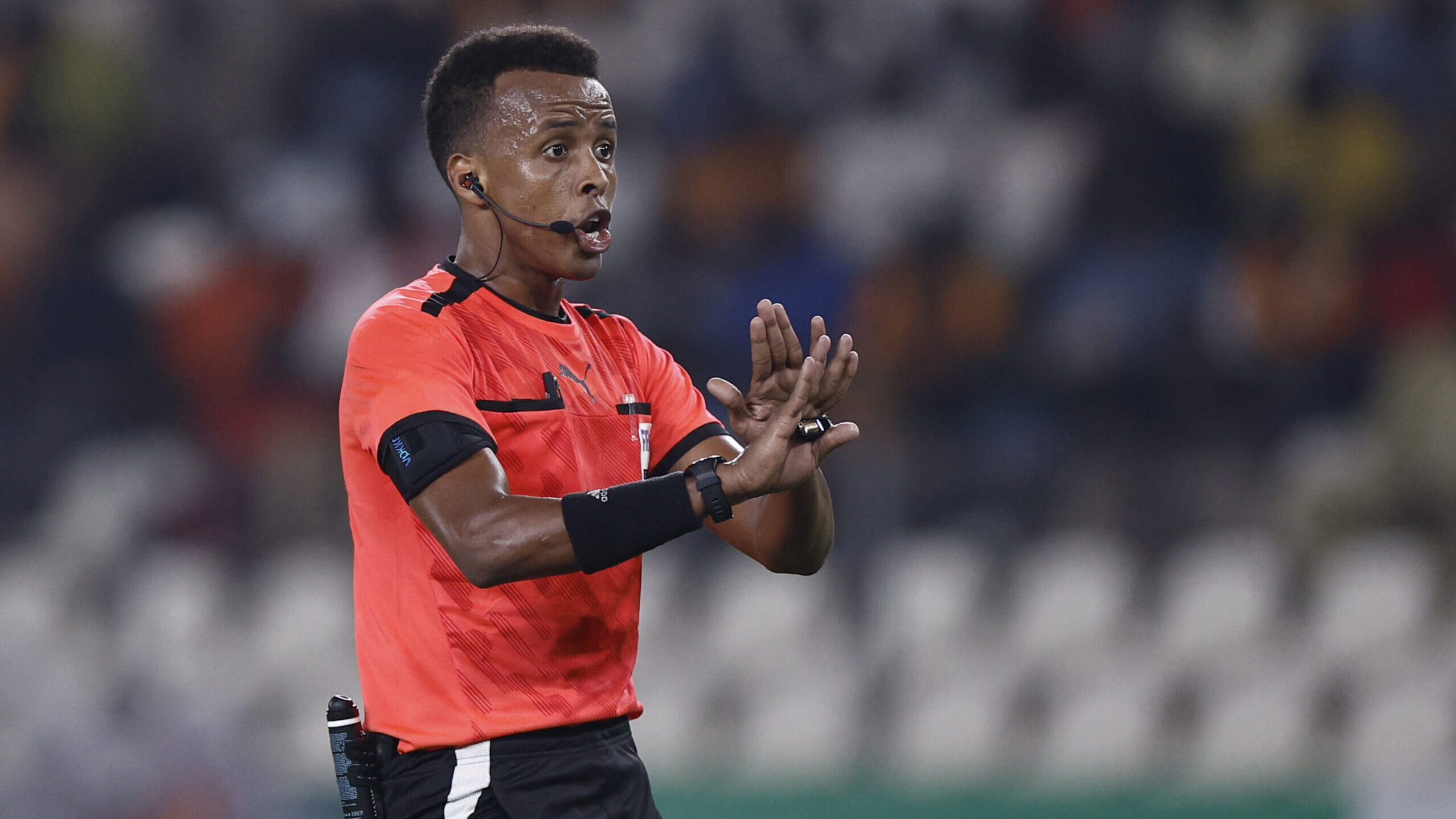
Somali referee Omar Abdulkadir Artan has been denied entry to the United States ahead of the 2026 FIFA World Cup, preventing him from becoming the first Somali official to referee at football’s biggest tournament.
Artan was one of 52 referees selected by FIFA for the World Cup, which is set to begin on Thursday and is being hosted by the United States, Canada, and Mexico. However, media reports on 8 June stated that he was stopped by US immigration authorities after arriving in Miami, despite reportedly holding a valid visa and travelling on official FIFA business.
US Customs and Border Protection later said that the official had been found inadmissible following additional screening due to unspecified ‘vetting concerns’. FIFA subsequently confirmed that Artan would be unable to participate in the tournament.
The Somali Football Federation quickly condemned the decision, with Hassan Wiish, chairman of the federation’s referees committee, expressing disappointment over Artan’s exclusion. He added that the referee had travelled with all necessary documentation and was carrying out official duties.
Somalia’s Ministry of Youth and Sports also issued a statement calling the move a ‘blow to sporting merit’ and ‘equal opportunity’. Somali officials have reportedly lodged formal complaints and requested clarification from both FIFA and US authorities.
The case is particularly sensitive because Artan was set to make history as the first Somali referee ever appointed to a men’s FIFA World Cup. A FIFA-listed referee since 2018, he officiated at the 2024 Africa Cup of Nations and was named the Confederation of African Football’s Referee of the Year in 2025.
The incident comes as President Donald Trump’s administration has renewed travel restrictions affecting several countries, including Somalia, citing security and immigration-related concerns. Somalia has also attracted renewed scrutiny in US political debate following major fraud investigations involving members of Minnesota’s Somali–American community. Republicans have frequently cited those cases in support of stricter immigration vetting and oversight measures.
Andrew Giuliani, who heads the administration’s World Cup task force, told the BBC that the White House supported the decision made by border officials.
‘I trust the men and women at Customs and Border Protection,’ Giuliani said, while declining to provide details about the specific reasons behind Artan’s exclusion.
FIFA has largely sought to distance itself from the dispute. In a statement, the organization said that immigration and border-control decisions remain the responsibility of host governments rather than football’s governing body.
Artan’s case is not the first immigration dispute involving World Cup participants. The Guardian reported on 7 June that several members of Iran’s World Cup delegation were denied US visas, forcing the team to relocate its training base from Arizona to Tijuana, Mexico. While Iranian players and essential coaching staff eventually received entry permits, senior football federation officials and support personnel remained unable to enter the United States.
Tehran accused Washington of politicizing the tournament, while US officials cited national security considerations. The Iranian team is now expected to travel into the United States only for its matches before returning to Mexico.
Related articles:
At a time when public debate is increasingly polarized and superficial, Hungarian Conservative remains committed to depth, intellectual honesty, and independent conservative thought.
Producing high-quality journalism requires resources. Your contribution helps us expand our coverage, reach new audiences, and keep our content accessible.

Please consider supporting our mission.