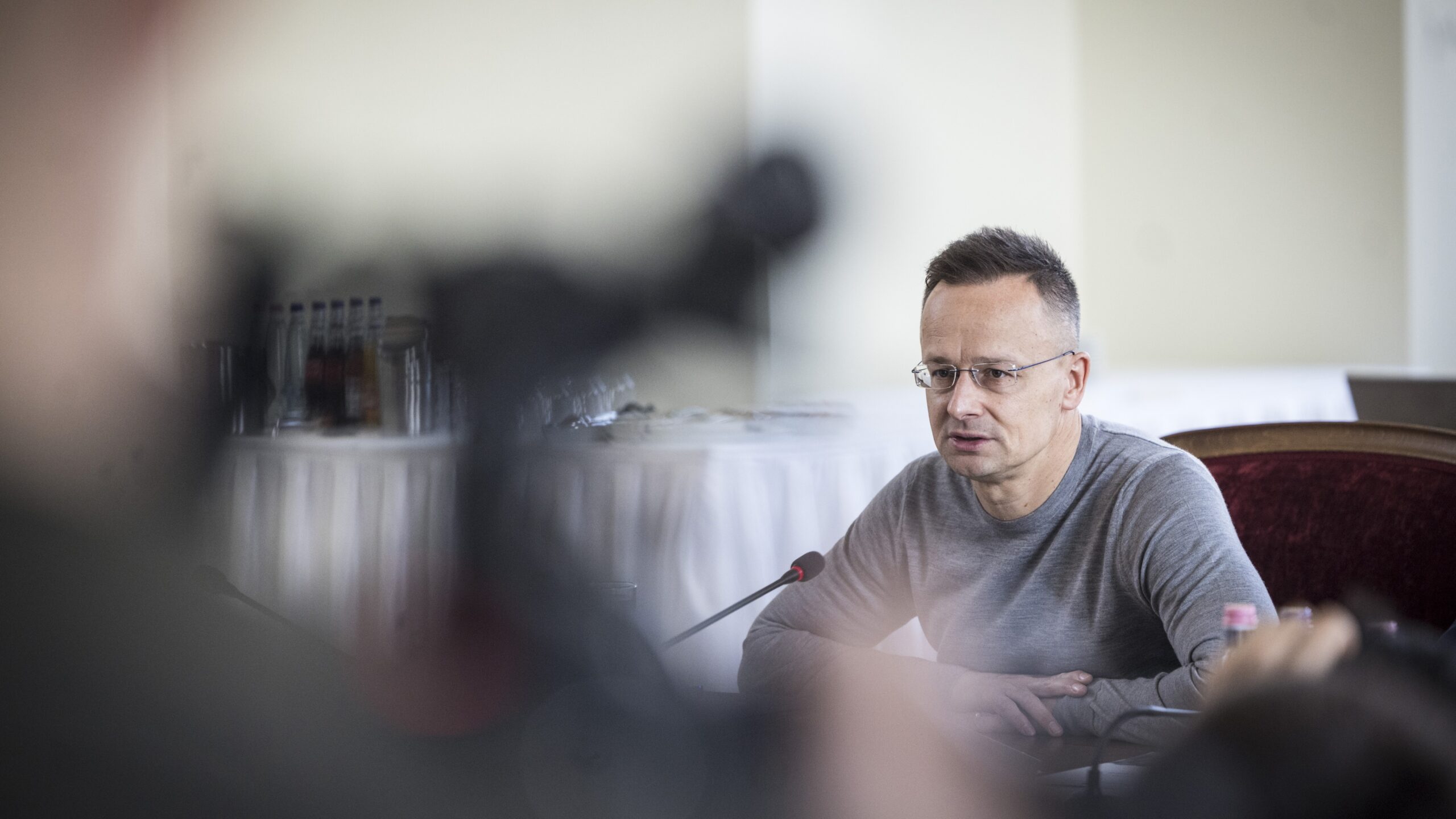
Europe is likely to face the world’s most severe energy shortages and price increases as a result of the war involving Iran and restrictions on Russian energy supplies, but Hungary can shield itself through an independent energy policy, Hungarian Foreign Minister Péter Szijjártó said on Wednesday.
Speaking after a government meeting in Budapest, Szijjártó warned that the conflict in the Middle East has escalated rapidly and has already drawn in several countries that initially had no role in the outbreak of the war.
According to a statement from the Ministry of Foreign Affairs and Trade, the minister said the situation poses a major threat to global security because several of the states involved are key pillars of the world’s energy supply. He highlighted that the region includes one of the most important routes for global maritime energy trade. ‘The closure of the Strait of Hormuz would mean that roughly one-third of the world’s seaborne oil trade and about one-fifth of global natural gas trade would effectively be under blockade,’ Szijjártó said.
He added that five countries transport the majority of their oil exports through the strait, with three regional states sending nearly all of their oil exports through the route. Saudi Arabia previously shipped about 90 per cent of its exports through the passage, while the United Arab Emirates relied on it for roughly half of its oil exports.
According to Szijjártó, this situation means that significant volumes of energy are disappearing from international markets, while the delivery of additional supplies has become highly uncertain. He argued that Europe is ‘on the losing side twice,’ as the uncertainty surrounding maritime transport harms European economies while earlier decisions in Brussels to restrict Russian energy supplies have further reduced available resources on the continent.
As a result, Europe currently has the smallest energy reserves among major regions of the world, the minister said. ‘This means the European energy market is facing the tightest supply and the largest shortages globally,’ he added, arguing that the combined effects of disrupted maritime transport and the exclusion of Russian deliveries have effectively cut Europe off from two major sources of energy in the Eurasian region.
Szijjártó warned that this could lead to dramatic increases in energy prices across Europe. According to him, the first signs have already appeared in fuel markets, where significant price increases have been recorded across the continent. He cited reports from Hungary’s ambassador to Warsaw indicating that diesel prices at some petrol stations in Poland have exceeded the psychological threshold of 8 zlotys per litre, while petrol prices are around 6.8 zlotys.
The minister noted that Hungarians are closely watching developments as two major conflicts not far from the country are placing both price and supply pressure on Hungary’s energy system. In this context, he said, the introduction of a government ‘protected price’ for fuel is particularly important in order to shield Hungarian businesses and farmers from the combined impact of the Iran war and disruptions to oil supplies linked to Ukraine.
Szijjártó also suggested that the conflict involving Iran could continue for a prolonged period following the election of a new religious leader in Tehran who, he said, represents the same political direction as his predecessor. According to the minister, Iran has not abandoned its escalation strategy, with drones and missiles continuing to target locations in Arab countries, including civilian sites. He warned that, much like the war in Ukraine, the conflict could become a long-term feature of global security.
Given these developments, Szijjártó said Europe must prepare for the possibility that it will remain the region most affected by energy shortages, while Hungary’s priority will be to maintain its sovereign energy policy, protect the country’s energy infrastructure, and ensure the uninterrupted operation of transit routes supplying the country.
Related articles:
At a time when public debate is increasingly polarized and superficial, Hungarian Conservative remains committed to depth, intellectual honesty, and independent conservative thought.
Producing high-quality journalism requires resources. Your contribution helps us expand our coverage, reach new audiences, and keep our content accessible.

Please consider supporting our mission.