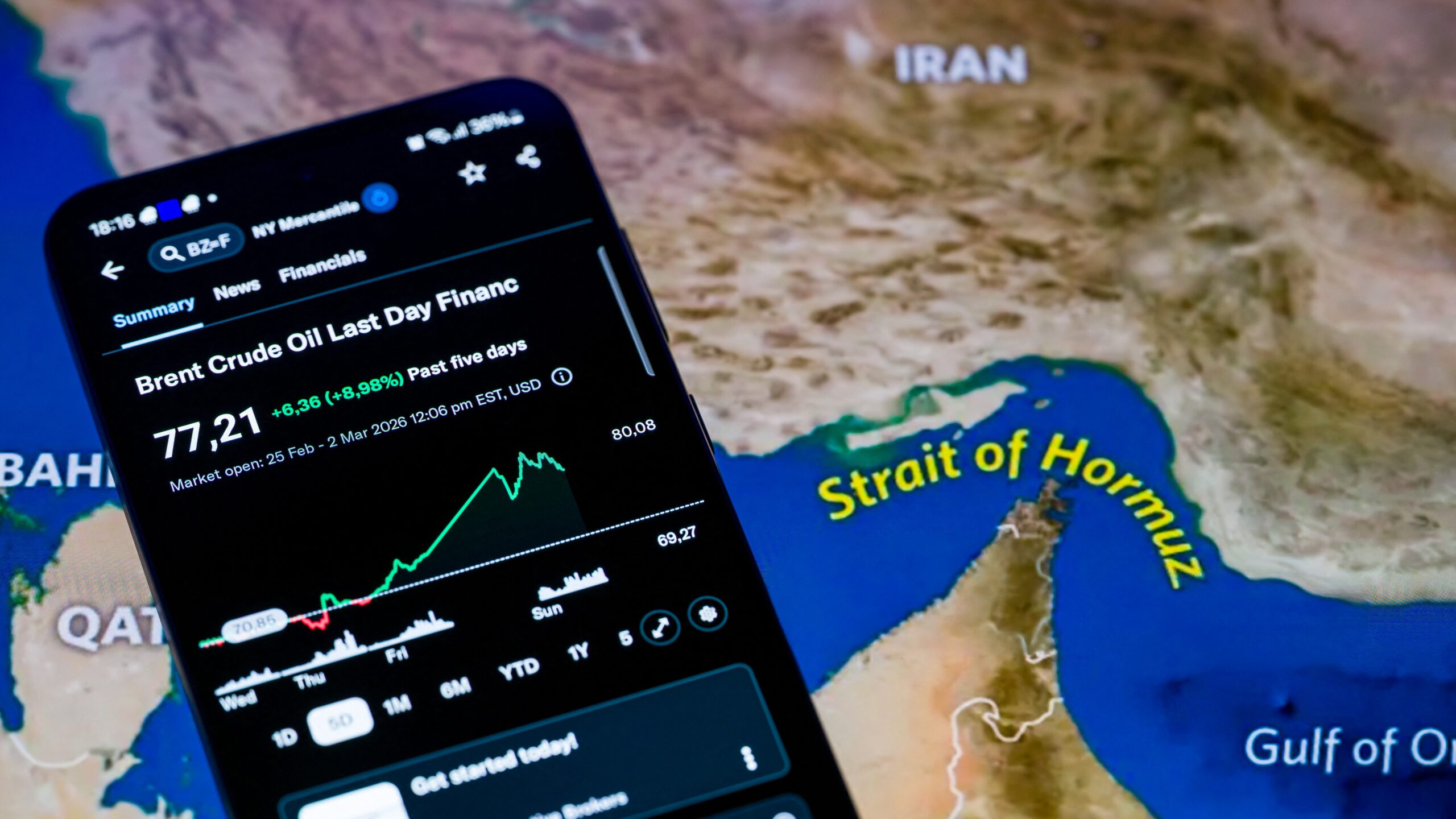
Closing the Strait of Hormuz threatens a double crisis of energy and food supply security since a defining part of the global oil, natural gas and fertilizer export originates from the Gulf countries and is exported via the strait. Even though so far, the most affected region seems to be Asia, the disruption of these supply chains could cause a dangerous phenomenon to global economics and may further increase geopolitical tensions.
Trouble No 1: Energy
The joint attack by the United States and Israel against Iran, and the latter’s responses, including the closure of the Strait of Hormuz, as well as its attack targeting some energy-related facilities in different Gulf countries, have raised serious concerns worldwide about the issue of global energy security.
Globally, around 20 per cent of crude oil and liquefied natural gas (LNG) trade crosses the Strait of Hormuz daily, produced by a fistful of oil monarchies. Two notable examples out of these are Saudi Arabia and Qatar. While the first one is the world’s No 1 crude oil exporter, the latter is the world’s No 3 LNG exporter. However, the importance of the strait does not reside only in sheer numbers like reserves, production or export capacities of the Gulf countries, but mostly in its geographical location.
The region has a distinctive feature since from here, ships could reach both the West and the East relatively within a similar time, so they could make deals on both sides. A clear example of this is Qatar’s LNG trade. While most of its exports go to Asia, EU member states also procure around 4 per cent of their cumulative total natural gas import from it. For that reason the closure of the strait by Iran on Monday with the warning that any ships which may try to cross would be set on fire hand in hand with Iran’s attack on several crude oil and LNG facilities—like Ras Tanura in Saudi Arabia or Ras Laffan in Qatar which are among the largest of their kind in the world therefor—had put already multiple regions with many countries into a limbo. In the case of crude oil, the best examples are China and India; in these cases, around a third and a half of their total imports were supplied by the Gulf countries, respectively.
Trouble No 2: Fertilizers
What makes this situation worse is that fossil fuels are far from being the only important commodities which cross the Strait. Besides oil and natural gas, some Gulf countries are famous for their fertilizer production and export as well, and even Iran itself is an important distributor of this agriculture-related product. Nowadays, fertilizers are an essential part of agriculture, to the extent that, according to some estimates, half of the world’s global food production relies on them. Synthetic fertilizers have three main groups based on the element they are built on, namely nitrogen, phosphorus and potassium. The first group accounts for almost 60 per cent of global use, and roughly a third of global exported urea—the most widely used nitrogen fertilizer—comes from the Gulf region and goes to Asia. Across many regions, as in Asia, this time of the year is about planting. Therefore, due to a potentially shrinking fertilizer supply chain, farmers may face a difficult situation in which even a modest reduction in application rates can trim output.
‘Globally, around 20 per cent of crude oil and liquefied natural gas (LNG) trade crosses the Strait of Hormuz daily’
Because of geopolitical tensions and market narrowing, fertilizer prices have already started to increase. Though it is worth mentioning that the whole market has already been in a squeeze, as both China and the EU have cut some output. The former did it by export controls in order to keep higher domestic availability, while the latter did it because of the loss of some cheap Russian gas supply. Although the extent of price surging cannot be assessed currently, food prices are likely to increase as well since they need to absorb the already growing prices of fertilizers.
All in all, as can be seen, there is an unfolding double crisis of energy and food supply disruption. What further extends the situation and intersects the two issues is the fact that the production of nitrogen-based fertilizers itself relies on natural gas. In this case, a notable example is that on Tuesday, QatarEnergy announced it would stop LNG production along with some downstream products, for example, urea. Therefore, the longer the conflict lasts, the more disruptions could occur in global energy and food supply chains, especially if the Strait of Hormuz remains closed for an extended period. These, in turn, could cause product shortages, price increases, inflation, and may even deepen the conflict.
Related articles:
At a time when public debate is increasingly polarized and superficial, Hungarian Conservative remains committed to depth, intellectual honesty, and independent conservative thought.
Producing high-quality journalism requires resources. Your contribution helps us expand our coverage, reach new audiences, and keep our content accessible.

Please consider supporting our mission.