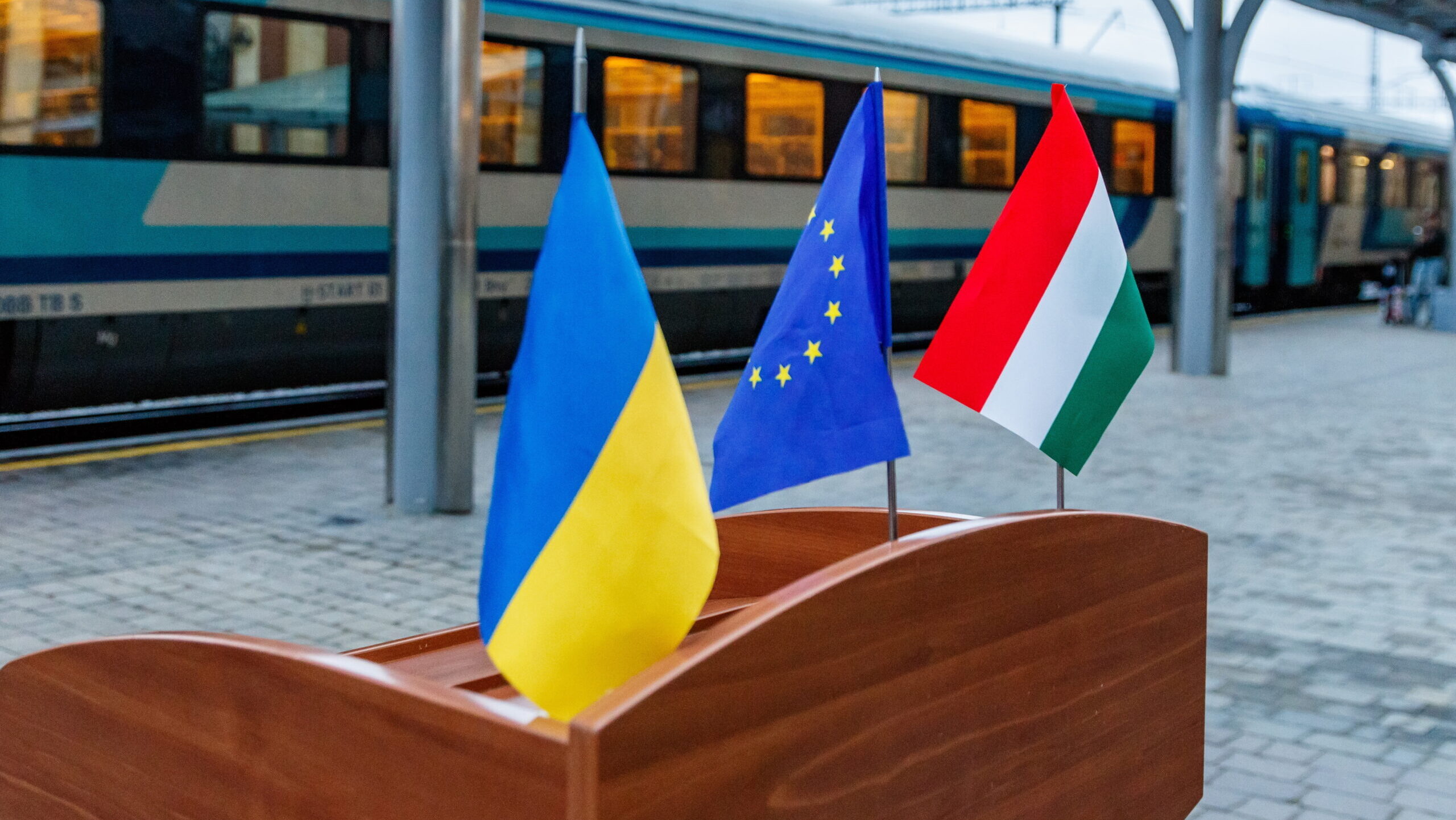
Kyiv is considering a significant tightening of penalties for violations of its language law, with fines potentially set to increase two- to threefold for breaching the regulations. The proposal was announced by Olena Ivanovska, Ukrainian State Language Protection Commissioner, who argued that current punitive measures, ranging from around €40 to €300, are not sufficiently dissuasive.
Speaking to Ukrainian outlet Unian, Ivanovska said that while the law was originally designed ‘not to punish, but to carry out an educational and encouraging mission’, enforcement data suggests a ‘need for stricter measures’. According to her, inspections rose by 26 per cent in 2025 compared to the previous year, while authorities have already conducted around a hundred investigations in the first two months of 2026.
Ivanovska stressed the importance of proportionality, noting that first-time or accidental offenders may still receive warnings, while repeat or deliberate violators should face tougher sanctions. The planned changes aim to ‘establish penalties at a level that would have a genuinely deterrent effect’ and encourage long-term compliance.
The language law has also begun to be applied online, according to Ivanovska, who said that users operating business-oriented social media accounts—including bloggers, beauty professionals, and service providers—are required to maintain Ukrainian-language content. Profiles used for commercial purposes fall under the regulation.
The proposed restrictions would have a negative impact on the Hungarian minority living in Transcarpathia. The issue has long been a source of tension between Hungary and Ukraine. In 2017, Ukraine’s education law introduced a gradual shift towards Ukrainian as the primary language of instruction from fifth grade onward, significantly affecting minority-language education, including Transcarpathian Hungarians.
Hungarian Minister for Foreign Affairs and Trade Péter Szijjártó sharply criticized the move at the time, stating that Ukraine had ‘stabbed Hungary in the back’. Budapest subsequently blocked high-level NATO–Ukraine meetings as a form of diplomatic pressure.
Although Ukraine incorporated several recommendations from the Council of Europe’s Venice Commission—delaying full implementation of the education reform until 2023—it proceeded to adopt a broader language law in 2019. The legislation mandates the use of Ukrainian in most areas of public life, with exceptions for private conversations and religious services.
Further legislative developments have also shaped the broader framework for minority rights. A 2021 law on indigenous peoples recognized only groups without a kin-state—such as Crimean Tatars—excluding minorities like Hungarians. Ukrainian authorities justified this by arguing that other minorities benefit from support from their respective mother countries.
‘Péter Szijjártó sharply criticized the move at the time, stating that Ukraine had “stabbed Hungary in the back”’
In 2022, Ukraine adopted a new law on national minorities as part of its EU accession process. The legislation guarantees a range of cultural, linguistic, and social rights, although disputes over implementation persist.
More recently, the Ukrainian parliament advanced a draft law that could introduce limited flexibility in vocational education, allowing instruction in EU languages—including Hungarian—under specific conditions. However, the proposed tightening of language law enforcement signals that Kyiv continues to prioritize strengthening the role of the Ukrainian language in public and economic life.
The proposed restrictions could add another layer of tension to already deteriorating Hungarian–Ukrainian relations. Prime Minister Viktor Orbán is currently blocking the €90 billion EU loan to Kyiv in response to the halt of oil transit through the Druzhba pipeline since 27 January. Ukrainian President Volodymyr Zelenskyy has also recently threatened Orbán over his veto. Both countries have accused each other of conducting intelligence operations on their respective territory, while the Hungarian government claims that Ukraine is part of a broader foreign intelligence operation aimed at influencing the outcome of Hungary’s upcoming election in support of the opposition Tisza party.
Related articles:
At a time when public debate is increasingly polarized and superficial, Hungarian Conservative remains committed to depth, intellectual honesty, and independent conservative thought.
Producing high-quality journalism requires resources. Your contribution helps us expand our coverage, reach new audiences, and keep our content accessible.
Please consider supporting our mission.