‘Do three things well, not ten things badly.’
David Segrove
India and the European Union have finally signed a free trade agreement. European leaders immediately declared it to be ‘the mother of all trade agreements’. For the moment, this euphoric claim appears justified; future hurdles should not prevent us from celebrating a worthy achievement after 30 years of patient negotiations. That said, my geopolitical instinct tells me that an even greater success might have been achieved elsewhere. This concerns the multipolar status of both Europe and India.
The idea of global multipolarity largely remains more a desire than a reality. The recent turbulence in the world order has brought this home to everyone. Until 2014, India was primarily conscious of its weaknesses; the question of its strengths was rarely given serious consideration. India hoped for, and received, only a limited degree of respect for its fragile territorial integrity and its position within global governance institutions such as the UN. Beyond this, India did not aspire to become a multipolar power on the scale of China, or even Türkiye. In this respect, India arguably adopted the right attitude.
In 1990, India’s GDP was approximately $321 billion, while that of the Netherlands was about $319 billion. Only a few decades ago, India was not just poor; it was extremely poor. If India ever gave the impression of being a multipolar power, this was despite itself. Without realizing it, India was producing a unique form of multipolarity, almost from nothing, just to overcome its weaknesses and survive. India is still heavily dependent on other great powers, but they are not that dependent on it. Without mutual dependency it is difficult to maintain or aspire to a multipolar power status.
After all, this might not be a bad thing, as India may seek to shape a new form of multipolarity grounded in cooperation rather than hegemonic force—a poorer country’s response to a conflictual and divided world.
In Search of Practical Multipolarity
To be a genuine candidate for multipolarity, a country must create and maintain a substantial network of dependencies, making other nations inclined to integrate into its system, either partially or completely. For centuries, Oxford and Cambridge contributed to the United Kingdom’s global influence by educating the elites of many Commonwealth countries. More recently, Germany and Japan exemplified the successful creation of polarity by making key industries worldwide dependent on their unique technologies and spare parts. In doing so, they constructed remarkable pyramids of value chains, at the apex of which they stood. This demonstrates that polarity ultimately derives from a country’s ability to secure the integrated dependence or adherence of other nations. Consequently, multipolarity is a country’s capacity to manage its openness to advantage while maintaining full control of it in relation to the outside world. As the Indian foreign minister, Mr Jaishankar, has stated: ‘We would like to have multiple choices.’
‘Multipolarity is a country’s capacity to manage its openness to advantage while maintaining full control of it in relation to the outside world’
Beyond this search for choices, a country must produce something sustainable and more orderly. Here, India is making a difference: its experimentation with polarity points to a cost-effective, and therefore sustainable, approach that is organic, decentralized, and federated. This suggests a vision of a world in which things can be peaceful. For the moment, however, the world appears to be moving in the opposite direction. From a historian’s perspective, the 21st century resembles the 20th century—but worse. Across the globe, remilitarization is underway, with funds redirected away from welfare and development. This, in turn, further fragilizes a large number of weak states, creating an attractive opportunity for some major powers that have shifted from protector to predator.
Building multipolarity will not be easy for India, but expectations are high. An increasing number of countries, both large and small, are looking to India’s distinctive approach to polarity to prevent a new era of competing blocs or the resurgence of a bipolar world. If this proves successful, India could achieve something it never anticipated, without actively seeking it. It may finally have the opportunity to establish a horizontal order that provides the security of multipolarity while avoiding the excesses and uncertainties of its classical form.
The EU — A Melting Bloc of Multipolarity
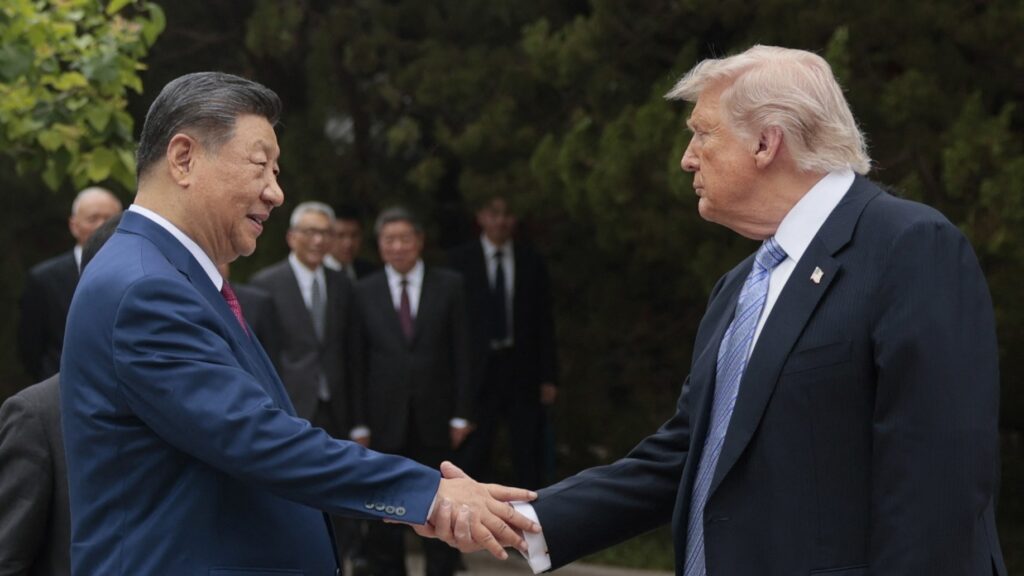
India could have learned a valuable lesson from the dismantling of Europe’s global stature and prestige. The ease with which it occurred was breathtaking. This clearly demonstrates that, since von der Leyen’s ill-fated meeting with the American President in Scotland, Europe has been gradually melting away, with little to prevent it. European leaders appear to regard President Trump as a passing nightmare, pushing them into a zombie-like inaction. As a result, they are leaving a dangerous void in the global balance.
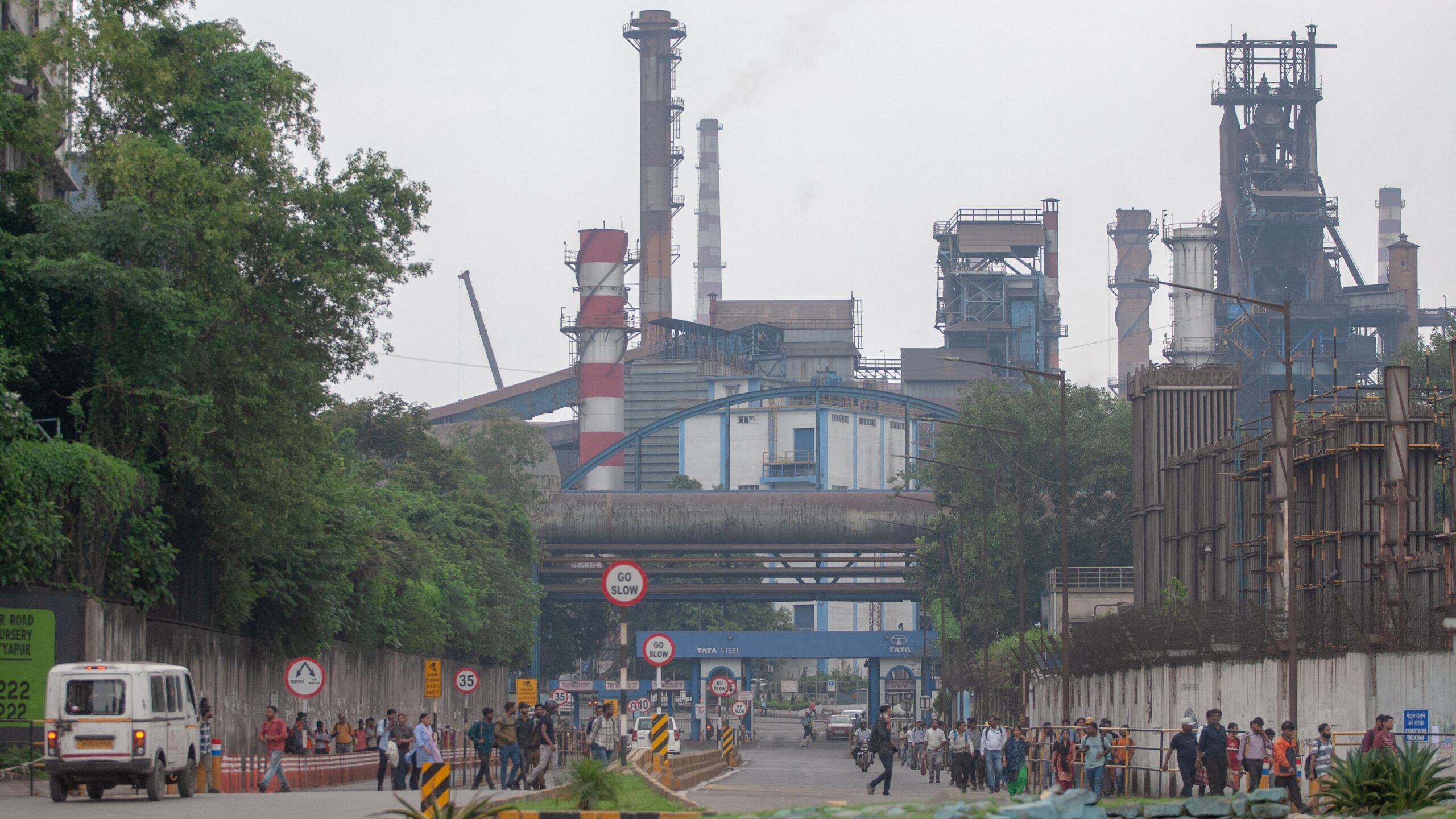
This was a detrimental blow to India in the short term. India had hoped to partner with Europe across multiple fields and levels, much of this tied to its multipolarity project. Europe was seen as a safe zone—reluctant to fully participate in Eurasian integration or to embed itself entirely within the American sphere. For India, Europe represented an economic and civilizational space, supportive of its long-term development. After 30 years of trade negotiations, India was fully aware that the path would not be easy, but it deemed the investment worthwhile. One of India’s major hopes was to provide Europe with the necessary scale through gradual market integration, while in exchange securing technology transfers.
‘For India, Europe represented an economic and civilizational space, supportive of its long-term development’
Squashed between China and the United States, Europe’s opportunities are narrowing. India hoped to benefit from this situation through two parallel developments. The first was that Europeans would lose competitiveness in the US and Chinese markets, making them eager for new markets—a factor that notably improved India’s negotiating position with the EU.
The second was that, given Europe’s moribund economic growth, its capacity to innovate and compete with both China and the US was diminishing. India sought to deepen cooperation in the technology and renewable sectors, seeing an opportunity to join forces at corporate, state, and Union levels to co-develop cutting-edge technologies. This collaboration could have helped Europe regain competitiveness against China and, most likely, the US—both of which increasingly occupy dominant positions. In this way, Europe and India could have achieved a competitive edge at half the cost, bringing together two giant markets, gaining scale, and benefiting from shared amortization.
That promise remains alive, but it is now less evident. President Trump is extending American prerogatives across the Western Hemisphere, including the European corporate sphere. Through his declarations and market interventions, he has bolstered stock prices and the capitalization of American companies, while seeking to produce the opposite effect in European equities—the Danish renewable and pharmaceutical sectors provide a clear example.
This suggests that a wave of new US corporate takeovers in Europe is likely. Over the next two years, America will increasingly exert influence over European corporate and industrial policies, particularly in the defence and space sectors. During the same period, India will continue to pursue sustainable multipolarity through economic development and partnerships with both the EU and the United States. This triangular relationship is likely to position America as the ultimate arbiter.
‘A wave of new US corporate takeovers in Europe is likely’
The only way out of this straitjacket would be for Europe to end its participation in the Ukrainian conflict through direct negotiations with Russia. Left solely to these two parties, the likelihood of success is minimal. This situation, however, presents opportunities for Hungary and India to persuade willing European countries to initiate the process. Such a move could be mutually beneficial, since all parties—including the United States—have an interest in seeing Europe recover its global standing. Reducing antagonism in all relations is essential to moving forward.
This is a genuine test for multipolarity: can multilateralism function without the United States? If the answer is yes, a multipolar world has a real future. If not, then multipolarity as a systemic order is unlikely to endure in the coming years, and both Europe and India would be wise to accommodate the emerging bipolarity. In this sense, India’s vision of a multipolar world and its partnership with Europe are intimately linked to the question of whether Europe can renew its own multipolarity in the near future.
Related articles:
At a time when public debate is increasingly polarized and superficial, Hungarian Conservative remains committed to depth, intellectual honesty, and independent conservative thought.
Producing high-quality journalism requires resources. Your contribution helps us expand our coverage, reach new audiences, and keep our content accessible.

Please consider supporting our mission.