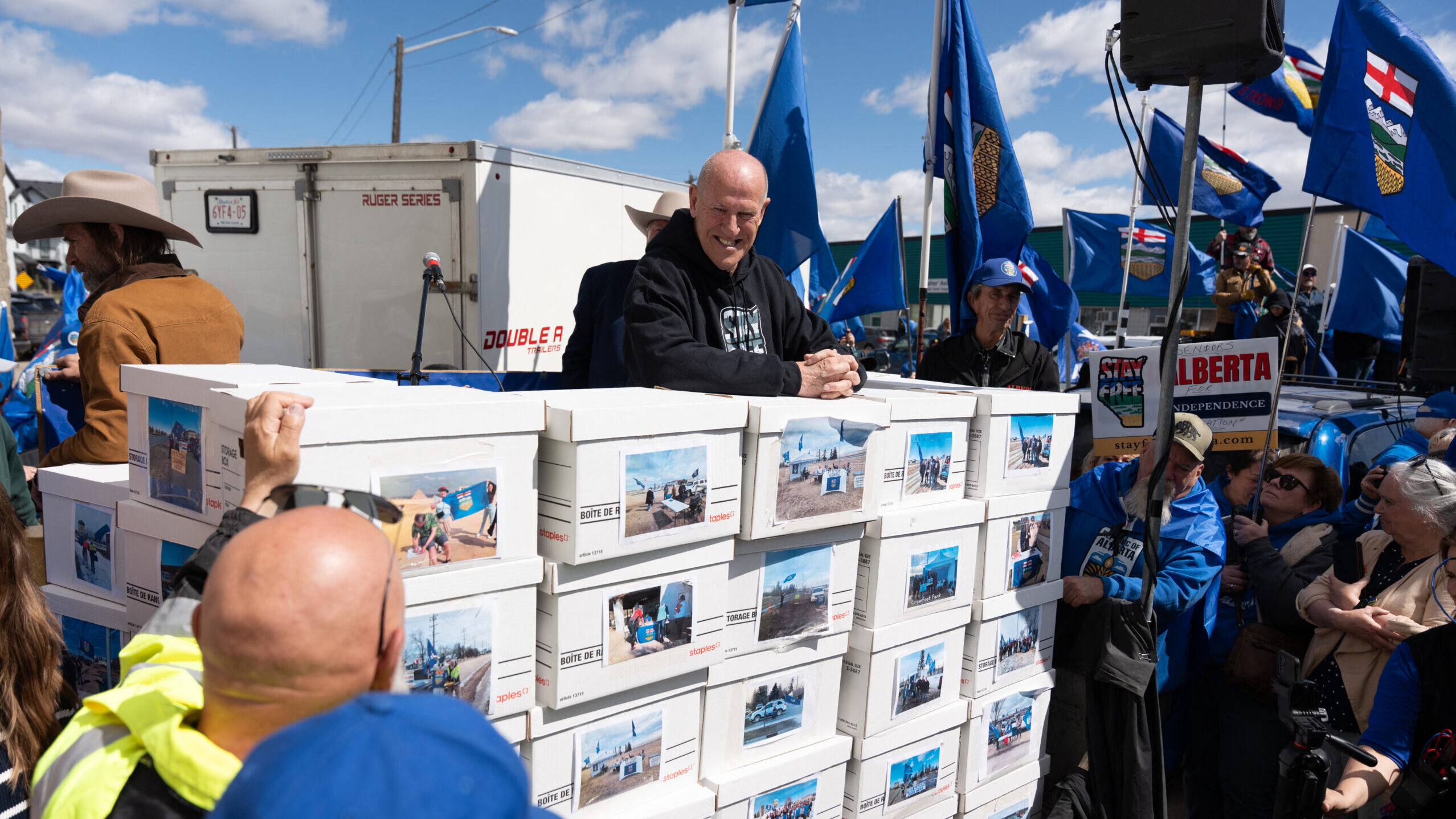
Secessionists in Canada’s Alberta province marked a major milestone on Monday, 4 May, as Stay Free Alberta leader Mitch Sylvestre announced that more than 300,000 signatures had been gathered in a petition on Alberta’s independence. The figure far exceeds the legal threshold required to trigger a possible referendum on the province leaving Canada—approximately 177,000—and is now being processed by Elections Alberta.
The question of separation could be put to a province-wide ballot as early as October, as Alberta Premier Danielle Smith has indicated she would move forward if a sufficient number of signatures are verified.
The development was widely covered in both Western mainstream media and on social media, with many interpreting it as evidence of growing momentum behind the separatist movement in Alberta and, therefore, a significant step towards independence. But how likely is such an outcome?
The short answer is: highly unlikely. To understand why, it is necessary to examine Canada’s political history, Alberta’s distinct position within it, and the broader dynamics of separatism in the country.
🚨 BREAKING: 301,620 signatures have officially been announced for the Alberta independence petition.
— Rise Of Alberta (@RiseOfAlberta) May 4, 2026
That is far beyond the required threshold to trigger the Alberta independence vote on October 19th.
A massive day for the Alberta Independence movement. pic.twitter.com/RbeIDkNf7e
Provincial Powerhouse ‘Locked Up’ in Federal Prison
Alberta’s tensions with the federal government are rooted in the province’s historical development as a resource-based economy operating within a highly centralized federation. From the outset, Alberta’s relationship with Ottawa was marked by asymmetry.
The province holds approximately 159 billion barrels of proven oil reserves—among the largest in the world—and accounts for over 90 per cent of Canada’s oil production and around 60 per cent of its natural gas output. This resource base translates directly into economic dominance: the oil and gas sector alone contributes roughly 20–25 per cent of Alberta’s GDP and represents the single largest component of its economy, while also underpinning the province’s position as the wealthiest in Canada in per capita terms.
When the province was created in 1905, control over natural resources remained in federal hands until 1930, establishing an early precedent of external authority over local economic assets. Although this imbalance was formally corrected, the political memory endured and, over time, merged with a broader perception of fiscal injustice—widely held among Albertans—that the province contributes disproportionately to federal revenues while receiving comparatively less in return, particularly as it does not receive equalization payments despite being a major net contributor to the federal budget. This dynamic is often compared to debates surrounding the United Kingdom–EU relationship during Brexit.
The Canadian federal government’s energy and fiscal policy is therefore inseparable from the conflict between Alberta and Ottawa, and the modern phase of that conflict is linked to a familiar name: Trudeau.
For many Albertans, the National Energy Program (NEP) introduced by Pierre Trudeau and its severe negative impacts on the province remain a defining rupture. Designed to increase Canadian ownership of the energy sector, stabilize prices, and redistribute oil revenues, the policy was perceived in Alberta as a direct expropriation of provincial wealth.

Price controls, export taxes, and federal intervention in the oil industry coincided with a global downturn, amplifying economic losses and fuelling a narrative of deliberate marginalization. The damage caused by the NEP reshaped Alberta’s political identity, embedding a lasting distrust of federal authority—what some have described as the ‘founding trauma’ of modern Alberta identity.
Similarly, Pierre Trudeau’s son, Justin Trudeau, introduced climate policies, carbon pricing, and regulatory hurdles affecting pipeline development, which indirectly harmed Alberta’s economic interests and further deepened this already existing distrust.
These dynamics have had a cumulative effect on separatist sentiment. Alberta’s independence movements have historically been cyclical, emerging during periods of economic downturn or heightened federal–provincial conflict, and receding when conditions stabilize.
The NEP era saw the first significant articulation of separatist ideas, but these remained marginal, as political elites largely channelled discontent into reformist rather than secessionist projects, most notably through the Reform Party in the 1990s.
The current wave differs in its organizational capacity and communication strategy, with groups such as Stay Free Alberta leveraging primarily digital mobilization to transform grievance into measurable political pressure.
The Québec Example
Yet despite this apparent momentum, Alberta’s separatist movement remains structurally constrained. To understand what Alberta lacks, the separatist movement in Québec must be examined.
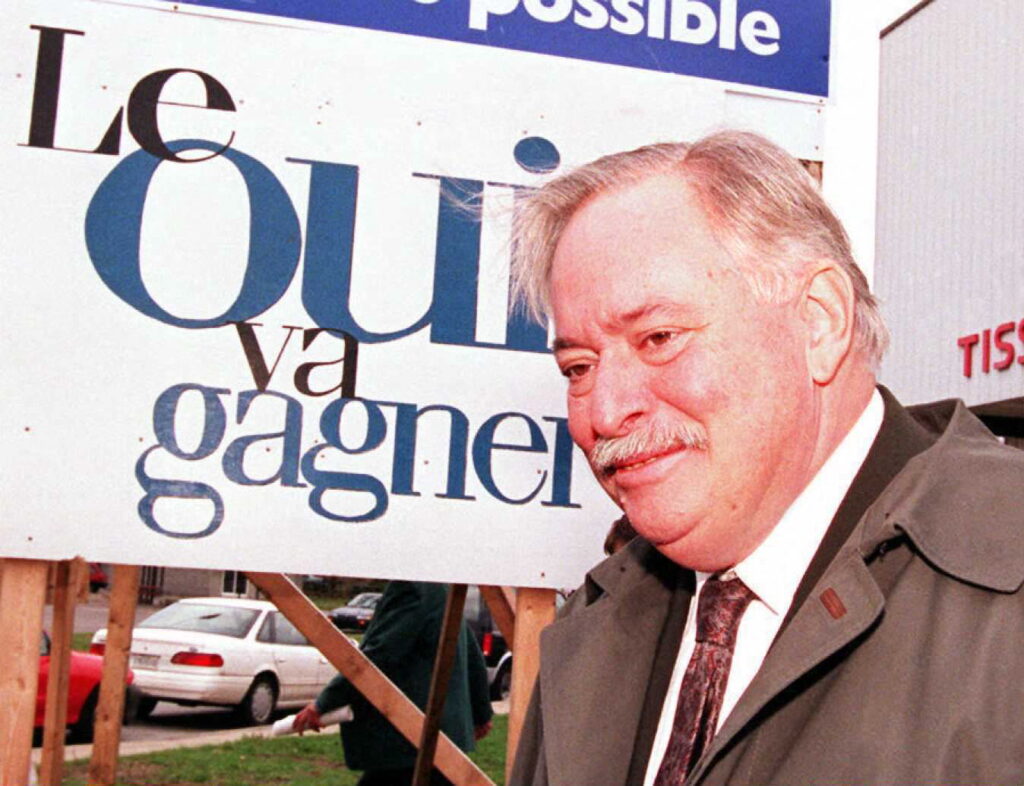
Québec held two independence referendums, in 1980 and 1995. While the first was decisively rejected, the second came within a fraction of success, with 49.4 per cent voting in favour of leaving Canada.
At that point, Québec’s separatist movement had several critical advantages. It was built on a strong and clearly defined identity: a predominantly French-speaking society with its own legal traditions, cultural institutions, and historical narrative distinct from the rest of Canada. This identity translated into sustained political support, institutionalized through the Parti Québécois, a major provincial party that not only advocated independence but also governed the province and actively organized the referendums.
Equally important was the level of elite alignment. Québec’s political leadership, segments of its business community, and much of its administrative apparatus were at least partially aligned with the sovereignty project. This gave the movement both credibility and the capacity to translate popular support into concrete constitutional action. By the mid-1990s, independence was not a fringe idea but a realistic political scenario that forced the federal government to prepare for the possible breakup of the country.
Alberta’s case is fundamentally different on all of these fronts. It does not possess a comparable identity-based foundation for separatism; its grievances are primarily economic, centred on energy policy and fiscal relations with Ottawa. As a result, support for independence is far more volatile and consistently remains well below a majority—currently, around 30 per cent support independence, while roughly 58 per cent are against it.
There is also no equivalent to the Parti Québécois: no dominant provincial party committed to secession, and no government willing to stake its political future on such a project. Premier Danielle Smith, while critical of federal policies, has explicitly stopped short of endorsing independence, instead advocating greater provincial autonomy within Canada.
This distinction is decisive. Québec demonstrated that secession becomes a genuine possibility only when identity, public support, and political leadership converge. Alberta, despite its current mobilization, has not reached that threshold.
The Trump Effect
The liberal federal government, led by Prime Minister Mark Carney, has yet to react to the 300,000 signatures, which is consistent with its approach to the Alberta separatist movement: calibrated strategic containment combined with selective policy concessions aimed at reducing tensions.
In contrast to the Trudeau governments, Carney’s administration has engaged more constructively with Alberta’s energy sector, while introducing measures to reduce interprovincial trade barriers and accelerate infrastructure development, including pipelines. These steps are designed to address the economic grievances that could otherwise strengthen separatist sentiment.
At the same time, Ottawa has maintained a firm constitutional position, emphasizing that any secession process would require a clear mandate—based on ‘clear question’ and ‘clear majority’ principles—and subsequent negotiations, as established in Canada’s legal framework following the Québec referendums.
‘Carney’s administration has engaged more constructively with Alberta’s energy sector’
The issue of Alberta’s independence is further complicated by reports of contacts between separatist figures and officials from the Trump administration. Coupled with President Donald Trump’s repeated rhetoric about Canada becoming the ‘51st state’ of the United States, these developments have raised concerns in Ottawa about potential foreign interference in a domestic constitutional matter, prompting the Carney government to frame the issue increasingly in terms of national sovereignty.
While separatists may have hoped to gain legitimacy and visibility through ties to the Trump administration, these connections have likely proven more damaging than beneficial. This was evident during Canada’s most recent general election, where the Conservative Party lost what had widely been considered a certain victory, in part due to the political backlash triggered by Trump’s aggressive rhetoric towards Canada during the campaign.
In sum, while the current petition marks a significant moment for Alberta’s separatist movement, it does not fundamentally alter the underlying political calculus. The province’s historical grievances—rooted in economic and energy-related concerns—continue to drive periodic surges in separatist sentiment. However, the absence of a unifying identity, sustained majority support, and elite alignment imposes clear limits on how far this movement can go.
Related articles:
At a time when public debate is increasingly polarized and superficial, Hungarian Conservative remains committed to depth, intellectual honesty, and independent conservative thought.
Producing high-quality journalism requires resources. Your contribution helps us expand our coverage, reach new audiences, and keep our content accessible.

Please consider supporting our mission.