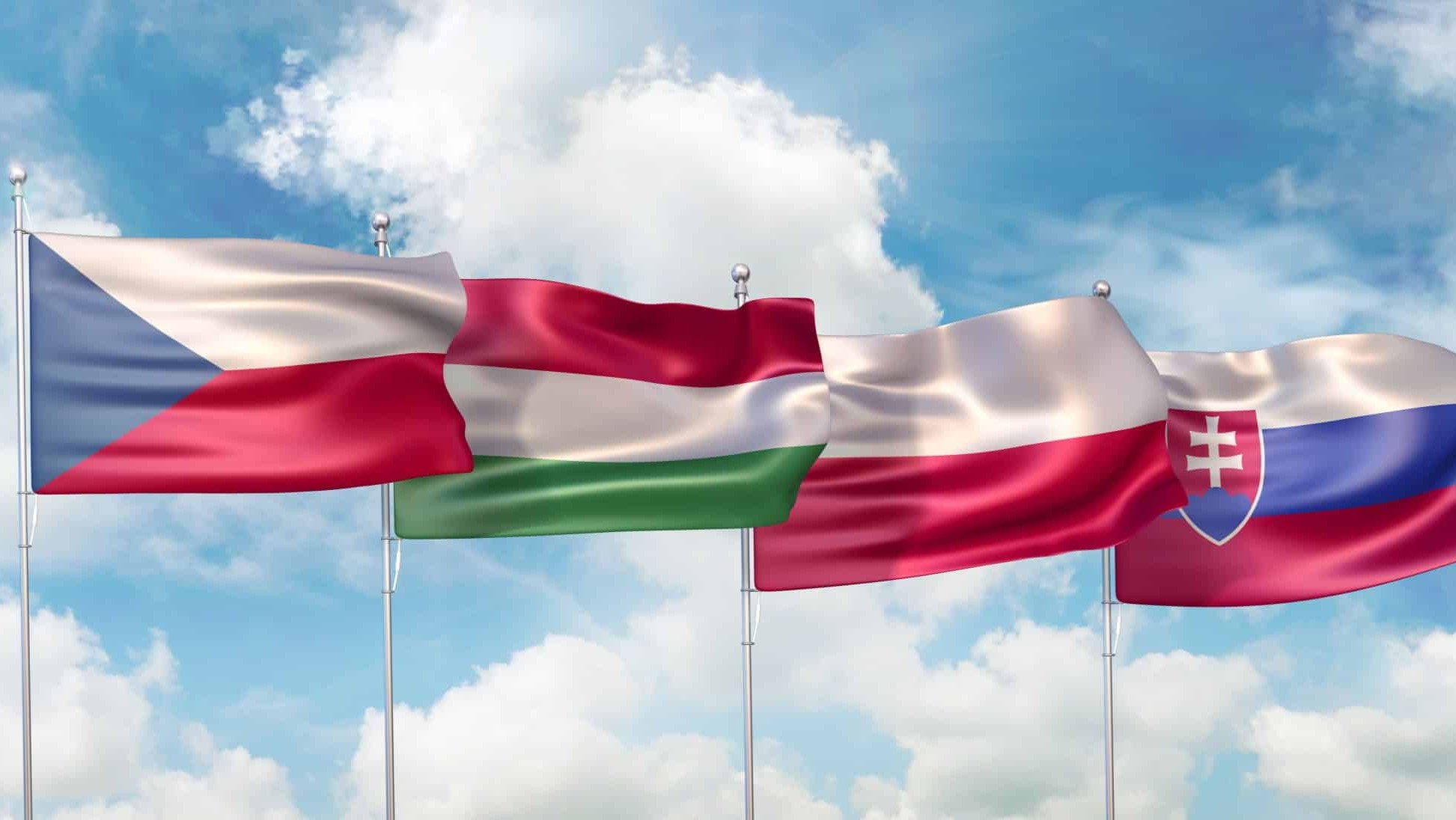
The following is an adapted version of an article written by Laura Nyilas, a research fellow at the Europe Strategy Institute of the University of Public Service, originally published in Hungarian on the Five Minutes Europe blog of Ludovika.hu.
From the perspective of Hungarian foreign policy, the Visegrád Cooperation has long been a key player in Central European political coordination, but the geopolitical and ideological fault lines of recent years have weakened this role. Recent political statements, however, suggest that the cooperation could be reorganized on a new basis.
The Visegrád Cooperation covers a key political subregion within Central and Eastern Europe, making it an important factor in European politics. In 1991 the clear goal of the (then) three countries was to assist one another on the path to Euro-Atlantic integration, which also entailed the parallel process of democratic political and market-economy transformation.
The Visegrád Cooperation, established by the four countries, was a more or less informal, deliberately non-institutionalized initiative launched in 1991 by leading politicians of the era of regime change who supported the idea of Central European integration. The Visegrád Cooperation is based on the conviction that, while respecting their national interests and recognizing their shared values, its members can increase the chances of achieving their common goals through coordinated efforts.
Following the completion of Euro-Atlantic integration in 2004, and amid a cyclical ‘fatigue’ in cooperation, the four countries experienced their ‘golden age’ during the 2015 migration crisis, which they perceived as a shared challenge. At that time, the four governments transformed a previously loose cooperation forum into a disciplined bloc that linked security to sovereign control of borders and freedom of political decision-making.
The joint statement of September 2015 rejected any mandatory and permanent relocation system. Hungary responded with emergency laws and police action after the government ‘securitized’ the issue of illegal migration. Warsaw, Prague, and Bratislava did not adopt the Hungarian legal solutions; rather, they applied a similar political framing that placed sovereignty, the maintenance of order, and territorial control at the centre of national security, while defining their own positions in opposition to Brussels’ relocation plans.
‘The joint statement of September 2015 rejected any mandatory and permanent relocation system’
Following the 2015 migration crisis, the four countries drifted apart, ideological differences became more pronounced, and then the 2022 Russo–Ukrainian war, along with their differing stances on it, created deep fault lines.
Poland and the Czech Republic’s unequivocally Atlanticist stance clashed with Hungary’s and, to some extent, Slovakia’s pro-Russian approach. Although the past four years have placed the V4 in a difficult position, calling into question the future of the group’s cooperation, it must be recognized that since 1991, the group has developed diplomatic flexibility and the ‘art of disagreement’. Thus, if the countries do not share the same opinion on a given issue, this does not mean the end of cooperation in that specific policy area, nor does it imply that the disagreement will spread to other areas.
There have also been periods when the ‘Visegrád Group became passive’, either because one country or another broke ranks, or because tensions arose among the group’s members. One such period was the one that now appears to be coming to an end, characterized by the other members distancing themselves from the Hungarian government’s foreign policy. This occurred despite the fact that, for example, in relations with Slovakia, Hungarian foreign policy—which describes itself as pragmatic—addressed every issue that was embarrassing or sensitive to Robert Fico, yet which, from the perspective of Hungary’s written or unwritten foreign policy principles, could be classified as a matter of national interest (such as the protection of Hungarian minorities).
However, a radical turning point appears to be on the horizon following the Hungarian parliamentary elections in April 2026. It comes as no surprise that the new Tisza government is committed to rebuilding a strong Visegrád Cooperation, as the V4 has very often been primarily a Hungarian ‘project’ and the Orbán government has always emphasized its key role.
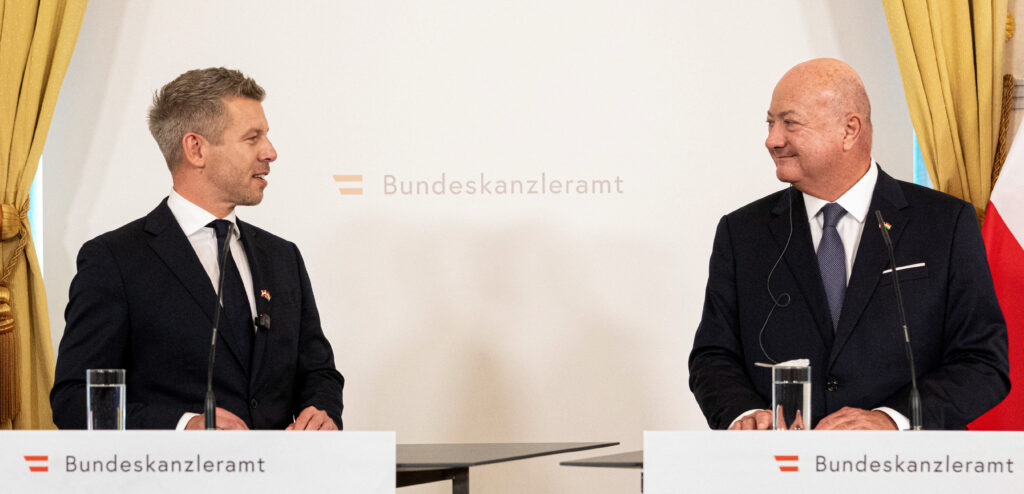
Before his inauguration as prime minister, Péter Magyar raised the idea of a possible expansion of the Visegrád Cooperation at a press conference in April, where he proposed merging the V4 group with the Slavkov format, which is a framework for cooperation between Austria, the Czech Republic, and Slovakia. This approach envisions not just a closed, four-member bloc, but a more flexible, multi-stakeholder regional cooperation.
Around the same time, as indicated by Robert Fico’s infamous recent X-post, the heads of government of the four countries jointly stated that they look forward to welcoming their new Hungarian colleague in strengthening the V4, as the region’s political actors once again see value in Central European coordination, even if its form and depth remain an open question for now.
‘The region’s political actors…see value in Central European coordination, even if its form and depth remain an open question for now’
The key question, therefore, is not whether there will be a V4, but in what form. Rather than a close-knit, unified bloc, a more differentiated, issue-based cooperation is taking shape, one that may once again be capable of joint action on certain matters (such as energy, infrastructure, and economic competitiveness).
Regarding cooperation in the energy sector, during his meeting with Péter Magyar on 20 May 2026, Donald Tusk emphasized that Warsaw can offer assistance and cooperation to the region in the area of energy security, so that Central and Eastern Europe can become as self-sufficient as possible in terms of energy supply.
During the meeting, the Polish president also made it clear that Poland is interested in revitalizing the Visegrád Cooperation, as he believes they share common views and interests. Furthermore, Donald Tusk made a statement that lent significant weight to the cooperation. He stated at the press conference following the meeting that they must work to make Central and Eastern Europe a place where the fate of the entire continent is shaped.
The current international environment—characterized by increasing bipolarity globally and multipolar dynamics regionally—also heightens the importance of Central European coordination. In a strengthened form, the V4 could even assume a new role as a ‘minilateral platform’ capable of flexibly adapting to differing national interests. Since a significant portion of past conflicts often stemmed from political and personal rivalries, one of the first steps in reviving the Visegrád Cooperation must be to rebuild trust.
Read more:
Click here to read the original article.
At a time when public debate is increasingly polarized and superficial, Hungarian Conservative remains committed to depth, intellectual honesty, and independent conservative thought.
Producing high-quality journalism requires resources. Your contribution helps us expand our coverage, reach new audiences, and keep our content accessible.

Please consider supporting our mission.