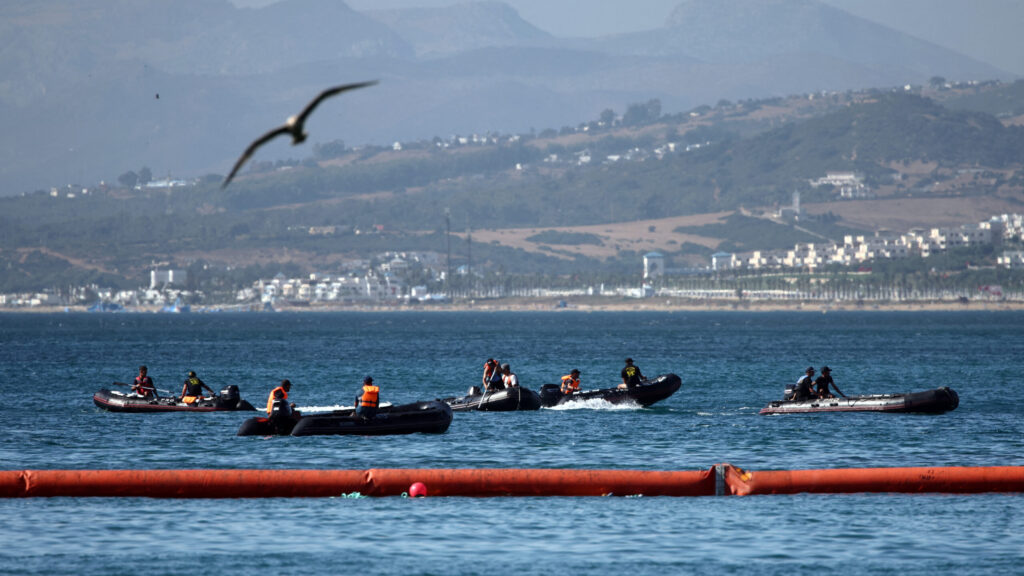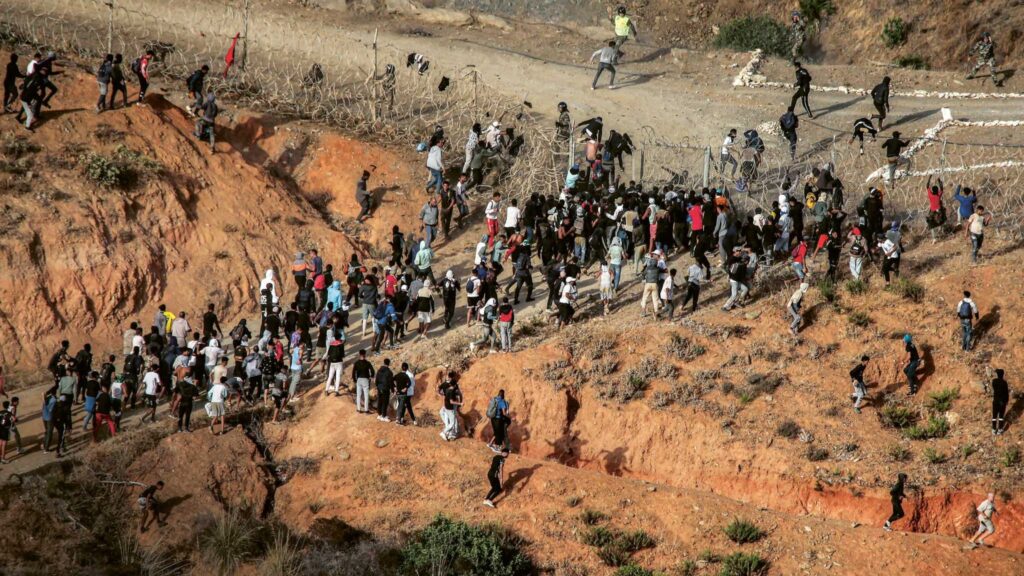
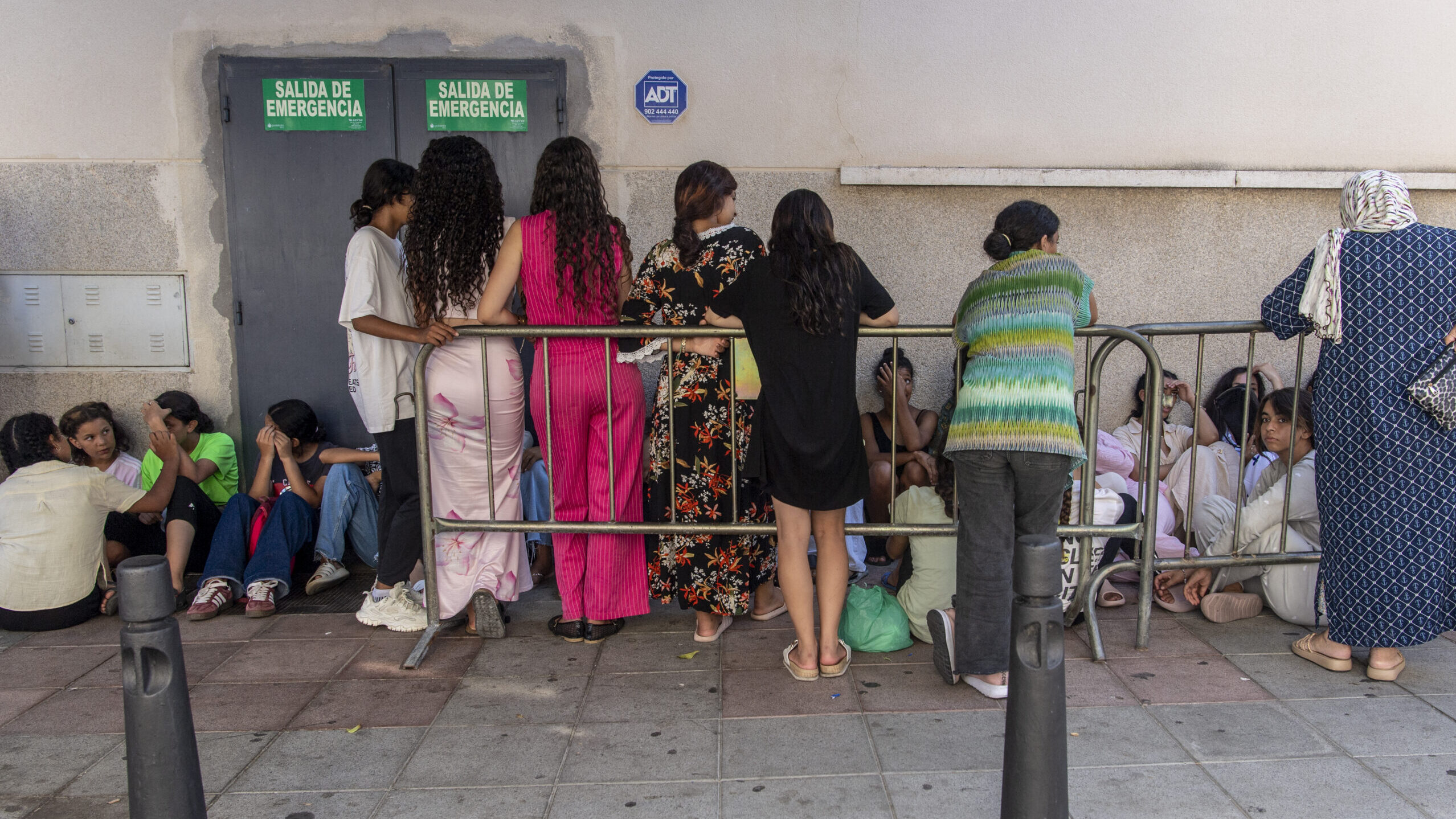
Morocco has demanded that Spain return all Moroccan unaccompanied minors in its territory, including those who entered Ceuta during the 30–31 July mass illegal invasion and children already housed in protection centres elsewhere in the country. Justice Minister Abdellatif Ouahbi said Rabat would pursue their return through legal and political channels, extending an offer of cooperation made days earlier under instructions from King Mohammed VI.
Madrid, however, while not rejecting family reunification and repatriation, insists that there can be no collective return, even if the country of origin explicitly asks for it. Youth Minister Sira Rego said every case must be assessed individually according to the child’s best interests, while the government is simultaneously preparing to transfer minors from overwhelmed Ceuta facilities to mainland regions within weeks. By 7 August, 1,342 minors had been registered; Ceuta authorities put the number of unaccompanied minors remaining at roughly 1,100, while NGOs believe the true number of minors in the enclave is considerably higher, with estimates as high as 7,000.
The dispute between Rabat and Madrid over unaccompanied minors shows a highly exploited difference in their legal treatment compared with most adult migrants who arrived during the unprecedented border rush. Spanish authorities say around 72,000 migrants entered Ceuta during the invasion, but the vast majority returned to Morocco within days. For those accepted as unaccompanied minors, however, Spain’s immigration and child-protection rules can turn emergency care into legal residence, continue that status beyond the 18th birthday and eventually open the way to indefinite settlement in an EU member state. It is, basically, coded into the system.
Returns of Unaccompanied Minors Virtually Non-Existent
If we take a deeper look into the system itself, the gaps become almost immediately impossible to ignore. An undocumented migrant does not need a passport before Spanish authorities can treat him as a possible minor. If age is uncertain, prosecutors order an age-determination procedure; where the result is a range, Spanish rules treat the person as a minor if the bottom of that range is below 18.
In 2024 prosecutors opened 7,562 age-determination files. Of those, 2,457 were found to involve adults and 3,825 minors or people who could be minors, while 1,280 cases ended without a determination after the person left the centre.
For those declared to be minors, the next step for authorities is to examine whether the child can be reunited with family, placed with protection services in the country of origin, or should remain in Spain. That decision is based on the child’s ‘best interests’, with official guidance specifically stating that ‘return is not an objective to be pursued at all costs’.
‘Nationality, or even locating the parents, is not necessarily enough to send the child home’
Nationality, or even locating the parents, is not necessarily enough to send the child home. Repatriation can be rejected, for example, if returning to an identified family would expose the minor to ‘violence, exploitation, serious neglect or an otherwise inadequate environment’. Spanish law also requires officials to weigh the child’s wishes, vulnerability, stability and development before ordering return.
Return is therefore legally possible, but historically incredibly rare. At the end of 2024, Spain’s Register of Unaccompanied Foreign Minors contained 16,041 children, including 4,393 Moroccans. During the entire year, only eight unaccompanied minors were repatriated—four Colombians, three Romanians and one French national. None was Moroccan.
It is important to note that, despite the current demand coming from Rabat, Moroccan authorities have usually been as uncooperative regarding the repatriation of unaccompanied minors as the Spanish system has been reluctant to return them. There were similar calls back in 2024, according to El País; however, no significant increase in returns was reported.
From Child Protection to Adult Residence
Now, continuing our hypothetical journey through the Spanish child-protection system as an unaccompanied minor, authorities have 90 days to decide between return and stay. After that, the child remains under protection, and the residence procedure officially begins. Having no documents at all is still not a problem: a cédula de inscripción can substitute for a passport.
The resulting residence authorization lasts two years, permits work from age 16 for qualifying activities and is backdated to the date the child entered protection. Crucially, obtaining it does not legally prevent a later repatriation if return is subsequently judged to be in the child’s best interests. But unless that happens, the residence pathway is already running.
This is the point at which transfer to mainland Spain becomes a possibility. Under Spain’s extraordinary-contingency rules, the destination autonomous community assumes guardianship and responsibility for accommodation, documentation, healthcare and integration. The rules envisage completion of the transfer process within 15 days of registration, although practical transfers can be delayed, as pointed out by Minister Rego, who said the first transfers from Ceuta could begin within weeks.
The main difference between the Spanish and other permissive migration systems, on the one hand, and stricter policies on the other is what happens when an unaccompanied minor who has spent time in the country’s child-protection system turns 18. In Denmark, which has one of the toughest positions in the European Union, they ‘normally have to leave’ the country. In Spain, turning 18 does not automatically end the pathway.
Former wards who already hold the minor’s authorization can renew it for two years at a time. The income requirement can be met through employment, social welfare or support guaranteed by a public or private programme. Even those who reach 18 without having received the residence permit they qualified for as minors have a separate exceptional route, in some circumstances available until age 20.
Official data also show that this bridge from unaccompanied-minor status to adult residence in Spain is widely used and operates on a large scale. On 31 March 2026, Spain had 21,104 unaccompanied minors and former wards aged 16–23 with valid residence permits. Of them, 17,044 were former wards aged 18–23, up 6.9 per cent from 15,948 a year earlier. Moroccans were by far the largest nationality, accounting for 10,216 people, or 48 per cent of the total, compared with 14 per cent from Gambia, 12 per cent from Algeria and 11 per cent from Senegal.
Awarding Illegal Crossings
The final award for crossing illegally into Spain without any documentation as a child is national long-term residence, which allows a foreigner to live and work in the country indefinitely. The ordinary route requires five years of legal and continuous residence, while the law expressly provides the status to a resident who reaches adulthood after five consecutive years under the guardianship of a Spanish public authority.
For a child entering protection at 13, that five-year guardianship threshold can therefore coincide with adulthood. Someone entering at 16 can continue through the former-ward renewal system until accumulating the normal five years of legal residence. In other words, Pedro Sánchez’s Socialist government has built a continuous route from childhood protection to adult legal status.
It is therefore no surprise that these routes have been deliberately exploited. Spanish authorities have documented several incidents in which families placed children into the system explicitly to secure legal residence. In 2025, police arrested 30 Moroccan parents in Tarragona over a scheme in which families entered Spain together before leaving their children at police stations or reception centres to claim that they had arrived alone; immigration officials said the ultimate objective was rapid access to residence.
The current crisis in Ceuta also saw similar incidents. OKDiario interviewed migrants sleeping around the city, including an 11-year-old Moroccan girl who said she entered the enclave alone and that her parents had sent her to Spain. Another migrant in the accompanying video said his family had told him to go; a Ceuta resident also described parents giving children money and telling them to cross.
‘Pedro Sánchez’s Socialist government has built a continuous route from childhood protection to adult legal status’
This is one of the clear problems in Spain’s current migration system; however, it is far from unique. France, Germany, Belgium, Czechia and Italy all provide routes through which unaccompanied minors can remain legally after reaching adulthood.
Czechia has perhaps the most generous permanent-residence rule: minors placed by a court in qualifying foster or institutional care acquire permanent residence by law, and those placed before 15 retain it after turning 18. France goes further in another respect, allowing minors who have spent at least three years in state care to apply for French nationality before adulthood.
None of them, however, appears tailored quite so comprehensively to incentivize illegal crossings by minors while making their subsequent repatriation exceptionally difficult, even when the country of origin explicitly asks for their return. Even if the Sánchez government wanted to cooperate on large-scale repatriations, the current regulatory system would severely constrain its ability to do so quickly or collectively. And while that is the case, it is unrealistic to expect large-scale illegal crossings to stop.
Related articles:
At a time when public debate is increasingly polarized and superficial, Hungarian Conservative remains committed to depth, intellectual honesty, and independent conservative thought.
Producing high-quality journalism requires resources. Your contribution helps us expand our coverage, reach new audiences, and keep our content accessible.

Please consider supporting our mission.