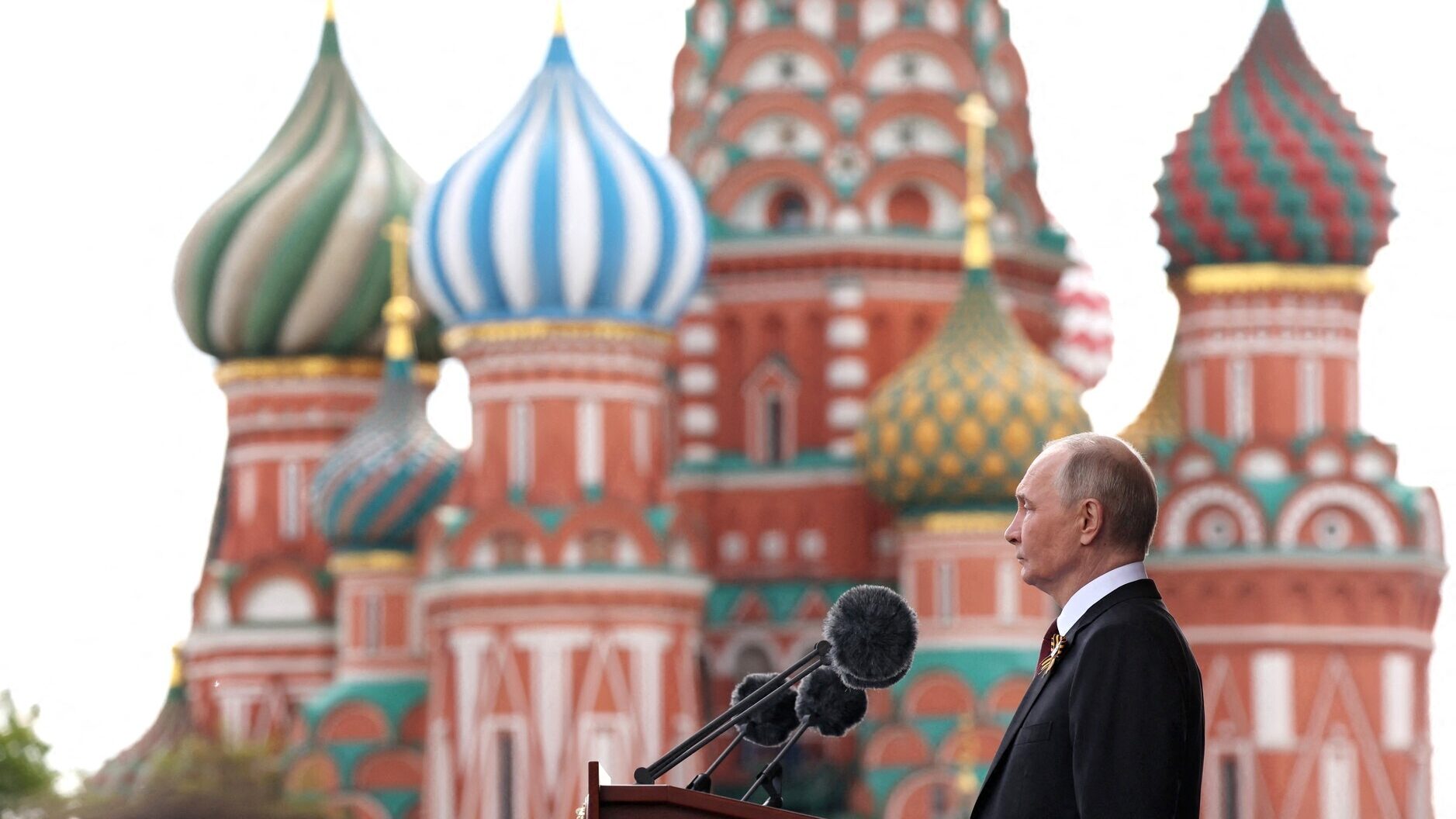
Russia is entering the final hours of preparations for what many describe as the ‘most paranoid’ Victory Day parade of the post-Soviet era. Mobile internet shutdowns, airport closures, sniper deployments, expanded anti-drone measures, and, most importantly, the unprecedented scaling back of the military parade—with no heavy military equipment expected on Red Square—all point to the Kremlin anticipating possible sabotage during one of Russia’s most symbolic national holidays this weekend.
Recent statements by Russian officials, including Kremlin spokesman Dmitry Peskov, Foreign Minister Sergei Lavrov, and President Vladimir Putin himself, all indicate that Russia’s strategic and psychological posture has shifted significantly since last year’s parade and that Moscow feels unusually insecure ahead of 9 May.
The Lasting Impact of Operation Spiderweb
To understand why, it is necessary to go back to 1 June 2025, when Ukraine carried out what many consider its most sophisticated covert sabotage operation to date, nicknamed Operation Spiderweb. The attack, reportedly prepared over 18 months and nine days and personally supervised by President Volodymyr Zelenskyy and Security Service chief Vasyl Maliuk, destroyed a significant portion of Russia’s strategic aviation capabilities, including Tu-95 and Tu-22M bombers.
Many of the targeted aircraft are Soviet-era bombers that are no longer in production and are therefore effectively irreplaceable. Analysts estimated that the strikes damaged up to 20 per cent of Russia’s operational long-range aviation fleet, even though these estimates are being contested.
While drone strikes inside Russian territory had already become an integrated part of Kyiv’s strategy, Operation Spiderweb represented a breakthrough, particularly in terms of execution. According to reports, the operation involved more than 100 Ukrainian FPV drones smuggled into Russia in parts, assembled inside the country, hidden beneath the roofs of disguised civilian cargo cabins, and transported on trucks driven by unsuspecting Russian drivers. On 1 June, the drones were launched simultaneously against five strategic aviation airbases stretching across five time zones, from Murmansk to Siberia.
Before Spiderweb, the Kremlin operated under the assumption that strategic depth still existed—that assets located deep inside Russian territory remained relatively secure. The operation shattered that assumption and arguably destroyed the myth of Russia’s internal invulnerability to Ukrainian strikes.
That was likely the operation’s greatest achievement, carrying deeper and more lasting implications than the destruction of military equipment itself. Spiderweb demonstrated that Ukraine was capable of penetrating Russian territory covertly and weaponizing civilian normality. The operation created long-lasting psychological effects that continue to shape Kremlin decision-making to this day, particularly ahead of 9 May.
Psychological Battlefield around Victory Day
Now, fear of a similar operation targeting Victory Day appears firmly embedded in the minds of Russian officials. In the weeks leading up to Spiderweb, Ukrainian deep strikes intensified significantly inside Russian territory, increasingly targeting strategic infrastructure and aviation assets. A similar atmosphere now seems to be emerging again.
Reuters reported this week that Ukrainian medium-range and deep strikes inside Russia have intensified sharply in recent months, with attacks reportedly doubling since March and quadrupling since February. In April alone, more than 160 strikes were reportedly carried out, targeting logistical hubs, energy infrastructure, and other facilities. Meanwhile, Ukrainian drones have once again reached targets near Moscow and even inside the Russian capital itself.
On 4 May, Kyiv struck a luxury residential complex on the outskirts of Moscow, less than five miles from the Kremlin. Overnight on 7–8 May, Moscow Mayor Sergey Sobyanin claimed that Russian air defences intercepted dozens of Ukrainian drones approaching the capital. The Kyiv Independent reported at least 26 drone interceptions during the night.
Ukraine’s rhetoric towards Russia has also become increasingly aggressive in recent weeks. On 4 May, Putin proposed a two-day ceasefire for 8–9 May, coinciding with the Victory Day celebrations. Rather than rejecting the proposal outright, Zelenskyy instead proposed extending it, a suggestion Moscow ultimately dismissed.
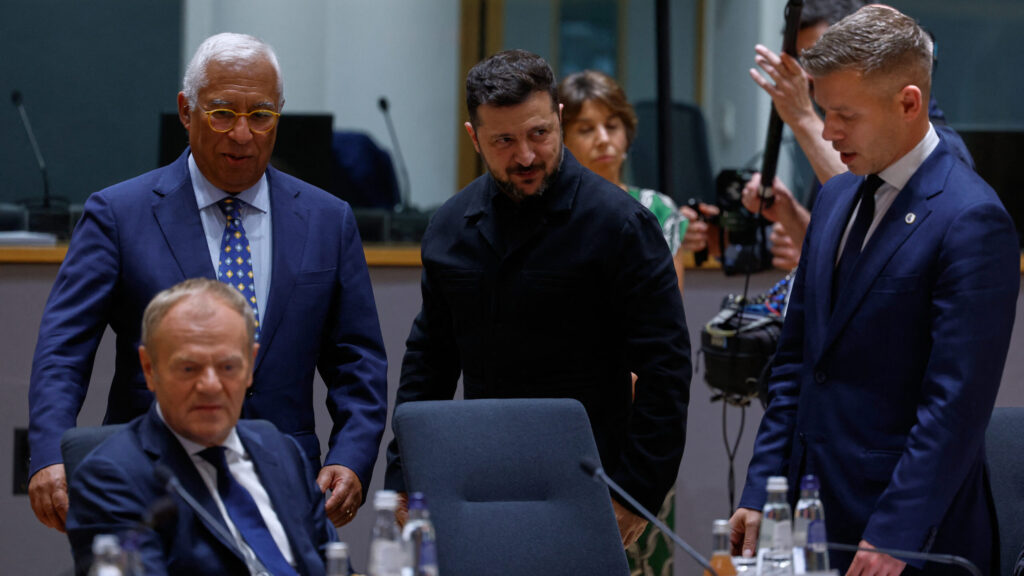
At the same time, the Ukrainian president hinted that Kyiv might be preparing something. Speaking on 6 May at the European Political Community summit in Armenia, Zelenskyy warned foreign officials that Ukraine did ‘not recommend’ attending the celebrations, stated that Russia’s parade ‘depends on us’, and declared that Kyiv would determine its ‘justified responses’ depending on Russia’s actions in the days leading up to the parade. His comments reportedly prompted Moscow to summon Armenia’s envoy, suggesting that the intended psychological pressure achieved at least part of its effect.
The Kremlin’s Security Trap?
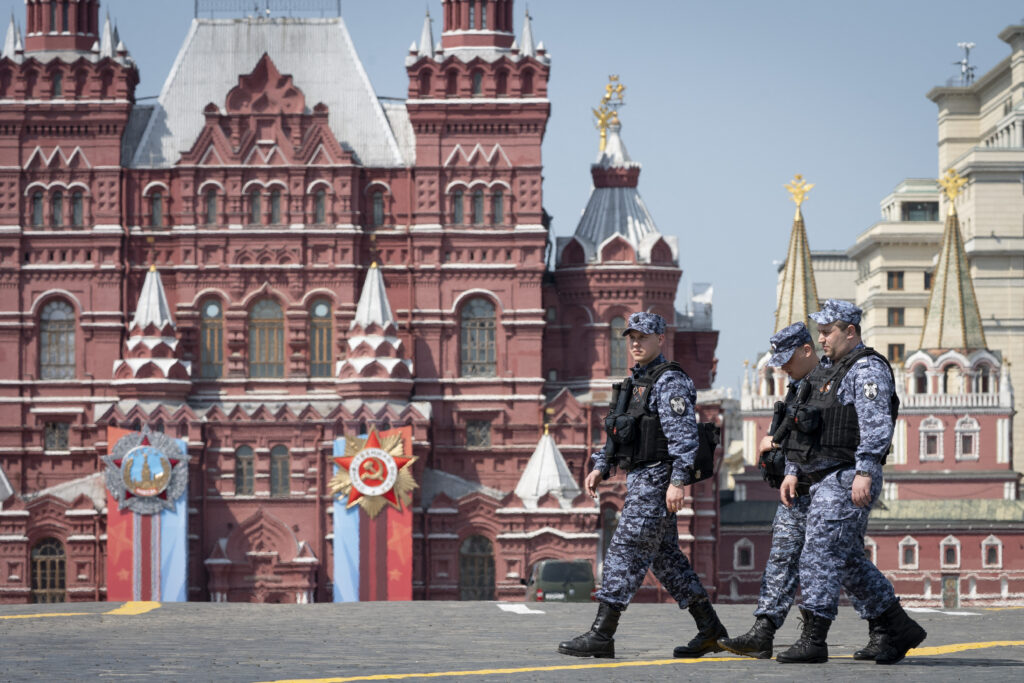
None of this proves that a Spiderweb 2.0 operation is imminent. Yet the Kremlin’s behaviour strongly suggests that Moscow considers some form of attack plausible enough to justify extraordinary domestic security measures. Paradoxically, that may even increase the likelihood of such an operation: while attention is focused on Moscow itself, coordinated strikes elsewhere across Russia may now appear more logical and feasible than ever.
A direct strike on central Moscow during Victory Day would carry enormous escalation risks, especially with foreign leaders expected to attend, potentially undermining Ukraine’s international legitimacy. It would also be extremely difficult to execute under current security conditions.
This is precisely why a calibrated Spiderweb-style operation appears more plausible than a direct strike on Red Square itself. Such an operation would be symbolic and humiliating enough to damage Russia’s international image without crossing the most dangerous escalation thresholds. A successful asymmetric attack would also likely force Moscow into further defensive overreaction while avoiding the scale of retaliation that would almost certainly follow a direct strike on the parade itself.
‘While attention is focused on Moscow itself, coordinated strikes elsewhere across Russia may now appear more logical and feasible than ever’
This time, however, Kyiv would need to make an even greater effort to successfully execute a similar operation. After Spiderweb, Russia significantly expanded domestic security measures on a nationwide scale, particularly around transportation, logistics, and strategic infrastructure. Russian authorities reportedly introduced expanded roadside inspections, intensified checks on cargo trucks and containers, additional border screening, and stricter monitoring of freight transportation routes.
Although some emergency measures were gradually eased, many elements of the new security posture remain in place to this day. Moscow continues to maintain elevated anti-drone defences, increased digital surveillance of transport infrastructure, and stricter vetting procedures around sensitive state facilities.
By this point, Ukraine may already have achieved part of its objective without launching a Spiderweb 2.0 operation at all. Russia has been forced to militarize Moscow with extraordinary security measures, scale down its parade, and publicly prepare for possible sabotage during its most symbolically important national celebration. Spiderweb has already permanently altered Russian strategic psychology. The Kremlin now behaves as though such an operation is always possible.
Related articles:
At a time when public debate is increasingly polarized and superficial, Hungarian Conservative remains committed to depth, intellectual honesty, and independent conservative thought.
Producing high-quality journalism requires resources. Your contribution helps us expand our coverage, reach new audiences, and keep our content accessible.

Please consider supporting our mission.