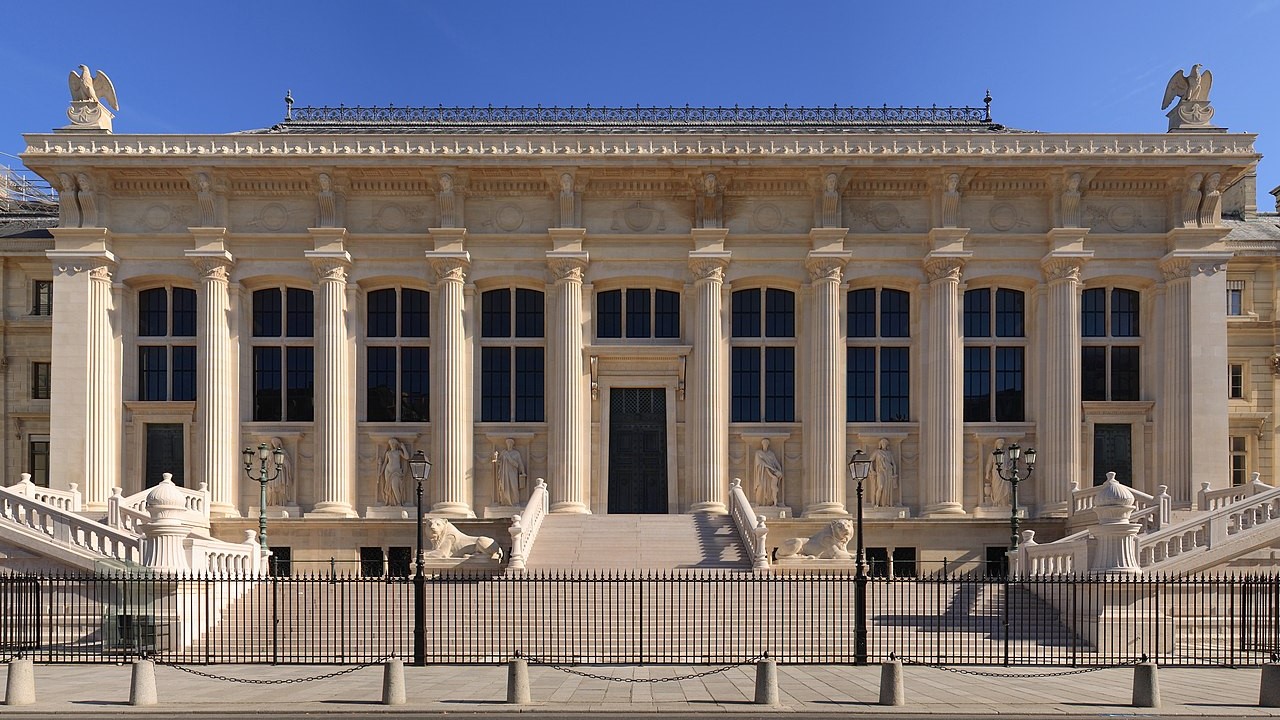
The trial of several members of the Rassemblement National, including Marine Le Pen, is currently under way before the Paris Court of Appeal.
A Very Severe First-Instance Ruling
In the first instance, Marine Le Pen was sentenced to a prison term and a fine, as well as a five-year ban on standing for election, with immediate effect. In practical terms, the criminal judge banned her from standing for the 2027 presidential election, despite the fact that she has reached the second round twice (and won 2.5 million more votes in 2022 than in 2017).
The court found that European Parliament funds—intended to pay parliamentary assistants—had in fact been used to pay people working for the political party in France, thereby constituting a misappropriation of public funds.
This immediate enforcement crystallizes tensions and misunderstandings, since the main objective of the additional penalty of ineligibility is to prevent reoffending. However, there is no risk of that because Marine Le Pen is no longer an elected member of the European Parliament—but a member of the French Parliament, and the two roles are incompatible.
Such a decision is all the more surprising given that, shortly before the court’s ruling (handed down on 31 March 2025), the Constitutional Council, a sort of France’s supreme court, had explicitly stated that ‘unless the right to stand for election guaranteed by Article 6 of the Declaration of 1789 is disregarded, it is then up to the judge, in his decision, to assess the proportionality of the infringement that this measure is likely to cause to the exercise of a current mandate and to the preservation of the voter’s freedom’ (decision QPC 2025 1129), thus guiding the court’s action towards caution.
The court ignored this and ruled that Marine Le Pen could not stand for re-election. She has, of course, lodged an appeal, which does not have a suspensive effect, but the proceedings are currently under way, ahead of the presidential election.
Marine Le Pen is now present at her hearing, and the public prosecutor has just made his closing arguments, asking the judges to uphold the ineligibility sentence.
However, the Court of Appeal seems to have understood the issue, since while a five-year ineligibility sentence is still sought against Marine Le Pen, this time the prosecutor has not requested provisional execution. In other words, the ineligibility would only apply once the judgment becomes final, giving Marine Le Pen time to appeal to the Court of Cassation and hope for a favourable outcome after the presidential election.
What Is the Legitimacy of the Criminal Judge in This Case?
The criminal judge lacks the competence to assess the relevance of employing a parliamentary assistant in the context of legislative work. This raises an issue not only of jurisdiction but also of legitimacy, with deeply anti-democratic consequences.
Thus, a candidate who has twice reached the second round of the presidential election now faces a judicial veto. Yet the true sanction for a politician should come from the popular verdict: electoral rejection.
For a criminal court to dictate what the exercise of a parliamentary mandate should or should not be amounts to interference in the functioning of the legislative branch. Such an act is incompatible with the fundamental principle of the separation of powers.
‘The future President of the French Republic must be chosen at the ballot box, not in the courtroom’
This is not the first time that a court has ventured to explain what parliamentary work is or is not. For example, and somewhat surprisingly, former presidential candidate François Fillon paid €70,000 because the French national financial prosecutor’s office accused him of hiring a parliamentary assistant—to write a book.
However, it is obviously part of a politician’s job to publicize their ideas and programme, and it is well known that all politicians surround themselves with advisers and ghostwriters who write their articles, speeches and books.
The book in question, entitled Faire and published at the end of 2015, was in fact the presidential candidate’s manifesto. It appears that the judge is only now recognizing this obvious fact, interfering in the unique relationship between a politician and their advisers, and assuming the authority to decide what constitutes parliamentary work and what is secondary. If writing for an MP is not considered part of a parliamentary assistant’s duties, the judge could tomorrow just as easily condemn MPs whose assistants book train or plane tickets, draft speeches, or manage their schedules.
Do Courts, Rather than Voters, Decide Who Can Be President?
While much of the current debate focuses on the independence of the judiciary, the primary quality that citizens expect from it is actually impartiality—hence the allegory of blindfolded justice.
We expect a government to lead the nation’s policy, a parliament to debate, vote on legislation and control the government’s actions, and we expect a judge to be impartial. The judiciary undermines its own credibility when it fails to exercise sufficient self-restraint.
When judges echo partisan and ideological struggles or allow themselves, rather than the voters, to decide who can stand for universal suffrage, they cease to be neutral and become political actors.
The future President of the French Republic must be chosen at the ballot box, not in the courtroom.
The judge shoots himself in the foot: while they talk about defending the rule of law, the harshness of judges’ decisions toward politicians, on the one hand, affects institutions through their officials and thus undermines national sovereignty; on the other hand, this severity, by contrast, highlights the leniency shown to ordinary offenders and criminals.
Related articles:
At a time when public debate is increasingly polarized and superficial, Hungarian Conservative remains committed to depth, intellectual honesty, and independent conservative thought.
Producing high-quality journalism requires resources. Your contribution helps us expand our coverage, reach new audiences, and keep our content accessible.

Please consider supporting our mission.