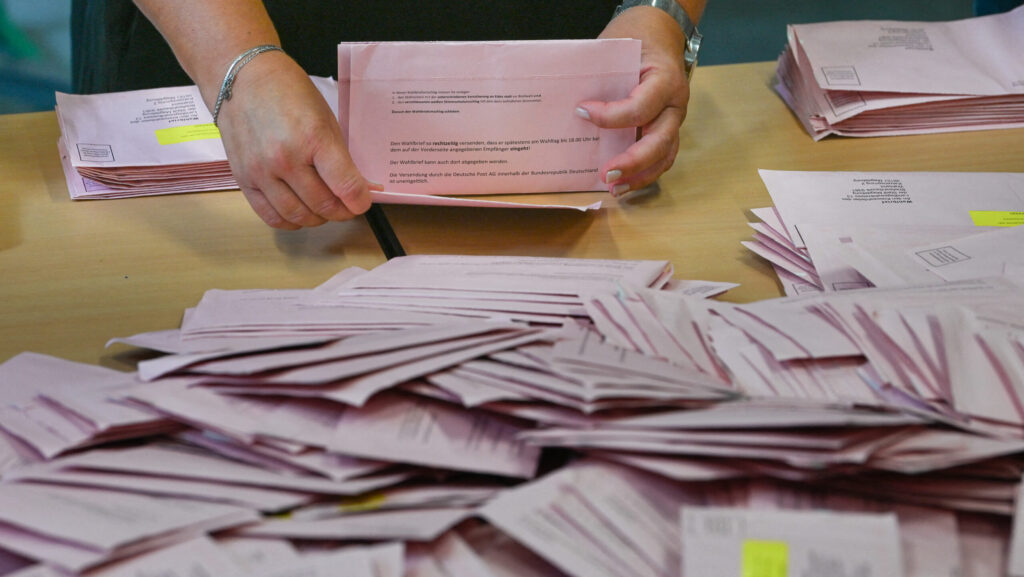
With the statewide count roughly 98 per cent complete late Sunday, the Alternative für Deutschland (AfD) was heading for a historic victory in Saxony-Anhalt—and an equally rare parliamentary deadlock that has left the Bündnis Sahra Wagenknecht (BSW) as the ultimate kingmaker of the night.
The latest ZDF projection puts the AfD at around 44 per cent and 39 of the Landtag’s 83 seats. The CDU, SPD, Greens, and Die Linke together are also projected to hold 39, while BSW takes the remaining five. 42 seats are required for a majority.
The arithmetic means that neither the AfD nor the establishment parties maintaining the so-called firewall against it can govern without some form of support from outside their respective camps. BSW, hovering just above the 5-per-cent threshold, has therefore become the most important actor and could ultimately tip the balance. Current projections give the CDU around 15 seats, with the SPD, Greens, and Die Linke on eight each.
BSW is an unusual kingmaker. Founded by Sahra Wagenknecht, the party combines economically left-wing policies with more conservative positions on migration and cultural questions. In Saxony-Anhalt, it campaigned for controlled migration, an end to weapons deliveries to Ukraine, cheaper energy, renewed negotiations with Russia over gas supplies, and an end to the political exclusion of the AfD.
Those positions leave considerable overlap with the AfD on energy, Russia and Ukraine, migration control, and opposition to the firewall, despite major differences on economic policy.
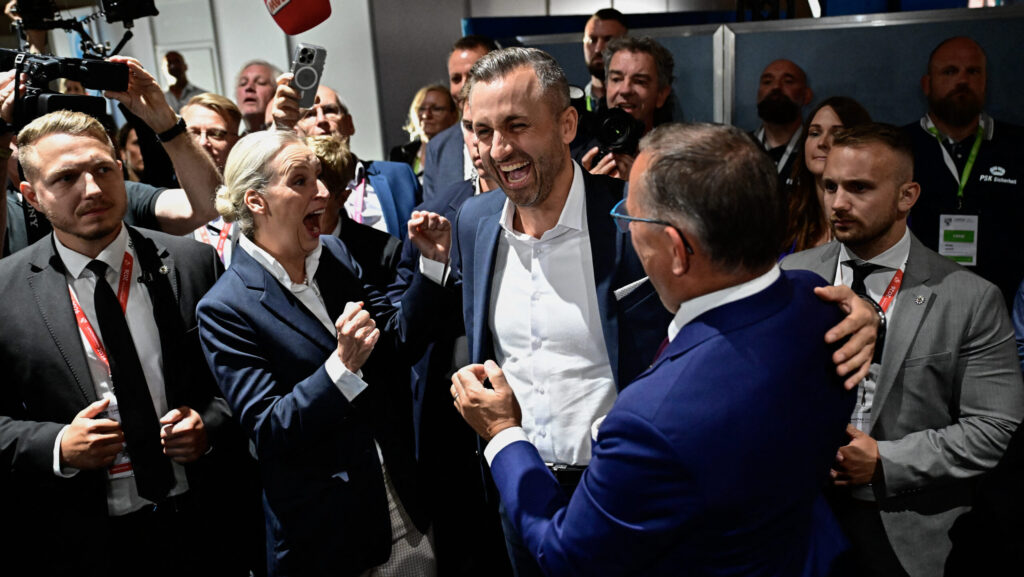
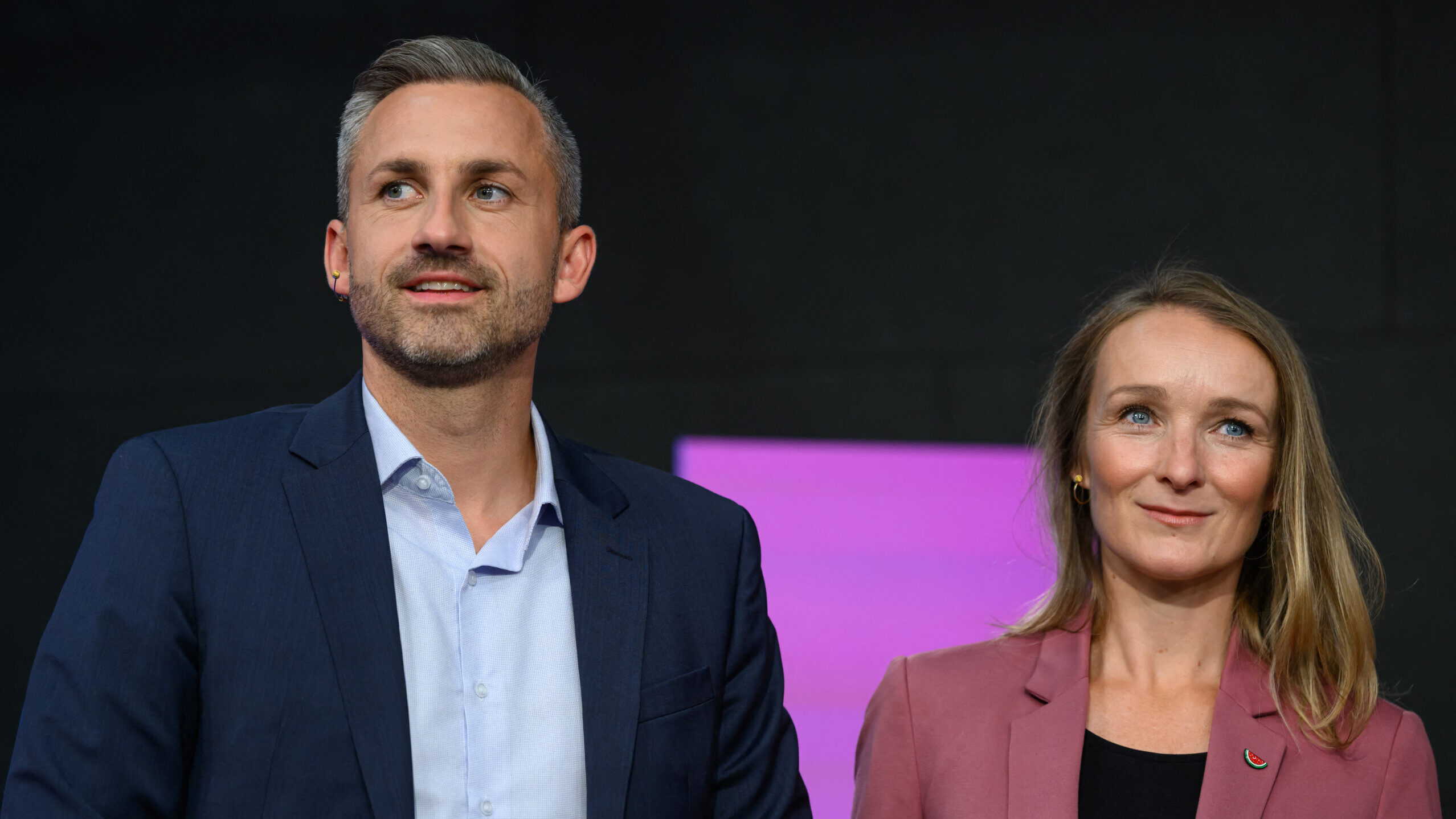
Appearing alongside AfD co-chair Alice Weidel on ARD during Sunday’s election night, BSW lead candidate Claudia Wittig said her party would decide on cooperation according to individual issues and proposals. On energy policy, she said, ‘that can be done together with the AfD’, while acknowledging obvious differences between the two parties in other areas. Weidel later called the prospect of cooperation with BSW ‘very interesting’.
Wittig nevertheless stopped short of backing Ulrich Siegmund for minister-president. BSW has instead proposed a non-partisan premier governing through changing parliamentary majorities, with Wittig saying before the election that neither Siegmund nor CDU incumbent Sven Schulze would receive BSW votes. The party has, however, left open the possibility of abstaining if its preferred model fails.
Under Saxony-Anhalt’s constitution, the minister-president is elected by secret ballot in the Landtag and needs an absolute majority in the first two rounds. If both fail and parliament does not dissolve itself, a third ballot is decided by a simple majority of votes cast, meaning BSW abstention could facilitate the election of Siegmund.
‘BSW abstention could facilitate the election of Siegmund’
Siegmund himself took a harder line on election night, reiterating that he wants a stable government capable of implementing the AfD programme and adding that he currently sees no suitable partner. He described BSW as ‘not part of the solution, but part of the problem’. He has also rejected an AfD minority government for now, while raising new elections as an option if no government can be formed, arguing that the AfD could win ‘50 to 55 per cent’ in a repeat vote.
AfD co-chair Tino Chrupalla, similarly to Weidel, was more flexible towards a potential minority government tolerated from outside and welcomed the possibility of cooperation with BSW, arguing that it could remove his party’s dependence on the CDU.
The situation closely mirrors the scenario outlined in Hungarian Conservative’s pre-election piece. The analysis noted that BSW entering the Landtag could simultaneously make an outright AfD majority harder while weakening the firewall through abstentions or issue-by-issue cooperation. With the projected chamber now split 39–39–5, that paradox has moved to the centre of the eastern German state’s post-election discourse.
Related articles:
At a time when public debate is increasingly polarized and superficial, Hungarian Conservative remains committed to depth, intellectual honesty, and independent conservative thought.
Producing high-quality journalism requires resources. Your contribution helps us expand our coverage, reach new audiences, and keep our content accessible.

Please consider supporting our mission.