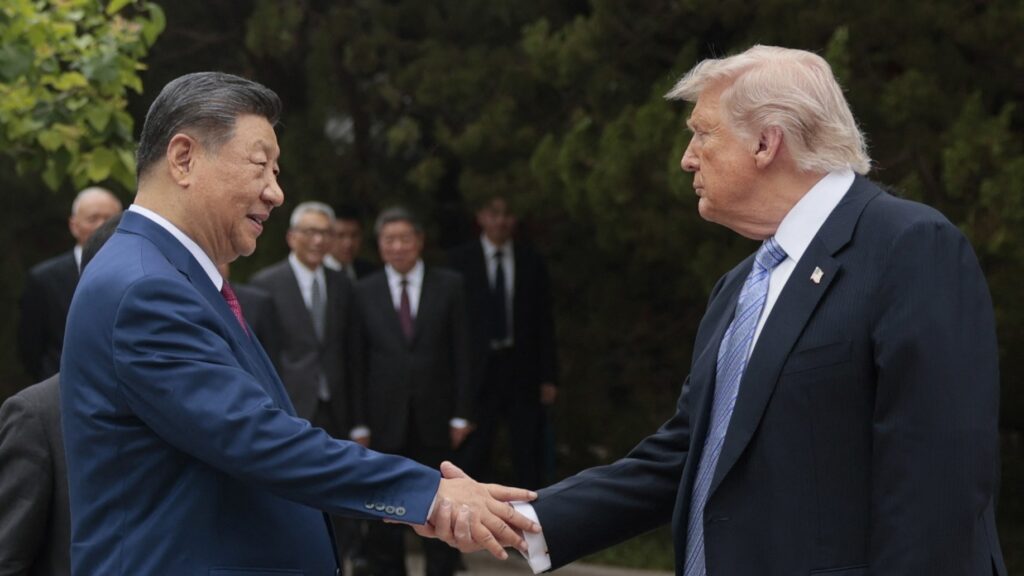
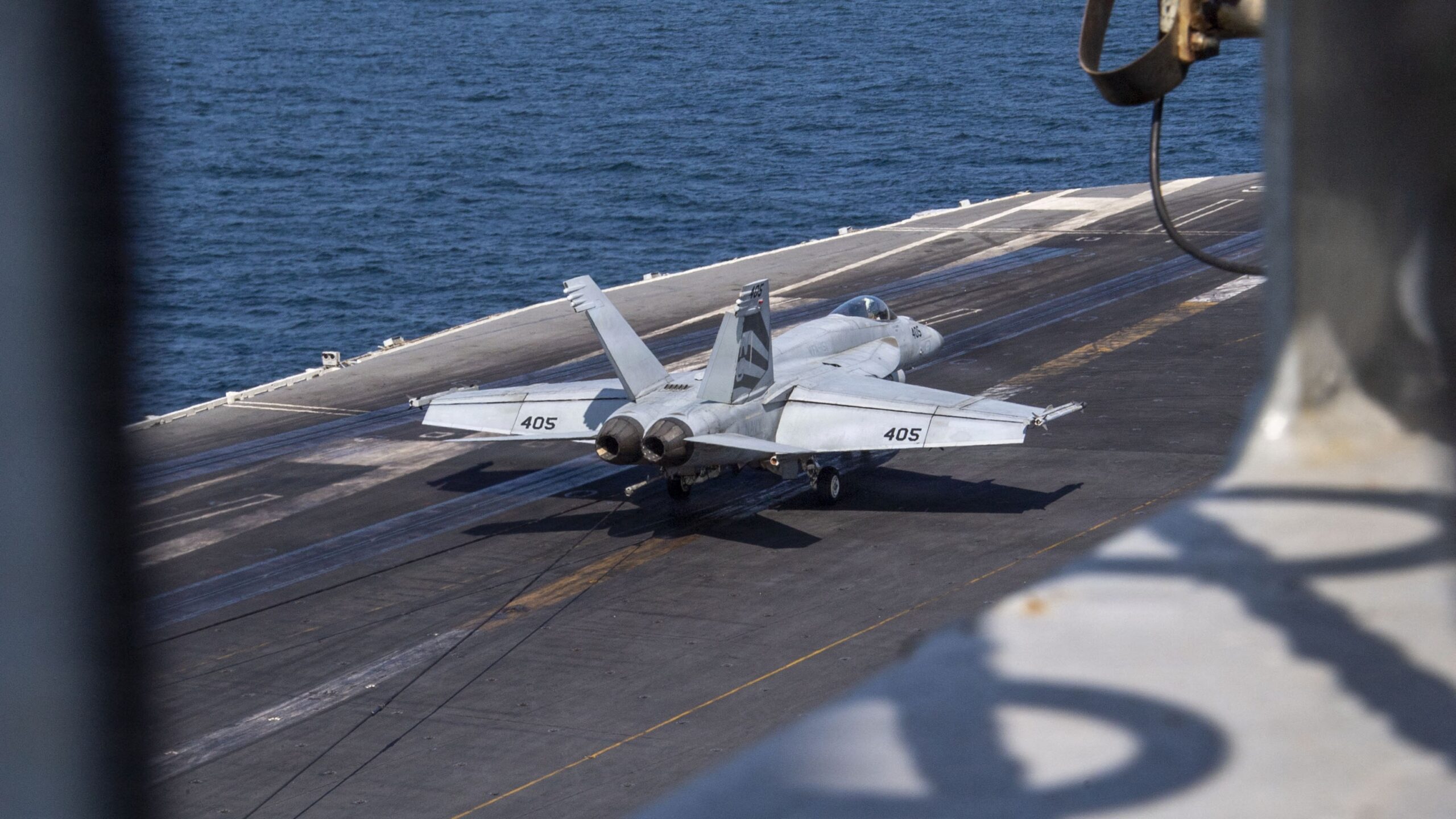
As tensions escalate in the Middle East and the Strait of Hormuz remains effectively closed, US President Donald Trump has intensified pressure on allies to contribute naval forces to secure one of the world’s most critical shipping routes.
Allies at Odds over Hormuz
Writing on his Truth Social platform, Trump claimed that ‘many countries’ would soon join the United States in keeping the strait ‘open and safe’, arguing that even a weakened Iran could still disrupt global trade through mines, drones or missile strikes. Calling on countries such as the United Kingdom, France and Japan, he warned that the United States would act regardless: ‘one way or the other, we will soon get the Hormuz Strait OPEN, SAFE, and FREE.’
At the same time, Trump has also criticized NATO allies, arguing that although they benefit from trade flowing through the strait, they have been unwilling to support US efforts to secure the vital maritime passage. Trump also added that ‘If there’s no response or if it’s a negative response, I think it will be very bad for the future of NATO.’
Yet the response from Europe has been markedly cautious. British Prime Minister Keir Starmer has made clear that the UK ‘will not be drawn into the wider war,’ despite US pressure to deploy warships, instead exploring more limited options such as mine-clearing support and coordination with allies. France, Germany and Italy have similarly ruled out participation in a US-led naval mission, emphasizing diplomacy, de-escalation, and the absence of a clear American endgame.
‘This hesitation…reflects a deeper structural problem within Europe’s approach to global security’
The result is a familiar transatlantic divide: Washington pushing for rapid, forceful action and burden-sharing, while Europe stresses restraint, legitimacy, and the risks of escalation. This hesitation, however, reflects a deeper structural problem within Europe’s approach to global security.
From Global Actor to Bystander
It is increasingly clear that the war in Ukraine and the conflicts in the Middle East are signals of a new world order taking shape before our eyes. A new world that is increasingly defined not by rules, but by power. A new, dangerous reality that much of Europe still tends to deny, which is why it often seems unprepared to address these events. Recent developments in the Middle East provide a striking illustration of this.
While the United States and Israel reshaped the situation in Iran within a single day—carrying out a strike that killed Ali Khamenei—the European Union needed three days just to agree on a joint statement. By the time Europe spoke with one voice, the strategic reality on the ground had already changed. And while the Strait of Hormuz is closed and European assets, including military bases, are threatened on a daily basis by Iranian rockets, European countries are still not sure how they could respond. We are far from the so-called ‘strategic autonomy’.
In a region crucial for Europe’s security, energy supply, and migration dynamics, the Old Continent often finds itself with no clear vision, limited influence, and especially lacking the hard power needed to shape events in the region. As a result, it can only react to crises rather than shaping them.
If Europe wants to remain a global actor, it needs to move beyond denial and admit that the world has changed, that geopolitical competition is returning, and to act accordingly. Leave ideologically driven policies and empty slogans behind and return to realpolitik. Otherwise, in a time of global threats, Europe risks becoming not a shaper of world events—but merely a spectator.
Related articles:
At a time when public debate is increasingly polarized and superficial, Hungarian Conservative remains committed to depth, intellectual honesty, and independent conservative thought.
Producing high-quality journalism requires resources. Your contribution helps us expand our coverage, reach new audiences, and keep our content accessible.
Please consider supporting our mission.