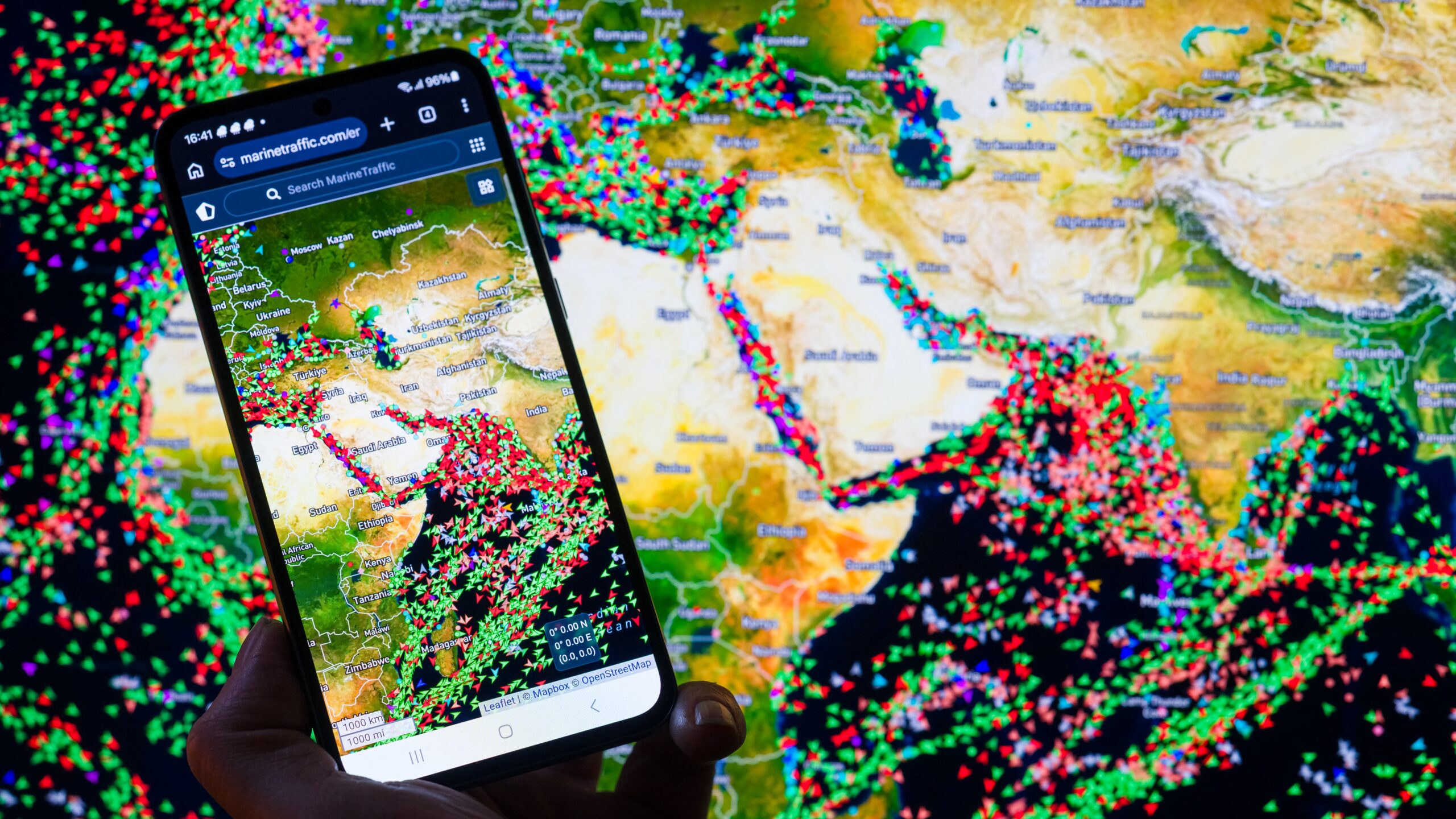
The US–Israeli–Iranian war has now been underway for two weeks, already exceeding the duration of last year’s 12-day conflict. But the key question remains: when will the current war end? At the moment, it appears that the situation in the Strait of Hormuz may play a decisive role in determining how long the conflict will last. Why?
Because this narrow maritime chokepoint is currently Iran’s most powerful lever—not only against its military adversaries, but against the global economy itself. Tehran appears to have concluded during last year’s 12-day war that it cannot defeat the world’s two most advanced militaries on the battlefield. Economically, however, it can make the war extremely costly for everyone. Its primary tool for doing so is disrupting the Strait of Hormuz.
The Cost of War
Iran has escalated its actions step by step. It began by threatening to close the strait, then fired on several commercial vessels, and has now reportedly deployed underwater mines in the area. The results have been immediate.
Energy shipments have effectively ground to a halt along one of the world’s most strategically important trade routes, through which roughly 20 per cent of global oil and liquefied natural gas (LNG) trade normally passes. Oil and gas producers along the Persian Gulf are struggling to deliver their resources to international markets, removing roughly 8 million barrels of oil per day from global supply. At the same time, disrupted export routes and direct Iranian attacks on energy infrastructure have forced several Gulf states to curb production. Qatar, for example, has shut down the world’s largest LNG liquefaction facility.
Brent crude prices briefly surged above $120 per barrel last week and are currently hovering around $100. Just two weeks ago, before the war began, oil was trading at roughly $60 per barrel. In response, the 32 member states of the International Energy Agency have agreed to release 400 million barrels from strategic reserves, while the United States has temporarily lifted certain sanctions on Russian oil exports. Even so, the situation represents one of the most significant disruptions to global energy supply since the oil crises of the 1970s.
It Could Get Worse…
Tehran clearly understands that it has struck a sensitive nerve. Iranian officials recently stated that their goal is to push oil prices as high as $200 per barrel. The newly appointed Iranian supreme leader, Mojtaba Khamenei, also pledged in his first public statement to maintain the closure of the Strait of Hormuz.
In many ways, however, this is the same economic pressure tool that the United States has used against Iran for decades through sanctions. The difference, however, is that economic weapons tend to operate very differently in authoritarian systems like Iran’s, where public opinion carries far less political weight than in democratic, consumer-driven societies. This dynamic could prove particularly significant for the Trump administration as it approaches the upcoming midterm elections.
How Trump Responded
Donald Trump has repeatedly stated this week that the war has essentially already been won, suggesting that the conflict could end sooner than many had anticipated. At the same time, he has downplayed the Iranian threat around the Strait of Hormuz, arguing that only a handful of missile attacks are still disrupting shipping and that these will soon be neutralized. The messaging appears clearly aimed at calming global markets.
At the same time, Trump has also criticized NATO allies, arguing that although they benefit from trade flowing through the Strait of Hormuz, they have been unwilling to support US efforts to secure the vital maritime passage.
Thus, while Israel and the United States may hold a clear military advantage, Iran has demonstrated that it can exert significant pressure on the economic battlefield—pressure that could prove particularly painful for the Trump administration ahead of midterm elections. The same war, fought on two different fronts. The key question now is how the United States and its allies can remove the ‘oil weapon’ from Iran’s hands.
Related articles:
At a time when public debate is increasingly polarized and superficial, Hungarian Conservative remains committed to depth, intellectual honesty, and independent conservative thought.
Producing high-quality journalism requires resources. Your contribution helps us expand our coverage, reach new audiences, and keep our content accessible.
Please consider supporting our mission.