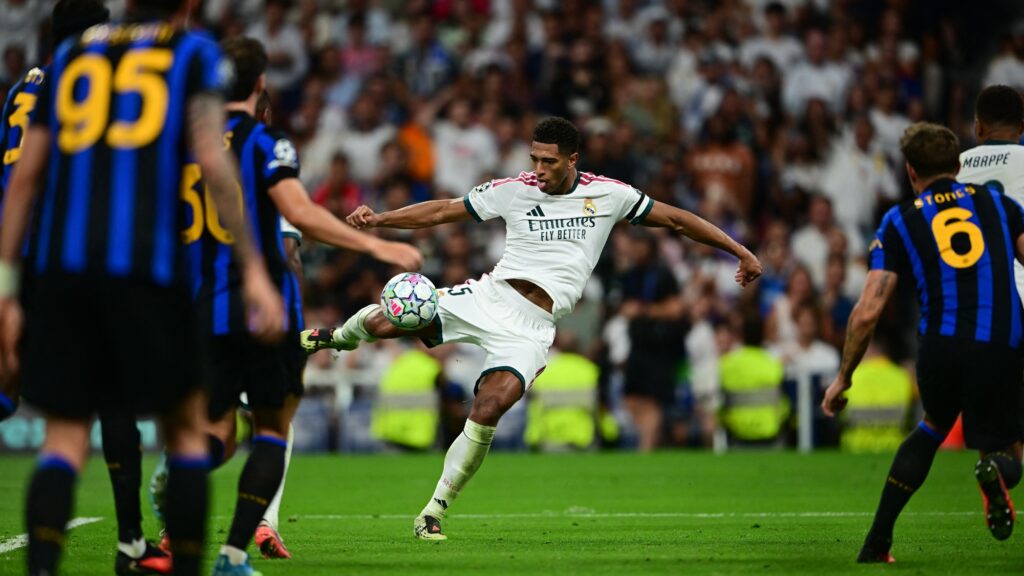
England will take on Croatia to begin the Three Lions’ World Cup campaign on Wednesday, 17 June, at AT&T Stadium in Arlington, Texas, in what is widely regarded as the first major heavyweight clash of the tournament. The two sides have met on some of international football’s biggest stages in recent years, including the 2018 World Cup semi-final, and their latest encounter comes amid a tournament in which several favourites have so far struggled to meet expectations.
Pressure on the Three Lions could not be higher: after hearing ‘it’s coming home’ for six long decades since 1966, the last time England won the World Cup, fans are confident that their team has a realistic chance to end their 60-year drought. England arrives in Texas with one of the tournament’s most mature and experienced generations, a team that has now entered its third consecutive major tournament as a genuine contender for the title.
Yet, there is another kind of pressure, slowly growing but becoming increasingly apparent. As the team prepares for the showdown against Croatia in the United States, across the Atlantic, the United Kingdom is raging: in recent weeks, several large-scale protests have been organized against Prime Minister Keir Starmer’s government, its immigration policies, and two-tier policing. In Belfast, Sheffield, Southampton, and other cities, the protests escalated into violent clashes with riot police, with buildings and vehicles burned down and footage of increasing police brutality spreading online.
From George Floyd to Henry Nowak
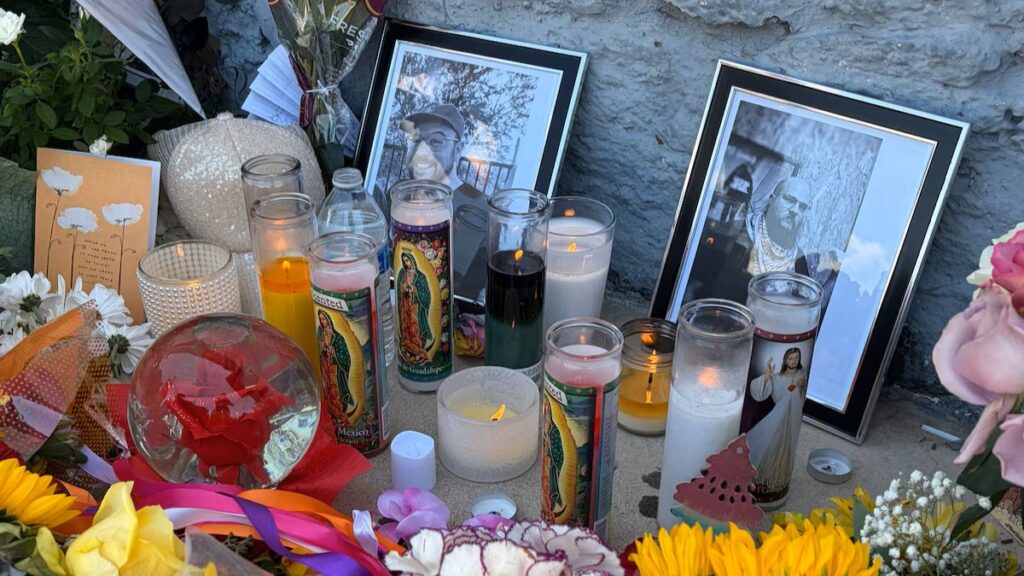
The trigger for the current events was the tragic murder of British university student Henry Nowak and the circumstances surrounding it. The 18-year-old was stabbed multiple times by Vicrum Digwa, a 23-year-old Sikh man, who misled arriving officers into believing he had been racially abused by Nowak. Despite repeatedly telling officers he had been stabbed and showing visible signs of serious injury, Nowak was restrained by police and died at the scene minutes later, drowning in his own blood. ‘I don’t think you have, mate,’ one of the officers told Nowak as he repeatedly tried to explain that he had been stabbed.
While his killer was sentenced to life imprisonment with a minimum term of 21 years on 1 June, the impact of the case could not be contained. As more information incriminating for the police emerged, outrage over police misconduct and alleged two-tier policing grew exponentially and spilled onto the streets of England while simultaneously breaking into the national headlines. Dissatisfaction became so widespread that it was impossible for politicians, media outlets, and the broader public to ignore.
Due to the similarities between the two cases, Nowak’s murder was immediately compared to that of George Floyd, a 46-year-old African American career criminal who died during an arrest in May 2020, prompting months-long riots and looting across many American cities and parts of Western Europe, particularly the United Kingdom.
At the time, mainstream and progressive politicians throughout the Western world, including Keir Starmer himself, rushed to condemn police brutality and took the knee for Floyd. Starmer took more than two weeks to address the murder of Henry Nowak and, instead of showing solidarity with the victim’s family or condemning police conduct, accused the ‘far-right’ of exploiting the teenager’s death for political gain, prompting many to accuse the prime minister of hypocrisy.
‘Under Southgate’s leadership, the England national team indeed became a social justice warrior’
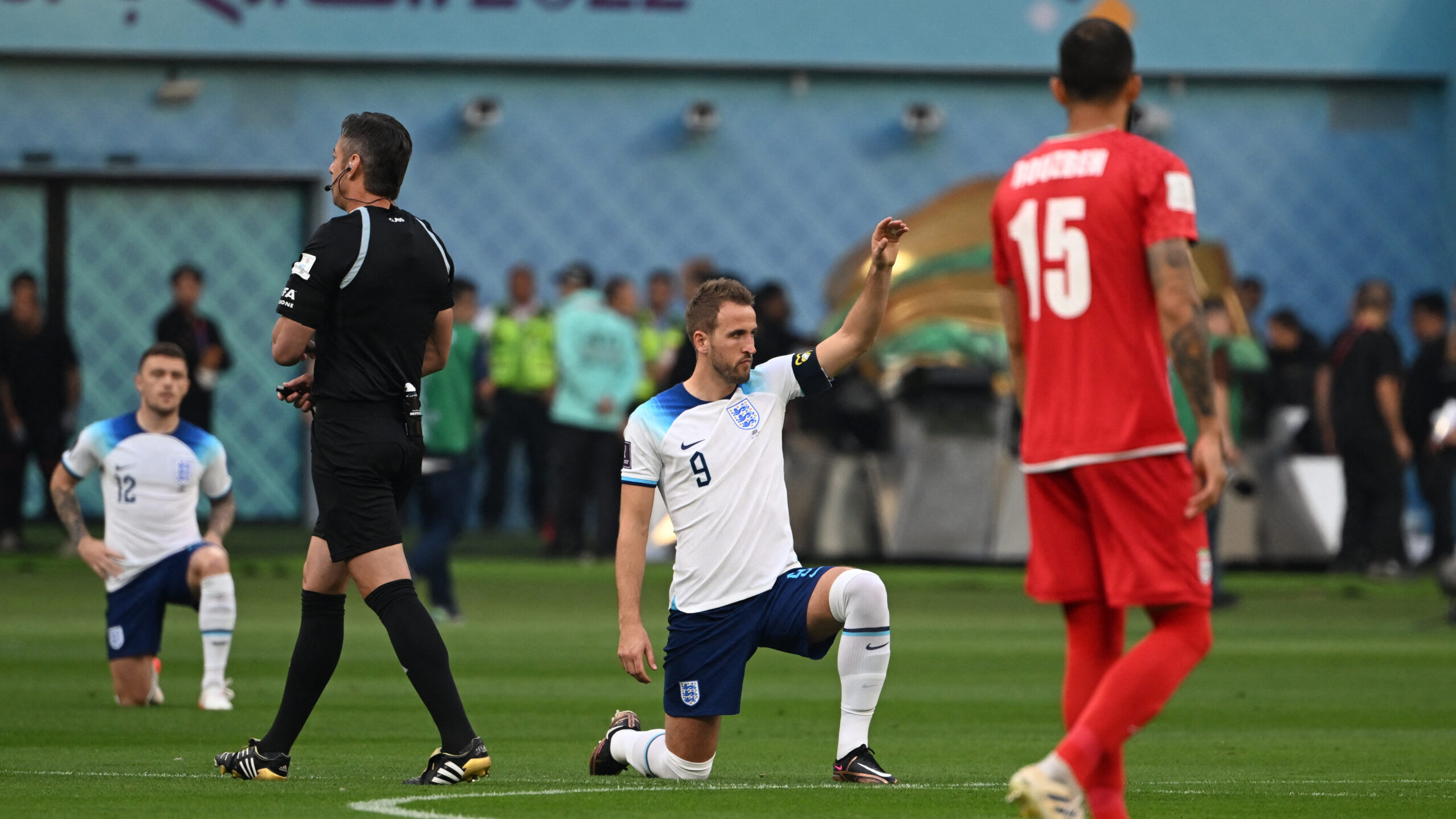
Back in 2020, the impact of George Floyd’s death also reached professional football. England was among the leading European countries where teams took the knee in support of the wider anti-racist movement and in opposition to police brutality. The gesture began at club level before being adopted by the national team in its first match following the Covid-19 break. Taking the knee became routine for the Three Lions during Euro 2020 and continued through to the 2022 World Cup in Qatar.
‘It’s what we stand for as a team and have done for a long period of time…We think it’s a strong statement that will go around the world for young people in particular to see that inclusivity is very important,’ then-manager Gareth Southgate told reporters in 2022.
Under Southgate’s leadership, the England national team indeed became a social justice warrior, putting every issue important to the mainstream media and political agenda on display. Whether it was LGBTQ armbands or taking the knee against racism, the England national team was always there.
England’s Henry Nowak Dilemma
That is exactly why the issue has become particularly sensitive for the Three Lions, as calls for the team to address the case of Henry Nowak are intensifying. Eight days ago, a petition was launched urging the team to hold a minute of silence in Nowak’s memory.
‘By holding a minute of silence at an England football match, the team can draw national attention to Henry’s story and underscore the vital need for unbiased policing and justice reform. Such a tribute would not only respect Henry’s memory but also stand in solidarity with his family and everyone who calls for change,’ the petition, which currently has around 5,000 signatures, states.
Similar calls have also been amplified by former BBC television presenter and fashion designer Jeff Banks, who has publicly urged England to observe a minute’s silence before their World Cup opener against Croatia. Social media users have likewise questioned why footballers who took the knee in 2020 have remained silent about a case that has dominated Britain’s political debate and sparked weeks of unrest.
Whether England should take the knee for Henry Nowak is nevertheless a highly divisive issue, even within right-wing circles. While morally it is arguably far more logical and appropriate for the British national team to pay respect to a tragically murdered British teenager than to a repeat criminal offender across the Atlantic, many on the right believe that professional sport should remain politically neutral. That was also their position in 2020 during the height of the Black Lives Matter movement, as well as during the recurring DEI campaigns that followed.
Yet, the 2026 World Cup was politicized from the moment it became clear that Donald Trump’s America would be one of the tournament’s co-hosts. Hosting the World Cup alongside Mexico and Canada amid tense bilateral relations with both countries, Washington is waging a war against Iran—one of the tournament’s participants—while frequently clashing with its European allies and, indeed, much of the world.
Stricter security measures and the Trump administration’s hardline immigration policies have resulted in referees, national team staff and personnel, and even the entire fan bases of several countries, mostly from Africa and the Muslim world, being barred from entering the US and missing the tournament, sparking intense backlash from human rights groups and the affected nations themselves.
Moreover, the Trump administration already intervened in Henry Nowak’s case, with the State Department expressing condolences to the victim’s family while condemning what it described as ‘ideological conditioning and two-tiered policing’ in Western societies, calling them ‘glaring symptoms of civilizational decline’, prompting harsh reactions from London. Taking the knee for Nowak, therefore, would not introduce politics into the tournament—it would simply become another episode in a World Cup already shaped by political controversies.
‘Taking the knee has become inseparably associated with Black Lives Matter, the George Floyd riots’
But is taking the knee the right thing to do? Many do not think so—not from a moral perspective, but symbolically speaking. Taking the knee has become inseparably associated with Black Lives Matter, the George Floyd riots, and the political battles surrounding them. The gesture carries significant ideological baggage.
Because of that, most of the initiatives are not explicitly calling for players to take the knee, but rather to observe a minute’s silence and stand with their hands on their hearts in memory of Nowak. By doing so, supporters argue, the Three Lions would avoid the baggage associated with kneeling while still expressing solidarity and acknowledging the national debate triggered by his death.
Yet this is also precisely why England are unlikely to do anything at all.
A Tribute Too Controversial to Make
Unlike the George Floyd protests, which were embraced by much of the political, media, sporting, and corporate establishment, the movement that emerged around Henry Nowak’s death has been picked up primarily by right-wing activists and commentators critical of immigration, asylum policy, and two-tier policing. The demonstrations that followed the case quickly merged with wider protests over migration.
Any gesture by England would therefore be interpreted through that lens by the mainstream media and politicians, making the team public enemy number one for progressive SJWs all over the world. The Football Association, England’s players, and FIFA itself are unlikely to willingly place themselves at the centre of such a controversy on the eve of a World Cup campaign.
‘For a national team that spent years publicly embracing approved social causes, crossing that line would be equal to public suicide’
That highlights perhaps the most striking difference between the cases of George Floyd and Henry Nowak. Floyd’s death was rapidly adopted by institutions and the media across the Western world, allowing athletes, clubs, corporations, and governments to express solidarity with little fear of political isolation.
By contrast, the movement surrounding Nowak’s death is being framed by those same institutions as a ‘far-right-led’ movement that they view as an existential political threat. For a national team that spent years publicly embracing approved social causes, crossing that line would be equal to public suicide.
England will almost certainly walk onto the pitch in Arlington without taking the knee, observing a minute’s silence, or making any reference to Henry Nowak. That is precisely what makes the debate so politically potent. The question is no longer whether the Three Lions will act, but why some tragedies become global sporting causes while others remain too controversial even to acknowledge.
Related articles:
At a time when public debate is increasingly polarized and superficial, Hungarian Conservative remains committed to depth, intellectual honesty, and independent conservative thought.
Producing high-quality journalism requires resources. Your contribution helps us expand our coverage, reach new audiences, and keep our content accessible.

Please consider supporting our mission.