The first major public controversy of Hungary’s electricity crisis, caused by an extreme heatwave and drought, has emerged over the different responses of the Sziget Festival and professional football. The Hungarian Football Federation, or MLSZ, voluntarily moved league matches into daylight hours to reduce pressure on the grid, while Sziget confirmed that its five-day festival would proceed. The contrast prompted allegations of double standards and a broader argument over voluntary social responsibility during a national emergency.
Hungary entered Tuesday with the Paks nuclear plant operating at just over 10 per cent of capacity. Record-low Danube levels caused by drought and extreme heat reduced the cooling water available to the plant, leaving one turbine producing around 240 MW. Paks normally generates more than 40 per cent of Hungary’s electricity. Voluntary reductions by households and more than 300 companies have helped keep the grid stable, while freight traffic, lighting, industrial production and air conditioning have also been curtailed during the critical 5pm to 10pm period.
The government and grid operator MAVIR have presented the response as a national effort requiring restraint from the entire country. That reliance on voluntary action has raised a basic question: which activities should continue, and who should bear the disruption?
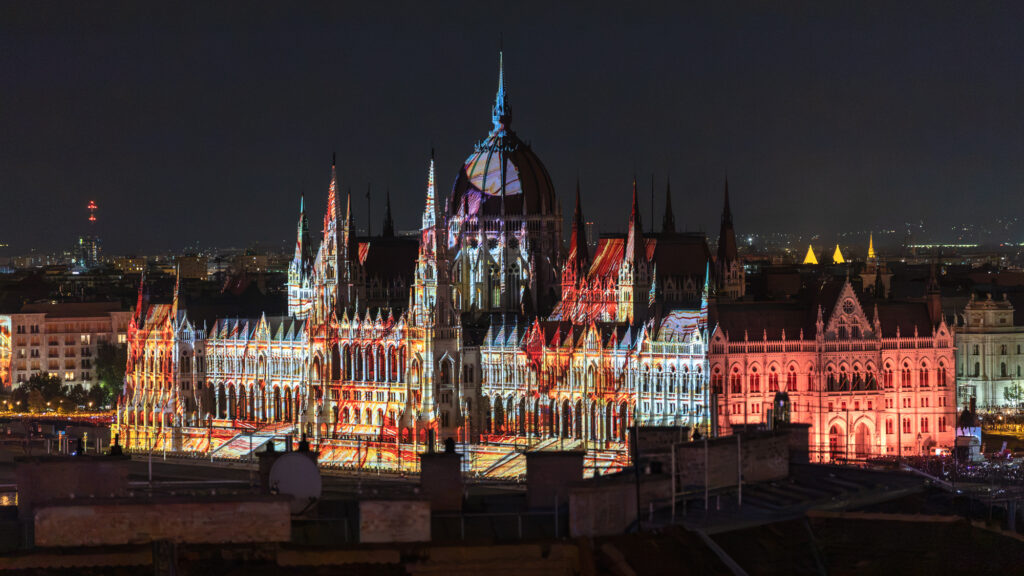
The organizers of one of Europe’s largest music festivals, Sziget, said the five-day event, scheduled for 11–15 August, would not endanger supply because its diesel-generator system can power the site. Under a three-stage plan, it will use the grid normally if the crisis eases, switch to generators between 5pm and 10pm if evening shortages continue, or disconnect completely if its demand could affect other consumers.
The MLSZ chose a remarkably different and visible approach. From 1 August, national league divisions NB I, NB II and NB III matches must begin early enough to minimize floodlight use, with 5:30pm set as the latest recommended kick-off. 13 first- and second-division fixtures were rescheduled or postponed in the first affected round. The entire 32-match NB III round was later delayed by one week because of the heat, while further NB I and NB II schedules were also rewritten.
Sziget nevertheless consumes far more electricity than several football matches. The organizers said the 2025 festival used ‘457,000 kW’, almost certainly meaning 457,000 kilowatt-hours, or 457 megawatt-hours, because kilowatts measure power rather than accumulated energy. Spread over six days, that amounts to approximately 76 MWh per day. The Groupama Arena’s documented floodlight system is rated at 448 kW, meaning three to four hours of full operation uses around 1.3–1.8 MWh. Three or four comparable matches would therefore use approximately 4–7 MWh in pitch lighting. Groupama is the largest energy consumer among Hungarian stadiums, so the number is probably lower in reality; nevertheless, the difference is already clear.
The MLSZ decision has also created a separate health risk for players. Over the weekend, Újpest captain Matija Ljujić became unwell during the 3:30pm match against Debrecen in temperatures reported at around 40°C, required treatment and was later substituted. The incident prompted criticism that the association had merely switched the electricity risk to a health risk endangering players during an extreme heatwave, disproportionately to the energy saved by rescheduling.
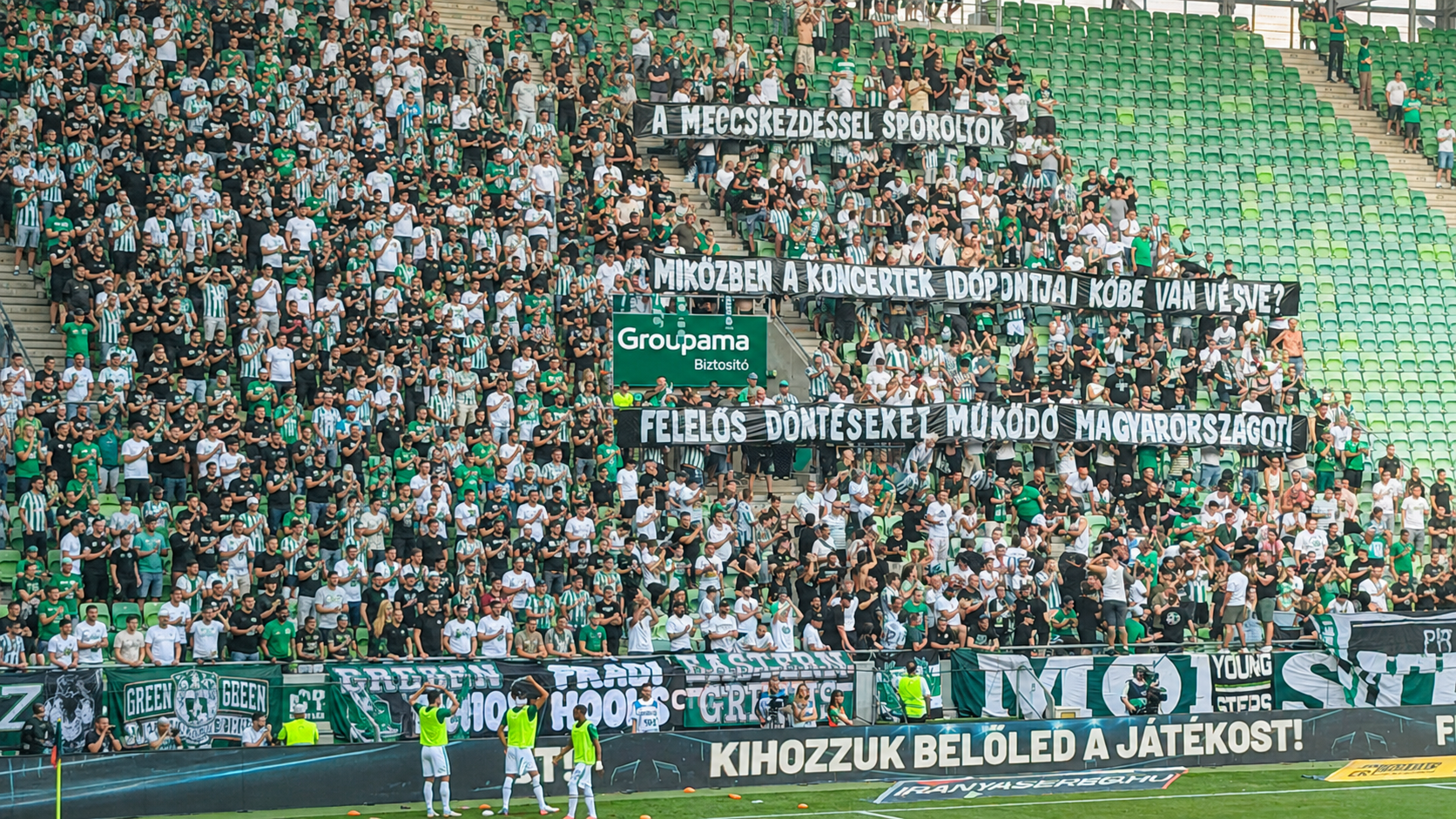
Fidesz politicians and football fans described the current arrangements as an unequal sacrifice, accusing the festival of benefiting from double standards. Ferencváros fans displayed a banner asking why match times were changed while concert schedules appeared ‘set in stone’, while the largest Hungarian football meme Facebook page, TrollFoci, posed a similar question online, garnering significant attention in recent days. Sziget’s supporters argued that the key issue was not how much energy the festival used overall, but whether it drew electricity from the national grid during peak hours. Critics responded that diesel generators would only shift the source of supply while adding fuel costs and emissions.
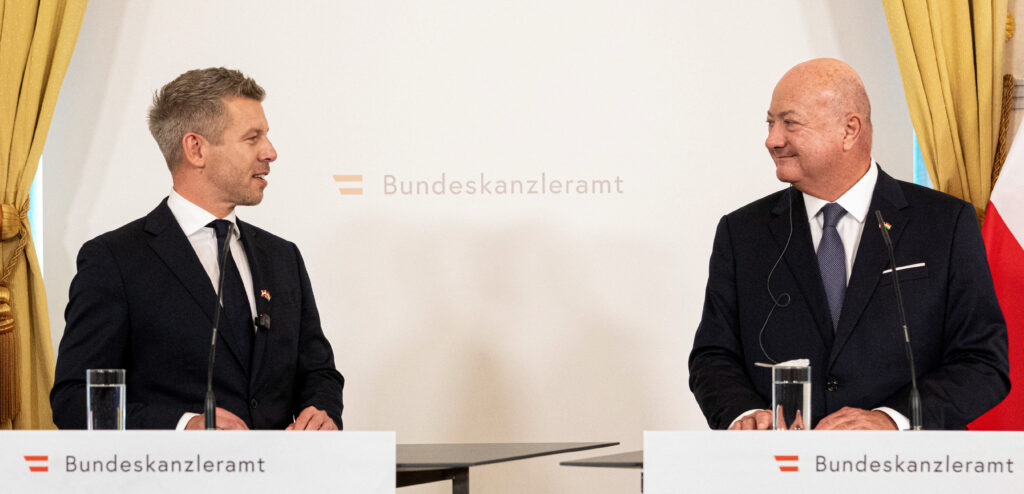
The comparison of Sziget’s and MLSZ’s responses to the crisis quickly merged into that framework of political and cultural division, which comes as no surprise considering how both organizations became overly politicized in recent years. Football had become closely associated with Viktor Orbán’s governments through public subsidies, stadium construction and his personal attachment to the sport. Sziget also carried political baggage: in July 2025, the Orbán government banned Irish rap group Kneecap from entering Hungary, prompting the festival to call the decision ‘unprecedented, unnecessary and regrettable’. Later that year, Sziget’s future became an election issue when both Fidesz and Tisza initially blocked a Budapest agreement before opposition leader Péter Magyar negotiated a compromise with founder Károly Gerendai.
Sziget proceeding seemingly without disruption is becoming even more controversial as local reports say coercive pressure to comply with energy-saving efforts is emerging at household level among ordinary citizens. Some villages hit by extreme water scarcity ordered continuous inspections of those not abiding by the water-saving campaign, authorized enforcement and fines. There are also proposals for civil-guard patrols, temporary air-conditioning bans and compulsory training, as well as placing warning stickers identifying first-time ‘offenders’ caught using electrical appliances deemed unnecessary during critical hours.
‘Resistance to voluntary commitments has also emerged’
Resistance to voluntary commitments has also emerged, with the radical right-wing outlet Vadhajtások urging readers to switch on their air conditioners and set freezers to minus 35°C, boasting that a similar appeal earlier in July had almost overwhelmed the system and framing the action as retaliation ‘against Tisza voters’. After government warnings of consequences for those deliberately ‘rooting against Hungary’, the outlet doubled down, joined by former Fidesz mayor Zsolt Wintermantel, who announced that he would resume using air conditioning because Sziget had been allowed to proceed.
There was at least some relief on Tuesday morning, when the Danube rose slightly, and Paks avoided the complete shutdown that had appeared imminent only hours earlier. The improvement remains fragile, but it has given Hungary’s electricity system more time and may allow the immediate restrictions to be eased if water levels continue to recover. The wider argument, however, will not disappear with the heatwave.
Péter Magyar has already announced plans to modernize the grid and develop 4 GW of wind capacity by 2030 to reduce Hungary’s dependence on the Danube. The government has also pledged a national water-retention programme, reservoir repairs and a new climate law; the emergency has now given those plans far greater urgency. Even if the immediate danger passes, Hungary is heading for a much more serious, and probably even more contentious, debate over the country’s future climate and energy policy.
Related articles:
At a time when public debate is increasingly polarized and superficial, Hungarian Conservative remains committed to depth, intellectual honesty, and independent conservative thought.
Producing high-quality journalism requires resources. Your contribution helps us expand our coverage, reach new audiences, and keep our content accessible.

Please consider supporting our mission.