
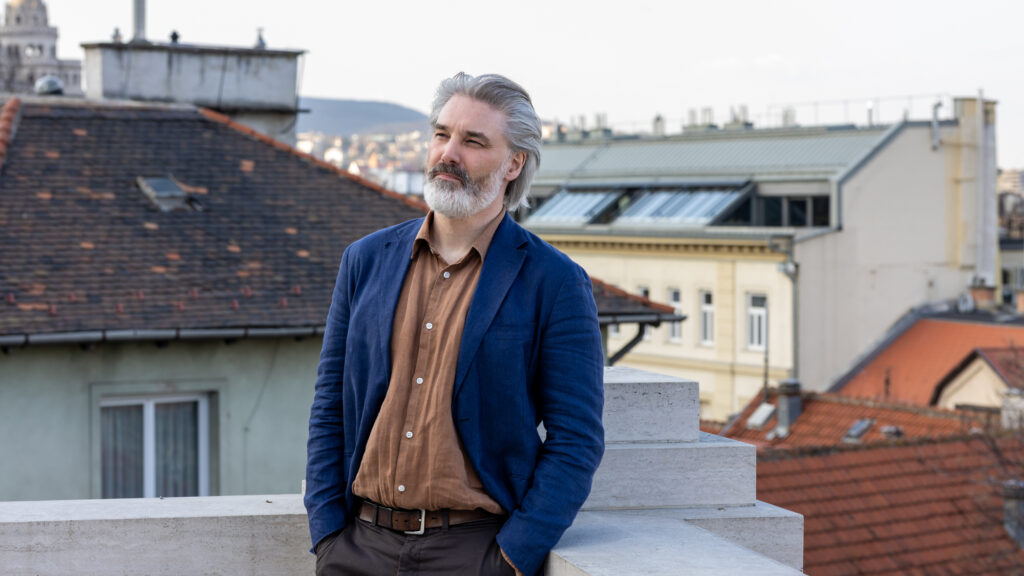
Calum T M Nicholson read Social Anthropology at Trinity College, Cambridge, and was awarded an MPhil in Migration Studies from St Antony’s College, Oxford. He holds a doctorate in Human Geography. He was most recently the Director of the Climate Policy Institute and has served as a Visiting Fellow at the Mathias Corvinus Collegium since 2021. He also continues to teach courses on international migration, international development, and the impact of social media at the Institute of Continuing Education, University of Cambridge. In 2023 his edited volume, Climate Migration: Critical Perspectives for Law, Policy, and Research, was published by Hart: Bloomsbury. His research interests encompass the role of science in society, political polarisation, and international interventions.
***
Duran Duran, a British pop band, played a gig in Budapest recently, and bass guitarist John Taylor says in one of their videos: ‘Hungary doesn’t feel foreign to us’. What is the explanation?
I share what they said because I’ve been here five years, and I find there are surprising similarities between Britain and Hungary on a lot of different levels. If you look geographically, Slovakia used to be part of Hungary, as it was Transylvania with the mountains and northern Serbia, and there is Britain with England, Scotland, Wales and Ireland. It’s superficial similarity, but more deeply, there are other similarities, like the humour. British humour is quite dark, quite self-deprecating and absurd, and I think Hungarian humour is quite the same. I have a Hungarian friend who once said to me: ‘Shakespeare is a great Hungarian writer,’ and I don’t know what he meant, but I believe it’s true.
He must have meant the same: the sympathy for irony.
Yeah, I think so. And there’s also a British comedy group called Monty Python.
It’s very popular here.
Well, this is it. In the 90s, there was a group here called Holló Theatre, and they just apparently translated Monty Python into Hungarian, and it worked. You know the Germans have never got it; the French don’t like Monty Python because a lot of the jokes are about them. But the Hungarians get it, and they like it. And my theory as to why this is is that Britain and Hungary were both island nations. We’re an island, obviously, surrounded by water, while Hungary is an island linguistically, surrounded by cultures that do not share its language. Island cultures tend to be quite creative and a bit eccentric in some ways, and I think both the Brits and the Hungarians are that. The only thing Hungary really reminds me of is Britain, actually, through a lens.
Some say Hungary is like the West in its old days. Is it true?
So does it remind me of a sort of pre-post-modern Britain in a sense? I think that’s exactly what it feels like. Hungary feels like Britain in 1992, and by that I do not mean backwards or anything from a long time ago.
‘Island cultures tend to be quite creative and a bit eccentric in some ways, and I think both the Brits and the Hungarians are that’
For example, in the early 90s in the UK, if the plumber came to the house, you’d meet them like, ‘Hello, Mr Anderson’, and there was that formality that protected everyone. And I find in Hungary they still have the use of the formal like this. There are a lot of things that feel like before we became so cynical in the UK. I do think that the West or the Anglosphere has become a victim of its own success, where we’ve ceased to think we need to believe in anything. In the UK, the fashionable thing is to believe in nothing these days, and here people still believe in something. So we could be a little bit less assured, maybe listen a little bit better. Hungarians could probably be a bit more confident in their own culture sometimes. I think, because history has been so traumatic, they know that if you’re not constantly trying to reaffirm the culture, it may disappear, and I think Hungarians are less cynical about it as a result.
What was your first impression of Hungary and the Hungarians when you arrived here, and what is your deeper knowledge about them after five years?
It’s interesting that there were certain things I noticed about Hungary right away, and one thing I really noticed is that Hungarians make a lot of eye contact. Like when you’re talking to them, there’s a great deal of presence. People aren’t looking at their phones. They’re very in the conversation. I mean, one Hungarian friend did just say to me: ‘It’s because you talk too fast, and they’re trying to focus.’ But I’ve observed here as a classic example that when you say ‘Cheers’, it’s a bit of a faux pas if you don’t look someone in the eye. Whereas in Britain, people will say ‘Cheers’, and they’ll look away as they do it.
Handshake is the same. You must have an eye contact too.
Exactly. In the UK, you can go a couple of weeks without feeling like you’ve actually had a real conversation with a real person in a way that feels present. And frankly, I have two or three conversations like that a day here. I really like that presence.
‘Hungarians could probably be a bit more confident in their own culture sometimes’
And I’ll tell you one little example of this. There is a festival in Transylvania called Tusványos. Every night basically, there’s a folk tent, and I remember one night in 2022, the first one I went to, there was a violinist playing some old folk song, and he was surrounded by people singing the song and drinking wine, and they were all singing together collectively. And I remember looking at it, thinking, ‘What is unusual about this? There’s something here that feels different than in the UK.’ And then I realized what it was. There wasn’t a single person with a camera phone out filming it. No one was consuming it as a cultural product to show somewhere else. It wasn’t something they were distanced from. Everyone was part of the experience. They can just sit and be in the present. So there’s something in the culture here.
In one Danube Institute video, you say: Budapest ‘is big enough that everything comes here or happens here, but it’s smaller, so it always feels yours.’ What is the difference between Budapest and London?
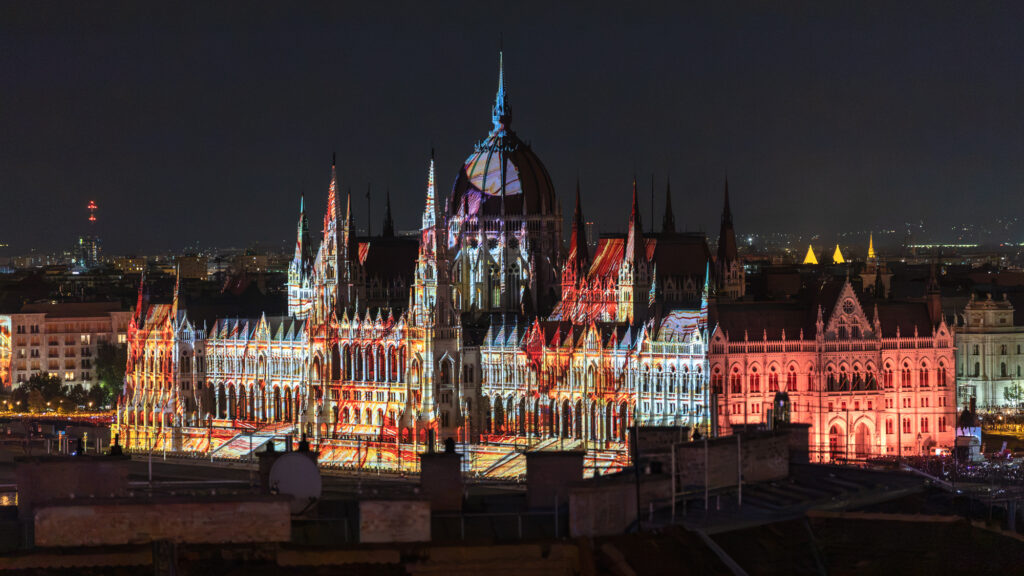
Budapest is just one of the great cities. It’s funny because Hungarians often look down on it a bit. But I think it’s just incredible because it’s not too stressfully paced, but things are going on. It’s got this amazing shape: it’s got the flat Pest, and then you’ve got kind of Hollywood Hills of Buda, and you have this centrepiece of the Gellért Hill and the Castle District. Visually, it’s a perfectly designed city. After five years here, every square, every street has both personal and professional stories woven into them, and it’s an amazingly well-narrated city. It’s a city with very strong stories, and it feels like having been part of some story here. It’s been one of the most evocative periods of my life, for sure.
Danube Institute is kind of an umbilical cord between the Anglosphere’s conservative movements and Hungarian conservatism. Why was Hungary interesting for the Americans, the British or the Australians?
I do think that symbolically, Hungary played a prominent role in the world of international conservatism. For instance, the Hungarian state set up a State Secretariat for Persecuted Christians, and there was no other state, to my knowledge, that had a ministry where its international development efforts were concentrated on one community with the logic that this is a Christian country and they were trying to support Christians abroad. So I think there are things that Hungary was doing over the last 16 years, issues like migration, that they were really ahead of the curve by a few years. Their views on migration were seen as outrageous in 2015, and it took some courage to hold that position. But in doing so, they’ve expanded what’s known as the Overton window in terms of what people can consider, and now those debates are much more common, and those positions are being much more widely adopted beyond Hungary, and there are other issues too.
‘Hungary played a prominent role in the world of international conservatism’
So Hungary didn’t always get everything right, but I think it had the courage to break from the sort of technocratic, sort of neoliberal consensus on certain issues, and someone had to do that. And I think the challenge Hungary has faced—the real tragedy—is that it takes courage and requires sacrifice to be the first mover, paving the way for others to follow, like an icebreaker. You know, others can come behind, but the icebreaker ends up being quite damaged. And the government obviously lost the election. But in terms of their international positions, there are certain issues on which I think they have set a precedent and sort of beaten a path that others can follow. So I think that’s why they’re of interest to the outside world. But I’d also say one additional thing on this: when Vesuvius went off and it buried the town of Pompeii, it was a complete tragedy for Pompeii, but ironically, this is the best-preserved Roman town now in the world. Communism buried Eastern Europe, but oddly, now it feels almost like there are certain things that have been preserved because of that, which have been lost to hypercapitalism across the West. So, in a sense, we had a 40-year head start on destroying ourselves. I think Hungary is a country that has suffered under communism, that had a voice in the world, and was able to offer it not from the position of a superpower and all the hubris that comes with that, but with the kind of humility of being a fairly small nation with a difficult history.
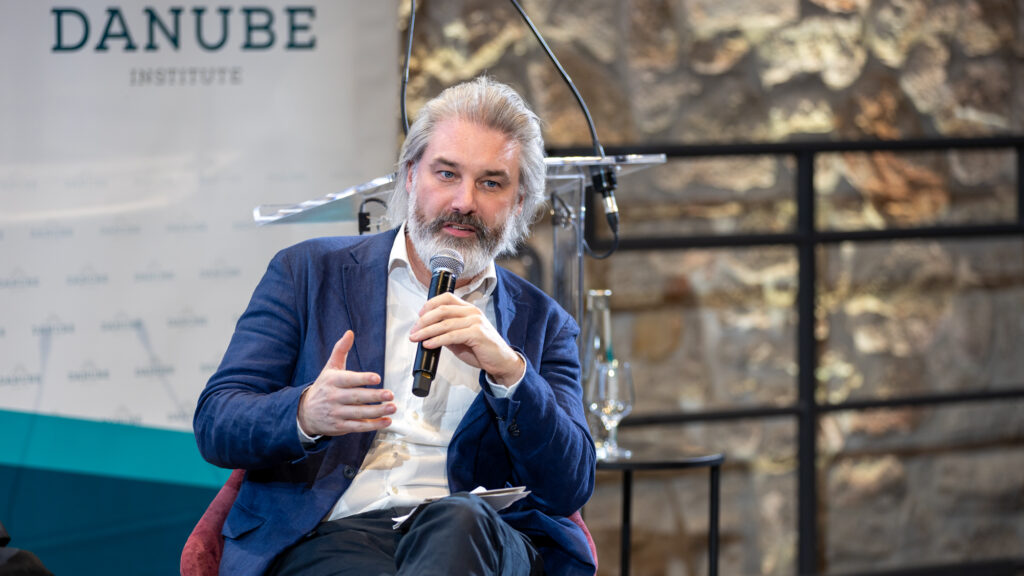
Sometimes the Danube Institute is described in the international press as kind of a nerve centre controlling things, but we were really just a nerd centre; we just have a bunch of people who are interested in the culture, who care about Western culture, who try to write and talk around those issues, and produce some really interesting and often quite bold ideas. I think we’re saying things that in ten years most people will just accept as common sense.
Do you believe that Fidesz will come back? Can the party reorganize itself, going back to the core conservative values?
I don’t really know. I think that the cause of conservatism is of concern to me. I think Fidesz has been successful on certain issues like family policy, and so on.
The legacy of Fidesz is, in some ways, that their opponents cannot deny certain things they were successful at. Fidesz was set up as a kind of young democrats that were all against communism back in the 80s, and they wanted to destroy the left and get rid of Hungary of the left, and, in a sense, the Fidesz project has been successful because now in the parliament you have three right-wing parties: Our Homeland (Mi Hazánk), Fidesz, and Tisza. The far left is gone.
Do you have high hopes for the British Conservatives? They have been in trouble for a long time.
I think the important thing today is to get past party thinking. All politics tends to be quite tribal in a sense. I think we really have to look at what the fundamental issues are. And only when you understand the problem can you come up with the solution. And I think one of the problems across the West right now is that we don’t really understand the problems or the questions. The world is changing so fast. I mean, is AI a threat or is it an opportunity? People seem to be saying both at once. So, what, therefore, is the policy? We have a general sense that something is wrong or something has changed, but we don’t really have a clear sense of why it has changed, how it has changed, and what the solution might be.
We’re at a special point in history. Since the end of World War II, this 80-year cycle that we’ve been in seems to be coming to a close; the question is what comes next. And I don’t think anyone really knows. And that’s why think tanks exist, arguably, because we’re here to shape the narrative. So, in terms of what’s going to happen in the UK, I think the most important thing right now on the conservative side, for Conservatives, Reform, Restore, is to actually start organizing opportunities to have dialogue. We should bring together the right in the UK and debate on what it is we care about, fundamentally at a civilizational level.
Political trends favour progressive ideas these days. Is there any bright future for conservatism?
I think that conservatives need to understand what they’re for, not just what they’re against.
‘Conservatives need to actually define what they stand for’
I mean, conservatives both benefited from and were victims of the fact that, for the past seven years, they managed to attack the woke, the neo-Puritan ideologies, and they got a lot of mileage out of saying how crazy these people were. All these leftish movements went pretty far, and that made it very easy for conservatives to score points. The problem is that those were cheap points because it didn’t take much effort to really point out how ridiculous the other side was being at the most extreme. Now that stuff is dying off, Conservatives need to actually define what they stand for. The second problem is that the left have always been much better at operations. I think too many conservatives are too preoccupied with what they want to say rather than how they are going to say it. There was a lot of discussion of ideology; they took a very intellectual approach to something that was actually quite a practical problem. So I’d like to see a bit more pragmatism and practicality in conservative discussion and communities.
Watch the full podcast below:
Related articles:
At a time when public debate is increasingly polarized and superficial, Hungarian Conservative remains committed to depth, intellectual honesty, and independent conservative thought.
Producing high-quality journalism requires resources. Your contribution helps us expand our coverage, reach new audiences, and keep our content accessible.

Please consider supporting our mission.