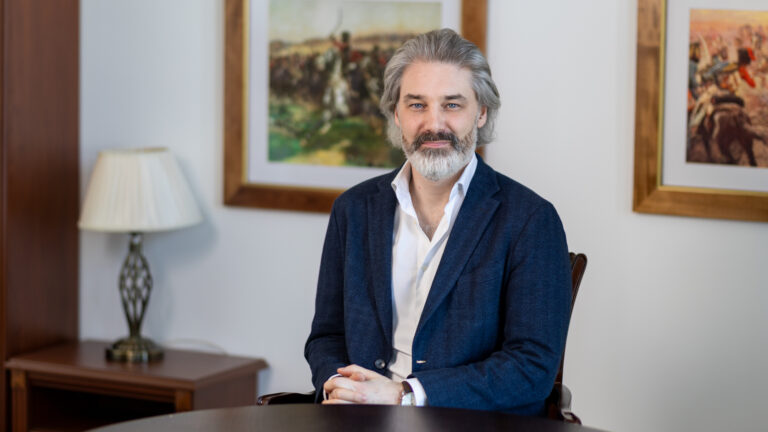
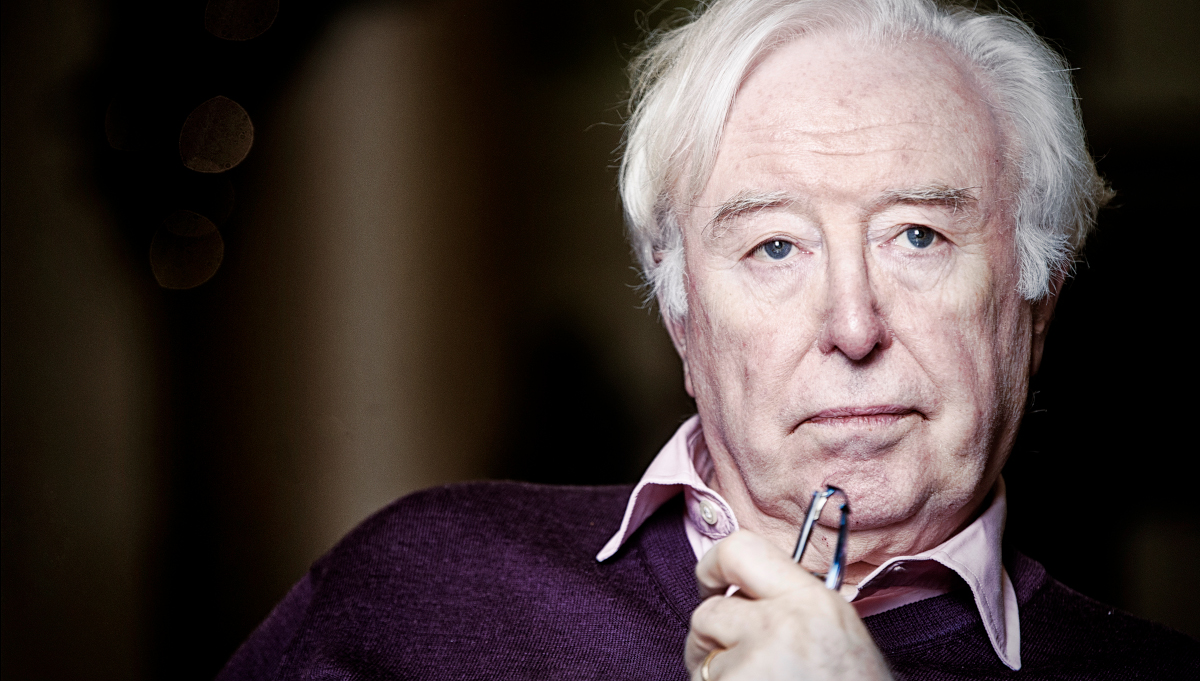
John O’Sullivan is president and founder of the Danube Institute in Budapest, international editor of Quadrant Magazine in Sydney, Australia, associate editor of the Hungarian Review, and an editor-at-large for National Review. He is a co-founder and director of Twenty-First Century Initiatives, as well as the International Reagan-Thatcher Society. He served as a special adviser and speechwriter to Prime Minister Margaret Thatcher. He was the founder and co-chairman of the New Atlantic Initiative, launched at the Congress of Prague in May 1996 by President Václav Havel and Lady Thatcher. It played a major role in bringing the countries of Central and Eastern Europe into NATO. His book, The President, the Pope, and the Prime Minister, on the roles played by Pope John Paul II, President Reagan, and Prime Minister Thatcher in the collapse of communism and the revival of Western market democracies, has been published in English, Portuguese, Spanish, Czech, Polish, Italian, and Hungarian.
***
A quote from my favourite Sting song: ‘I’m an alien, I’m a legal alien. I’m an Englishman in New York.’ Have you ever felt this way in Hungary during your stay?
Well, no, I haven’t. The very first time I came here was in 1972, I was bringing some American students on a tour of Europe for the summer, and Hungary was a very exotic place in two senses: it was Central Europe, and most people had not been to Central Europe post 1940, and of course, it was a communist country, and a Westerner felt as he was taking part in a spy movie. I mean, one felt watched and so on. Now I think this was true despite the fact that we had a very pleasant time. With a friendly group of Hungarians, whom we met outside the Hotel Gellért having a summer drink, we had a pleasant evening talk, and they claimed to be fans of the Daily Telegraph, the newspaper for which I worked. I thought that was very unlikely.
I imagine you as a man who never wishes to move away, even for a day, from the Carlton Club or the Reform Club; still, you chose to settle down in Budapest. Why?
First of all, the opportunity arose; I was offered the position partly because I’d got involved in Central Europe in two ways before. One was that I started an organization called the New Atlantic Initiative, which campaigned for the admission of Hungary and the Visegrád countries, and then eventually all of Eastern and Central European countries into NATO and the EU. So I had made friends with a number of politicians in Central Europe and in Hungary, and we were on friendly terms. In 1999, there was the entry into NATO, and in 2004 into the EU. I wanted all of the post-communist European countries to be brought back into the European world, and well, we had some impact on that. I was then invited to work for Radio Free Europe in the Czech Republic, and finally I got the offer to start a think tank here in Budapest.
It was 2013, the third year of the second Orbán government, and I suppose you understood it was a new type of conservatism, but nobody knew then that it would take 16 years. What did you sense about it back then?
Well, I didn’t think I would be here for 13 years, as I have been. If I had thought that, I would have tried to learn Hungarian.
‘I wanted all of the post-communist European countries to be brought back into the European world’
I thought I was here for a much shorter time. I thought I would probably be dead before I learnt the language, and so I didn’t. I’m sorry about that now because it put me at a disadvantage in certain ways. But Hungarians never made me feel uncomfortable, quite the reverse.

What was your intention in founding the Danube Institute?
The essential idea was to broaden the extent of the right-wing side, the conservative side of civil society. Civil society had really been born and was very influential in the 80s; civil society was the change. It then split in two, as happens in almost all countries. You have a progressive side, and you have a conservative side. And in the case of Hungary, the progressive side had the great assistance of George Soros, so it was thriving. It had a lot of organizations. It posed a real challenge to any kind of conservative government.
The first conservative government under József Antall, the MDF government, was in a sense a casualty of history, the first person I heard describe that government in this terms, as namely as a ‘suicide mission’, was someone on the left, and he said to me: ‘They’ll get in, but it’s a suicide mission, and we’ll come back soon.’ In other words, you take over a country that has been severely damaged by communism, and restoring it to a fully functioning civil society with all its advantages takes much longer.
And in fact, of course, we’ve had a period of the left, which was social democratic with remnants of post communists, then Orbán’s first term, which was a kind of liberal regime, then you had the socialists back, and they bankrupted things, and that’s one of the reasons they stayed out for a long time. And then you’ve had 16 years of a conservative government under Viktor Orbán. Was I aware that it was somewhat different from, let’s say, the Conservative Party in England? Of course, I expected that. But then you know the differences in conservatism are really quite sharp, even when you go from country to country, like from Britain to Australia or to America. All English-speaking countries have strong conservative traditions, and all of them are distinct from each other.
Danube Institute, which is a conservative think tank in Budapest, has been a hub for conservative thinkers. In what aspect was Hungarian conservatism interesting to American and British conservatives?
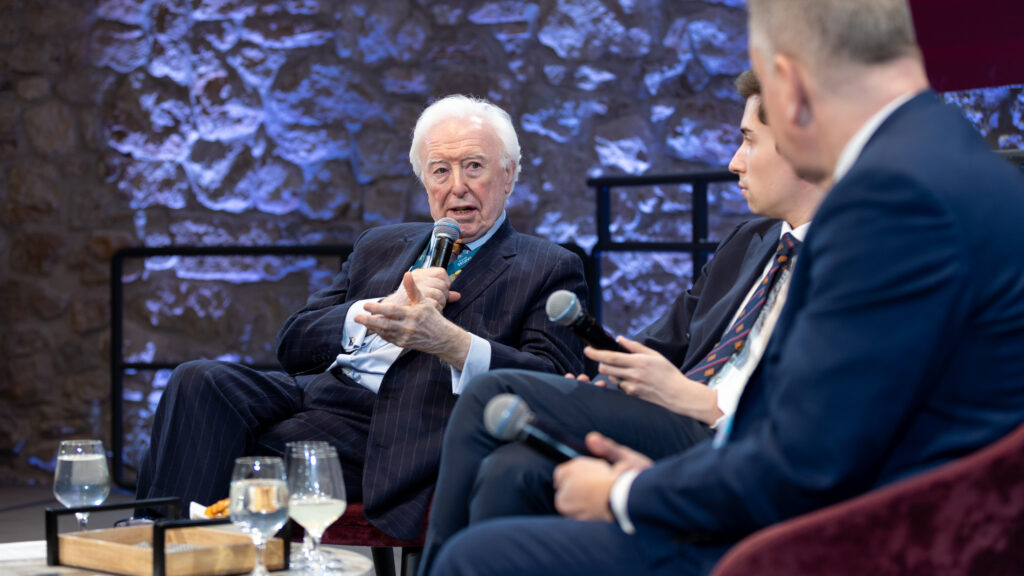
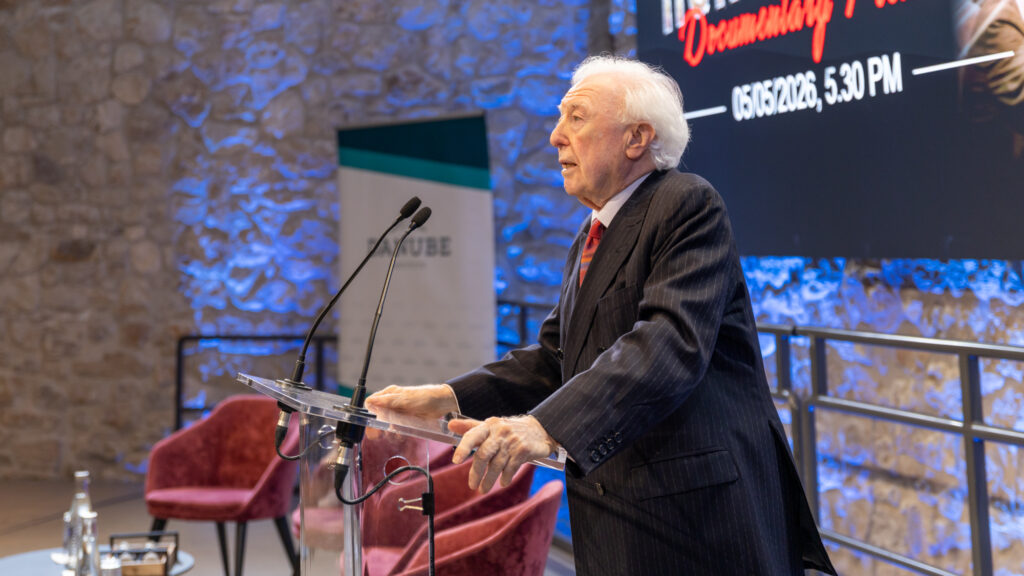
I wouldn’t quite say that was the question we asked ourselves. When we were planning our programmes, what we asked was: what are the issues in which NATO countries, or the EU, or the Anglosphere countries have an interesting point of view, and Hungary has an interesting point of view, but they’re somewhat different? Well, let’s get these two different groups into the same room, and then thrash out the argument. That was the general idea we applied to all kinds of different topics. For instance, one of our most interesting conferences was entitled ‘What’s the Future for Europe’s Left’, and we brought together left-wing academicians, members of parliament, journalists, bureaucrats, people who’ve held high positions in different governments. We brought them together into the same room, and we had only one conservative in the room, a columnist for the London Times, Tim Montgomerie, and he was under a vow of silence. He could say nothing until the final session, when he got to comment on everything he’d heard, and that was a very successful conference.
In fact, it was the conference at which David Goodhart, the social critic from England, launched and was testing out his concept of Britain divided into ‘somewheres’ and ‘anywheres’, a class system, in which on the one side you have people who live most of their lives near where they’re born, marry a girl from there, go to a school from there, travel abroad on vacations, but otherwise stay close to home. That’s about, he thought, 50 per cent of the British people. The other 25 per cent are the ‘anywheres’ who have been to university, they’ve got a good degree, they have professional qualifications that work anywhere. These two groups of people have very different ideas, and it’s David’s view that the ‘anywheres’ have too much influence on policy; you can understand why, and the ‘somewheres’ don’t quite have enough, and that’s distorted British government policy on a range of issues for many years.
When you look at things through that pair of glasses, you find that the pattern is replicated in modern country after modern country, and I think this recent election in Hungary, in which Viktor Orbán lost, is a victory for the ‘anywheres’ over the ‘somewheres’. Of course, that’s because the ‘anywheres’ on this occasion persuaded the ‘somewheres’ to vote for them, and that’s fair and square, as Mr Orbán demonstrated when he resigned on the same night. I think what’s happened in other countries too, particularly in Britain, is a warning to the ‘anywheres’ that they should take good care not to drift too far away from the concerns and the interests of the ‘somewheres’.
‘This recent election in Hungary, in which Viktor Orbán lost, is a victory for the “anywheres” over the “somewheres”’
What happens to the conservative ideas, initiatives, and policies when a party that represents them just loses an election?
Well, we know what happened last time: Mr Orbán remained leader of the party; he went off into the mountains to consult and talk, probably with his own mind and conscience, as well as with colleagues and experts, and he came back with a somewhat different kind of conservatism, one which was more nationalistic. With a belief that the interests of the ‘somewheres’ should be given greater weight when people are deciding on government policies.
Well, what we thought we were doing was to bring together people to take each argument at a time, to get them to make their cases. We believed in debate and argument and discussion. I think we were never completely one-sided. I, for example, was considerably more sympathetic to Ukraine and NATO than the official Hungarian government’s position, and we have that point of view expressed. We have people like, for example, Tony Abbott, the former Australian prime minister, who gave several major speeches, very forcibly advocating support for NATO and sympathy for Ukraine. So we didn’t shy away from controversy. We regarded controversy as a teaching tool. You know the reason you’re interested in something is that it’s controversial. People did come to our conferences because they had the opportunity to learn, to debate, to discuss, and to put forward their own view in response to what they heard.
Can you name one more topic that was very controversial between the Hungarians and the Westerners, and can you name one on which they agreed?
The obvious answer is migration. In 2015, when people from North Africa, the Middle East, Afghanistan, and other countries started arriving at the Budapest railway station, and almost all of them intended to go on to Germany or Sweden or France or Britain, from that point on, this was a major flashpoint in European politics. Mrs Merkel, who until then had been quite sceptical about multiculturalism and mass migration, and seemed to a lot of people to be moving towards a position that Viktor Orbán actually advanced—a sceptical position in favour of greater regulation and control, and fewer and less migration—so for her, the issue had really been a second-order issue, but it became a first-order one. And when Mrs Merkel started to pursue a welcome policy, the European Union, in fact, just rubber-stamped that; they simply agreed to go along with what she had said. Then there was a period of time in which it was fiercely contentious. But within about three or four years, most of the other European countries had gradually evolved into a position very similar to Viktor Orbán’s. I think that was one issue in which you had to concede that Orbán had achieved something important and real. But there is also the family policy.
Did Western conservatives agree on that?
Well, everybody would like to have more children, stronger families, and less need for migrants to fill certain economic places. But how do you get that? That’s always been a difficult problem. The policies pursued by the Hungarian government were bold, consistent, and I think just reasonable. Nonetheless, the impact wasn’t as favourable as you might wish. I mean, Hungarians are not having as many children as the policymakers hoped, and we don’t quite know what’s going to happen next. One defence which we hear from ministers is, and I think this is a justifiable argument, that it will take much longer than three or four or five or six years.
‘I think migration was one issue in which you had to concede that Orbán had achieved something important and real’
Having said that, there’s not really a good record of using tax and financial policies to get people to have more children. I wish there were. There’s no doubt this was a distinctive policy, and you know, even its opponents wished it had had more success.
The political-ideological trends and the zeitgeist favour progressive ideas. The British Conservative Party is also in trouble. What is the future of conservative ideas?
Well, there are contrary trends, too. For example, if you look at Poland, at Slovenia, or if you look at the Czech Republic, yes, you have a strong progressive trend, but you’ve had very strong conservative countertrends. At the moment, the current Czech government is comparable with Mr Orbán’s first government from 1998 to 2002. If you look at what’s happening in England, and we’re not going to have an election to test the waters for another two-three years, but what you can see is an enormous rebellion by what I would describe as the private sector middle class and the blue collar proletariat together against the Labour government, which now represents—well, it’s very hard to say who it does—but it no longer represents blue-collar workers. Just doesn’t, and there are many reasons for that. It doesn’t represent the private sector at all, because its taxation policies have alienated small businesses and medium-sized businesses. It’s being driven back onto what is a modest part of the electorate in numbers. Its core of support today is what I would describe as the public sector middle class intelligentsia, the people who go to university and have degrees, who, in a sense, cut themselves off from their family backgrounds in ways that they didn’t do before, who are inculcated with a set of ideas—we see this in America and Britain—which alienates them from the nation and also from the family.
This group of people, as it moves up in institutions, in the private sector, in cultural institutions, in the media, and so on, becomes the basis for a left, progressive, critical, indeed hostile view of British society. I don’t think you can muster more than about 20 per cent of the voters to support such a vision, so you have the paradox now in England. I don’t see that this governing class, even allied to progressive Muslims—and progressive Muslims are themselves a kind of minority—is a big enough base to sustain government in the long term.
Can the opposition, the Reform Party plus the Conservative Party plus various people who are drifting, be the basis for a new governing majority? Well, it looks at the moment that they can be. But of course the progressive establishment is using every weapon it can to create the impression that these are irresponsible and dangerous extremists. If you look at them, they’re your butcher, your baker, your candlestick maker, your country lawyer, your local doctor, and your foremen in the factory. That’s the basis of this anger, and they are under attack by the institutions they think are there to protect them. So I don’t fear a Reform government. I would prefer a Reform–Conservative alliance large enough to convince everybody, and also with practical wisdom and common sense attitudes to policy.
You’ve been living here for 13 years. What have you learned about the Hungarian mentality and the Hungarian people?
Well, I had a crush on Hungary long before I came. I was 14 in 1956, and I had very strong, passionate, idealistic feelings in favour of the Hungarians. There was something really inspiring about young people in those old-fashioned belted Macintoshes throwing Molotov cocktails at tanks and trying to protect their country or regain their liberty. And that feeling about Hungarians has lasted a very long time in England. A Hungarian who came to live in England might be a guest at a dinner party, or he or she might be at a faculty meeting of a university; in her or his presence, nobody could say the Soviet Union was a beacon of progress. It was just too embarrassing. So they had this kind of subliminal impact. There weren’t that many, but there were enough to, in a sense, make people think a little bit about what they thought of international politics. When they could remember the tanks coming back into Budapest, that was a terrible defeat for the Soviet Union in the long run, and so that was one reason.
‘I was 14 in 1956, and I had very strong, passionate, idealistic feelings in favour of the Hungarians’
Secondly, as I mentioned, I came here when I was 28, and it was the age of goulash communism, and I was never seduced by goulash communism, but I was seduced by goulash. I liked Hungary. I came back a lot after the system change. Having worked for Mrs Thatcher and having known people like Henry Kissinger, I got them to support me in trying to launch the New Atlantic Initiative, and that, I think, was something I’m still very proud of, and why I think that the expansion of NATO is something that was the right and proper thing to do, and we shouldn’t retreat from that. Lech Walesa said only weeks ago that if there hadn’t been NATO expansion, the war today in Ukraine would be taking place in Poland, and I think that’s right.
Is there any special bond between the Hungarians and the British?
Yes, I think we feel closer to the Hungarians in many ways. I think it would be 1956, but it might go back further. People were aware of Hungarian civilization and Hungary’s fight for independence in the 1840s too. There was enormous support among the English people for Lajos Kossuth, and an enormous interest in the gradual compromise after 1867 and in the way in which Hungary was making this very remarkable advance in its civilization in the period until the First World War. Everything since then went badly for the Hungarians, and we know that. And people in Britain were well aware of the injustice done to Hungary at Trianon. So in a way, who knows what causes one country to have a special kind of feeling for another? But I certainly felt this special feeling for Hungary. I would also say, by the way, for Hungary’s historical ally, for Poland.
‘And people in Britain were well aware of the injustice done to Hungary at Trianon’
I mean, because of the Second World War, there was an enormous admiration for Poles in English society, their role in the RAF in the Battle of Britain. So both Hungary in 1956 and Poland in 1939–1940 established a particular affection in the Englishman’s heart.
Related articles:
At a time when public debate is increasingly polarized and superficial, Hungarian Conservative remains committed to depth, intellectual honesty, and independent conservative thought.
Producing high-quality journalism requires resources. Your contribution helps us expand our coverage, reach new audiences, and keep our content accessible.

Please consider supporting our mission.