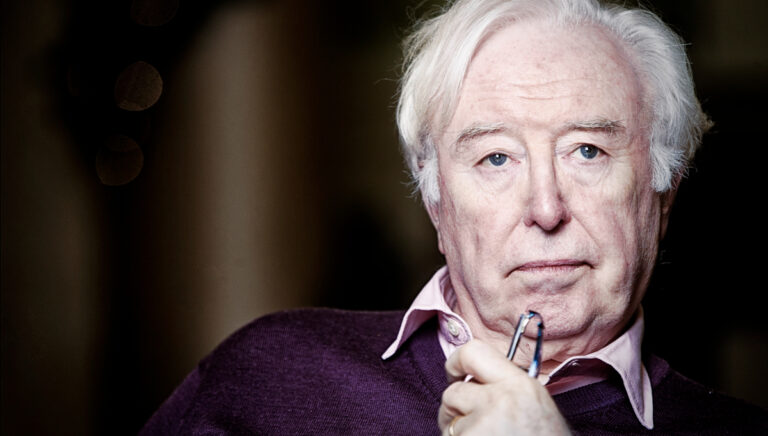
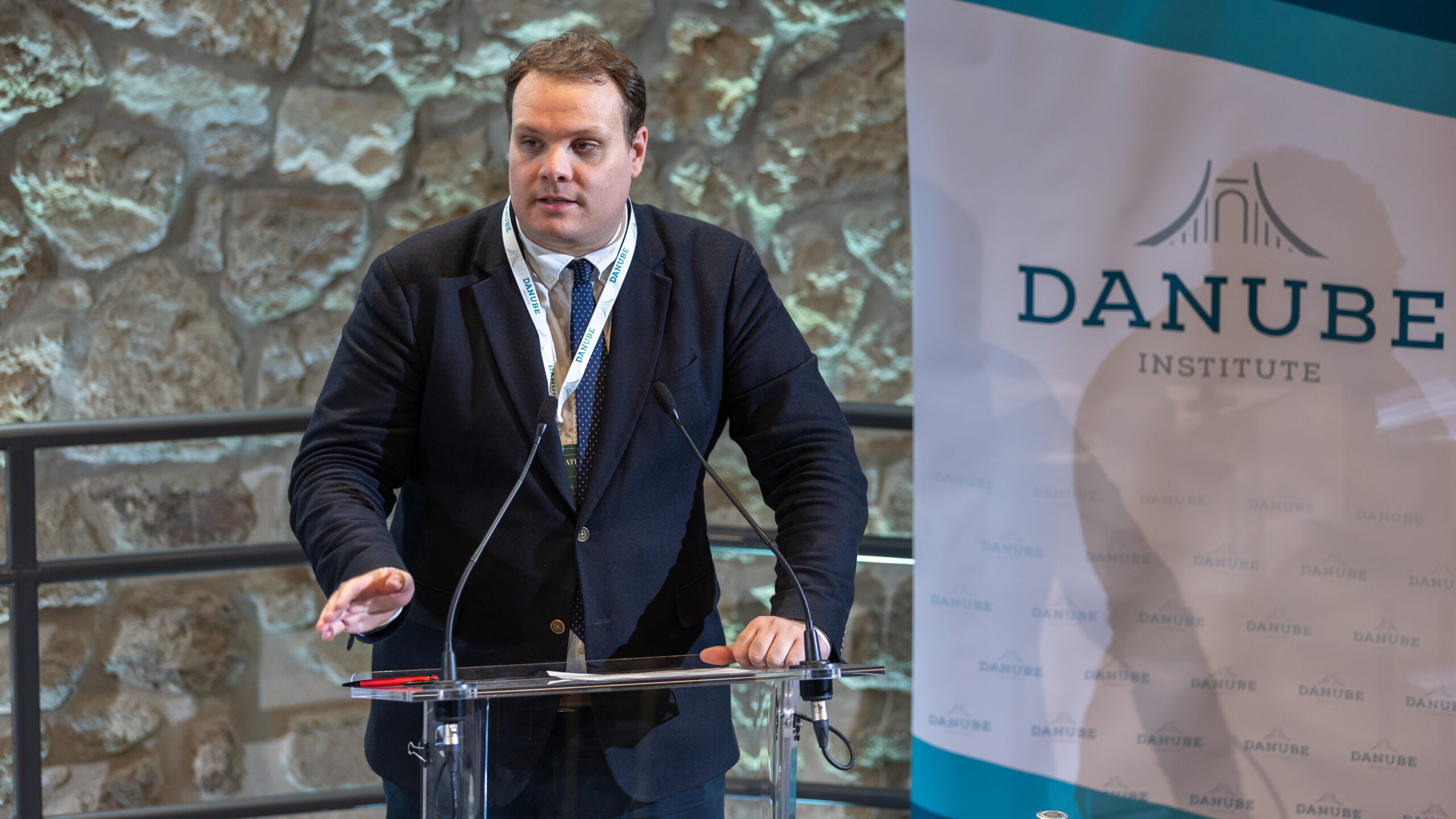
István Kiss is the Executive Director of the Danube Institute. He is a political scientist and an international relations expert who formerly worked as a Political Adviser in the Prime Minister’s Office of Hungary.
***
Hungary is among the few European countries where around 20–25 per cent of the nation lives outside the country’s borders. Do you consider the Hungarian government’s diaspora policy successful? If so, how can this success be measured?
During the communist era, the issue of Hungarians living abroad was completely taboo and could not be addressed. Under left-wing governments, this topic was also swept under the rug, neglected, and treated very poorly. The 2004 referendum, when the ruling left-wing government actually campaigned against them, further inflamed the situation and caused a major rupture among Hungarians living outside the borders. They felt that Hungarians in the homeland had abandoned them by voting against dual citizenship in the referendum.
‘The current government is trying its outmost to help Hungarians living abroad and to ensure their rights are respected’
Fidesz was able to improve this situation, turning the negative relationship into a positive one. A very important step in this was granting dual citizenship to Hungarians abroad, allowing them to vote in parliamentary elections, as well as providing them with numerous programmes and significant support.
The current government is trying its outmost to help Hungarians living abroad and to ensure their rights are respected so that they can enjoy at least some form of cultural autonomy. The Hungarian government pursues a dual approach, offering opportunities for those who want to move to Hungary, while simultaneously supporting those who wish to stay and prosper in their native regions. There is, however, greater emphasis on the latter with significant support to foster their cultural, media and sport landscape.
Hungary has long supported Hungarian communities abroad as well as persecuted minorities in the Middle East. What justifies the approach that assistance should primarily take place in the homeland rather than relocation being the main tool?
In the Western world, there is a common narrative that there is a demographic problem that cannot be solved internally; for example British or French families will not have more children, no matter what is done. At the same time, there is a migration pressure that is considered unavoidable, and seen as mostly beneficial economically as well. The prevailing attitude therefore is that demographic problems can be solved through migration.
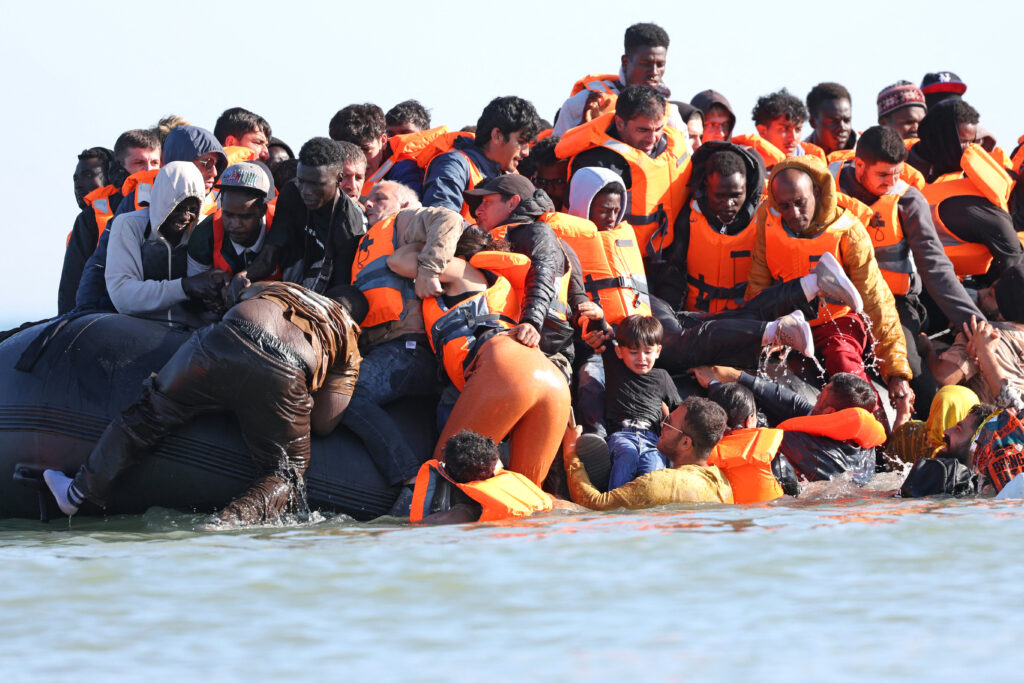
Hungary sees this very differently. The belief is that the country can support its own people to have more children and that it is not necessary to bring in immigrants to address demographic challenges. Mass migration can also have other negative effects, such as security issues or housing problems, since more people arrive than there is housing for. This also creates societal tensions that are unnecessary and problematic.
From this perspective comes the idea that, instead of resolving their problems by removing them from conflict zones and relocating them, it is better to improve their opportunities in their home countries. This is likely to be better for everyone. For the country they come from, it is better if talented individuals stay home and help build stability and the future rather than leaving and moving, for example, to Europe.
And also instead of over-ideologized programmes—like most of the programmes supported by USAID—that consume large amounts of money but do not solve everyday problems, it is better to dig wells, build schools and hospitals, reconstruct churches, and improve community spaces and infrastructure in these countries. The Hungary Helps programme is a very good initiative in this respect, building projects that serve the interests of local people.
Why is it important for Hungary to actively engage in Middle Eastern peace and stability?
Regarding support for persecuted Christians and other groups in the Middle East and Africa, two main arguments can be made. The first is migration pressure: by helping on the field, less pressure will be on the destination countries of immigrants. Integrating migrants to other societies is also very costly; integrating hundreds of thousands of migrants each year would cost much more than local assistance and might not even pay off in the sense of demographic change.
The second argument related to Hungary’s active part in building peace in the Middle East and Africa is international reputation. If a country which now suffers from conflicts or other problems recovers, such as Iraq with its abundant natural resources or Nigeria, these countries will likely be grateful to Hungary for prior assistance.
In the long term, this can be particularly beneficial for Hungary, as it may enable better economic relations with these countries due to their gratitude. Viewed this way, supporting persecuted Christians is not an abstract or distant expense but it can be seen as an actual, tangible, and rational investment.
‘Despite Hungary being a small country with its own challenges, it does not forget those in need’
The other reason for this assistance is coming from our Christian values and principles. Despite Hungary being a small country with its own challenges, it does not forget those in need and participates globally in helping the vulnerable.
What does it mean for Hungary to be among the founding members of the Board of Peace? Why did Donald Trump invite Viktor Orbán to this role?
In the recent decade Hungary has been punching above its weight in international politics, which is clearly due to the active diplomacy of Prime Minister Viktor Orbán. Even though countries like the Czech Republic or Austria are of similar size, few people know their leaders internationally, whereas Viktor Orbán’s name is recognized worldwide, even by taxi drivers in the US and India. This reflects our pragmatist political approach, which aims to maintain good relations with major powers.
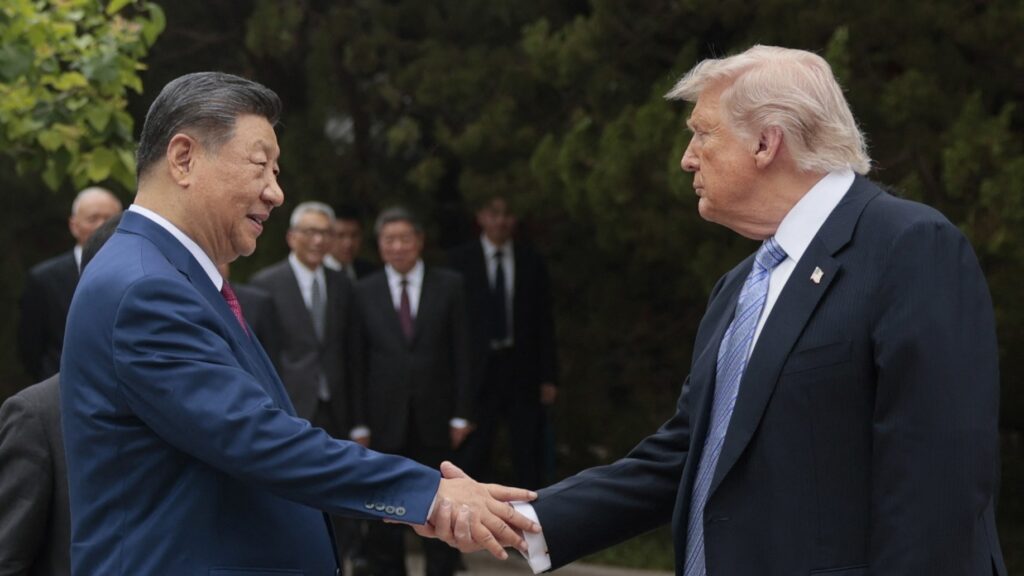
Related to the role in the Board of Peace, Orbán Viktor was the first European leader to openly support Donald Trump even before he was elected in 2016. The Hungarian prime minister believed Trump’s presidency would be favourable for Hungary. Since then, even after 2020, Orbán consistently supported Trump, which is important to Trump, who values loyalty. This has resulted in a personal relationship that is unique.
It is understandable, therefore, that Donald Trump invited Viktor Orbán to be among the founding members of the Board of Peace, as they maintain a good personal relationship. Additionally, Hungary’s conservative policies align ideologically with Trump, which is really important.
And also, Hungary has demonstrated in recent years that it can consistently participate in international political arenas beyond its size by steadfastly defending its national interests, even when doing so has caused rifts with the EU and the Biden administration.
What does it mean for you, as a Hungarian citizen, that a small Central European country can achieve such a visible role in global political processes?
As a Hungarian citizen, it is both a source of pride and a pleasant surprise that the Hungarian prime minister is widely recognized in the world despite the fact that leaders of much bigger countries are not necessarily known by everyday people.
During my travels, I often realized, while speaking with ordinary citizens of other countries who are not in politics, such as taxi drivers, how many people sympathize with Viktor Orbán and his policies.
It is also interesting to note that this support is even higher in the non-Western world. Outside the Western world, I have almost consistently received positive feedback about Hungarian politics, from South Korea to India and across the Middle East.
Read more of our interviews:
At a time when public debate is increasingly polarized and superficial, Hungarian Conservative remains committed to depth, intellectual honesty, and independent conservative thought.
Producing high-quality journalism requires resources. Your contribution helps us expand our coverage, reach new audiences, and keep our content accessible.

Please consider supporting our mission.