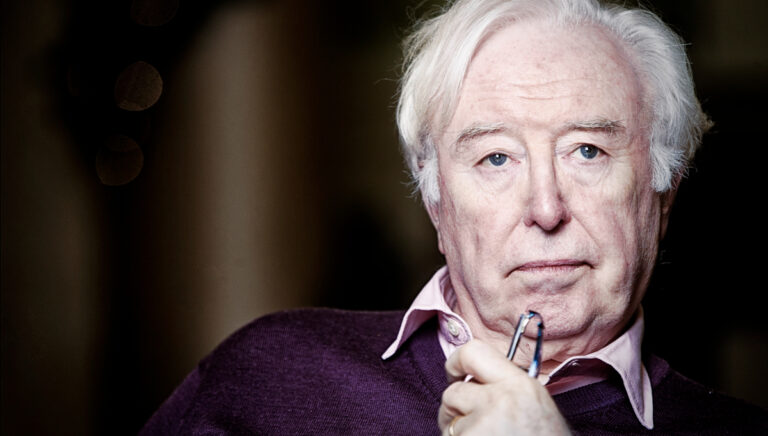
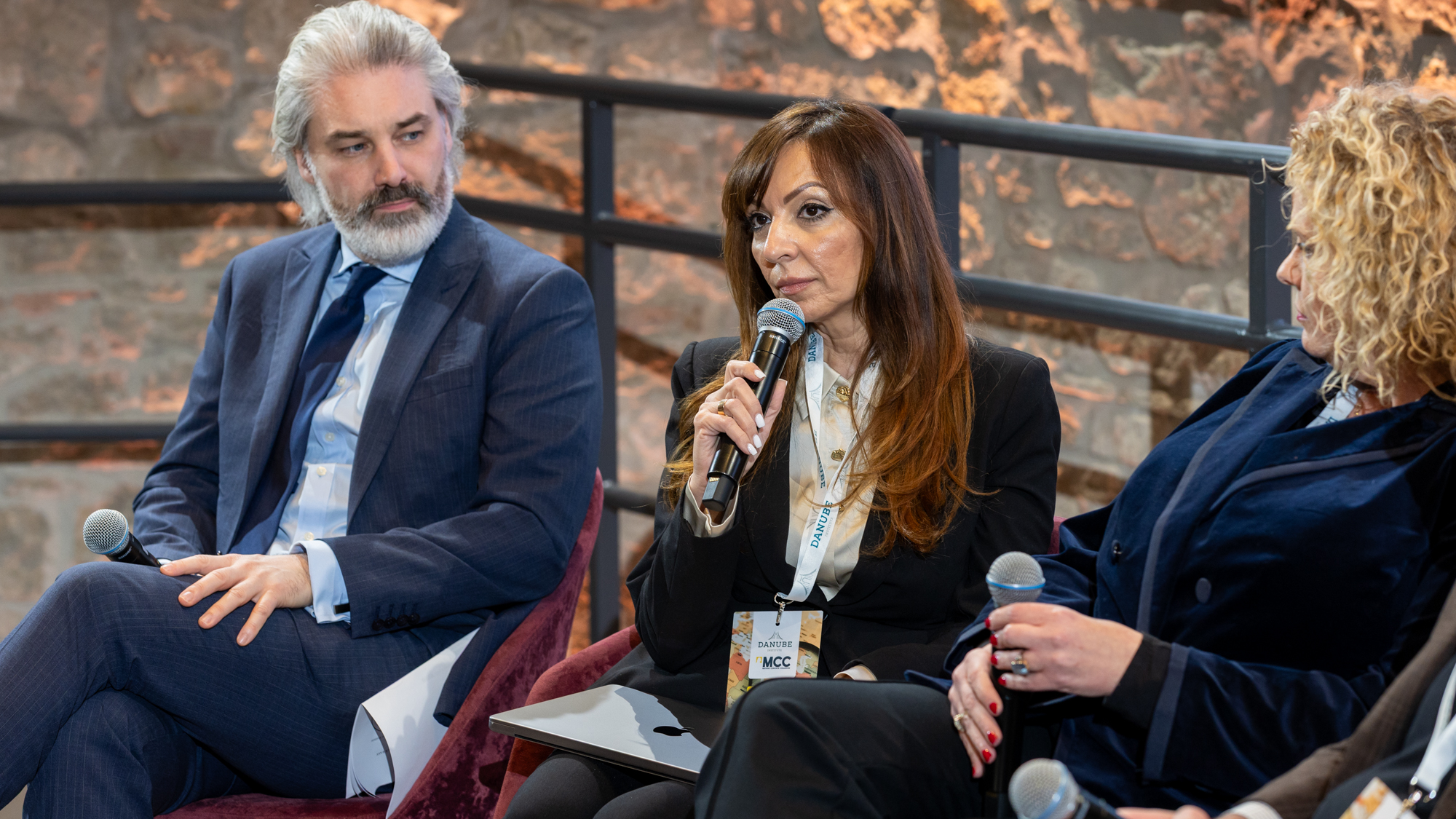
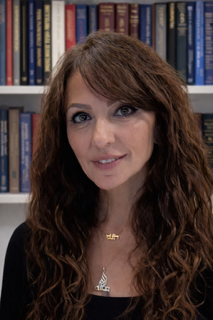
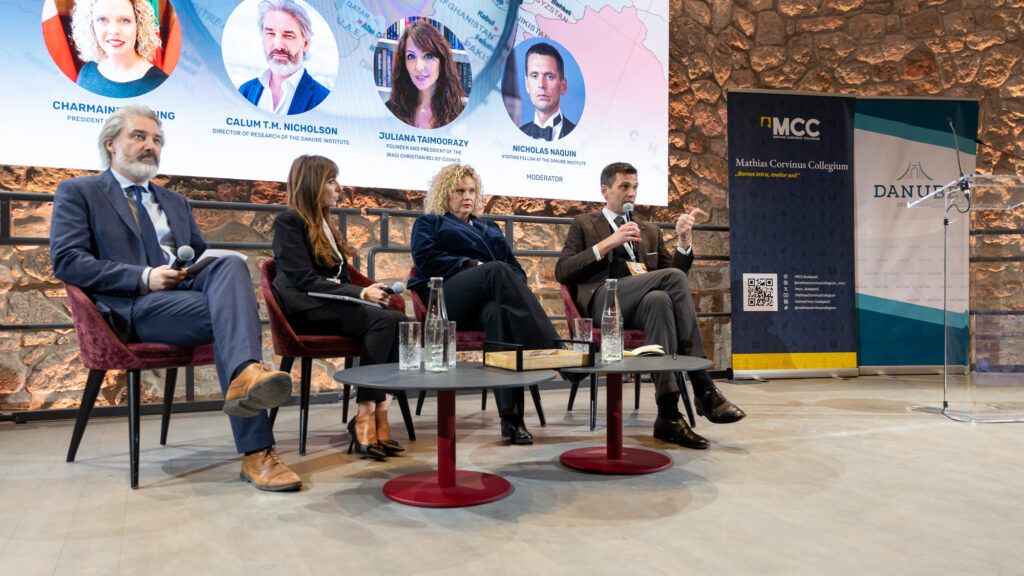
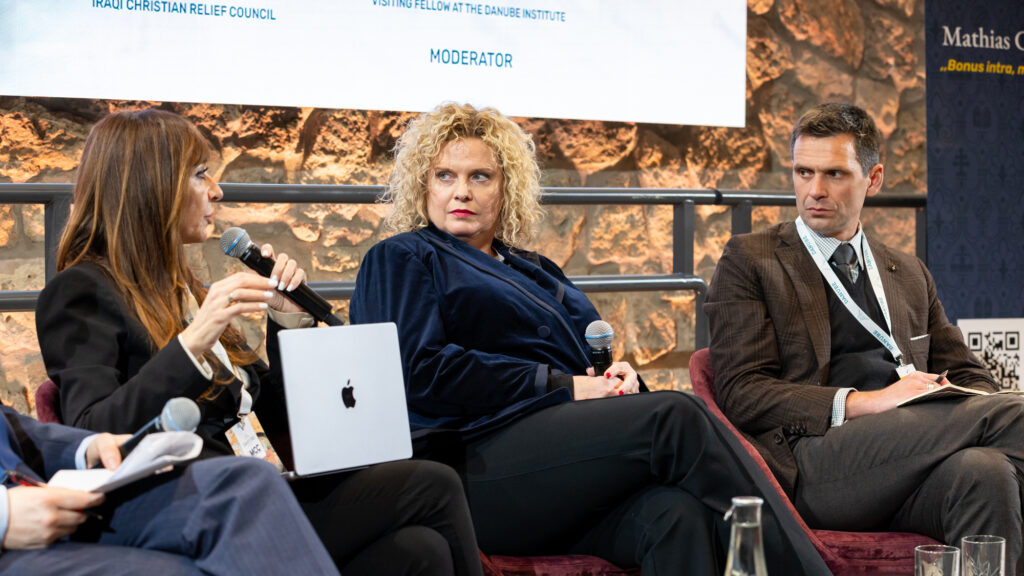
Juliana Taimoorazy is a speaker, author, and Nobel Peace Prize nominee who raises awareness about the persecution of Christians and other minorities in the Middle East. In 2007, she founded the Iraqi Christian Relief Council to provide humanitarian aid and advocacy for victims of persecution, and later launched Assyrians Against Antisemitism to build bridges between Middle Eastern Christians and the Jewish community.
She serves on the Simon Wiesenthal Center Community Engagement Committee and is a former fellow of The Witness Institute, continuing the legacy of Elie Wiesel. She is currently a PhD candidate at the University of Texas at Dallas.
***
You were forced to flee Iran in 1989 as a young woman, escaping religious persecution and seeking asylum in the West. How did that experience shape your understanding of freedom, faith, and the moral responsibility of free societies toward those persecuted for their beliefs?
It gave me clarity at a very young age. In many ways, it shaped everything that came after. It taught me resilience. When you face extreme hardship, you cannot dwell on ‘Why is this happening to me?’ You have to focus on survival and move forward—or you fall into despair.
Living through the revolution and the eight-year Iran–Iraq war, I was constantly surrounded by death—bombings, executions, and the routine violation of basic human rights. From a young age, I saw how easily human beings can turn against one another, how quickly life and freedom can be taken away. Reflecting on this later, I was reminded of the biblical question God asks Cain: ‘Where is your brother?’ It became painfully clear to me how easily Cain’s answer—violence against one’s own brother—repeats itself throughout history.
Those experiences gave me a deep appreciation for the sanctity of human life and the sanctity of freedom: the freedom to be who you are, to hold your own beliefs, to express your political views, and to live with dignity. I learned how fragile these freedoms are, and how quickly they can disappear.
Coming to the United States was not only a necessity but a conviction. We were drawn to its foundations in human dignity, religious freedom, and moral responsibility.
Everything I endured shaped the course of my life. It is why I chose a life of service—service to others, especially to those whose freedom and dignity are under threat.
Iran is facing widespread unrest after years of economic mismanagement and political repression. As someone who grew up under the Islamic Republic, how do you understand the roots of today’s protests? Were they driven more by economic collapse, or by a deeper rejection of the regime’s religious and ideological authoritarianism?
There is an economic angle to this, but it isn’t purely economic. Its roots are equally tied to people’s freedom, or rather the lack of it: freedom of religion and expression, and the oppression they have faced for nearly half a century.
This is also not a new phenomenon. The uprisings have been happening for decades, beginning with a major one—the Green Movement in 2009—which was not about the economy. It was about young people lacking freedom of movement, freedom of expression, and the ability to truly live their lives. Then came the Mahsa Amini uprising, sparked by the fact that she did not cover her hair ‘properly’. That was not about economics, but about the freedom to be who they are.
The most recent uprising, however, does include a clear economic element. In recent years, the Iranian rial has collapsed, and the cost of living has become staggering. For the first time, even the markets closed. This time, merchants joined in, unifying their voices with those of young people and older generations alike.
That is what distinguishes this uprising from the others.
Human rights organizations describe the regime’s response as one of the most violent crackdowns in Iran’s modern history. How does this moment compare to earlier periods of repression, and what does it reveal about the regime’s stability—or insecurity?
I agree with that assessment—and I would go further. This is a genocide, or at the very least, an intentional massacre. It is the systematic elimination of a population that rejects a tyrannical regime: young and old, men, women, and even children. When tens of thousands are killed, hundreds of thousands injured, and thousands deliberately blinded, these are not isolated acts—they are the hallmarks of calculated mass killing.
This level of violence reveals profound regime insecurity. A government that rules through terror is not stable; it is afraid. I believe the regime has been significantly weakened, especially after the 12-day war and now this uprising.
The blackout was an attempt to control the narrative—to label protesters as terrorists and foreign agents. But once videos emerged, the truth was undeniable: ordinary people, including children, were being murdered in the streets.
The regime knows it is on its last leg. Whether it is toppled, transformed, or replaced, one thing is clear: it cannot continue as it was. Some fundamental change is inevitable.
‘I am not the same person I was before the uprisings’
And it isn’t only the regime that has changed—the nation has. Too much blood has been shed. No one who has witnessed such suffering remains the same. The Iranian people, at home and in the diaspora, have been permanently transformed.
I am not Persian but born in Iran, and I can say this personally: I am not the same person I was before the uprisings.
Before this uprising, you spoke daily with your cousin in Iran—now you can’t really do it. What do these internet shutdowns reveal about the regime, and how are they reshaping life inside Iran and the ability of diaspora families to stay connected?
We can only reach them sporadically. Their landline doesn’t answer, and sometimes we’re even told the number doesn’t exist—though it still does. Most communication used to happen through the internet, on WhatsApp and similar platforms, but that’s no longer possible.
Now, we only hear from them when the internet briefly comes back on. When it does, they reach out. Otherwise, there is complete silence. Even they don’t know how long the connectivity will last—it could be five minutes or an hour.
When Starlink was briefly available, people were able to connect much more easily with the diaspora and send videos out. But then the regime began cracking down. They started removing satellite dishes from rooftops and identifying IP addresses connected to Starlink. When they locate a connection, they don’t send one or two agents—they send dozens. It’s an ambush on an entire family.
A few weeks ago, people in the diaspora were even saying on the news: If you can hear us, go to the embassies, because Starlink still worked there. People were going to embassies just to send messages and videos.
But at this point, communication is nearly impossible. When the internet briefly returns, we hear from them. Otherwise, we have no idea what is happening.
How are religious minorities—particularly Christians, Assyrian Christians, and Jewish communities—affected during periods of unrest, when suspicion and repression intensify?
I’ve heard of about a dozen Armenians killed—some accidentally, others while protesting. Reports on the Assyrian community are still unconfirmed, but at least seven are believed to have been killed, including a firefighter in northern Iran whose photo I personally saw.
There was also a Christian woman who was standing by her window watching what was happening in the street. A bullet came through and hit her in the shoulder. She was too afraid to go to the hospital, fearing she would be arrested and accused of participating in the protests.
Another critical angle here is the fear among religious minorities—Jews, Baháʼís, and Christians. But I want to make an important distinction within the Christian community: between cradle Christians and converts from Islam.
Some cradle Christians have gone into the streets to protest, and as I mentioned, some have been killed. However, converts—Persian Christians who converted from Islam—have been dying in far greater numbers. We don’t yet know the full scale, but many Muslim converts to Christianity have been killed because they were actively protesting in the streets.
Baháʼís have been arrested even without participating in protests, simply accused of being Western agents. I don’t have confirmed data on the Jewish community, but minorities as a whole are terrified of what has happened—and what may still come.
Let me give you a very recent example of this persecution. My sister-in-law’s cousin, an elderly woman, passed away naturally. Her family was told by the hospital that her body could not be released until authorities determined whether she had been shot during the protests. Families are sometimes forced to retrieve bodies from Muslim cemeteries before they can bury them according to Christian rites. They claim they need to examine the body to see whether she was shot.
This is how persecution is happening—right now, in real time. This incident happened just recently.
As a woman who fled religious persecution, how do you assess the role of Iranian women in resisting the regime today? What risks do they face for their visible acts of resistance, and how central are they to any future transformation of Iranian society?
There’s a Persian term we use for women who refuse to submit or live on their knees. We call them shirzan—lionesses.
For decades—not only since the uprising sparked by Mahsa Amini—Iranian women have shown exactly what that means. Long before that moment, women were taking to the streets, removing their headscarves, and resisting oppression. Again and again, they have proven that they are lionesses.
Iranian women play a central role in the struggle to topple the regime and bring real change to the country—not cosmetic reform, but genuine transformation. Many Iranians hope to restore a modern, open society like the one that existed before the fall of the Shah.
At the same time, it is important not to overlook the role of men. During the Mahsa Amini uprising, women led the charge, but men stood beside them—brothers with their sisters, fathers with their daughters. Men were on the front lines and also protecting and supporting the women. This has always been a collective movement.
‘There’s a Persian term we use for women who refuse to submit or live on their knees. We call them shirzan—lionesses’
Yet women do face particular dangers. Under fundamentalist interpretations of Islam, women are treated as second-class citizens. We have seen videos of women being dragged by their hair in the streets by armed men. Reports and evidence show that members of the IRGC, along with foreign fighters brought in to support them, have raided dormitories and private homes and committed sexual violence against women.
During the Mahsa Amini protests, reports from prisons described extreme abuse, including sexual torture. Women are not only shot or beaten in the streets; they are subjected to rape, mutilation, and other brutal violence simply for asserting their dignity and their freedom.
Despite these risks, Iranian women continue to stand at the forefront of the movement. I honour both the women—the lionesses—and the men who stand with them, fighting to restore dignity, freedom, and humanity to Iran.
Many Western media figures and influencers speak passionately about the suffering of people in Gaza, yet remain largely silent about the mass repression, executions, and violence against Iranians. How do you interpret this silence? Do you believe some are, consciously or not, aligning with the Iranian regime’s worldview—particularly because of their hostility toward Israel?
This is a complex issue, so the answer is necessarily long. Broadly speaking, Iranians are a Western-leaning people. Persian society has, for over 2,500 years, maintained close historical and cultural ties with the Jewish community. In the Middle East, for many freedom-loving Iranians, Israel represents a symbol of freedom. That is why, after 7 October, some of the first people to openly show support for the Jewish people were Iranians, who took to the streets waving Israeli flags. Similarly, in recent protests in support of Iranians, Israeli flags are often visible.
The desire of Iranians to bring a Western way of life into Iran directly contradicts the narrative promoted by pro-Gaza and pro-Palestinian movements. Inside Iran, protesters are burning mosques and clerical institutions, rejecting religious authoritarianism. Meanwhile, in the West, we see mosques being built, official decrees issued, and even police forces being trained on how to wear the hijab. This contrast stands in stark opposition to what many pro-Palestinian or pro-Gaza supporters claim to represent.
‘In the West, we see mosques being built, official decrees issued, and even police forces being trained on how to wear the hijab’
Another troubling issue is the silence of women’s and children’s rights organizations. The Me Too movement, which was loudly supported by much of the Jewish community in the US, often felt like ‘Me Too—unless you’re a Jew’. That silence now extends further: it feels like ‘Me Too—unless you’re an Iranian woman’.
Because of the long-standing relationship between Jews and Persians, the Western outlook of the Iranian people protesting in the streets, the rejection and destruction of clerical power, and the broader movement away from Islam—whether toward atheism, a return to Zoroastrianism, or conversion to Christianity—Iranian protesters stand in sharp contrast to many Gaza supporters, who often embrace Islamist ideology. This is where the so-called red-green alliance becomes relevant. Iranians do not subscribe to this alliance; they are actively fighting against it.
In fact, Iranians are fighting jihadism on the front lines—on behalf of the West and on behalf of Israel. That is a critical point and one that deserves to be highlighted. The Iranians who protested and were brutally repressed were, in effect, confronting Islamic jihad directly, not only for themselves, but for all of us in the West.
On 28 February 2026, Israel and the United States launched a coordinated military operation against Iran that reportedly eliminated much of the regime’s leadership. Realistically, what changes could this bring for the future of the Iranian people?
Because the Islamic Republic is founded on hierarchical clerical power, there is a succession plan in place, as we have clearly witnessed in recent days. With the removal of the leadership, the regime did not collapse; the next leader was immediately announced. There are several circumstances that may arise, such as the regime continuing to impose tougher measures on the people and selecting new supreme leaders. This option would be devastating for 80 per cent of the population, for the region, and for us in the West. Another scenario could be that a potential rivalry may occur among the IRGC elements, which could lead to civil war. This, too, could be destructive to the country with terrible consequences for the citizens of Iran. The best scenario, in my opinion, is for His Majesty, the Crown Prince Reza Pahlavi, to emerge as a transitional figure, who is suited to lead Iran out of this tyrannical and theocratic state into a democratic future, enabling Iranians to take their destiny into their own hands.
You have spoken openly in support of Israel and the Jewish people, despite growing up under a regime where antisemitism has long been part of the state’s official ideology. How does the Iranian regime shape attitudes toward Jews and Israel from an early age among ordinary Iranians, and how have these attitudes evolved in recent years? Did Israel’s recent intervention increase or decrease sympathy for Israel among Iranians?
Persians and Jews have had deep admiration and love for one another since the time of King Cyrus the Great, when he ended the Babylonian captivity. One ought to remember that when the world rose against the Jewish State on 8 October, it was the Iranians who stood shoulder to shoulder with the Jewish people, especially in North America and throughout Europe. Inside Iran, despite the grave dangers facing the people, the brave Iranian men and women showed their support for Israel via social media, by painting the Israeli flag on the walls, or by writing different pro-Israel slogans across Iran. And in turn, now you see many Israeli flags in pro-revolution marches and protests across the globe. I also must add another group that was devastated by the crimes committed against the Jewish people, who were my own Assyrians, who were deeply angered by the heinous crimes committed by Hamas.
Following the operation, what role should the United States play in order to most effectively support the Iranian people without repeating the mistakes of earlier interventions in the region?
I am not a politician nor a military strategist. I am a humanitarian whose people [Assyrians] have suffered tremendously due to persecution as well as betrayal by Western countries, namely England, France, Russia, and, to a degree, also by the United States. I believe that the Trump administration must finish the job it has started, and I am sure they understand that military action will not complete the mission; there must be many other paths it needs to adopt to cleanse the country of this cancer. I believe the Crown Prince Reza Pahlavi, with his strong cabinet, can lead the transition process. But frankly, I think we have a bigger problem on our hands. The issue is not just toppling the Islamic Republic of Iran. We must confront the Muslim Brotherhood ideology, which has taken root in many countries in Europe and in North America. This would require a serious coalition, a serious global partnership that implements policies, albeit difficult ones, to eradicate this ideology. This may take generations, but it must be done.
Hungary has emphasized the protection of persecuted Christians and the defence of national sovereignty. From your perspective, what constructive role can Hungary and Central Europe play in supporting the Iranian people without legitimizing or empowering the regime?
Hungary and Central Europe can play a constructive role by supporting the protection of Iranian defectors and ensuring they feel safe in the West. They can also coordinate with allies to freeze any regime-linked assets within their jurisdictions. At the same time, thorough vetting of individuals with potential regime ties—while respecting legal standards—would help prevent the regime from extending its influence abroad, without legitimizing or empowering it.
When the regime eventually falls—hopefully soon—Iran will emerge from decades of poverty, corruption, and systemic destruction. At that point, Iran will need international partners. Hungary’s past support for Iraqi Assyrians is a strong example of the kind of help that will be needed. That support should extend to all Iranians, helping them rebuild their country and their lives with dignity.
Iran still has vulnerable minority communities that will especially need support. There are approximately 20,000–30,000 Christians, including Armenians and Assyrians, and roughly 8,000 Jews remaining in Iran, based on the most recent estimates I’ve seen. These minorities, in particular, will need the protection and assistance of the West.
What makes Western support meaningful is its commitment to human rights and human dignity—not simply religious conversion or ideological motives, but practical help. Iran is facing severe shortages of medication, food, and basic resources. People need to be fed, treated, and cared for. Their physical needs are as urgent as their political freedom.
That is how Hungary can contribute—both now and in the future: by standing for human dignity, helping protect lives, and assisting in the rebuilding of a nation that has suffered for far too long.
Finally, what lessons should Europeans—especially those who value faith, national identity, and historical continuity—draw from the courage of Iranians who continue to resist tyranny at immense personal cost?
First of all, I want to say once again: blessed is Hungary for not allowing radical Islamism to penetrate its borders. Pride in one’s nation and identity is not a sin. Nationalism is not inherently a far-right issue. I honour figures who openly defend national identity and sovereignty. You should be proud of your nationality—of your borders, your land, your language, your identity, and your heritage.
This is exactly what many Iranians are fighting for today. They are fighting for their identity as Persians, as Iranians, and for basic human rights—values that were historically respected in the Persian empires. What has happened, however, is that much of the IRGC leadership is not of Persian descent. Many come from other ethnic backgrounds, and their loyalties do not lie with Iranian national identity.
The people who have taken to the streets are saying clearly: we are Persians, we are Iranians, and we are proud of who we are. They are fighting to reclaim their country, their dignity, and their future. This same principle applies to you. Being proud of who you are—of your national and cultural identity—is crucial. Do not be ashamed of being true to your essence.
For Hungarian Christians, your faith is deeply intertwined with your national identity. Be proud of that. Learn your history, your nationality, and your Christian faith so that you can defend them—not only at home, but on the international stage. Do not cower. Elect leaders who are not afraid to be Hungarian and Christian.
From America, we look to Europe and see widespread failure—except in Hungary. Poland has followed Hungary’s example, and Italy has begun to move in that direction as well, though it still struggles with the consequences of mass migration. This is something that must be confronted honestly and decisively. Nations must protect themselves.
The Iranian people have shown extraordinary courage. Unarmed, they stood against machetes, machine guns, and even chemical weapons. There are reports of IRGC forces wearing protective gear while using chemical agents against their own people. Despite this, the people did not back down.
I believe Iranians will be remembered in modern history as among the most courageous people to stand against tyranny and evil—fighting for their dignity and their beliefs. Like others before them who refused to live on their knees, they chose freedom over submission, even at the cost of their lives. They decided they would no longer live without dignity—and many died for that choice.
Related articles:
At a time when public debate is increasingly polarized and superficial, Hungarian Conservative remains committed to depth, intellectual honesty, and independent conservative thought.
Producing high-quality journalism requires resources. Your contribution helps us expand our coverage, reach new audiences, and keep our content accessible.

Please consider supporting our mission.