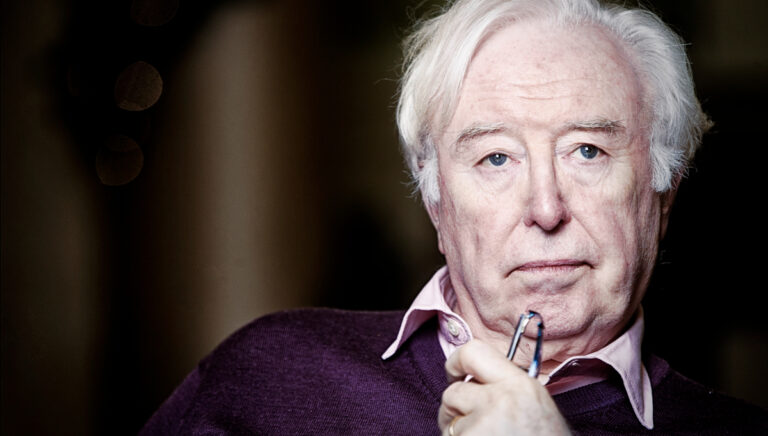
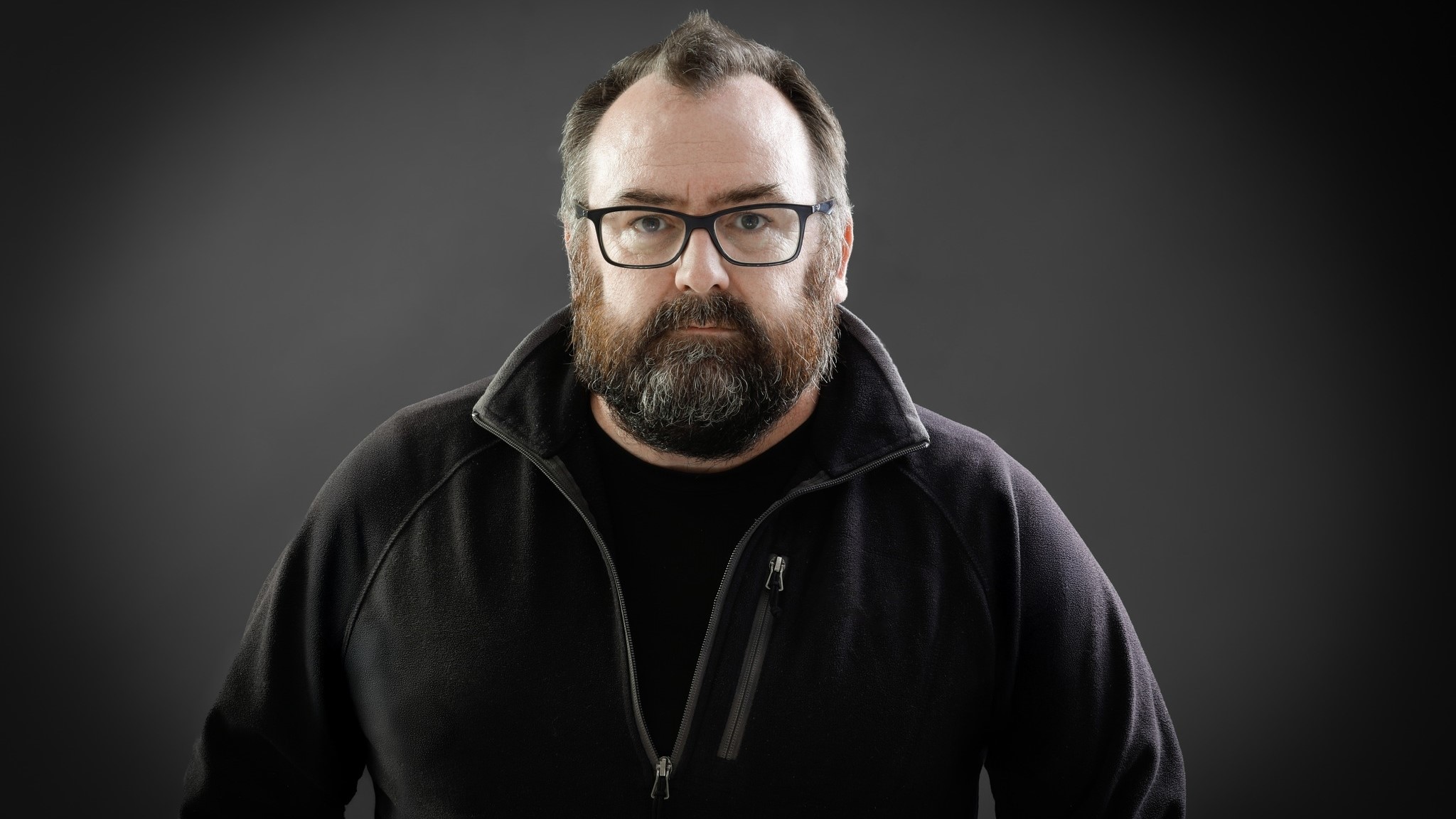
Dr Eoin Lenihan is an independent journalist and researcher. Lenihan holds degrees in History and Archaeology from the National University of Ireland, Galway, and a doctorate in Pedagogy from the University of Augsburg. Focusing primarily on politics today, he has written for a wide range of international news outlets, including The Federalist, The European Conservative, Gript, Daily Caller, Quillette and Post Millennial, and has featured on Al Jazeera and Fox News, among others. His peer-reviewed study of Antifa uncovered damning evidence of how Antifa in the US infiltrated the national media and remains the largest empirical study of the group to date. His new book, Vandalising Ireland, has become an Irish bestseller. Hungarian Conservative has previously reviewed it.
***
Could you summarize the rhetoric of major Irish politicians, like Tánaiste [Deputy Prime Minister] Simon Harris, on the topic of migration since October’s presidential election?
Rhetorically, this is part of a grand tradition in Irish politics whereby Fianna Fáil and Fine Gael will run the country into the ground, and then they’ll talk in generalities, as if somebody else was in charge. We’ve had a de facto open border system since the early 2000s. I go into it in detail in the book, but essentially, a quick summary, no border controls were enforced. This came out in parliamentary discussions in early 2024. The Irish did not, even though we were told for a decade, for two decades, that we had strict registration processes as people came to claim asylum. None of that happened. The people were fingerprinted, but fingerprints weren’t put through the Euro DAX system to see if they were entering from another country illegally. Nothing was put through Europol to look for serious criminal offences. No non-EU embassies were called up to check on the legitimacy of claims of people coming in. So, we were literally letting in unvetted people who were entering illegally, throwing away documents or whatnot. But again, nobody was turned away, nobody was deported.
In one famous case, we had a minister, then-Justice Minister Helen McEntee, ask how many people—in 2023, 8,975 arrived claiming asylum in Dublin Airport with no documents or travel papers. So, they threw them in a bin after getting off the plane, or arrived with false documents. And, in all of those, only one case was prosecuted. We had another case where multiple take-back requests were accepted under the Dublin agreement, where a second European country agreed to take back somebody who was registered in their country. Only three cases were enforced where Ireland bothered to send a person back.
So, Ireland was a de facto open-borders country, and word had gotten out. The government then chose this hyper-aggressive policy of forcing these people into small communities all around the country, into immigrant accommodation centres. People were saying: ‘Hey, these people are unvetted. We don’t know who they are. We’re scared. This is dangerous.’ And the government enacted, infamously, this policy of ‘No Veto, No Consultation’, meaning you don’t get a voice. And, very often, they would bus these characters into towns in the middle of the night. This led to a spate of burnings at these centres. It also led to a series of clashes with locals and the police. And this goes back to what you’re talking about, about how word began to get out of Ireland that something’s happening here, these fiery images of the police charging old women and men, as well as some activists. And it just all spun out of control.
Simon Harris, very famously, in the Dáil during this period when he first came to power—I think it was early 2024—he stood up and said: ‘What is this unvetted male talk?’ You know: ‘Stop saying that. Don’t talk about it.’ So, he took a very hard-line approach against anyone who spoke up and has now been proven correct—those who spoke out against these unvetted men being forced into their communities.
And so, what happened was, after the presidential election earlier this year, in October, there was this massive ‘Spoil the Vote’ campaign, where the government parties coordinated to keep one religious, conservative candidate off the ballot, and it led to this huge backlash. Again, it was like a straw that broke the camel’s back, that there was a lot of different anger and frustrations. People who didn’t feel heard thought: ‘This is our only way of being heard.’ It gave Fianna Fáil and Fine Gael such a shock. And I would like to think alongside my book, as well, because I have heard that it’s gone into government circles, and it’s being read. And it’s having an effect that these two instances came together to rock Fianna Fáil and Fine Gael, because their key voter demographic is the 65-plus demographic. They have an ageing voter base, and that’s why they control the media so carefully, to keep sending this older voter base the correct message. But this terrified them: ‘Oh, hang on a minute, we’re losing our grip on the narrative. Things are spiralling outside of our control.’ So then, overnight, Simon Harris adopts this. It’s almost schizophrenic, you know? He adopts this tone of ‘Oh, maybe we have too many, that there is a direct link between mass migration and housing supply, and stress on our facilities.’
But anyone who said this for the past three to four years was called ‘far-right’ in the press. One of the great sleights of hand that the government did was that they would tell communities that Ukrainians were being sent into their communities and staying in hotels in their localities. And people supported that. Irish people were terrific supporters, initially, of the Ukrainian refugee programme. And then they would get a bus of North African or Arab men, who everyone knew entered the country illegally, and they were told that if you don’t accept this, you’re racist.
And so, people were abused, gaslit, and slandered. And then, suddenly, Simon Harris, after getting this shock, the only thing politicians understand, a threat to their electoral capabilities…Well, suddenly they started talking in ‘far-right’ tones. I’m old enough to understand what’s happening here, which is what has always happened. That is, Fianna Fáil and Fine Gael are parties without core principles and without roots, just as they shifted far-left for the last 20 years with Sinn Féin.
‘People know they can’t be silenced anymore’
Now, since the wind is shifting, and there’s a popular uprising, the people know they can’t be silenced anymore. And people are demanding common-sense immigration laws. People are demanding that, on a series of fronts, the government policy be reigned in, and that radical leftist government policy be reigned in; they sense this wind is shifting. It can only happen in Ireland because they have ruled since the beginning of the state, and they believe they have a right to always rule. They turn around and say: ‘Well, actually, we do have too many migrants putting a strain on our housing market,’ as if they aren’t responsible for it, as if it isn’t their policies, as if they didn’t gaslight the public and demean the public and label the public for the past ten years, who are telling them they were on the wrong path.
But they can switch like that, because logic left the building a long time ago. As I said, Ireland is a crippled democracy. No, there’s no voting in an alternative. They know they can just turn around and tell bare-faced lies, and the public has to accept that. They have no intention of changing anything.
What they’re going to do is try to placate the public right now, then hope that they get through Christmas and things calm down. The nice words are enough to make people happy, because this is how it’s always happened. Ireland, after the collapse of the Celtic Tiger, was to give up our economic sovereignty to the EU and the IMF, to the world. This was a profoundly shameful moment for Ireland.
But, less than a decade later, Fianna Fáil are back in power, the guys who did it. So, Ireland, we’re a unique kind of country in that we don’t hold our politicians to account. You can be cynical and say: ‘You get what you vote for.’ But I would say that the government have rigged the game by inserting a wedge of NGOs between them and the electorate, and by paying off the media to ensure that their narrative is spouted out 24/7, to keep the populace ignorant. I do think that Irish people, maybe because of our colonial past, have this tendency to allow ourselves to be ruled by tyrants. Maybe that’s why. Maybe it explains our love of the EU.
‘I would say that the government have rigged the game by inserting a wedge of NGOs between them and the electorate’
The new element is that the government have very strategically used the fabulous wealth of the FDI economy to buy their position, to buy out all the various institutions that play an essential role in protecting democracy. And so, what I advocate for in Chapter Seven in the book is that, for the first time in our history, we need a populist right, or a nationalist, populist—whatever you want to call it—movement and party in Ireland that will be driven by very clear principles and refuse to bend on those. Another way Ireland is remarkable is that we have the narrowest XY political access anywhere in Western Europe. Look at Hungary. This is where we’re very different from Hungary, where Hungary would have had a very broad political spectrum.
At various times in Irish history, we had two parties which were essentially brothers fighting with each other. After 1948, they failed to have any meaningful differences between them. And so, we’ve had a uni-party rule for the century of our freedom. We handed over, first of all, control of our social and educational institutions to the Catholic Church, and then, later, we were happy to hand over much of that to the EU again. So, we have a political class who’s used to being subservient, who’s used to shirking responsibilities, and we have an electorate who’s used to not having options. It’s dangerous, and we need to break out of that cycle for the first time in our history.
I think many readers will be familiar with the horrendous story out of Ireland recently, in which a ten-year-old girl under state care was allegedly raped by a migrant accommodated at the Citywest mixed-use facility near Dublin. The alleged crime at Citywest happened after your book went to print. It’s worth noting that you mention Citywest multiple times—part of the large body of evidence to suggest something like this was bound to happen. There have also been significant developments in Irish politics since the publication date. Will you consider publishing a second edition reflecting subsequent events?
It’s the perfect little case study of just how reckless Ireland has been over the past number of years with de facto open borders. It touches on a lot of what we’ve talked about, this idea of where our leaders have a self-hatred, an unwillingness to serve their own populace. The Citywest Hotel is the largest hotel in Dublin. It was a four-star hotel, fantastic. And so, the state started paying out extraordinary sums of money for this hotel to accommodate IPAS, international-protection claimants.
This was part of an overall process that we saw across the country, where little mini-oligarchs were made overnight. Where I come from, in County Clare, we rely on tourism, and we rely heavily on Irish–American tourism. All down the western seaboard of County Clare, we have the famous Cliffs of Moher and the Burren. The vast majority of our hotel beds were taken out of commission, first to house Ukrainian tourists. The costs were phenomenal. Actually, I have these numbers here. In 2023, 1 billion euros were lost in tourism because of housing. Ukrainians in hotel beds. Ten thousand jobs were lost by May 2023, so we sacrificed an unbelievable amount in areas that we couldn’t afford to sacrifice.
These are areas where heritage was our bread and butter, but it created these new oligarchs. In County Clare, where I’m from, Marcus White, for example, was paid 3.7 million in 2022 and 5.5 million in 2023. His father was paid similar figures. They owned all of the hotels in Lisdoonvarna, which is a very famous tourist town. So, they sold out their hotels and became astonishingly wealthy overnight.
And the secondary knock-on effect was that all of the other tourism industries folded overnight: people who had pubs, bars, restaurants, tourism, bus tours into the Burren and walking tours, you name it. People who sold soaps and whatnot. So, it created this incredible new economic, social class overnight, reminiscent, as I say in the book, of the old landlord class, whereby, if you had a hotel, you became obscenely wealthy, but all around you got much poorer.
This was done to an extraordinary degree in Dublin, where, you know, property prices were extremely valuable, and so in Citywest, they were being paid tens of millions a year to house these immigrants. Then, last year, the government made the decision to buy the hotel. And so, now the Citywest Hotel is the government’s genius response after two decades of mass asylum abuse. Their genius solution has been to buy a four-star hotel to house hundreds of immigrants who have cheated the system to get into Ireland. It was a huge point of tension in the community. People had warned and warned about the women feeling unsafe, that girls feel unsafe.
Around October, a young girl, ten years old, who was in state care, Tusla—another very poorly managed and run government body, which has endured a number of scandals in recent years—was allegedly raped on the grounds of the Citywest Hotel by an African illegal immigrant. That, again, had the knock-on effect where people were already on edge for a long time and had warned this was going to happen for a long time. It was a spark, and there was a riot, and a police van was set on fire. Again, the next day, fiery images of buses, terrible rioters. ‘Rioters are bad’ is the story in the Irish national media.
So that’s the cycle, rinse and repeat. We saw it after the brutal attack of those three children in Dublin in 2023. We see it after the brutal rape of a ten-year-old child now. And so, we see the machine in operation: the government is allowed to skate by on fixing their criminally negligent, I would say, immigration policies of the past two decades. They’re let off the hook by the national media, who deflect attention away from the core of the problem, which is government failures, and instead place the blame onto the scared locals who, I would say, have been backed into a corner and feel that they have no political outlet when these people are pushed into these hotels.
And the government policy is ‘No Veto, No Consultation’, so the people have no democratic or legal pushback. What do you think is going to happen after one of these people who’s brought in here rapes a child? Anyone who is in any way mature, who has a mature sense of politics, who understands the gravity of politics, can come to no other conclusion than that the government has been unbelievably reckless here. The media have been unbelievably reckless in supporting them. And, as this cycle continues after distorting Ashling Murphy’s murder, distorting after that attack on three schoolchildren in Dublin, distorting after this by placing all the blame on the victims, what do you think is going to happen? Of course, Ireland is erupting in flames.
Have you considered publishing Vandalising Ireland in other languages? I can picture an enthusiastic audience for a Hungarian translation, if not necessarily a large one.
I would love to. Because the reaction to this has been incredible. I spoke at an MCC conference in Brussels two weekends ago. And it was actually quite moving, because, especially young people under 30 came up to me and said they’re terrified. My generation and up lived with multiculturalism in theory. They live with multiculturalism in practice, and they’re frightened, and they understand that they’re hated by the people who rule them, and they understand the dangers of it. They understand that it’s not what their grandparents told them it was going to be. And so, I’ve been very proud that the book has resonated strongly with that demographic, and it has resonated strongly with that demographic outside of Ireland.
You could probably do the German translation yourself.
Well, yeah, I would. The Junge Freiheit just published an interview on it this week, and there’s been very strong feedback from Germany. I think the obvious countries would be Germany, where we have a strong populist movement, Hungary, where we have a strong populist movement, France, where we have one, but also Sweden has a very strong movement. Spain, with Vox, and other places, where I think this book would do well. I think it’s striking. I’m more than happy to take any guidance on that. I know Hungary has an extraordinary literary heritage and a lot of multilinguists. Maybe they want to help me out.
But the reaction to it has been extraordinary from the diaspora overseas. So, in Australia, America, and Canada, the feedback has been very strongly that, yes, while this book is about Ireland, the themes that I discuss are applicable across the West. If you’re a Hungarian reading this book, you’re going to see the exact same dangers at play that have undermined and destroyed Ireland. Now in Hungary, you’re fortunate that you have a strong leader who has kept a lot of it at bay, particularly the NGO threat in Hungary, because the NGOs are simply globalist sleeper cells whose only intention is to open your nation up to the globalist agenda. So, in Hungary, I think this book could do well, because I think it would show people exactly why the Fidesz agenda is so important, because it’s kind of like a ‘before and after’.
Last question for you: How can a Hungarian purchase Vandalising Ireland?
There are two options. If you don’t like shopping on Amazon—and many don’t, for good reasons—the best way is to go directly to the publisher, which is Wise Path Books. You’re going to pay more for it because of shipping. You’re probably going to have to wait longer for it because they’re a small Christian book company, but they absolutely deserve backing. I’m so grateful to them that they took a risk on this book when no Irish publisher would.
That said, Amazon. Amazon have been incredible in this. This book would not have succeeded without them. I know that that’s crazy to hear, because anyone who went through the 2015–20 culture wars in the US knows that, very often, Amazon was the first to buckle under the slightest activist pressure. But this book has become a best-seller on the back of Amazon. It has become part of the cultural zeitgeist because of Amazon. So, I’m very grateful to them, and Amazon in every local country is selling it, and they will have the best price and shipping.
Related articles:
At a time when public debate is increasingly polarized and superficial, Hungarian Conservative remains committed to depth, intellectual honesty, and independent conservative thought.
Producing high-quality journalism requires resources. Your contribution helps us expand our coverage, reach new audiences, and keep our content accessible.

Please consider supporting our mission.