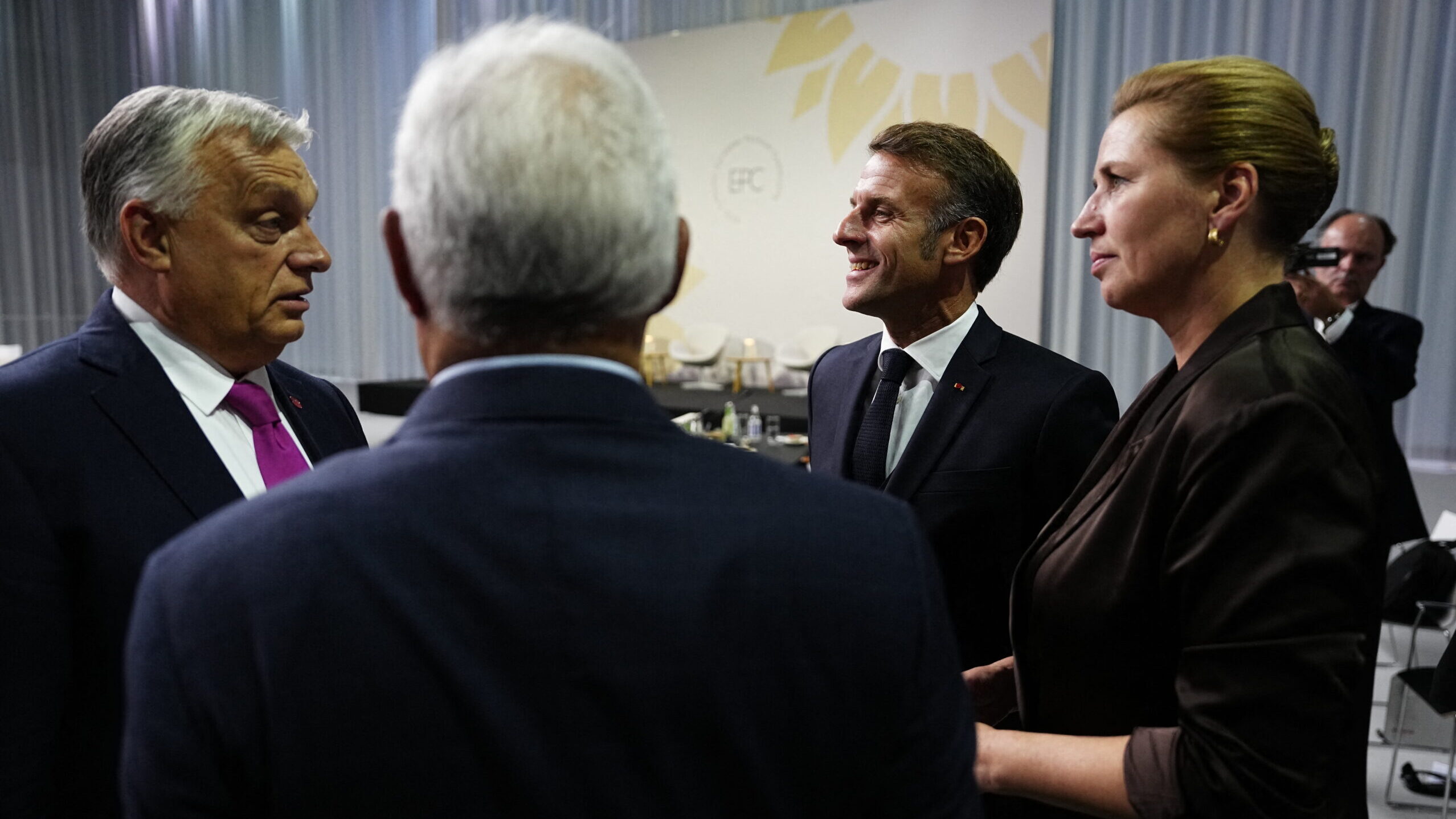
Viktor Orbán’s departure from power was expected to make European Union sanctions against Russia easier to approve. Instead, negotiations over the bloc’s 21st sanctions package have exposed how Hungary’s highly visible resistance often provided political cover for other capitals with objections of their own.
As EU ambassadors met in Brussels on Wednesday, 22 July, a deal remained broadly expected. However, the package had already been weakened, with measures removed following national economic, religious and administrative objections despite the Commission’s efforts to tighten pressure on Moscow.
Sanctions require unanimity among all 27 Member States, giving every government leverage—leverage frequently used by the former Hungarian prime minister.
‘Orbán was difficult,’ one EU diplomat told POLITICO Brussels, ‘but he never actually blocked whole packages.’
The remark captures the problem after Orbán’s departure. Orbán repeatedly delayed sanctions, demanded exemptions and challenged their effectiveness, but generally allowed packages through after securing concessions. With the bloc’s ‘usual villain’ gone, the same method is now being used openly by governments considered part of the pro-sanctions mainstream.
‘Orbán was the only one willing to bear the public cost, while other Member States have now objected to the same measure’
The clearest demonstration of the vanished ‘veto shield’ is the case of Patriarch Kirill. In 2022 Hungary held up the EU’s sixth sanctions package until the Russian Orthodox Church leader was removed from the sanctions list, prompting accusations that Orbán was protecting one of Vladimir Putin’s most prominent clerical supporters. Four years later, with Budapest no longer objecting, Kirill has again been removed—this time following Bulgarian resistance and an Italian reservation reportedly influenced by Vatican concerns about sanctioning another church’s leader, which was also the justification articulated by the Orbán government in 2022.
Hungary’s position at the time was presented as isolated. The latest episode suggests otherwise: Orbán was the only one willing to bear the public cost, while other Member States have now objected to the same measure and produced the same result.
In hindsight, repeatedly obstructing EU decision-making through veto threats, often in ways perceived as advancing Russian interests, proved politically costly for both Orbán and Fidesz. The 12 April election that ended their 16 years in power was framed by Péter Magyar and the Tisza Party precisely as a choice between Hungary’s future orientation towards Moscow or Brussels.
European People’s Party (EPP) leader Manfred Weber later repeatedly cited Kirill’s removal as evidence that Orbán was advancing Putin’s interests within the EU, a message echoed by EPP, S&D and Green MEPs. That narrative helped portray Orbán domestically as pro-Russian and isolated, despite Hungary now appearing far from the only country prepared to oppose Kirill’s inclusion.
A Bouquet of Objections
Regarding the current package, Greece is the principal holdout. Athens objects to restrictions preventing EU companies from transporting Russian liquefied natural gas to third countries, arguing that affected ships would simply be sold or reflagged in less regulated jurisdictions. The dispute centres on Dynagas, a Greek company operating specialized ice-class tankers serving Russia’s Arctic Yamal plant—the facility from which EU countries purchased every shipment in February.
Greece says the measure would damage European shipping without materially reducing Russian revenue, while other diplomats note that companies across the EU have already absorbed sanctions-related losses.
Greece, Malta and Cyprus also hesitated over freezing the Russian oil price cap at $44.10 per barrel for another six months, reflecting their maritime interests. The extension is expected to pass if Athens receives an acceptable LNG settlement, while the cap has temporarily remained unchanged.
Austria introduced another complication on behalf of Raiffeisen Bank International. Vienna wants frozen Russian-linked assets used to compensate the bank for losses imposed through Russian court action. Other capitals fear this would legitimize Moscow’s retaliatory seizures and establish a precedent for reimbursing European companies from sanctioned assets. The Commission has reportedly promised to examine the issue in a later package, allowing Austria to step back.
‘With the “veto shield” gone, more governments must voice objections publicly’
Commercial concerns have also hollowed out the package. A proposed phase-out of Russian cod, haddock and pollock imports was dropped or diluted after Germany, Portugal and others warned of higher consumer prices and damage to fish-processing industries, preserving a market worth hundreds of millions of euros for Moscow.
France and Italy, both major issuers of visas to Russian nationals, resisted broad restrictions on former Russian servicemen. They argued that authorities lacked a workable system for determining who had served, participated directly in combat, or deserted. The proposal was narrowed to short-term visas and those directly involved in military operations.
The likely final package is therefore narrower than the Commission proposal unveiled in June, despite Orbán no longer obstructing the process. Diplomats increasingly acknowledge that the EU is running out of ‘low-hanging fruit’, with each additional sanction affecting politically connected companies, sensitive industries or national diplomatic interests. With the ‘veto shield’ gone, more governments must voice objections publicly—a development that could reshape the debate around the ‘pro-Russian’ label and its accompanying political narrative.
Related articles:
At a time when public debate is increasingly polarized and superficial, Hungarian Conservative remains committed to depth, intellectual honesty, and independent conservative thought.
Producing high-quality journalism requires resources. Your contribution helps us expand our coverage, reach new audiences, and keep our content accessible.

Please consider supporting our mission.