Days after losing their main presidential candidate through a rushed nomination process, Prime Minister Péter Magyar and the Tisza Party seem to have launched an online presidential casting.
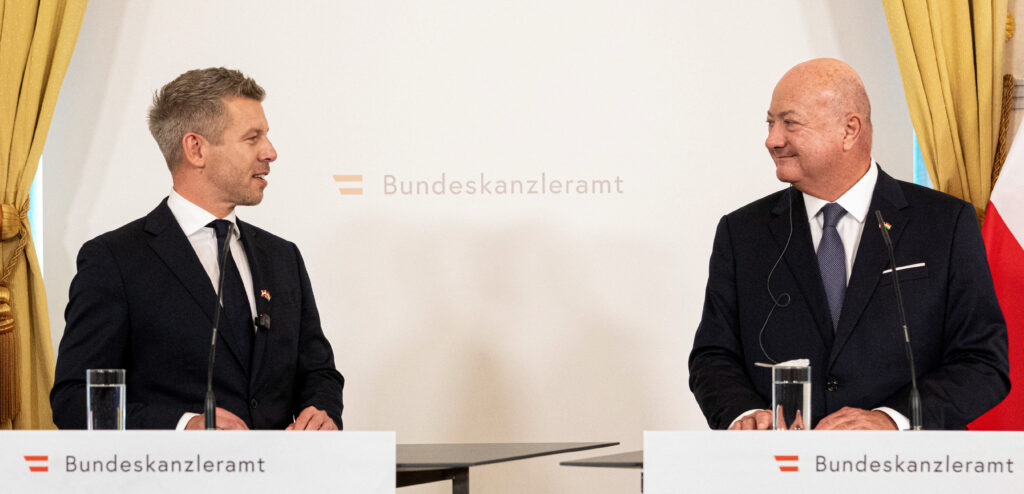
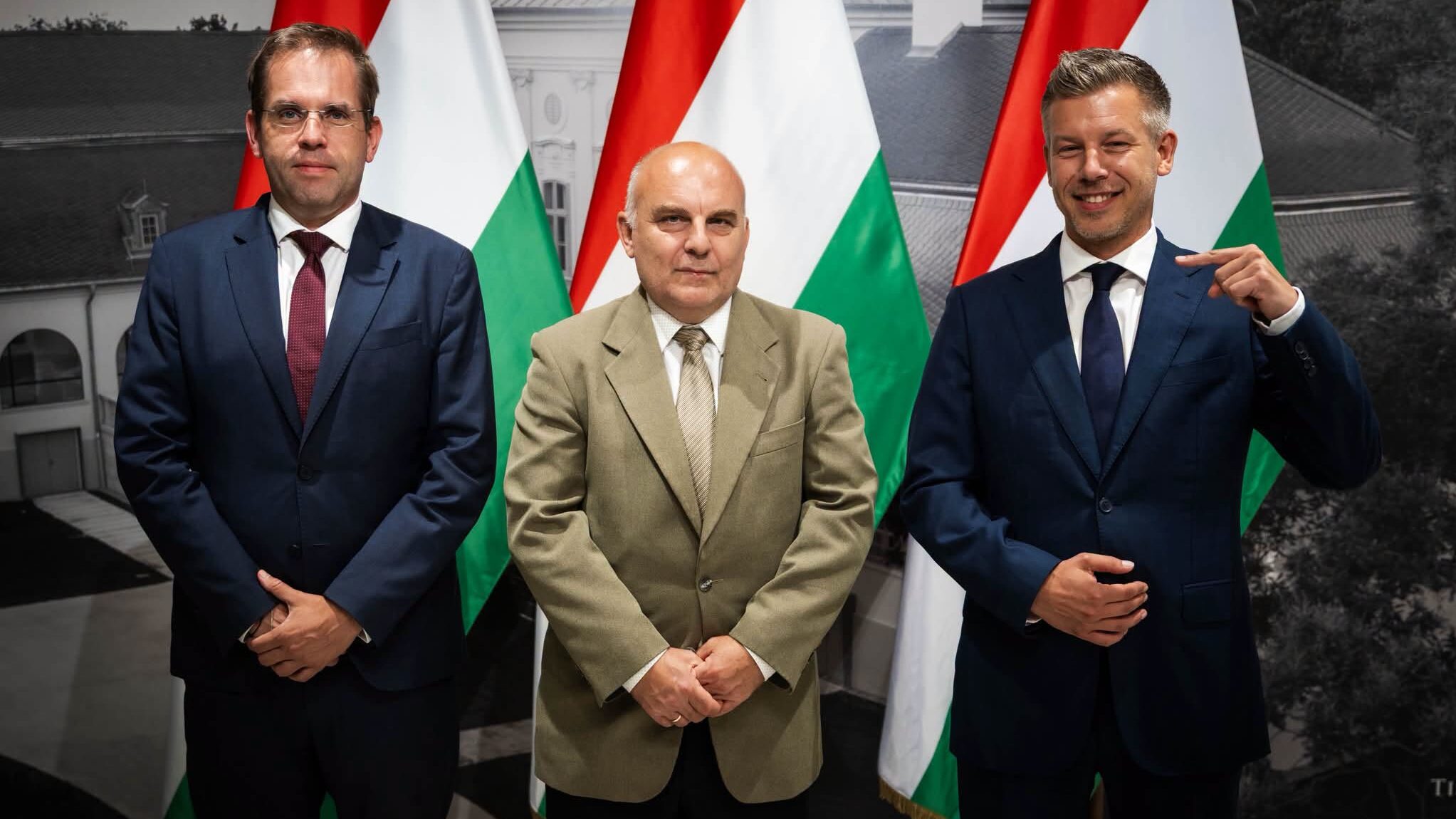
After Hungarian chess grandmaster Judit Polgár declined Magyar’s explicit offer on Monday, the prime minister published a photo with Botond Fülöp, widely known as Vidéki prókátor, the lawyer who uncovered the pardon scandal that ended President Katalin Novák’s political career. Bálint Ruff, the minister heading the Prime Minister’s Office, was also present.
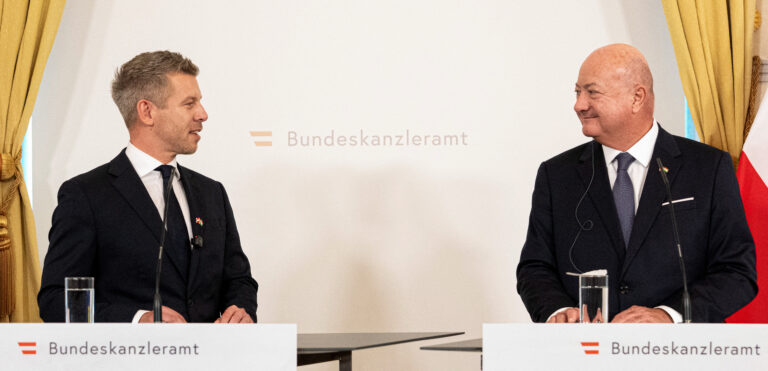
Two days later, Magyar and Ruff appeared in an almost identically composed photo with historian Ignác Romsics.
Neither post mentioned the presidency. Magyar described Fülöp as someone ‘without whom there probably would have been no regime change’, while he said he had discussed the ‘great questions facing our nation’ with Romsics. Yet meeting two publicly circulated potential candidates within two days indicates that Tisza has changed strategy and started measuring their support on social media.
The new strategy followed one of the hardest weeks of Tisza’s three months in government, although it should not have been such. On Saturday, Magyar celebrated a significant power-political victory over Fidesz when President Tamás Sulyok promulgated the 17th amendment to the Fundamental Law, ending his term the next day. Magyar invited the public to propose names and promised broader consultation, only to settle on Polgár the following day.
After a huge backlash from supporters, political allies and rights advocacy groups, the Hungarian ‘Queen of Chess’ rejected the offer the next day, saying she could not assume the ‘historic responsibility’ of uniting a deeply divided country.
After the blunder, the contest is open again. Circulated names include former Justice Minister Péter Bárándy, anti-corruption campaigner and former MP Ákos Hadházy, Methodist pastor Gábor Iványi, economist Péter Róna and former judge Adrienn Laczó. Parliament has 30 days to elect the next president.
Wide Field of Potential Candidates
The first to appear next to Magyar after Polgár’s rejection was Fülöp, whose story is intertwined with Magyar and Tisza’s rise. Fülöp, who until May ran the anonymous Vidéki prókátor Facebook page, triggered one of the most consequential scandals in Hungary’s modern political history.
While reading court decisions in February 2024, the lawyer found that Kónya Endre, former deputy director of the Bicske children’s home, had received a presidential pardon despite being convicted of coercing child abuse victims to withdraw testimony against the institution’s director, later convicted of sexually abusing children.
The disclosure forced Novák to resign and ended the political comeback of former justice minister Judit Varga, Magyar’s ex-wife, who counter-signed the pardon. It prompted Magyar to enter politics on a wave of outrage and, most importantly, damaged Fidesz and Viktor Orbán’s child-protection narrative, defence of families and Christian morality, as well as the party’s credibility.
‘Fülöp…comes from a conservative background but broke with Fidesz’
Fülöp remained anonymous until a month after Tisza’s landslide victory in the 12 April election, posting political and legal commentary with positions similar to Magyar’s. Pro-Fidesz influencers claimed Magyar, or someone close to him, was behind the page. While still anonymous, Fülöp rejected claims that he was related to Magyar in any way and told Válasz Online that he and Magyar had ‘many things in common’ and very similar political worldviews. Magyar also acknowledged this in Tuesday’s post.
Fülöp worked at the Court of Justice of the European Union between 2005 and 2011, comes from a conservative background but broke with Fidesz, and has argued that parliamentary majorities must remain subject to constitutional limits. In June, he published a book recounting the pardon scandal and outlining views built on Christian-conservative patriotism and a civic Hungary.
The next publicly presented candidate, Romsics, would represent a different model. The Széchenyi Prize-winning historian commands national authority without a party-political career. He previously said a good president should possess ‘self-weight’: authority acquired before the parliamentary vote rather than created by the office. However, he also deemed himself unsuitable, citing his age, temperament and lack of political and social embeddedness.
Former judge Adrienn Laczó is another candidate to watch. She worked as a criminal judge from 2001 until 2024 and handled serious economic cases at the Budapest-Capital Regional Court from 2008. She resigned amid concerns over judicial independence and now practises as a lawyer. Several vocal anti-Orbán figures proposed her, after which she featured in a long interview with Hungarian outlet Kontroll.
The role of Kontroll in the online casting is also worth examining. The outlet is published by Magyar’s brother, Márton Magyar, suggesting proximity to the governing party and its agenda. Although Kontroll presents itself as independent, leading fact-checker Lakmusz reported frequent Tisza-friendly framing, omission of potentially damaging details and almost non-existent criticism of the prime minister.
Around three hours before Magyar posted the photo with Fülöp and Ruff on Tuesday, Kontroll republished an edited section of its May interview with the lawyer under the title ‘The tyranny of the majority must be prevented’. The 18-minute clip presents Fülöp’s idea of the presidency just hours before Magyar launched the casting. It could be a coincidence, but could also signal that the prime minister’s brother’s outlet received advance information. It is therefore worth watching whom it covers.
Could the President Be Someone Other than Magyar’s Pick?
Now take a look at support for the potential candidates. Magyar’s photo with Fülöp currently has more than 70,000 likes and 5,000 comments, attracting overwhelmingly positive reactions and becoming an impromptu ‘Fülöp for President’ campaign. Many interpreted it as a hint of an upcoming nomination, while others said his role in exposing the pardon scandal made him uniquely deserving of the office.
At the time of writing, the Romsics photo had garnered more than 30,000 likes and 1,700 comments in less than 24 hours. While widely praised as a respected and independent figure, commenters immediately compared him with Fülöp and, more specifically, Laczó, signalling public awareness of the casting process.
Polling data, however, produced different frontrunners. In a Blikk survey of nearly 10,000 readers, Hadházy finished first with around 21 per cent among more than ten names. Kontroll’s YouTube polls also placed Hadházy first, with Bárándy second by 34 to 31 per cent. Fülöp received 20 per cent and Romsics 30 per cent. The two polls had around 9,300 and 4,800 responses respectively.
Some of the strongest names in the polls, however, are unlikely to be selected. Magyar effectively ruled out Bárándy by saying ‘old-opposition politicians’ should not be considered for an office representing national unity. Hadházy remains a question mark. Magyar has not ruled him out, but the two have an uneasy relationship, with Hadházy recently accusing Tisza of tailoring the retrospective 12-year term limit on MPs specifically against him.
That raises another question: could the presidential candidate be anyone other than the person Magyar supports? The Polgár controversy proved supporters can force Tisza to retreat from personal decisions; however, criticism targeted the rushed process rather than Polgár herself. Tisza has also measured public support for candidates online before and backtracked following significant backlash.
According to a widely held view among intellectual circles sympathetic to Tisza, the next president should also be someone who spoke out against the Orbán system during the past 16 years. This argument was raised against Polgár’s nomination and increases Fülöp’s chances, as he is seen as one of the few personally involved in defeating Fidesz.
‘Some of the strongest names in the polls, however, are unlikely to be selected’
The next president, however, will not inherit the office without a struggle. The 17th amendment ended Sulyok’s mandate and brought a broader constitutional overhaul, with some provisions criticized not only by Fidesz but also by rights advocacy groups. Fidesz boycotted the parliamentary vote and later vowed resistance against what it called an ‘illegitimate authoritarian system’ created by Tisza. Fidesz and part of its voter base will therefore reject any Tisza-backed president, making the anticipated national unity essentially impossible.
As a consequence, Magyar must find someone able to defend the transition while convincing the public that the office will not become another instrument of the government’s two-thirds parliamentary majority. How a casting process on increasingly echo-chamber-driven social media would help select such a person remains to be seen.
Related articles:
At a time when public debate is increasingly polarized and superficial, Hungarian Conservative remains committed to depth, intellectual honesty, and independent conservative thought.
Producing high-quality journalism requires resources. Your contribution helps us expand our coverage, reach new audiences, and keep our content accessible.

Please consider supporting our mission.