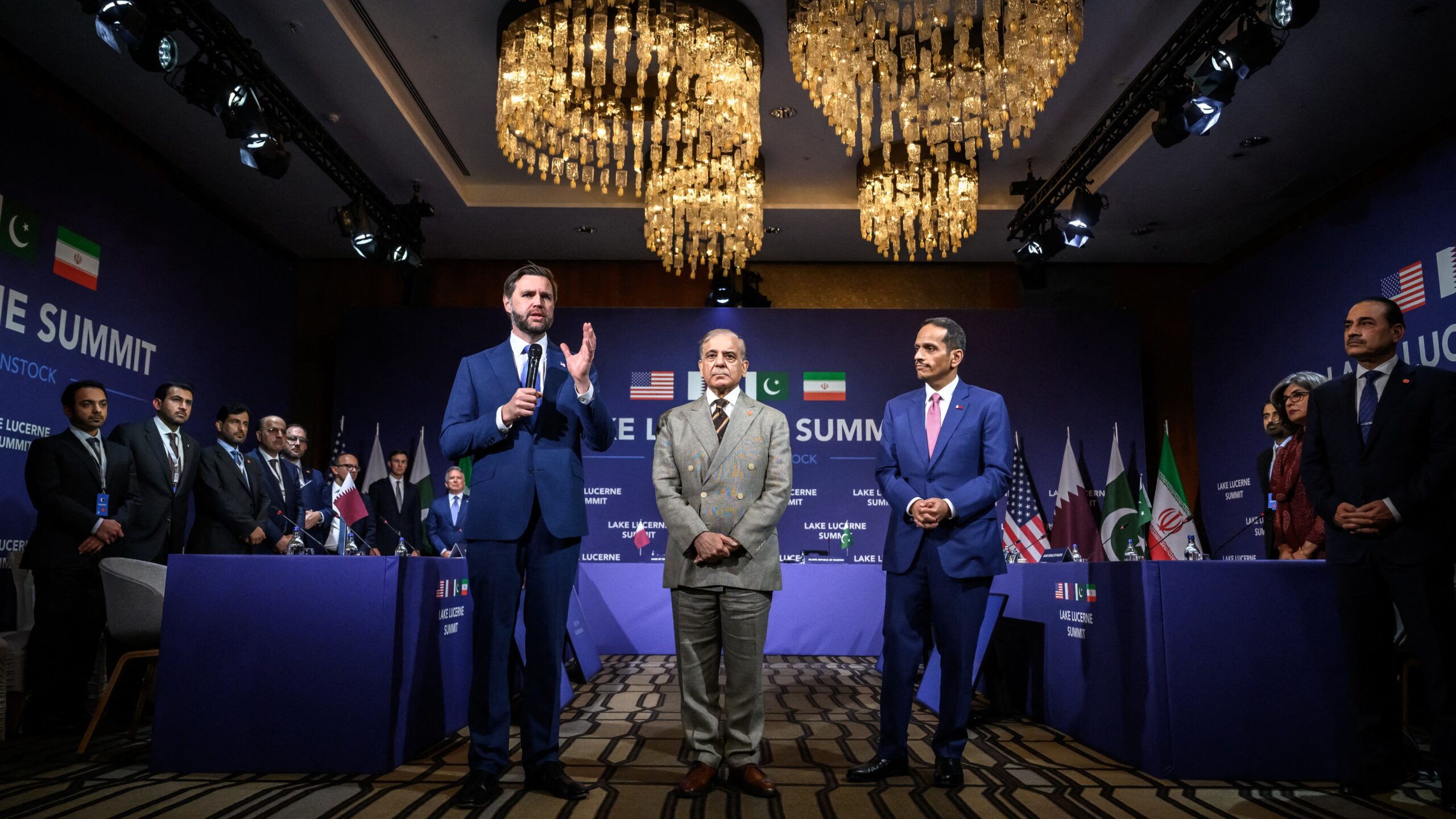
The United States and Iran sat down—along with mediators Qatar and Pakistan—in the Swiss mountain resort of Bürgenstock to advance a framework with technical details of a broader peace deal. The talks were turbulent, punctuated by walkouts and symbolic snubs, yet concluded with carefully worded optimism and a set of concrete structural commitments, suggesting the two sides are not ready to abandon the process.
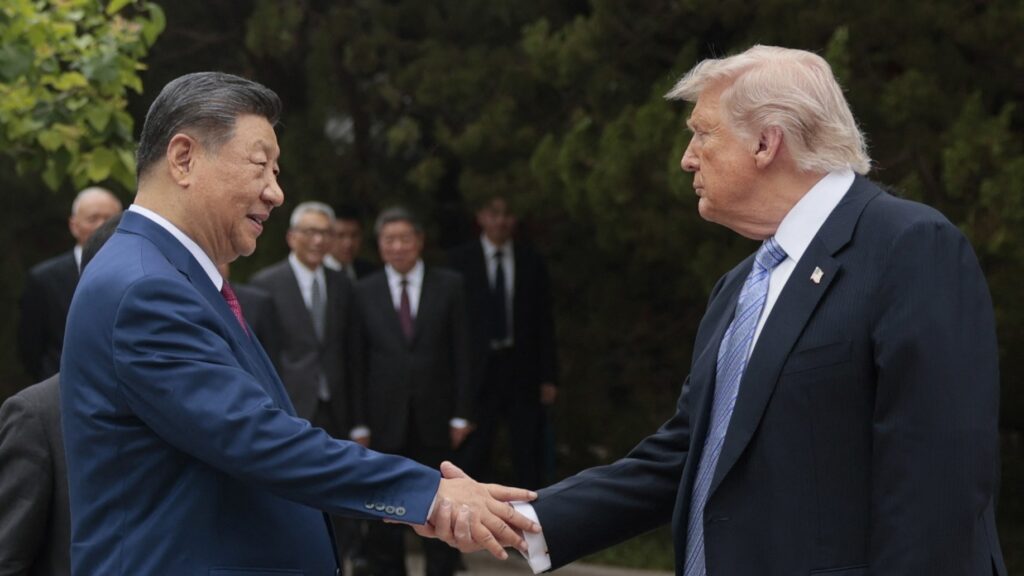
The meeting followed the signing of a Memorandum of Understanding between the US and Iran by President Donald Trump and Iranian President Masoud Pezeshkian in France the previous week, with Vice President JD Vance and Iranian Parliament Speaker Mohammad-Bagher Ghalibaf digitally signing the agreement, witnessed by Trump.
But the goodwill generated in Paris ran into immediate friction in Switzerland. Iran’s Tasnim News Agency, citing a source close to the negotiating team, reported that the Iranian delegation walked out of negotiations on Sunday in protest at Trump’s threats to restart strikes against Iran unless the Strait of Hormuz was reopened. Earlier tensions had already been on display, as the Iranian delegation declined to participate in a group photo with the US delegation, and Parliament Speaker Ghalibaf refused to enter the room during the press conference held by the American, Pakistani, and Qatari sides.
Iran’s leverage over the Strait was directly linked to the war in Lebanon. Mehr reported that the Strait of Hormuz would not be reopened until a ceasefire in Lebanon was respected—a clear signal that Tehran views its support for Hezbollah as a bargaining chip in the wider negotiation. To ease tensions, the US disputed claims that the strait had been fully closed, with officials saying 55 merchant ships had crossed it on Saturday, although vessel-tracking data broadly supported Iran’s assertion that tanker traffic had ceased.
Hezbollah and Lebanon at the Centre
The conflict between Israel and Hezbollah—Iran’s most powerful regional proxy—loomed over every session. An emergency meeting specifically addressing the ongoing Israel–Hezbollah conflict in Lebanon was added to the summit’s first day schedule. However, neither Israeli nor Hezbollah representatives were present.
‘Finance Minister Bezalel Smotrich said the agreement was “bad for Israel and for the entire free world. Period.”’
Earlier, Israeli officials, including Defence Minister Israel Katz, have rejected this—insisting Israel isn’t bound and will keep operating in Lebanon regardless. Far-right members of Netanyahu’s coalition also argued that the terms of the agreement would not bind Israel. Finance Minister Bezalel Smotrich said the agreement was ‘bad for Israel and for the entire free world. Period.’
This placed Washington in the uncomfortable position of negotiating outcomes that directly affect parties who had no voice in the room. Vance told reporters that Trump had ‘done more to stop the conflict in Lebanon than any government anywhere in the world over the last few months,’ a claim that reflects the administration’s framing of itself as the indispensable broker—though one that Iran can plainly use as pressure, given its ability to direct or restrain Hezbollah’s operations.
Vance Voiced Optimism
Despite the friction, the American delegation projected confidence. Vance credited Trump’s ‘leadership and willingness to see a Middle East that is much different ten years from now’ as the driving force behind the summit, framing it as part of a larger vision of regional transformation where Iran and the Gulf states could work together rather than against each other.
Qatar’s Prime Minister and Foreign Minister, Muhammad bin Abdulrahman Al Thani, described the day’s meeting as ‘just the beginning’ of a negotiation process, citing ‘tremendous dedication’ from Vance, the Pakistani Prime Minister, and the Iranian Foreign Minister.
A lot of ‘good progress’ was made, said JD Vance, following the conclusion of the talks and the reported departure of the Iranian delegation. He noted that the Strait of Hormuz is open, and that a ‘good foundation for a successful final deal’ has been laid.
When pressed on Israel—notably absent from the talks—Vance said the US had ‘seen great progress over the last couple of days in ensuring the ceasefire holds in Lebanon.’ He praised Israel, Qatar, and Pakistan as partners working toward regional peace, saying there was still ‘additional wood to chop’.
Concrete Outcomes
In a joint statement, mediators Qatar and Pakistan said the talks were conducted in a ‘positive and constructive atmosphere’. They announced that both the US and Iran had agreed to establish a High-Level Committee for political oversight of future negotiations, with chief negotiators reporting regularly to it.
The parties set a 60-day roadmap toward a final deal. They agreed to the creation of a ‘deconfliction cell’ through which the termination of Israeli military operations in Lebanon would be assured.
Regarding frozen Iranian assets expected to be released under the deal, Vance said Washington wanted to ensure the funds would ‘support citizens, not terrorism’.
On the nuclear file—long the central issue in any US–Iran negotiation—Vance confirmed that Iran had formally agreed to invite inspectors from the International Atomic Energy Agency (IAEA) back to its nuclear sites, with inspections potentially beginning as early as that day. Further technical talks, Vance said, would continue over the days and weeks ahead.
Related articles:
At a time when public debate is increasingly polarized and superficial, Hungarian Conservative remains committed to depth, intellectual honesty, and independent conservative thought.
Producing high-quality journalism requires resources. Your contribution helps us expand our coverage, reach new audiences, and keep our content accessible.
Please consider supporting our mission.